Where Did Anthony Bourdain Eat In Palermo?
Anthony Bourdain filmed two Sicily episodes and ate at two documented Palermo stops: the Capo market in 2005 and Trattoria Piccolo Napoli in 2013. Here is what he had, and what you can still visit.
Where Did Anthony Bourdain Eat In Palermo?
Anthony Bourdain ate at two documented Palermo stops: the Capo market, where the 2005 No Reservations Sicily episode filmed him eating tripe, frittola and a spleen sandwich with the region's then governor, and Trattoria Piccolo Napoli, the seafood trattoria he visited in the 2013 Parts Unknown Sicily episode with food writer Mary Taylor Simeti.
That is the whole verified list, and it is shorter than the internet makes it look. Bourdain came to Sicily twice for television, once in 2005 for the Travel Channel and once in 2013 for CNN, and both trips produced a single Palermo food sequence each. Everything else you may have read, long lists of "Bourdain's favorite Palermo spots", mixes in other people's recommendations or stretches a brief market walk into a full itinerary. The record is tighter and, honestly, more interesting than the folklore.
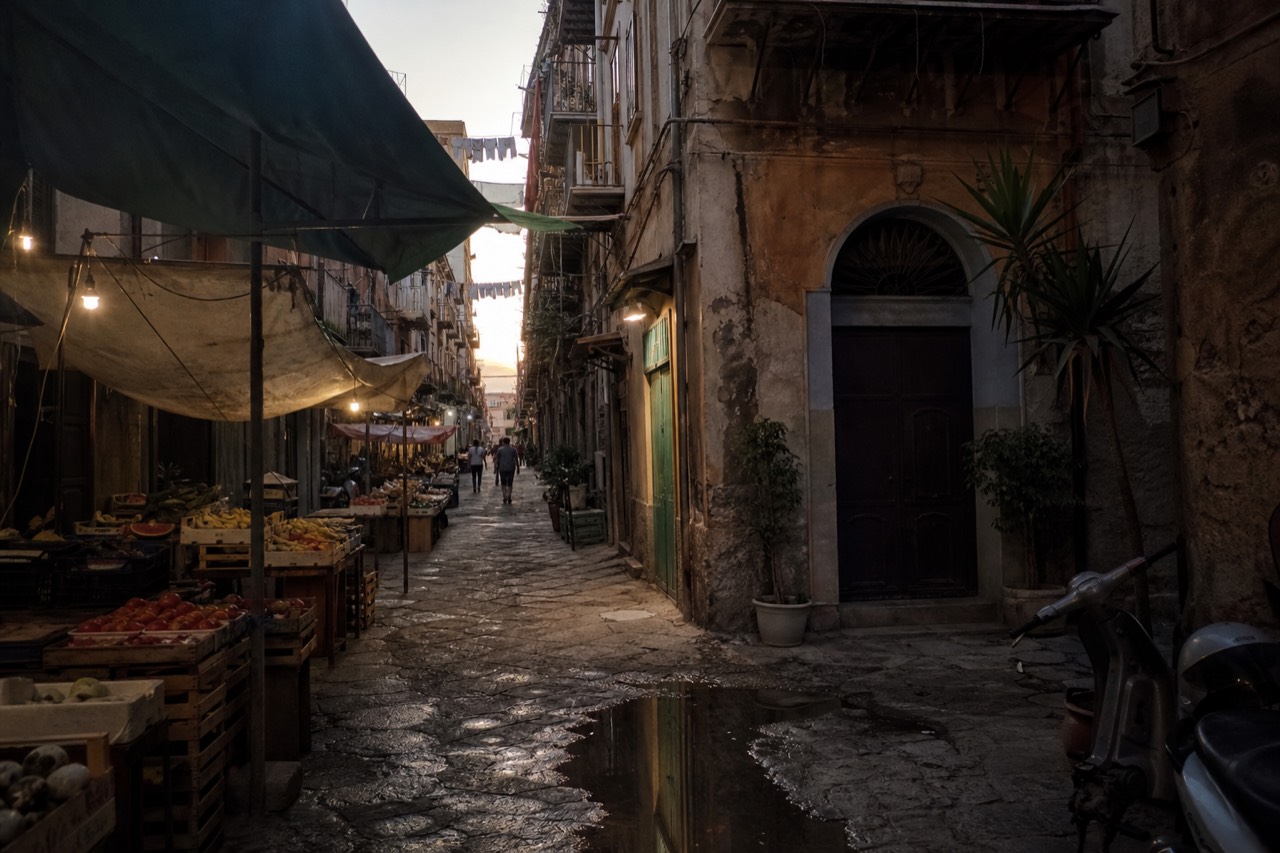
The 2005 visit was the louder one. For the No Reservations Sicily episode, his first Sicily shoot, Bourdain went into the Capo market with an unusual dining companion: Salvatore Cuffaro, who was then the president of the Sicilian region. The two ate standing up, market style. The episode description records tripe, frittola and a spleen sandwich, the pane con la milza that the city's own tourism portal still lists among the street food sold by Capo hawkers.
The 2013 visit was quieter and, by Bourdain's own account, worse. Parts Unknown based him at a villa on the eastern side of the island near Mount Etna, and his one filmed Palermo meal was at Trattoria Piccolo Napoli, a seafood trattoria, in the company of Mary Taylor Simeti, the American food writer who has spent decades documenting Sicilian cooking. He also spent part of that episode debating where to find the best cannoli, a question Sicilians themselves have never settled.
If you want to eat where he ate, the practical question is not "where" but "does it still exist." The Capo market does, and it trades daily. Piccolo Napoli does too. The cannoli shop from the 2005 episode does not, and we will get to that.
What Did Bourdain Eat At The Capo Market In No Reservations?
In the No Reservations Sicily episode, first aired October 10, 2005, Bourdain ate tripe, frittola and a spleen sandwich inside the Capo market, alongside Salvatore Cuffaro, then president of the Sicilian region. The spleen sandwich, pane con la milza, is one of the street foods the Comune di Palermo's own tourism portal lists as sold by Capo hawkers.
The episode is No Reservations season 1, episode 6, titled "Sicily", produced by Zero Point Zero Production and broadcast on the Travel Channel. The episode record confirms the air date and the Capo market sequence, including the governor's presence. It is worth being precise about this, because the Capo scene gets retold loosely all over the travel web, usually with venues Bourdain never set foot in.
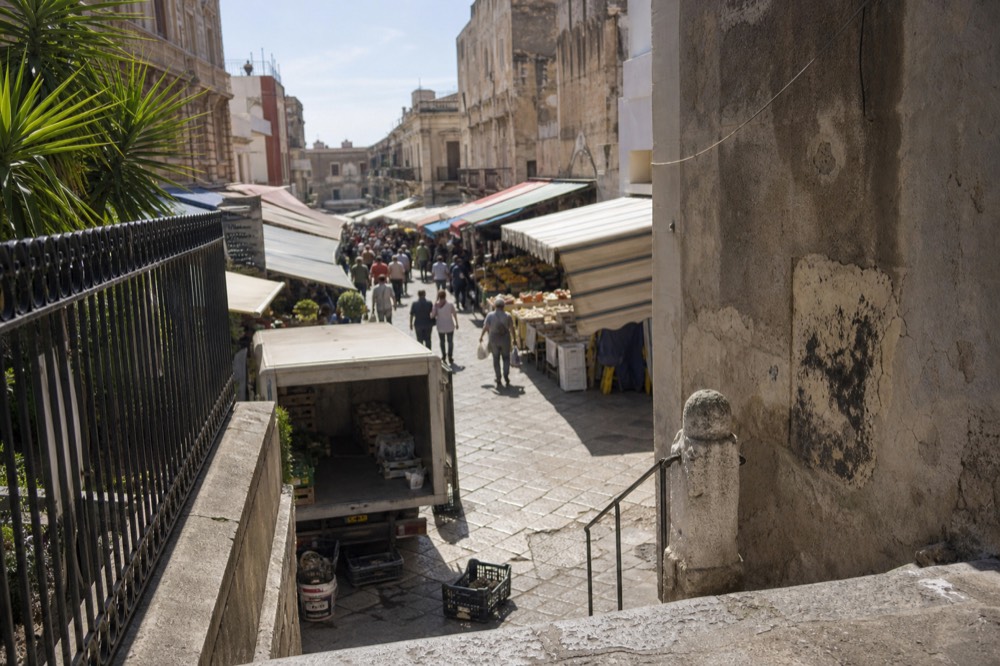
What the market itself is helps explain why a television crew chose it. The Capo sits in the ancient Seralcadio quarter, its principal entrance at Porta Carini, and it began as a meat market; the Comune notes the old civic slaughterhouse, the "bocceria nuova", once stood nearby, and that the dialect word for its butchers' shops was "carnezzerie", a Spanish-era borrowing. Hanging meat, offal and fried food are not tourist additions here. They are the market's working history.
The spleen sandwich fits that history exactly. The city's tourism portal lists "pane con la milza" among the specialties sold by Capo hawkers, right alongside sfincione, panelle and crocche di patate, several of which are recognised on Sicily's official PAT list of traditional products. Bourdain did not hunt down a hidden gem in 2005. He stood in one of the city's four historic markets and ate what the hawkers there had been selling for generations.
The Capo is still the most reliable place in Palermo to do the same thing. The market is open every day, morning and afternoon, per the Comune's own market page, and a guided walk through it remains the single closest experience to that episode. The Palermo Street Food Walking Tour with Local Guide & Tasting, run by Hili srl, is the budget option on our roster: 2.5 hours from $39.83 per person, rated 4.8 across 933 reviews, with free cancellation up to 24 hours before. It often sells out, which tells you something about how many people arrive in Palermo with that 2005 episode in mind.
| No Reservations "Sicily" | Parts Unknown "Sicily" | |
|---|---|---|
| Season and episode | Season 1, episode 6 | Season 2, episode 5 |
| First aired | October 10, 2005 | October 13, 2013 |
| Network | Travel Channel | CNN |
| Producer | Zero Point Zero Production | Zero Point Zero Production Inc. |
| Palermo food stop | The Capo market | Trattoria Piccolo Napoli |
| Dining companion | Salvatore Cuffaro, president of Sicily | Mary Taylor Simeti, food writer |
| Other Palermo content | Cannoli debate, cliff dive | Seafood lunch, cannoli debate |
Where Is Trattoria Piccolo Napoli And Is It Still Open?
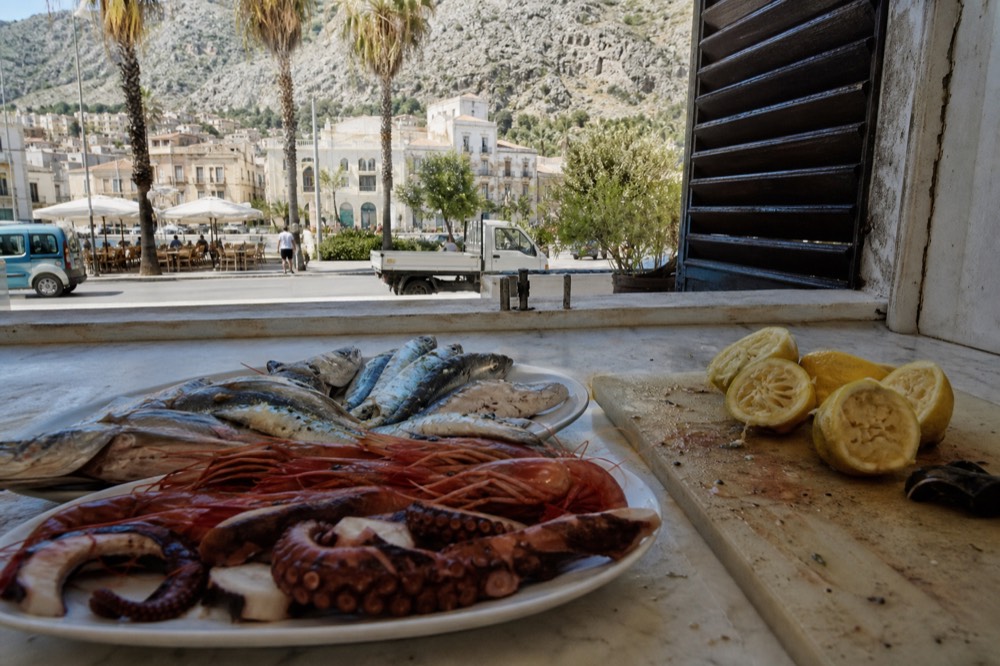
Trattoria Piccolo Napoli is a Palermo seafood trattoria that Bourdain visited for the 2013 Parts Unknown Sicily episode, in the company of the food writer Mary Taylor Simeti. It is still open, and it remains one of the few Bourdain television stops in Sicily you can book a table at today.
The visit is documented in the episode recap published on the Parts Unknown site, which names the trattoria and Simeti as his companion for the meal. By 2013 Bourdain was no longer doing the standing-up market eating of the 2005 shoot. The Parts Unknown episode based him at Villa Monaci, the Monaci delle Terre Nere property near Catania and Zafferana Etnea, on the opposite side of the island, and his Palermo sequence reads like a deliberate correction: a proper seated lunch, with a writer who has spent her professional life on Sicilian food.
That choice of companion matters. Mary Taylor Simeti is one of the most serious English-language authorities on Sicilian cooking, and pairing Bourdain with her signalled what the episode was trying to do, which was to go deeper than the fried-food tour of eight years earlier. The seafood at Piccolo Napoli was the vehicle for that conversation.
The practical answer for a visitor is a good one. Unlike several other Bourdain television locations in Sicily, Piccolo Napoli survived. The trattoria was still operating as of 2026, and it sits inside Palermo proper, so it costs you no detour. If you are building a Bourdain day in the city, the sequence writes itself: the Capo market in the morning while the hawkers are at full voice, Piccolo Napoli for lunch, and a cannolo afterwards, though not from the shop he used.
One caution about the wider "eat like Bourdain in Sicily" industry. Plenty of listicles will hand you a dozen venues with his name attached. The documented Palermo record is the two stops on this page, plus the cannoli debate. An Osteria Nero D'Avola in Taormina also associated with the 2013 episode has closed, which is a useful reminder that these lists age badly. Verify before you cross the island for any single meal.
Why Did Bourdain Call His Sicily Episode A Personal Failure?
Bourdain called the 2013 Parts Unknown Sicily episode a "personal failure" in a 2016 interview, saying he was "snake bit as far as Sicily". His own field notes from the shoot, published in October 2013, open with the line "Failure has a smell" and ask "Why, why, why can't I get Sicily right?"
This is the part of the story most Bourdain tributes skip, and it is the most human thing in it. The field notes he wrote during the Parts Unknown shoot were published on his blog on October 11, 2013, two days before the episode aired, and they read like a man fighting the material. Sicily did not give him the clean narrative arc he wanted. It was too personal, too tangled in family and emigration and his own Italian-American distance from it.
In a 2016 Forbes interview he went further and named the Sicily episode outright as a personal failure, describing himself as snake bit when it came to the island. For a presenter whose whole persona was unflappability, that is a striking admission, and it is worth knowing before you retrace his steps.
The irony is that the episode works. The Piccolo Napoli lunch with Simeti and the market sequences hold up as television, and the failure Bourdain felt was a narrative failure, not a food one. Sicily resisted the big conclusion he tried to impose on it. The food was never the problem; the story was.
For a visitor, that failure is actually freeing. Bourdain gave you two stops and a shrug, not a canon. You are not completing his checklist when you eat at the Capo or at Piccolo Napoli. You are starting where he started, and then doing what he ran out of time to do, which is eat your way past the cameras. Our Capo market guide covers the market's stalls, entrances and hours in full if you want the practical layer.
Can You Still Follow Bourdain's Palermo Trail Today?
Partly. The Capo market still trades every day, morning and afternoon, and Trattoria Piccolo Napoli is still open. The cannoli stop from the 2005 episode, Pasticceria Chemi, has closed, so that piece of the trail exists only in the footage.
That is the honest scorecard, and it changes how you should plan. Half the Bourdain trail in Palermo is a market, which is free to walk and needs no booking, and the other half is a trattoria, which needs a table. The missing piece is dessert.
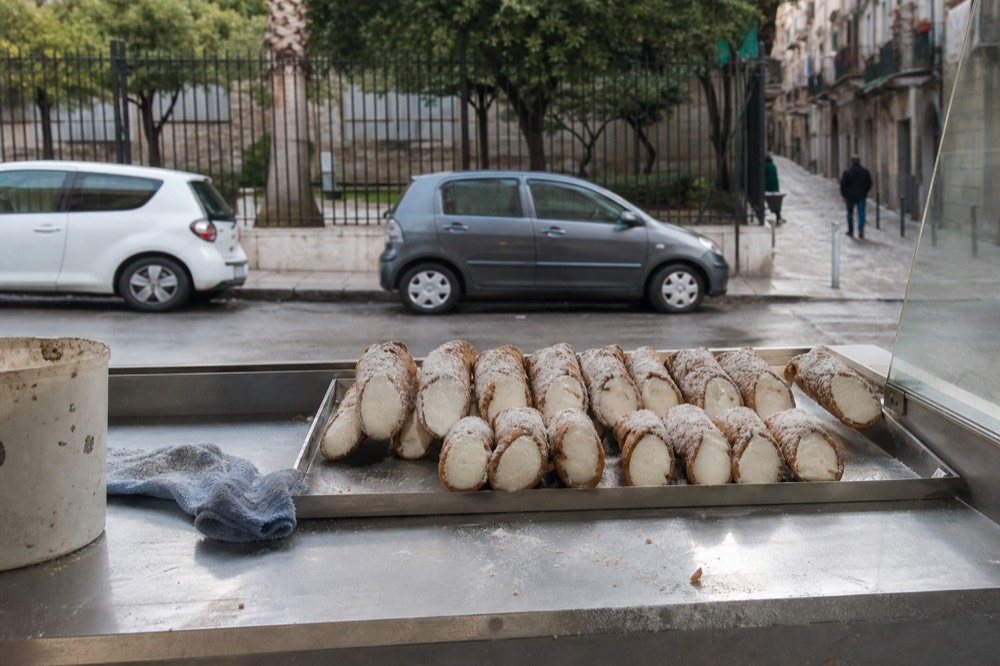
The cannolo question deserves its own honesty. Bourdain spent part of both Sicily episodes arguing about where the best cannoli come from, and the answer he kept running into was not Palermo at all. The official PAT technical sheet for the cannolo alla ricotta lists its production territory as Paceco, Erice, Trapani and Valderice, the Trapani area on the west coast, and the name itself comes from the cane, Arundo donax, around which the fried shell was originally rolled. Locals in Palermo will often send you to Piana degli Albanesi for the real thing. So the closure of Chemi costs you less than you might think: the canonical cannolo was never a Palermo city product to begin with.
| Stop | Episode | What he had | Status |
|---|---|---|---|
| The Capo market | No Reservations, 2005 | Tripe, frittola, spleen sandwich | Open daily, morning and afternoon |
| Pasticceria Chemi | No Reservations, 2005 | Cannoli | Closed |
| Trattoria Piccolo Napoli | Parts Unknown, 2013 | Seafood lunch with Mary Taylor Simeti | Open |
| Osteria Nero D'Avola, Taormina | Parts Unknown, 2013 | Dinner sequence | Closed |
For the market half of the trail, a guided walk is the closest modern equivalent to what Bourdain did with a camera crew and a governor. The Palermo Street Food Walking Tour with Local Guide & Tasting costs from $39.83 per person, runs 2.5 hours, and carries a 4.8 rating across 933 reviews with free cancellation up to 24 hours before. It often sells out, so book ahead in the shoulder months when the market is busiest with visitors.
What Did Bourdain Eat In Palermo, Dish By Dish?
Bourdain's documented Palermo eating consists of tripe, frittola and a spleen sandwich at the Capo market in 2005, a seafood lunch at Trattoria Piccolo Napoli in 2013, and cannoli whose shop he debated and visited on the 2005 shoot. That is the complete list from the episode records.
It is worth being blunt about this because the temptation to pad the list is enormous. Travel content routinely attributes half of Palermo's street food canon to Bourdain. The episode descriptions name the items above and nothing else. Anything else you read is either someone else's recommendation or invention.
What the list does show is how well chosen it was, deliberately or not. Every savoury item he ate at the Capo belongs to the market's documented street food offer, and several of the canon's neighbouring items are on Sicily's official PAT list of traditional products: panelle, whose production territory on the Regione Siciliana technical sheet is the city of Palermo itself, crocche di patate, arancini di riso and stigghiola. The spleen sandwich, pane con la milza, is the one item the Comune confirms is sold at the Capo but which has no PAT listing and no authoritative definition on file anywhere. It is the most Palermo-specific thing he ate and the least documented.
| What he ate | Where | Episode | What is verifiably known |
|---|---|---|---|
| Tripe | The Capo market | No Reservations, 2005 | Named in the episode record |
| Frittola | The Capo market | No Reservations, 2005 | Named in the episode record |
| Spleen sandwich (pane con la milza) | The Capo market | No Reservations, 2005 | Listed among Capo street food on the city's tourism portal |
| Cannoli | Pasticceria Chemi | No Reservations, 2005 | PAT territory is the Trapani area; shell named for the cane it was rolled around |
| Seafood lunch | Trattoria Piccolo Napoli | Parts Unknown, 2013 | Named in the episode recap with Mary Taylor Simeti |
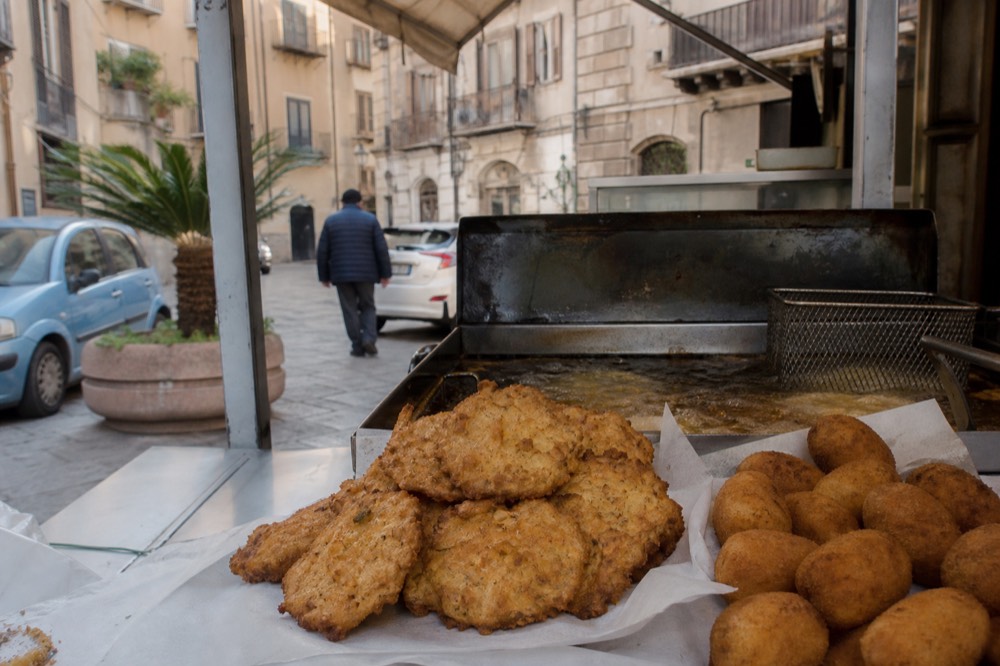
If you want to eat the market half of that list today, you do not need a time machine. The Capo's friggitorie still fry panelle and crocche through the morning, and the spleen sandwich is still hawked from the same lanes. The honest way to describe a visit is that you are eating the same offer Bourdain sampled, not the same plate. Recipes, vendors and fryers change; the canon does not.
Which Palermo Food Tour Covers The Same Ground?
No tour is marketed as a Bourdain tour, but any walk through the Capo market covers the 2005 ground, and a longer tasting walk adds the surrounding street food canon. The Secret Food Tours ten-tastings walk and the Culinary Backstreets markets walk are the two strongest matches on our roster.
The Secret Food Tours option, Palermo Food Tour: 10+ Tastings of Arancini, Cannoli, Wine & More, runs 3 hours 30 minutes from $89.33 per person and carries a perfect 5 rating across 782 reviews, with free cancellation up to 24 hours before and only 12 spots per departure. One guest review praises exactly the mix Bourdain was chasing, food, drinks and culture with a friendly guide, which is the closest thing to his format on the market. It includes the cannoli he spent two episodes arguing about, which closes the loop neatly.
The deeper option is Savoring Palermo: In The Markets and Beyond, run by Culinary Backstreets, 5 hours from $150 per person with a 5 rating across 79 reviews and only 7 spots per departure. It is the tour for someone who watched Bourdain call Sicily a failure and wants to take the time he did not have. Five hours in Palermo's markets, with free cancellation up to 24 hours before, buys you the version of the city he was reaching for.
The through-line of both episodes, and of Bourdain's whole Sicily problem, is that he kept trying to summarise the island and it kept refusing. You do not need to solve Sicily in an afternoon. Eat at the Capo while the hawkers are shouting, sit down for seafood the way he did at Piccolo Napoli, argue about cannoli with whoever is standing next to you, and you will have done the Bourdain trail properly. For everything beyond his two stops, where Stanley Tucci ate in Sicily picks up the story with a rather happier presenter, and Palermo Food Tours covers the rest of the eating the city is famous for.
The short answers: Bourdain ate at the Capo market and Trattoria Piccolo Napoli, Piccolo Napoli is still open, the 2005 cannoli shop is closed, and the Parts Unknown Sicily episode is season 2, episode 5, aired October 13, 2013 on CNN. The questions below cover each of these in full, with the sources behind every claim.
Common Questions About Anthony Bourdain's Palermo Food Stops
Where Did Anthony Bourdain Eat In Palermo?
At two documented stops: the Capo market, where the 2005 No Reservations Sicily episode filmed him eating tripe, frittola and a spleen sandwich with Salvatore Cuffaro, then president of the Sicilian region, and Trattoria Piccolo Napoli, the seafood trattoria he lunched at at in the 2013 Parts Unknown Sicily episode with the food writer Mary Taylor Simeti.
Is Trattoria Piccolo Napoli still open?
Yes. The trattoria Bourdain visited for Parts Unknown in 2013 was still operating in 2026 and remains one of the few television locations of his in Sicily you can book a table at today.
What did Bourdain eat at the Capo market?
Tripe, frittola and a spleen sandwich. The spleen sandwich, pane con la milza, is one of the street foods the Comune di Palermo's tourism portal lists as sold by Capo hawkers, alongside sfincione, panelle and crocche di patate.
Did Bourdain like Sicily?
He loved the food and struggled with the storytelling. His field notes from the 2013 shoot open with "Failure has a smell" and ask why he could not get Sicily right, and in a 2016 interview he called the Parts Unknown Sicily episode a "personal failure", describing himself as "snake bit as far as Sicily".
What episode of Parts Unknown was filmed in Sicily?
Parts Unknown season 2, episode 5, titled "Sicily", first aired on CNN on October 13, 2013. Bourdain based at a villa near Catania and Zafferana Etnea, and his Palermo sequence was the seafood lunch at Trattoria Piccolo Napoli with Mary Taylor Simeti.
Can you do a Bourdain food tour in Palermo?
No tour is sold as one, but the Capo market half of his trail is covered by any market food walk, and the Palermo Street Food Walking Tour with Local Guide & Tasting, from $39.83 per person for 2.5 hours, is the closest match on price and format. It often sells out and offers free cancellation up to 24 hours before.