Capo Market Palermo: What To Eat, When It Is Open, And What To Skip
The Capo is the market that still feeds its own neighbourhood, a tangle of streets behind Porta Carini where butchers, friggitorie and produce stalls trade a short walk from the cathedral. It is also the market where the gap between the official opening hours and the real ones catches the most visitors out.
Short answer
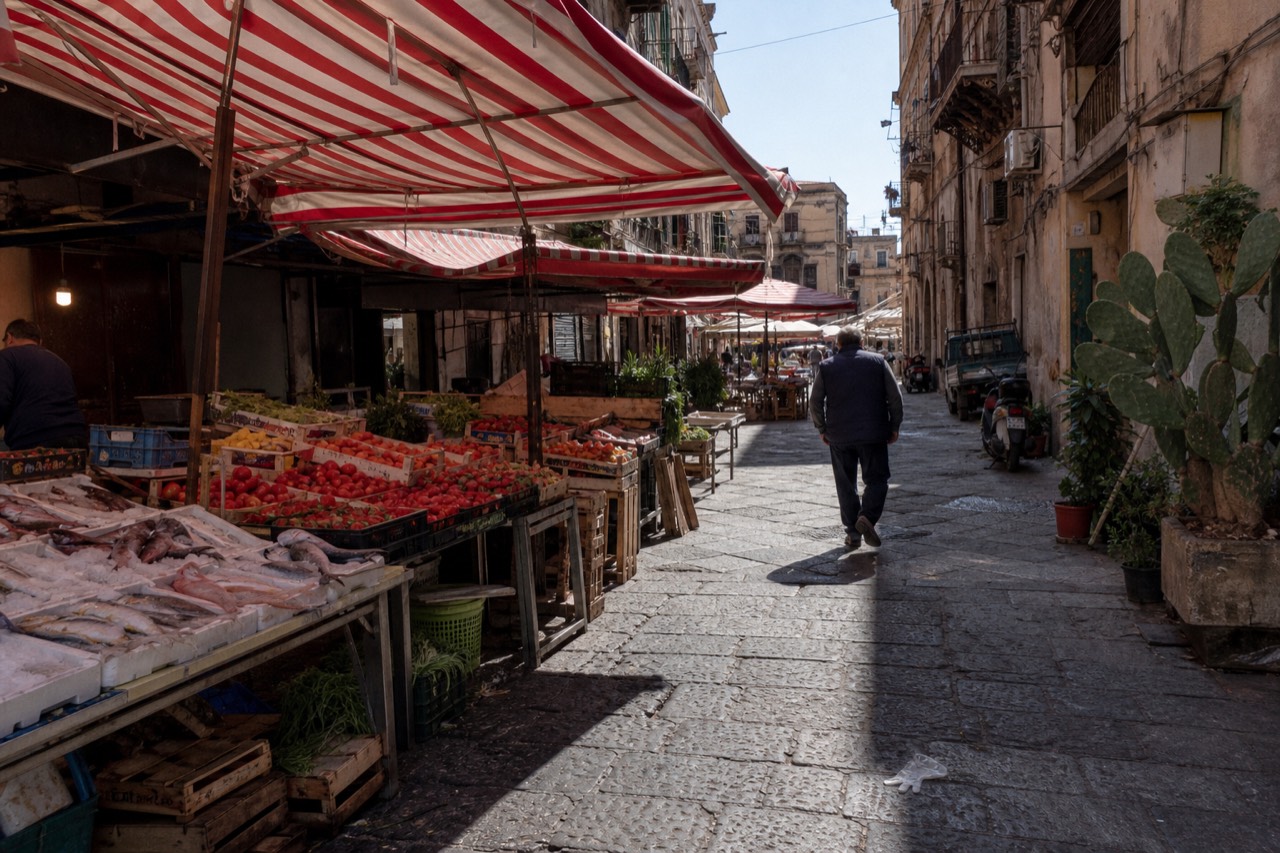
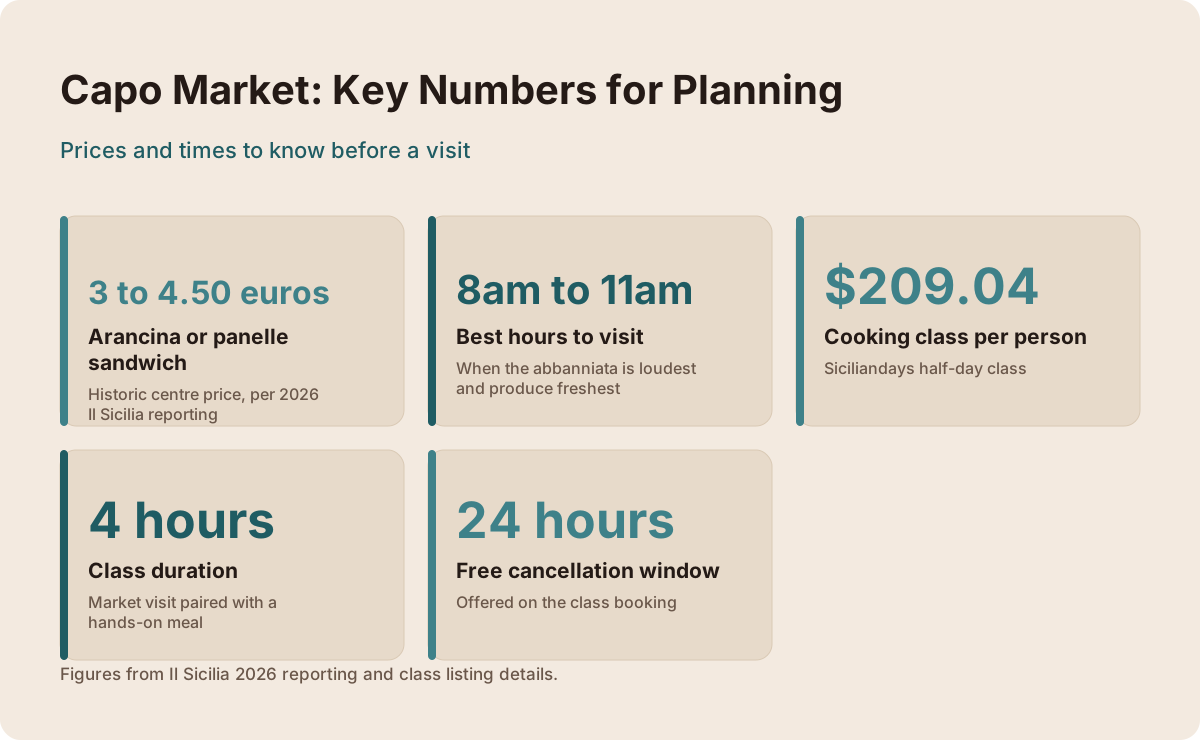
The Capo market trades along via Carini, via Beati Paoli, via Sant'Agostino and via Cappuccinelli in Palermo's Seralcadio quarter, entered through Porta Carini. The city's tourism portal lists it open every day, morning and afternoon, free to enter. Street food sold on the spot includes sfincione, panelle, crocchè and pane con la milza, at roughly 3 to 4.50 euros in the historic centre.
Palermo's tourism portal recognises four historic markets: Ballarò, the Vucciria, the Capo and Borgo Vecchio. Of the three that sit inside the old centre, the Capo is the one that still behaves most like a market for the people who live around it. Traders shout the abbanniata, the Palermitan sales cry the city itself calls folk music, over boxes of produce that the surrounding streets actually cook from. Fish, meat and vegetables dominate the aisles, with a friggitoria never far away when the frying gets urgent.
This guide walks the market street by street: what the Capo is, what is worth eating there, when it genuinely opens, how it compares with its two famous rivals, and what a first-time visitor should know before walking in through Porta Carini. Where a claim rests on the city's own tourism portal or on Italy's official traditional-food register, the source is named, because a lot of what circulates about Palermo's markets is folklore wearing a guidebook's clothes. It is part of the market coverage we publish at Palermo Food Tours, alongside guides to every other historic market in the city.
What Is The Capo Market In Palermo?
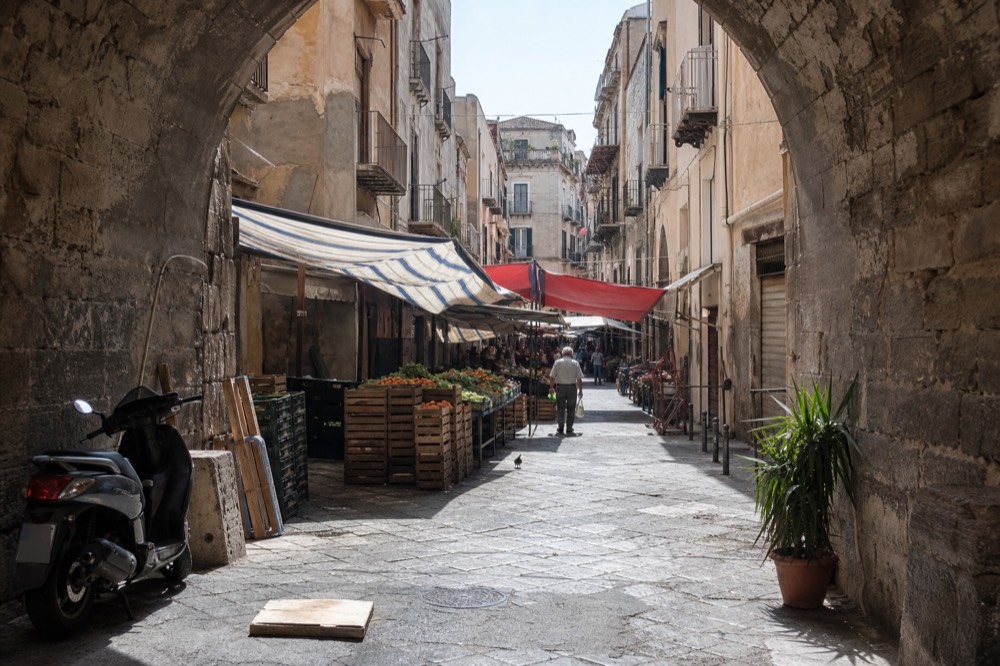
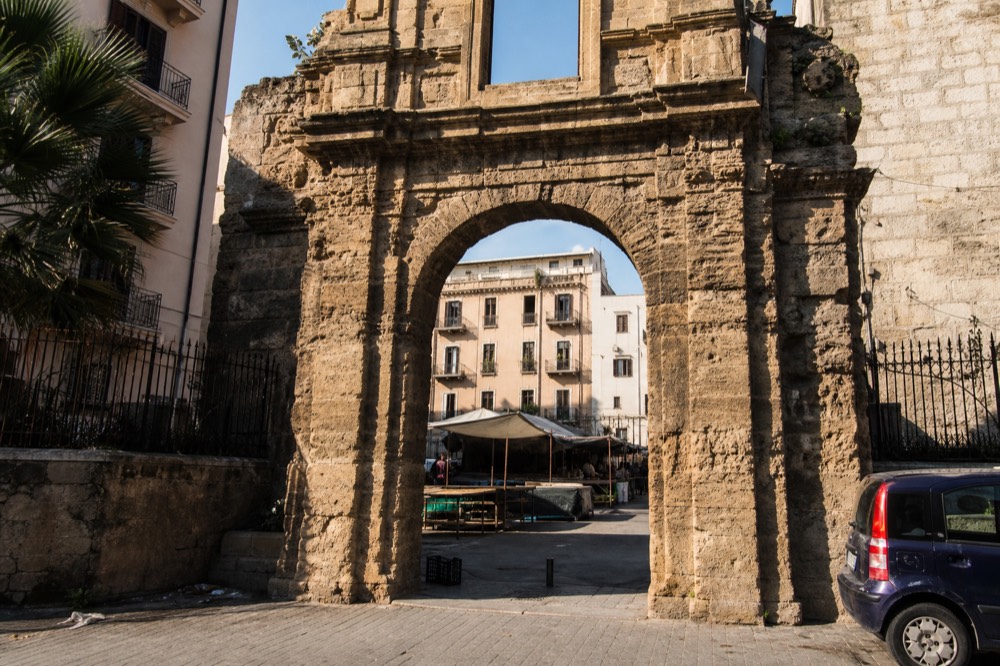
The Capo is Palermo's historic meat-and-produce market in the Seralcadio quarter, running along via Carini and via Beati Paoli between via Sant'Agostino and via Cappuccinelli, with its principal entrance at Porta Carini, the 18th-century gate rebuilt on the model of a 15th-century original. The quarter formed in the Muslim era, according to the Comune di Palermo's own tourism portal, to house the schiavoni, pirates and slave traders of the period, and the Augustinians later settled the area from their convent beside the 14th-century church of Sant'Agostino. The market itself grew up as the city's meat market: the civic slaughterhouse, the bocceria nova, stood nearby, and the butchers' shops here still carry a Spanish-era dialect name, carnezzerie, rather than the standard Italian macellerie.
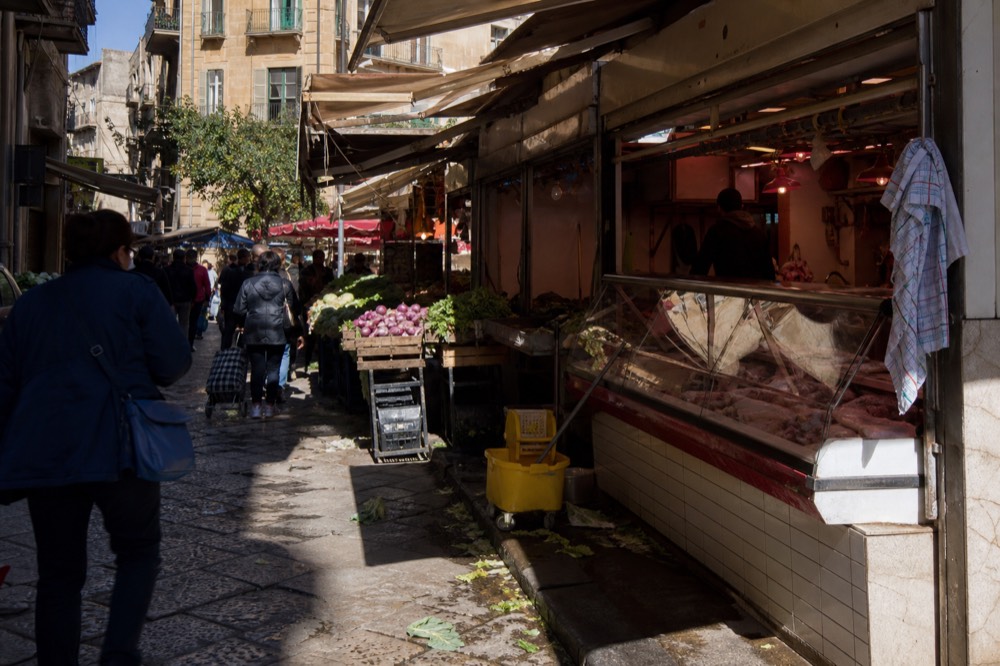
The address the Comune gives is via Cappuccinelli 1, but that undersells the sprawl. The market is a grid rather than a single piazza. Via Carini is the spine, and the lanes off it do the rest: one street of fish, one of butchers, one of fruit and vegetables, with a handful of friggitorie and old bars wedged between. The Palazzo di Giustizia stands close by, which is one reason the area stays busy on weekday mornings with people who are shopping, not photographing.
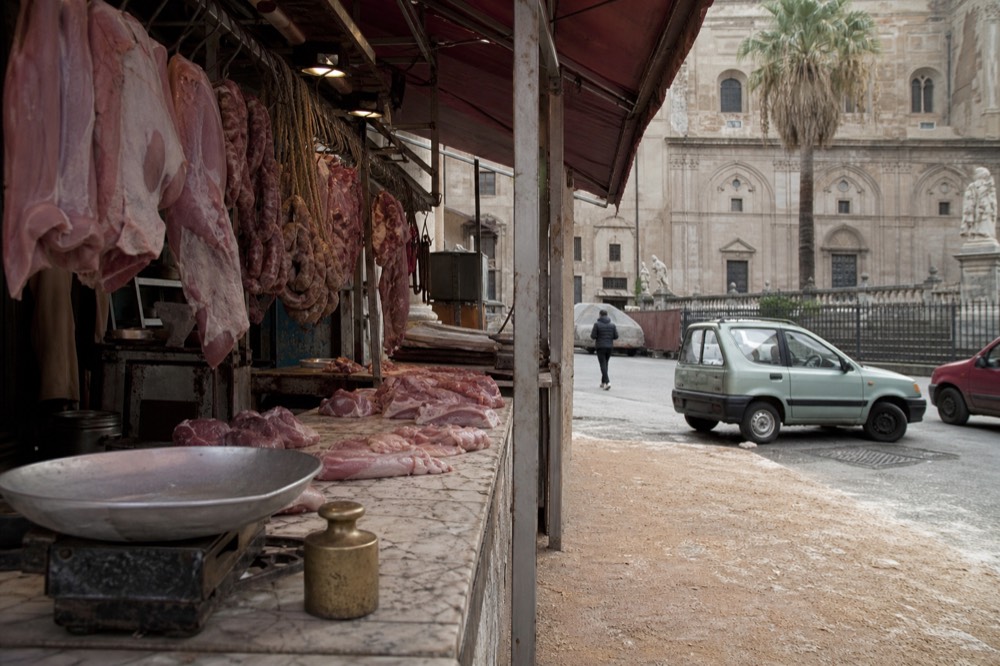
Two details from the Comune's own page are worth carrying with you. First, quarters of meat are still hung outside the shops here, a custom the city attributes to Palermo's former Jewish presence, the hanging being for draining the animal of blood; on certain pre-feast days the same shops display fully skinned kids and lambs, tail tuft kept, arranged as a backdrop. Second, the street food the portal lists for the Capo is specific: sfincione and sfincionello, pane con la milza, pane con le panelle and crocchè di patate. That list is a good map of the market's fried canon, and it comes from the city rather than a blog.
If you are building a whole markets itinerary around the city, the overview in what the four markets actually are covers the full set, and our Palermo markets guide goes deeper on each one.
What Should You Eat At The Capo Market?
Eat the fried canon the city's own portal names for the Capo: sfincione, panelle, crocchè and pane con la milza, ideally at a friggitoria with a queue of locals, and expect to pay roughly 3 to 4.50 euros for an arancina or a panelle-and-crocchè sandwich in the historic centre, per 2026 reporting in Il Sicilia. Of these, panelle and crocchè di patate are both on Sicily's official PAT register of traditional foods, as are arancini di riso, stigghiola and caponata di melenzane, so the market is one of the few places where almost everything in the frying pan carries a state-recognised traditional designation. The full PAT register, 293 products as of the June 2025 regional edition, is published by the Regione Siciliana, and the official PAT technical sheets describe each product's territory and method.
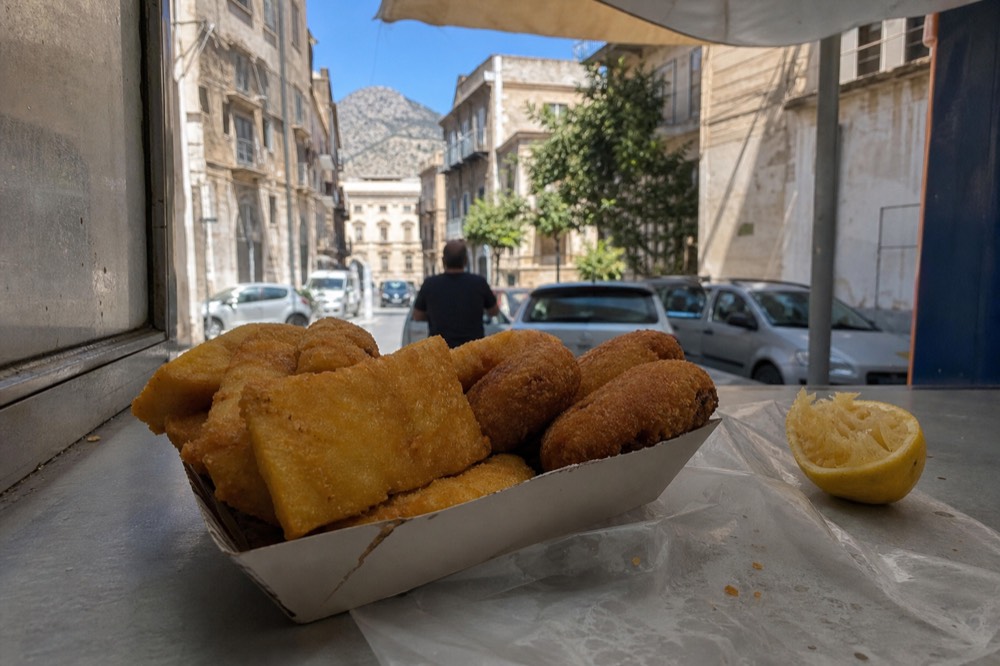
Panelle deserve their own sentence, because they are the one item in the whole street-food canon whose official production territory is Palermo itself. The regional technical sheet specifies a batter of chickpea flour, water, salt and pepper, spread to half a centimetre thick, cut cold into rectangles and deep-fried, then served very hot with freshly ground pepper. A panelle e crocché sandwich, the classic Palermo combination, is lunch as much as a snack.
What to be choosy about. A 2025 first-hand report from a visitor to Palermo's markets found pre-made arancini reheated in a microwave at some stalls, with local replies pointing to specific long-standing friggitorie instead. The lesson is not that the Capo is a trap; it is that the busiest counter with the shortest reheating distance from fryer to hand is the one that earns your euros. A hot sfincione slice cut from a tray that came out of the oven minutes ago is a different product from one that has been sitting under a lamp.
Here is the canon, with what each item is and its status on the official register:
| Item | What it is | PAT status |
|---|---|---|
| Panelle | Chickpea-flour fritters, official sheet specifies half-centimetre thickness, fried and served hot | Listed; territory is the city of Palermo |
| Crocchè di patate | Potato croquettes, usually eaten with panelle in a sesame bun | Listed |
| Arancina | Fried rice ball; in Palermo the word is feminine and the shape round | Listed as "Arancini di riso" island-wide |
| Sfincione | Palermo's thick Sicilian-style pizza, sold by the slice | Listed; red is the Palermo tradition, white is Bagheria's symbol product |
| Pane con la milza | The spleen sandwich the Comune lists for the Capo; the market confirms it is sold here | Not on the PAT list |
| Stigghiola | Lamb intestine wound in caul fat, grilled; the sheet suggests a possible Jewish culinary legacy, phrased as a hypothesis | Listed, with a 72-hour consumption limit |
One naming trap for the confused visitor: say arancina in Palermo, not arancino. The Accademia della Crusca settled the geography in its linguistic consultation on the question: feminine and round in the west, masculine and round or pointed in the east, and neither form is wrong. The same consultation, though, demolished the Arab-origin story that half the menus in town repeat, which is covered in what Sicilians call arancini.
If you want the eating done for you, with a guide choosing the stalls, these are the three approaches that best match a Capo visit:
When Is The Capo Market Open, And Why Do The Closures Catch Visitors Out?
The Comune di Palermo's tourism portal lists the Capo as open every day, morning and afternoon, with free entry, but the practical reality is narrower: current cooking-class listings note the market closed on Mondays, with substitute tastings offered, and much of the trading is effectively over by early afternoon, which is why afternoon and Sunday visitors so often find the stalls winding down. That gap between the official line and the lived one is the single most common way the Capo disappoints people, and it is worth planning around rather than discovering.
The honest framing is this. The city's page describes a market with a full-day rhythm, and some of that is still true: the friggitorie and a few bars trade into the evening because they serve the neighbourhood, not the market crowd. But the produce and fish stalls, the part that makes the Capo a market rather than a street with fryers, work the morning. A 2024 local discussion of the Ballarò area made the same point for that market, noting it closes around 5pm, and visitors to Palermo's markets generally report the mornings as the real trading hours. Cooking classes that use the Capo publish 9am and 10am start times for exactly this reason: the shopping happens before lunch, the cooking after.
The monthly picture matters too. Palermo's climate normals from the World Meteorological Organization put July's average daily high at 29.8 C and August's at 30.5 C, with July the driest month at 6.7mm of rain over 1.2 rain days. A market with no air conditioning is a morning activity in those months by simple physics. Midsummer daylight is generous, over fourteen and a half hours in July, but the useful hours are the early ones.
| Timing question | Official position | Practical reality to plan around |
|---|---|---|
| Days | Comune portal: open every day | Cooking-class listings note Monday closure, with substitute tastings |
| Hours | "Morning and afternoon" per the Comune | Produce and fish trading is concentrated before early afternoon |
| Sunday | Not distinguished on the official page | Reduced trading; go early if you go at all |
| Best hours | Not stated | 8am to 11am, when the abbanniata is loudest and the produce freshest |
| Summer adjustment | Not stated | Shift earlier; July and August average highs near 30 C |
A cooking-class-and-market morning is the most closure-proof way to see the Capo, because the operator has already absorbed the schedule risk. The Siciliandays half-day class pairs the market visit with a hands-on meal, runs 4 hours from $209.04 per person, and offers free cancellation up to 24 hours.
How Does The Capo Compare With Ballarò And The Vucciria?
The Capo is the most food-focused of the three central markets: Ballarò is the biggest and oldest, sprawling from piazza Casa Professa to the bastions of corso Tukory in the Albergheria quarter, while the Vucciria has largely ceased to function as a daytime food market and is now regulated as a pedestrian nightlife zone, its pedestrian-area ordinance extended by the Comune to 31 December 2026. PalermoToday reported in March 2025 that traders at the historic markets say they have lost around 80 per cent of their traditional custom, with the Vucciria described in that reporting as effectively gone as a market, the Capo slowly emptying, and Ballarò still alive but visibly transforming. That decline is real, and it is why choosing between the three now matters more than it used to.
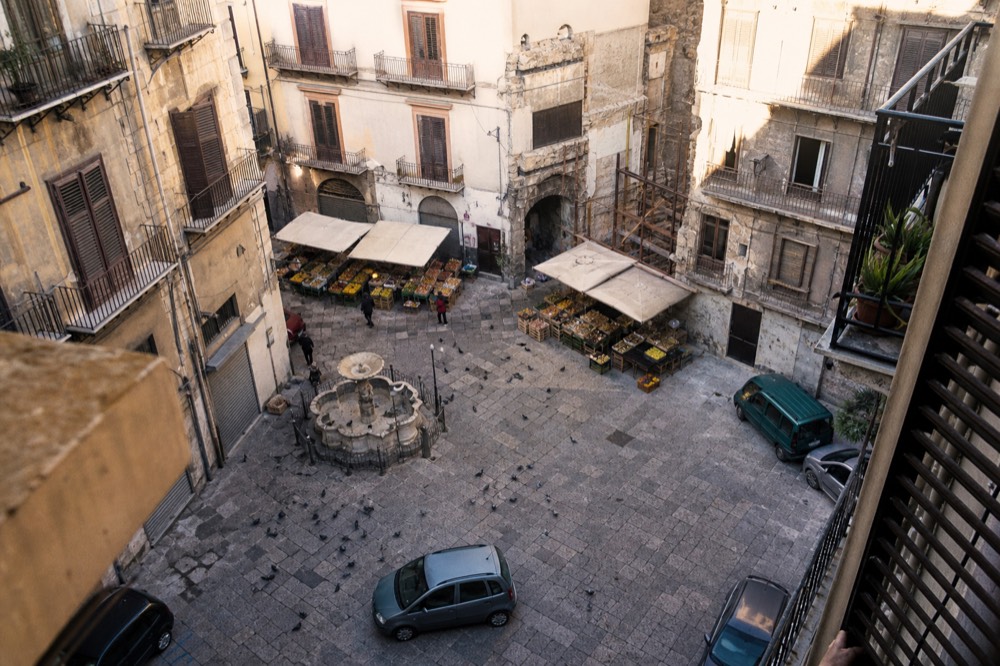
In practice, visitors who walk all three tend to reach the same verdict a 2025 visitor posted after finding some Ballarò stalls reheating pre-made food: the Capo came out best of the three for actual eating and shopping. The Vucciria has its defenders, mostly for its evenings and for Guttuso's famous 3-by-3-metre painting of it, which hangs at the University of Palermo's Steri a short walk away, painted in 37 days in 1974 from produce flown up from the market itself. As a place to buy lunch, though, it is no longer the answer, and our Vucciria market guide covers that story in full.
| Market | Quarter | Official character | Current reality |
|---|---|---|---|
| Capo | Seralcadio | Historic meat market behind Porta Carini | Still the best all-round eating market of the central three |
| Ballarò | Albergheria | The Comune calls it the city's oldest and largest market | Vast, atmospheric, uneven on food quality |
| Vucciria | near via Argenteria | Formerly the great food piazza of old Palermo | Daytime market largely gone; pedestrian nightlife zone to 31 Dec 2026 |
For depth on the biggest of the three, the Ballarò market guide walks that market's own streets and closures. A structured tour is one way to shortcut the quality question, since the guide has already done the vetting. The Eating Europe Ballarò tour, from $68.15 per person with free cancellation up to 24 hours, is rated 5.0 across 139 reviews and keeps to 12 spots per departure.
What Is The History Of The Capo Market?
The Capo's documented history runs through meat: the quarter formed in the Muslim era to house the schiavoni, the Augustinians settled beside their 14th-century church of Sant'Agostino, the civic slaughterhouse known as the bocceria nova stood nearby, and the butchers' shops here still carry the Spanish-era dialect name carnezzerie, a word the Comune di Palermo's tourism portal preserves on its official page for the market. Porta Carini, the market's principal entrance, is itself an 18th-century rebuild on the model of a 15th-century original, and the palazzo di Giustizia nearby anchors the quarter's later civic life.
The hanging meat is the detail most visitors ask about. The Comune attributes the custom of hanging quarters of meat outside the shops to the city's former Jewish presence, for draining the animal of blood. It is one of the few places where the city's own tourism material connects a living market practice to Palermo's layered history rather than to a slogan. The regional PAT sheet for stigghiola makes a comparable, carefully hedged suggestion about that product, calling it very probably a legacy of past Jewish culinary culture; that is an official source offering a hypothesis, not a settled fact, and it should be read that way.
The market's recent history is one of contraction and adaptation. The same March 2025 PalermoToday reporting that documented the traders' 80 per cent loss of custom describes street food for tourists replacing traditional stalls across the historic centre. The Capo's answer has been to lean into what it already did well: the carnezzerie, the friggitorie and the produce stalls that the Seralcadio still shops at. In 2026 the surroundings added rather than subtracted. Antica Focacceria San Francesco, one of the city's historic names in panelle and milza, opened a second location on via Maqueda near Teatro Massimo in mid-April 2026, and Porta Carbone marked its 82nd anniversary at a new via Maqueda outlet with a grill for stigghiola. The old canon is consolidating along the street that connects the Capo to the theatre.
Can You Take A Cooking Class At The Capo Market?
Yes, several Palermo cooking classes build their morning around a historic-market shopping trip, and current listings name Mercato del Capo as the market used: the Siciliandays half-day class and market tour runs 4 hours from $209.04 per person, and the Sicilian Pantry class pairs a market visit near one of the historic markets with a hands-on four-course meal at $115.95 per person, both with free cancellation up to 24 hours. The format is the same everywhere: meet the chef, walk the stalls while they choose the seasonal ingredients, then move to the kitchen and cook what you bought, typically arancini, fresh pasta and cannoli, with wine and a recipe booklet to take home.
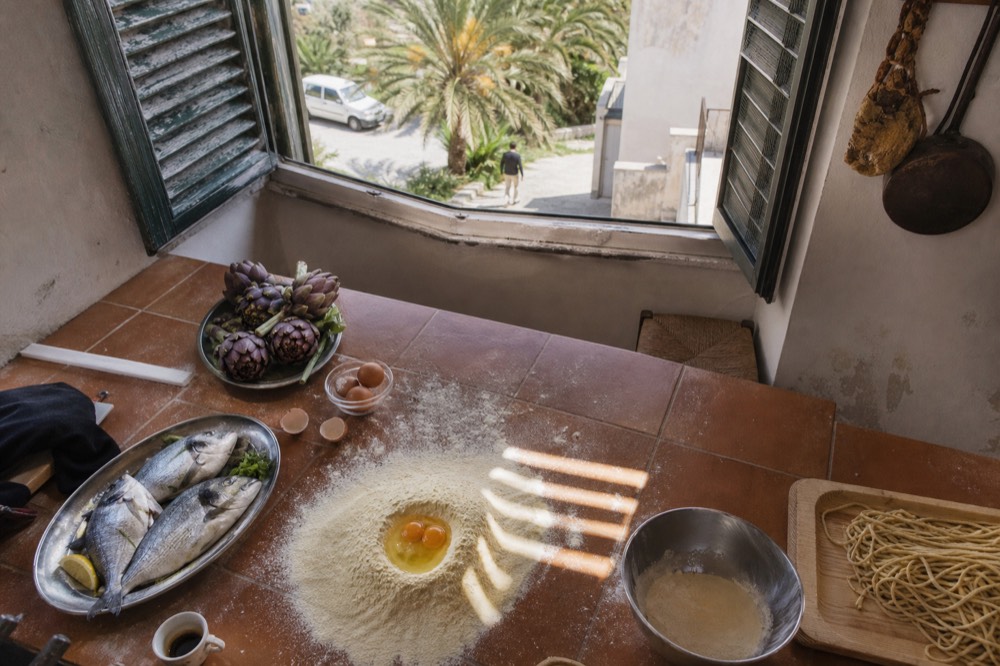
The class route suits the Capo specifically because the market's produce stalls are at their best exactly when classes start, at 9am or 10am in current listings. You get the abbanniata at full volume, the fish still glassy, and a guide who knows which carnezzerie will sell a chef what she needs. Reviews from 2025 and 2026 consistently pick out the hands-on cooking, the market guidance on seasonal produce and the group meal; one 2026 review describes a six-person group at The Sicilian Pantry as the intimate end of the scale.
| Class | Operator | Format | Price | Duration |
|---|---|---|---|---|
| Half-Day Cooking Class & Market Tour | Siciliandays | Market visit plus hands-on cooking | from $209.04 | 4 hours |
| Sicilian Cooking Class | The Sicilian Pantry | Market shopping then four-course meal, 8 spots | from $115.95 | 4 hours 30 minutes |
| Pizza and Gelato Cooking Class | Towns of Italy | Pizza and gelato with dinner and wine, no market | from $60.95 | 3 hours |
The Siciliandays half-day class is the one that leans hardest on the market itself, and it is the class we point people at when the Capo is the reason they are in Palermo.
For a fuller comparison of formats, prices and what each class actually cooks, the Palermo cooking class guide breaks down the whole category, and cooking class and market tour options in Palermo covers the combined format in detail.
What Should You Know Before You Go To The Capo?
Walk there, go early, carry small notes, and know two rules before you arrive: Palermo's historic centre has a limited-traffic zone, the ZTL, active on weekdays from 8am to 8pm and at night at weekends under the summer timetable, so a hire car is a liability; and every food stall is legally obliged to tell you about allergens, a duty that comes from EU food-information rules on non-prepacked food. Both facts are more useful than the usual advice, and both come from primary sources: the Comune di Palermo's own police notice for the ZTL, and the European Commission's food-information legislation page.
On the allergen point, it is worth being direct. Regulation (EU) No 1169/2011, in application since 13 December 2014, made allergen information mandatory for non-prepacked foods, including in restaurants and cafes. A friggitoria frying panelle in shared oil cannot fob off a nut-allergy question with a shrug. Ask, and expect an answer.
The rest is straightforward streetcraft. The market is cash-friendly and always has been; small notes speed up every transaction at a counter with twelve people behind you. Watch your bag the way you would in any crowded southern European market, since pickpocketing in tourist areas is the recurring theme of recent first-hand reports from the city. And do not turn up at 3pm in August expecting the market of the photographs: the numbers below are the honest monthly picture for planning a walking-and-eating day, drawn from WMO climatological normals for Palermo.
| Month | Average daily high | Average rain days | What it means for a Capo visit |
|---|---|---|---|
| April | 18.7 C | 8.6 | Mild but showery; carry a light layer |
| May | 23.3 C | 4.1 | One of the two sweet spots |
| June | 27.2 C | 1.9 | Warm, dry, go before noon |
| July | 29.8 C | 1.2 | Hot and almost rainless; earliest starts |
| August | 30.5 C | 2.4 | The hottest month; morning only |
| September | 27.5 C | 5.4 | The other sweet spot, with more daylight than spring |
One seasonal note that catches planners: on 14 and 15 July the Festino di Santa Rosalia, the city's biggest annual event, sends processions through Corso Vittorio Emanuele, the Quattro Canti and piazza Marina, all within the ground a Capo visit walks. The 402nd edition followed the same pattern. The centre is given over to crowds and celebration, which is either a reason to be there or a reason not to be, but it is not a normal market morning.
If your Palermo days are limited, the questions of how many to spend and what else to fit in are covered in three days in Palermo, and the free-and-cheap options in free things to do in Palermo slot neatly around a market morning.
And when the market morning is done and the afternoon stretches ahead, one option takes the same appetites somewhere entirely different: the vineyards. The Camporeale wine discovery tour at the Sallier de La Tour estate runs 2 hours from $69.68 per person with free cancellation, though note that transport to the estate is not included, so you drive yourself. The Partinico historic-vineyard tasting, from $55.74, works the same way. Both are close enough to Palermo to follow a morning at the Capo with an afternoon among the vines.
Whichever way you build the day, the pairing logic is the same: shop and fry in the morning, when the Capo is most itself, and let the afternoon take care of the wine. Before you go, these are the three approaches that best fit a Capo-centred visit:
The Capo is Palermo's historic meat-and-produce market behind Porta Carini, free to enter, best visited between 8am and 11am, and closed in practice on Mondays; its canon is sfincione, panelle, crocchè and pane con la milza, at roughly 3 to 4.50 euros a serving, and it is generally the best of the three central markets for actual eating and shopping. The questions below cover the details visitors ask most.
Common Questions About The Capo Market In Palermo
What is the Capo market in Palermo?
It is Palermo's historic meat-and-produce market in the Seralcadio quarter, running along via Carini and via Beati Paoli with its principal entrance at Porta Carini. The city's tourism portal describes it as a market that formed in the Muslim era, later shaped by the Augustinians and the nearby civic slaughterhouse, and still known for its butchers' shops, the carnezzerie.
What should you eat at the Capo market?
The Comune's own page names the canon: sfincione and sfincionello, pane con la milza, pane con le panelle and crocchè di patate. Panelle, crocchè, arancine and stigghiola all appear on Sicily's official PAT register of traditional foods. Expect roughly 3 to 4.50 euros for an arancina or a panelle sandwich in the historic centre.
When is the Capo market open, and why do the closures catch visitors out?
The official line is every day, morning and afternoon. In practice, cooking-class listings note the market closed on Mondays with substitute tastings, and most produce trading finishes by early afternoon. Go between 8am and 11am, and shift even earlier in July and August, when average daily highs approach 30 C.
How does the Capo compare with Ballarò and the Vucciria?
Ballarò is the biggest and, per the Comune, the oldest market, but visitor reports find uneven food quality there. The Vucciria has largely stopped functioning as a daytime food market and is now a pedestrian nightlife zone. The Capo is generally the best of the three for actual eating and shopping.
Can you take a cooking class at the Capo market?
Yes. Current listings name Mercato del Capo as the market used by several classes. The Siciliandays half-day class and market tour runs 4 hours from $209.04 per person, and The Sicilian Pantry class runs 4 hours 30 minutes from $115.95, both with free cancellation up to 24 hours.
Is the Capo market free to enter?
Yes, entry is free, as the Comune di Palermo's tourism portal states for all four historic markets. You pay only for what you eat and buy, which makes it one of the cheapest mornings in the city, covered further in our guide to free things to do in Palermo.