Ballarò Market In Palermo: Opening Hours, The Route In, Safety And What To Eat
Ballarò is the only one of Palermo's four historic markets for which the city publishes exact clock times, and it is the one every related search asks the same three questions about: when it opens, how to walk in, and whether it is safe when it is busy.
Short answer
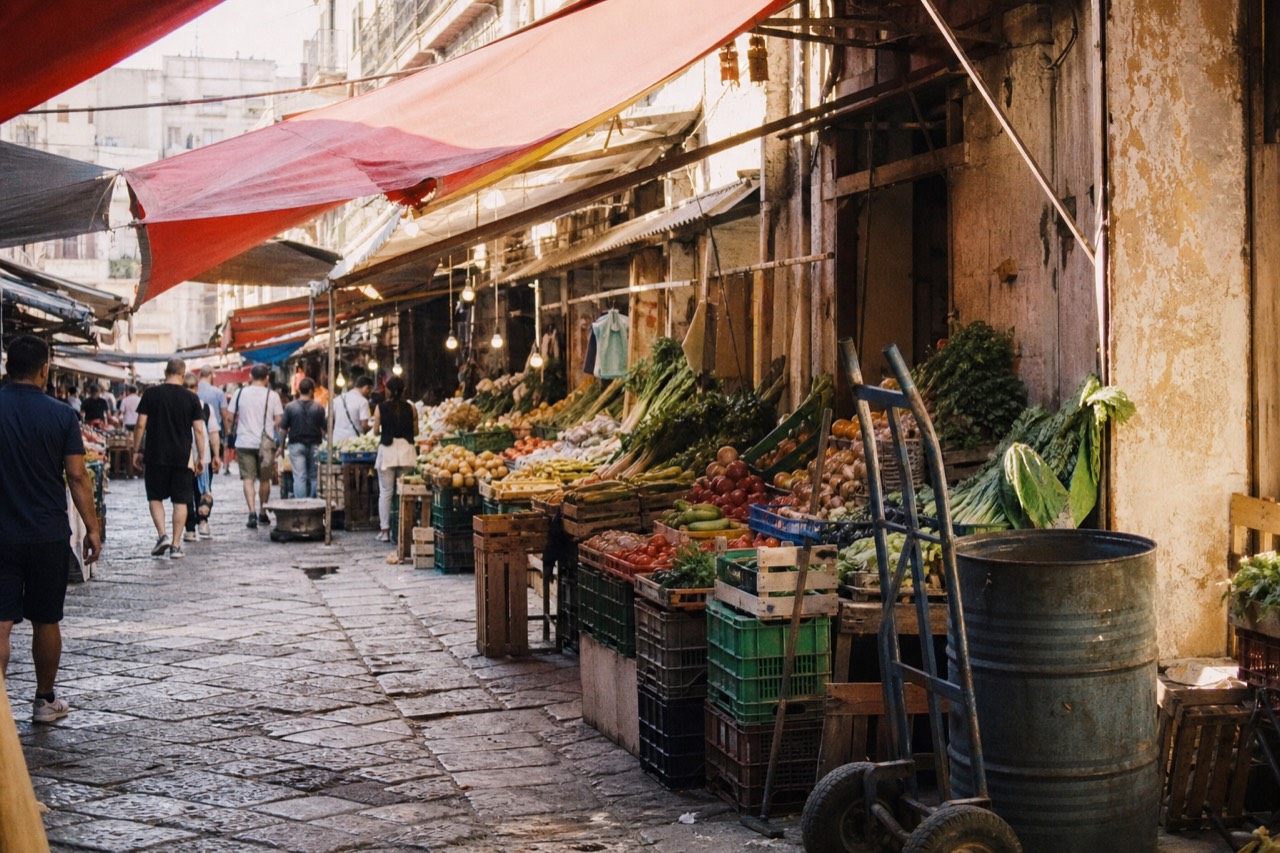
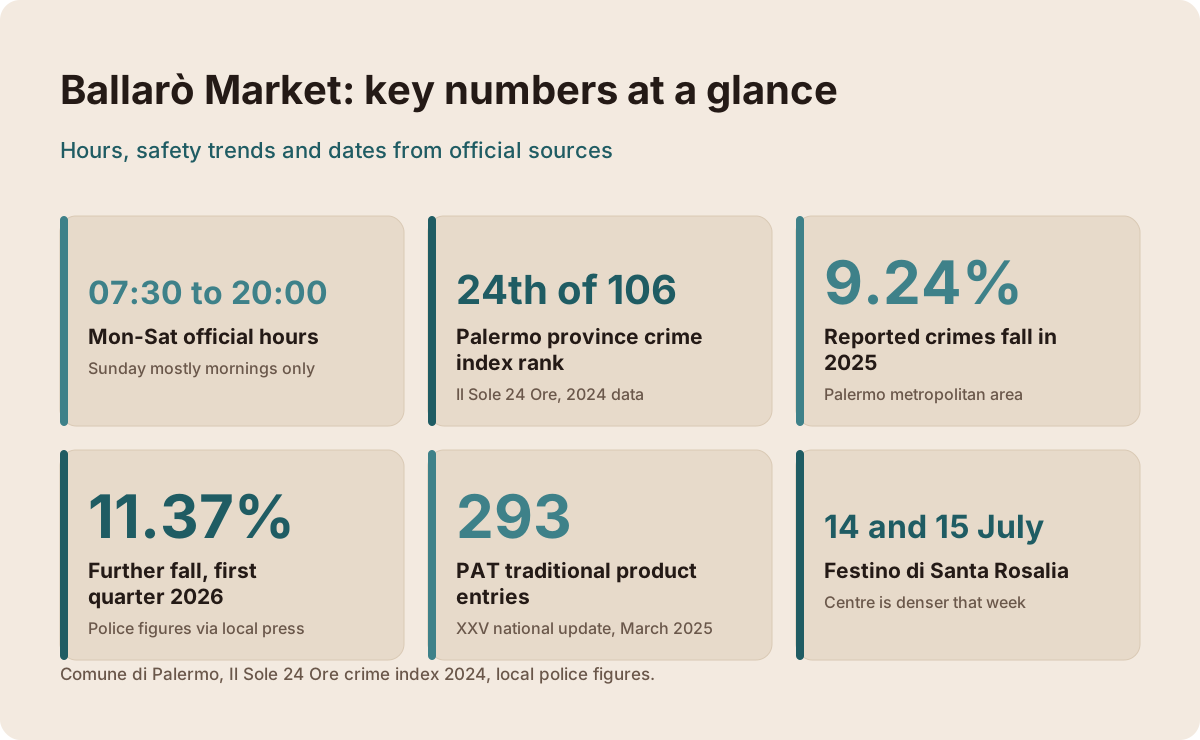
Ballarò Market opens Monday to Saturday from 07:30 to 20:00, with Sunday trading mostly in the morning, per the Comune di Palermo. It sits in the Albergheria quarter, running from piazza Casa Professa to the bastions of corso Tukory, and plan it as a daytime visit.
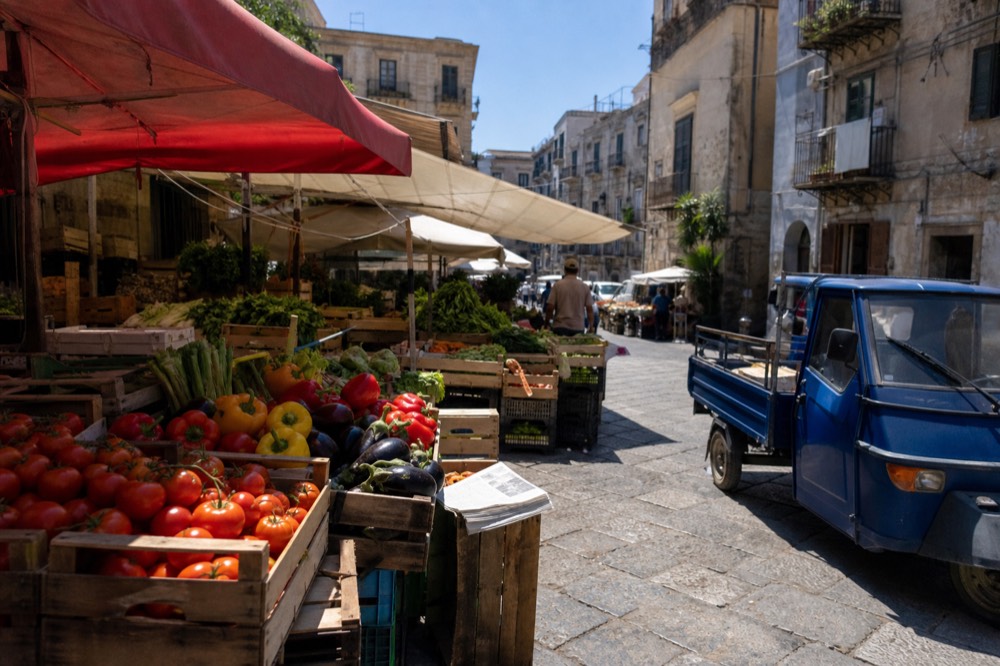
Ballarò is the market most first-time visitors to Palermo end up in, and it is also the one surrounded by the most repeated half-truths. The city's own tourism portal calls it the oldest and largest market in Palermo, a characterisation worth repeating only with that attribution, since no scholarly founding date sits behind it. What can be stated plainly is practical: Ballarò trades in the Albergheria quarter, stretches from piazza Casa Professa to the bastions of corso Tukory, and is the only one of the four historic markets whose official page publishes exact opening and closing times.
The name itself is genuinely unsettled. The Comune offers three competing etymologies and prefers none of them: from Bahlara, a village near Monreale from which goods came; from Ag-Vallaraja, a title of the sovereigns of the Indian region of Sind, because spices from the Deccan were supposedly sold here; or from Segeballarath, meaning fair or market. This page is part of the market series on Palermo Food Tours, and it sticks to what the official record and current reporting actually support: hours, routes, safety, food and tours.
What Are Ballarò Market's Opening Hours?
Ballarò trades Monday to Saturday from 07:30 to 20:00, and on Sunday mostly in the morning only, according to the Comune di Palermo's own tourism portal, the only source that publishes exact clock times for the market. Those hours make it the most flexible of the city's four historic markets: early enough for the produce and fish trade, late enough to visit after the museums close.
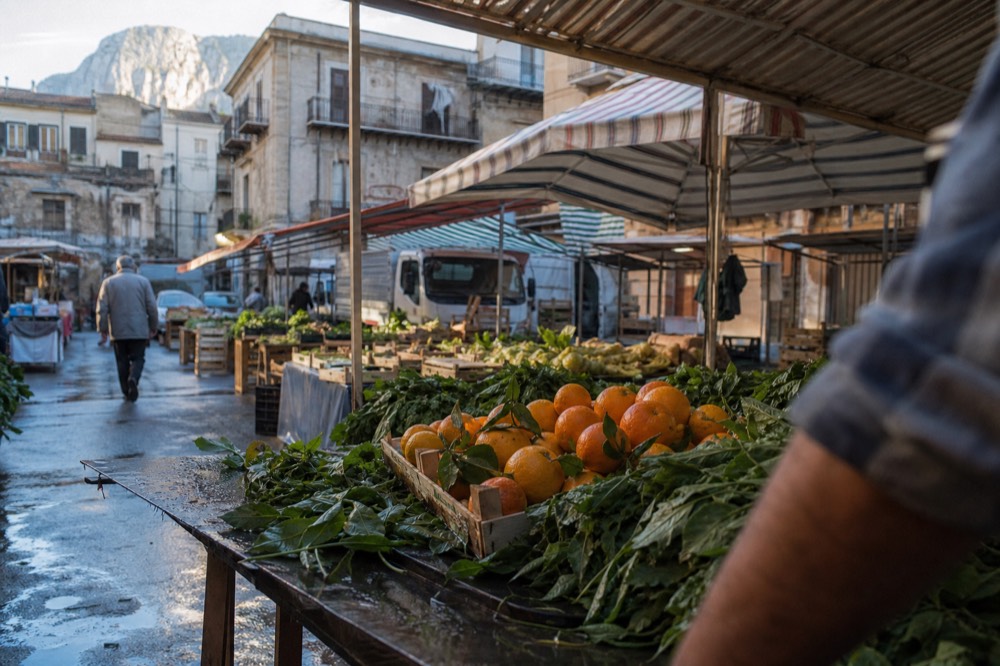
The official hours come from the Comune di Palermo's market page, and they are the single most useful practical fact about Ballarò. Monday to Saturday, 07:30 to 20:00. Sunday, predominantly mornings only. That is the whole official record, and it is worth holding onto because the other three historic markets get vaguer descriptions from the same portal.
Two honest caveats belong next to those numbers. First, official hours describe when the market as an institution trades, not when every stall is at its best: the fish and produce trade happens early, and recent first-hand visitor reports describe the market winding down in the late afternoon, well before the official 20:00. Second, the hours describe the outdoor market. The new covered market beside piazza del Carmine is a separate story, built but not yet trading, covered in full further down this page.
How the four markets compare on the official record:
| Market | Official hours | Quarter | Note |
|---|---|---|---|
| Ballarò | Mon-Sat 07:30-20:00; Sun mostly mornings | Albergheria | The only market with published clock times |
| Capo | Every day, morning and afternoon | Seralcadio | Historically the meat market |
| Vucciria | Every day, morning and afternoon (official description) | Loggia | Current reality differs; see below |
| Borgo Vecchio | Mornings | Behind the Politeama | Morning market only |
The Vucciria line needs a flag. The Comune's page still describes a market open all day, but PalermoToday reported in March 2025 that the Vucciria is, in its reporter's words, essentially gone as a daytime food market, with the Capo emptying slowly and Ballarò alive but visibly transforming. Both things are true at once: the official description and the street-level reality. Ballarò is the one where the gap between the two is smallest.
What Is The Best Walking Route Into Ballarò Market?
The market runs through the Albergheria quarter from piazza Casa Professa to the bastions of corso Tukory, and the practical answer is to arrive on foot: Palermo's historic centre has a restricted traffic zone active on weekday days and weekend nights, so a hire car is a liability, and the main streets around the market, corso Tukory and via Maqueda, are the ones locals themselves recommend sticking to.
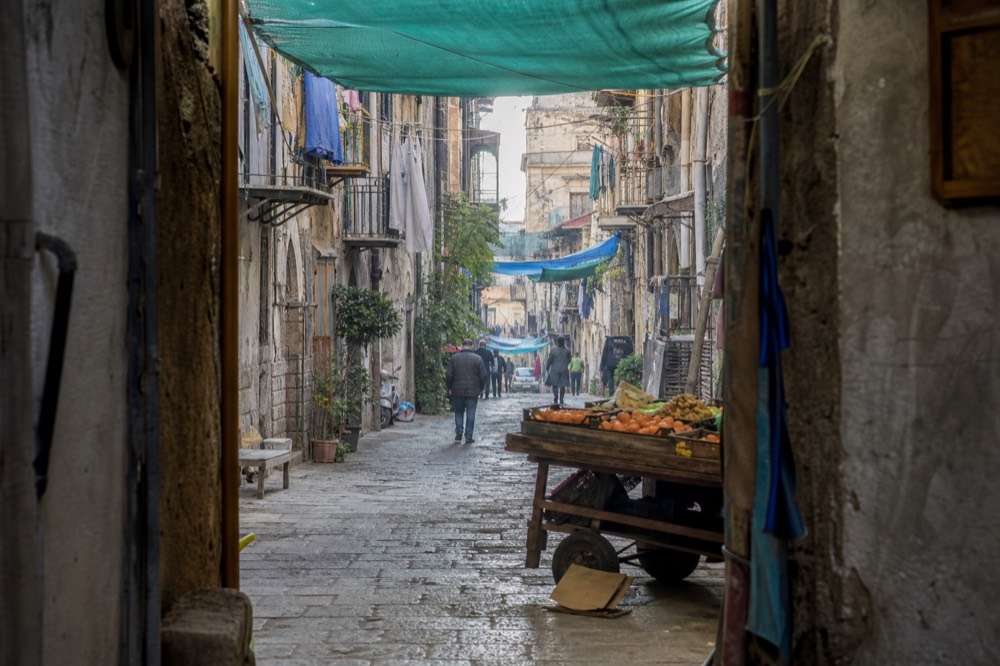
Ballarò's extent is officially given as piazza Casa Professa to the bastions of corso Tukory, in the Albergheria, the quarter that wraps around the market on the inland side of the historic centre. The market grew, on the Comune's own account, as the destination for early produce and for everything arriving from the surrounding countryside or from non-European countries, and the city attributes its origins to the era of Arab domination, again a characterisation rather than a dated fact.
The driving question resolves quickly. Palermo's Zona a Traffico Limitato covers the historic centre, and the summer timetable published by the city's traffic police runs until 31 October 2026:
| Day | ZTL hours (summer timetable) |
|---|---|
| Monday to Thursday | 08:00-20:00 |
| Friday | 08:00-24:00 |
| Saturday | 00:00-06:00 and 20:00-24:00 |
| Sunday | 00:00-06:00 |
The winter timetable differs, so check the Comune's notice page before relying on these hours outside summer. The durable version of the fact is simpler: the ZTL is active during the day on weekdays and at night at weekends, which is why nearly every Palermo food tour is a walking tour by design. A hire car parked outside the centre and retrieved later works; driving to the market does not.
On foot, the approach matters less than the streets you keep to once inside the web of lanes. Recent first-hand reports from visitors and locals converge on the same advice: corso Tukory and via Maqueda, the broad main streets that frame the Albergheria, stay busy and comfortable through the day, while the side streets inside the market are best explored in daylight. That is not a warning about Ballarò specifically, it is the ordinary geometry of any dense market quarter, and it sets up the safety question properly.
If you would rather have someone else handle the route and the stall-picking, three market-focused options cover this ground well:
Is Ballarò Market Safe When It Is Busiest?
Yes, in the conditions most visitors actually experience it: Ballarò is busiest on weekday and Saturday mornings, when the market is full, the lanes are crowded and the atmosphere is ordinary market noise. The honest caveat is about timing rather than place: trading winds down from late afternoon, the lanes are poorly lit, and recent visitor reports describe the area around the market as uncomfortable after dark, so plan Ballarò as a daytime visit.
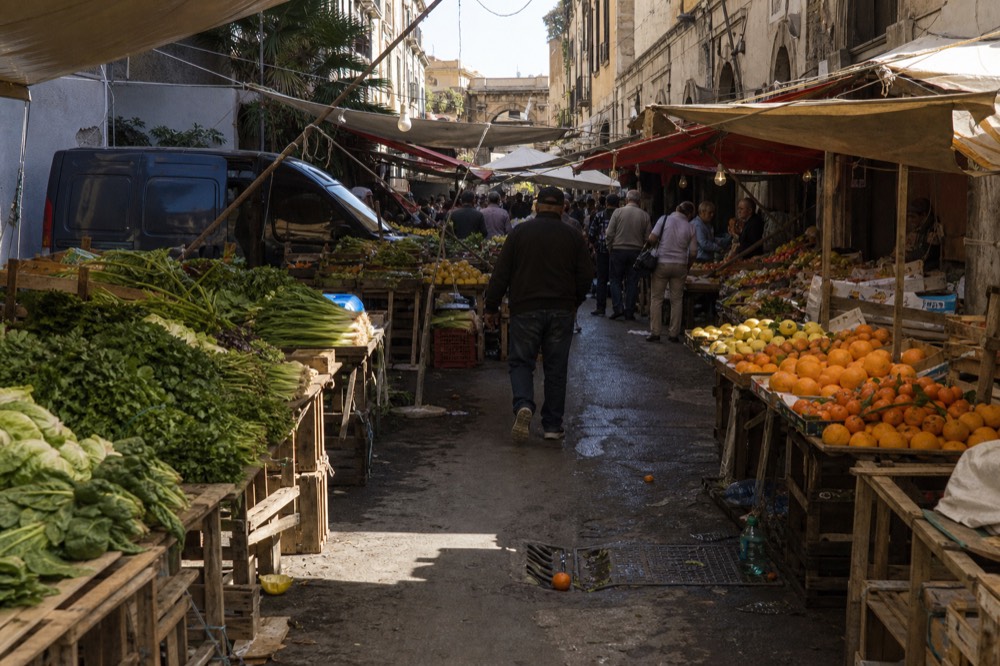
The busiest hours are the safest hours, and that is not a coincidence. When the fish stalls are turning over stock and the friggitorie are frying, the lanes are full of shoppers, and a crowded market is a market with eyes on it. The pattern reported by visitors is consistent: lively and unremarkable through the morning, thinning after lunch, quiet and poorly lit by evening. One recurring piece of local advice on the side streets is simply to keep to the main streets, corso Tukory and via Maqueda, once the stalls close.
The statistics back the calm reading. The Il Sole 24 Ore crime index, using 2024 data, ranked Palermo province 24th of 106 Italian provinces for reported crimes per capita, and police figures reported by local press show reported crimes in the Palermo metropolitan area falling 9.24% in 2025 and a further 11.37% in the first quarter of 2026. The ordinary big-city caution applies: pickpocketing in crowded tourist areas is the recurring incident type in first-hand reports, so bags in front, as in any European city.
One more timing note worth knowing before you lock plans: the Festino di Santa Rosalia, the city's biggest annual event, falls on 14 and 15 July, when the historic centre's main axis fills with processions and crowds. The route runs along Corso Vittorio Emanuele, the Quattro Canti and Piazza Marina, streets that frame rather than pass through Ballarò, but the whole centre is denser that week. If your dates are flexible, that week is the one to either embrace or avoid deliberately.
If a five-hour walk through the markets with a local guide sounds like the comfortable way to do this, the question answers itself:
What Should You Eat At Ballarò Market?
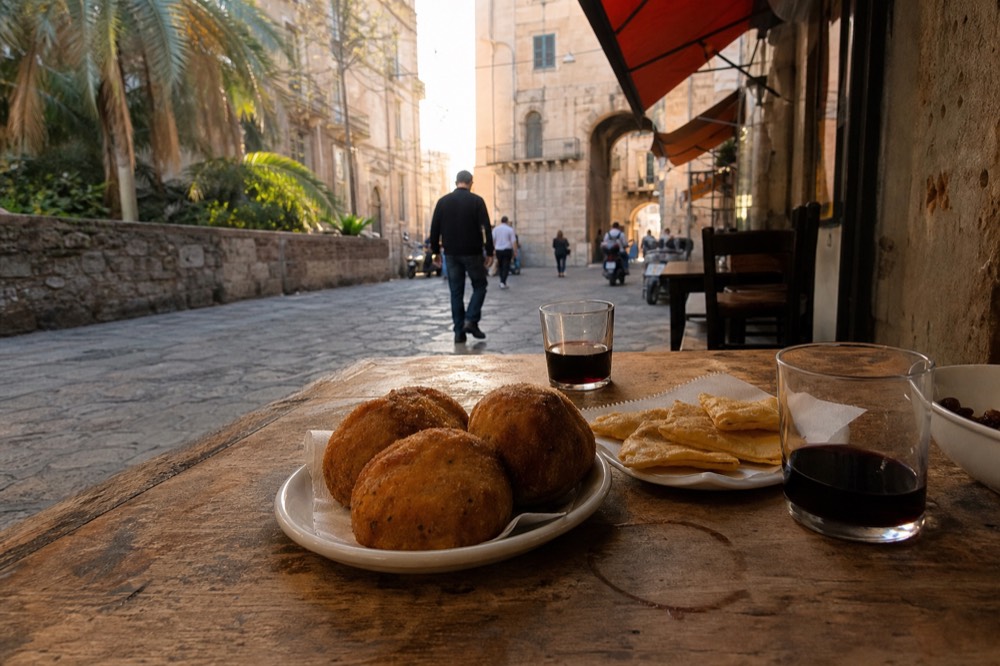
The PAT-listed Palermo canon is all here: panelle, the chickpea fritters whose official production territory is the city of Palermo itself, crocchè, arancine, sfincione and stigghiola, plus cannoli and the Palermo-native iris for anyone with room left. Quality varies stall to stall, and recent first-hand reports describe pre-made arancine reheated at some stalls, so the working rule is to buy where the frying happens in front of you and the queue is local.
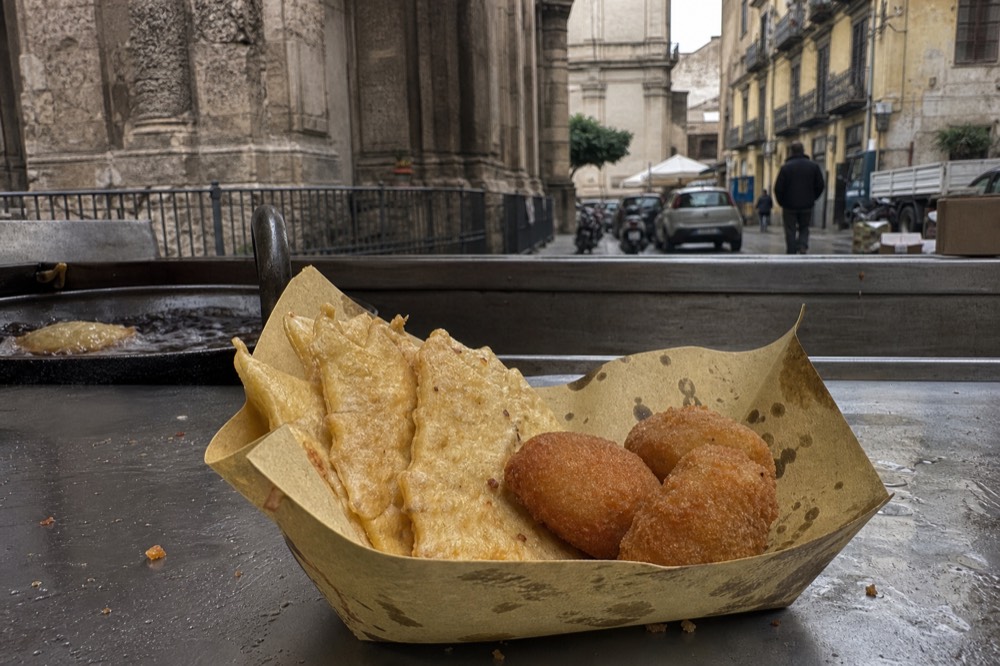
The official record is more specific than most food writing about Palermo, and it is worth using. Sicily maintains a national list of traditional products, the PAT, with 293 entries as of the XXV national update in March 2025, and the Palermo street-food canon is well represented on it. The technical sheets even fix details: the panelle sheet is spread to half a centimetre thick before being cut and fried, and panelle is the one canon item whose official production territory is Palermo city itself.
What the official sheets say about the canon you will find at Ballarò:
| Item | What the official record says |
|---|---|
| Panelle | Chickpea flour batter, spread half a centimetre thick, cut and deep-fried; production territory is the city of Palermo |
| Crocchè di patate | Potato croquettes, listed among Sicily's traditional gastronomy products |
| Arancini di riso | The PAT name; a rice ball, typically spherical, filled with meat or ham and mozzarella or spinach |
| Sfincione | Listed in the bakery category; the Comune di Bagheria calls white sfincione its symbol product, with red the Sicilian tradition |
| Stigghiola | Lamb intestine and caul fat with onion and pancetta; the sheet gives it a 72-hour shelf life |
| Iris | A Palermo-territory item: round sweet fried dough filled with ricotta cream |
| Cannoli | A caveat worth knowing: the PAT sheet's production territory is the Trapani area, Paceco, Erice and Valderice, not Palermo |
Two pieces of information gain hide in that table. The arancina you eat in Palermo is feminine and round because that is the form that follows standard Italian grammar, while Catania's masculine arancino follows the Sicilian dialect, a finding set out by the Accademia della Crusca, which also notes that the earliest 19th-century records describe a sweet rice dish, not the savoury item everyone now eats. And the cannolo, despite being everywhere in Palermo, is officially a Trapani-area product on the PAT sheet, its shell originally rolled around a piece of cane.
The quality question deserves straight talk. A visitor report from September 2025 described buying arancine at Ballarò that turned out to be pre-made and microwaved, and the replies from locals were blunt: go where the frying happens in front of you. The names that come up repeatedly in that local advice include Passami u Coppu, nni Franco u Vastiddaru, Basile, I Cuochini and Bar Vabres, several of them on or near via Maqueda rather than inside the market itself. Our guide to where locals eat in Palermo collects this thread in full, and the best food in Palermo guide covers the sit-down side.
On price, local press reporting in May 2026 put an arancina or a panelle-and-crocchè panino at 3 to 4.50 euros in the historic centre, roughly double the 2021 level, an increase the paper attributed to tourism-driven change. That is the honest planning range: Ballarò is no longer the cheap-everywhere market it once was, though it remains far below restaurant prices.
A guided option takes the stall-picking risk out of the equation. Eating Europe's Ballarò market walk runs 3 hours from $68.15 per person, rated 5 across 139 reviews, with free cancellation up to 24 hours and only 12 spots per departure.
Which Food Tours Visit Ballarò Market?
Two listings name Ballarò explicitly: Eating Europe's Ballarò Market and Street Food Tour from $68.15 per person, and Alessandro Morreale's Ballarò and Vucciria walk from $92.91. Several broader market tours cover it among Palermo's historic markets. Prices across the market-tour roster run from $39.83 to $150 per person, and 19 of the 22 tours on this site allow free cancellation up to 24 hours, which matters when plans depend on weather.
The roster at a glance, with the Ballarò-named tours first:
| Tour | Operator | Rating | From (pp) | Duration | Cancellation |
|---|---|---|---|---|---|
| Street Food Tour in Ballarò and Vucciria Markets | Alessandro Morreale | 5 across 17 reviews | $92.91 | 3 hours | Free, up to 24h |
| Ballarò Market and Street Food Tour | Eating Europe | 5 across 139 reviews | $68.15 | 3 hours | Free, up to 24h |
| Savoring Palermo: In The Markets and Beyond | Culinary Backstreets | 5 across 79 reviews | $150 | 5 hours | Free, up to 24h |
| The Original Palermo Street Food and Market Tour | Streaty Food Tours | 4.9 across 2308 reviews | $81.64 | 3 hours | Non-refundable |
| Palermo on a Plate: Traditional Food and Wine | Streaty Food Tours | 5 across 125 reviews | $117.13 | 4 hours | Non-refundable |
| Half-Day Cooking Class and Market Tour | Siciliandays | 4.8 across 63 reviews | $209.04 | 4 hours | Free, up to 24h |
| Street Food Walking Tour with Local Guide and Tasting | Hili srl | 4.8 across 933 reviews | $39.83 | 2.5 hours | Free, up to 24h |
The cancellation column is the sharpest decision axis on the whole site, and it deserves honest treatment: 3 of the 22 tours, all of them Streaty products, are non-refundable, and the other 19 cancel free up to 24 hours before departure. If your Ballarò morning sits at the start of a trip with moving parts, that difference is worth more than a few dollars of price.
For depth rather than breadth, the standout is Culinary Backstreets' Savoring Palermo, five hours in the markets and beyond at $150 per person, rated 5 across 79 reviews, with only 7 spots per departure, the smallest cap on the roster. It is the tour for visitors who want the market explained as a working institution rather than delivered as a tasting list, and its free cancellation up to 24 hours removes most of the planning risk.
If you want to leave the market with a skill rather than a full stomach, the cooking-class route pairs a market visit with a hands-on session. Siciliandays' half-day class and market tour runs 4 hours from $209.04 per person, rated 4.8 across 63 reviews, with free cancellation up to 24 hours; per the operator's listing, the market stop on Palermo cooking classes generally runs at Mercato del Capo, on the other side of the centre, so treat it as a market-and-cooking day rather than a Ballarò-specific one.
For the two-market walk in one outing, the Ballarò and Vucciria market walk covers both markets in 3 hours from $92.91 per person, and you can Check availability on the operator's live listing. It is a small-operator product, 5 across 17 reviews, and the free cancellation up to 24 hours makes it easy to slot around a Festino week or a cruise day.
When Is The Best Month To Visit Ballarò Market?
May, June and September are the walking-market sweet spots: WMO climatological normals for Palermo put May at a 23.3 C average daily high with 4.1 rain days, June at 27.2 C with 1.9, and September at 27.5 C with 5.4. July is nearly rainless, 6.7 mm across 1.2 rain days on average, but it is also Festino month, when the historic centre fills with processions on 14 and 15 July.
The numbers behind that answer, from the World Meteorological Organization's published normals for Palermo:
| Month | Mean daily high (C) | Mean rain days |
|---|---|---|
| January | 14.7 | 9.0 |
| February | 14.5 | 9.6 |
| March | 16.4 | 8.7 |
| April | 18.7 | 8.6 |
| May | 23.3 | 4.1 |
| June | 27.2 | 1.9 |
| July | 29.8 | 1.2 |
| August | 30.5 | 2.4 |
| September | 27.5 | 5.4 |
| October | 23.5 | 8.2 |
| November | 19.0 | 10.4 |
| December | 15.8 | 12.0 |
Read the table with the market's own rhythm in mind. August is the hottest month by mean daily maximum, 30.5 C, which pushes everything worth doing into the early morning; since Ballarò's best hours are the morning hours anyway, an August visit simply means starting at 07:30 and being finished by lunch. April looks mild on paper, 18.7 C, but it averages 8.6 rain days, more than double May's 4.1, and a wet awning-covered market is a different experience. The wet half of the year, October through March, carries 632.4 mm of the annual total against 223.1 mm for April through September.
Daylight matters too. A mid-January visit has under ten hours of daylight, with the light gone before 17:15, which turns a morning market into effectively the whole day. A mid-July visit has over fourteen and a half hours, but the middle of the day averages a 29.8 C high, so the early market and a long evening are the usable blocks.
What Is Happening To Ballarò's Covered Market?
A new covered market building, roughly 500 square metres at the piazza del Carmine end of Ballarò, is built but not yet trading: the city council approved its regulation in January 2026, the housing agency handed the keys to the council in May 2026, and the tender for its 31 stalls was suspended in August 2026 for 90 days pending a legal opinion. A fire in the same month damaged the empty structure.
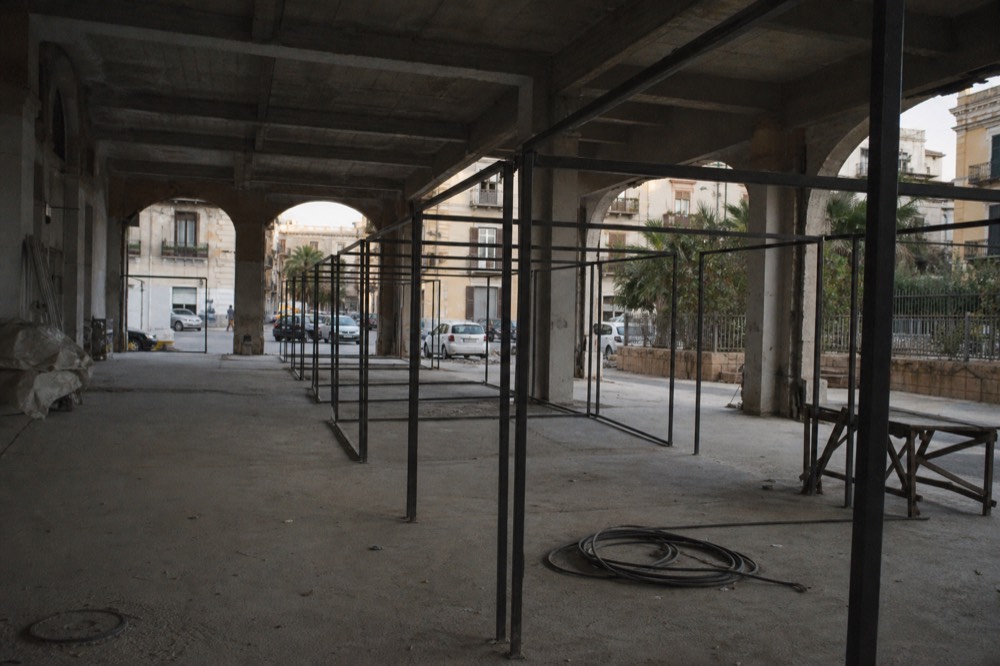
This is the story no ranking page tells, and it explains a lot of what a visitor currently sees. The covered market was funded with 4.7 million euros of EU money, with works completed in 2024 or early 2025, and the plan splits the roughly 500 square metre structure between fish and butcher stalls and agroalimentare retail. In January 2026 the city council unanimously approved a regulation prioritising historical traders, as reported by Balarm, and the same month the regional housing agency formally pressed the city to take delivery of the vandalised building. The keys changed hands in May 2026. Then the tender stalled.
| Date | Event |
|---|---|
| 2024 to early 2025 | Construction works completed on the EU-funded covered market |
| 13 January 2026 | Housing agency formally presses the city to take delivery of the building |
| 15 January 2026 | City council unanimously approves the covered market regulation, prioritising historical traders |
| 29 May 2026 | Keys handed from the housing agency to the Comune di Palermo |
| July 2026 | Tender published for 31 covered-market stalls, part of a city-wide round of roughly 500 |
| 10 August 2026 | Tender suspended for 90 days pending a legal opinion on trader regularisation |
| 18 August 2026 | Fire damages the roof and accumulated waste in the empty building |
None of this affects the outdoor market's opening hours, and a visitor in the next months will still find Ballarò trading as it does. But the saga is the visible edge of a bigger change. PalermoToday reported in March 2025 that the historic markets are shrinking, with traders quoted saying they have lost around 80% of their traditional customers, a figure attributed to the ZTL, parking scarcity and missing services, and with tourist street food replacing the traditional stalls in the paper's telling. That reported shift is exactly why the quality advice in the eating section above matters: the market that greets a visitor in 2026 is more tourist-facing than the one locals describe from a decade ago, and the stalls that still fry to order are the ones worth finding.
How Does Ballarò Compare With Palermo's Other Markets?
Ballarò is the biggest and, on the city government's own description, the oldest of the four historic markets, and the only one with published clock times. The Capo is the meat-and-street-food market, the Vucciria is now mostly nightlife with a daytime rump, and Borgo Vecchio is a morning market behind the Politeama. For a first visit built around eating, Ballarò and the Capo are the two that still trade as markets first.
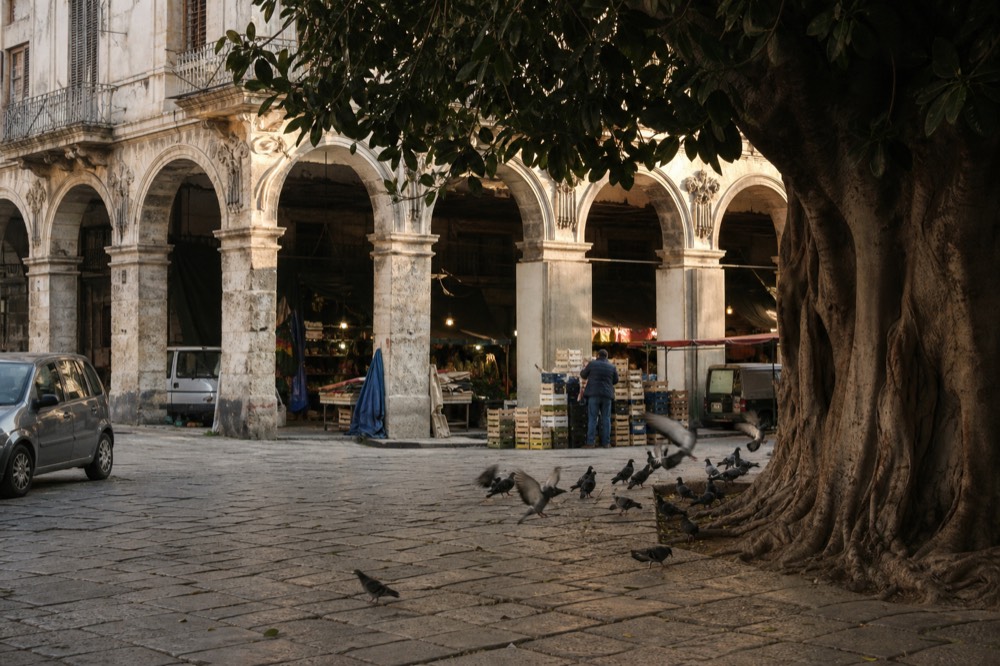
The four markets share an official framing: the Comune's portal describes them as resembling the souks of a Muslim city, notes that some were created during the Arab domination, and gives the hawkers' shouted sales cry its own Palermitan dialect word, abbanniata, calling it part of the show. Beyond that shared DNA they have diverged sharply, and the divergence is the useful thing to know when splitting your time.
The Capo, in the Seralcadio quarter, entered through Porta Carini, is the street-food market on the official record: the Comune lists sfincione, pane con la milza, panelle and crocchè among the hawkers' wares there, and attributes the custom of hanging meat outside the shops to the city's former Jewish presence. Our Capo Market guide covers it in detail. The Vucciria is the cautionary tale: the city's pedestrian-area ordinance keeps piazza Caracciolo traffic-free through 31 December 2026, but the daytime food market has contracted into an evening and nightlife scene, a change PalermoToday described bluntly in its March 2025 reporting. Borgo Vecchio, dated firmly to 1556 in the Comune's own account, trades mornings only, and the city itself notes the quarter's gentrification around its pubs and taverns.
For a budget first taste of the market circuit, the cheapest guided option on the roster is Hili's street food walk with tastings, 2.5 hours from $39.83 per person, rated 4.8 across 933 reviews, with free cancellation up to 24 hours. It often sells out, which at that price is not a surprise.
The full picture of all four, including the ones this page only sketches, is in our guide to Palermo's historic markets. If Ballarò is your anchor, the practical summary is short: go in the morning, eat where the frying is visible, keep to the main streets after the stalls close, and treat the covered market as a story still being written rather than a stop on your walk.
Ballarò opens Monday to Saturday from 07:30 to 20:00 with Sunday trading mostly in the morning, sits in the Albergheria quarter best reached on foot, and is safe in its busy morning hours with the ordinary caveats about poorly lit lanes after dark. The questions below cover the details: hours, the route in, safety, what to eat, which tours visit, and the best months to go.
Common Questions About Ballarò Market
What are Ballarò Market's opening hours?
Monday to Saturday from 07:30 to 20:00, with Sunday trading mostly in the morning only, per the Comune di Palermo's tourism portal, the only official source publishing clock times. In practice the market is at its fullest in the morning and winds down in the late afternoon.
What is the best walking route into Ballarò Market?
Walk in. The market runs through the Albergheria quarter from piazza Casa Professa to the bastions of corso Tukory, the historic centre's ZTL makes driving a liability, and the main streets, corso Tukory and via Maqueda, are the ones locals recommend keeping to around the market lanes.
Is Ballarò Market safe when it is busiest?
Yes, in the morning conditions most visitors experience: full lanes, crowded stalls, ordinary market noise. The caveat is timing, not place. Reports describe the side streets as poorly lit and uncomfortable after dark, and reported crime in the Palermo metropolitan area fell 9.24% in 2025, so plan it as a daytime visit and keep bags in front in crowds.
What should you eat at Ballarò Market?
The PAT-listed Palermo canon: panelle, crocchè, arancine, sfincione and stigghiola, plus cannoli and the Palermo-native iris. Buy where the frying happens in front of you, since recent reports describe pre-made arancine reheated at some stalls, and expect roughly 3 to 4.50 euros for an arancina or a panelle panino in the historic centre.
Which food tours visit Ballarò Market?
Two listings name Ballarò explicitly: Eating Europe's Ballarò market walk from $68.15 per person and Alessandro Morreale's Ballarò and Vucciria walk from $92.91. Broader market tours cover it among the historic markets, with prices from $39.83 to $150 per person, and 19 of the 22 tours on this site offer free cancellation up to 24 hours.
When is the best month to visit Ballarò Market?
May, June or September, on WMO normals for Palermo: mean daily highs of 23.3 C, 27.2 C and 27.5 C with 4.1, 1.9 and 5.4 rain days respectively. July is nearly rainless but is Festino month, with processions filling the historic centre on 14 and 15 July, and August averages a 30.5 C high, so start at opening time.