Palermo's Markets Compared: Ballarò, Capo, Vucciria And Borgo Vecchio
Palermo's four historic markets have split into four very different experiences. Here is how Ballarò, the Capo, the Vucciria and Borgo Vecchio compare on food, hours and atmosphere.
Short answer
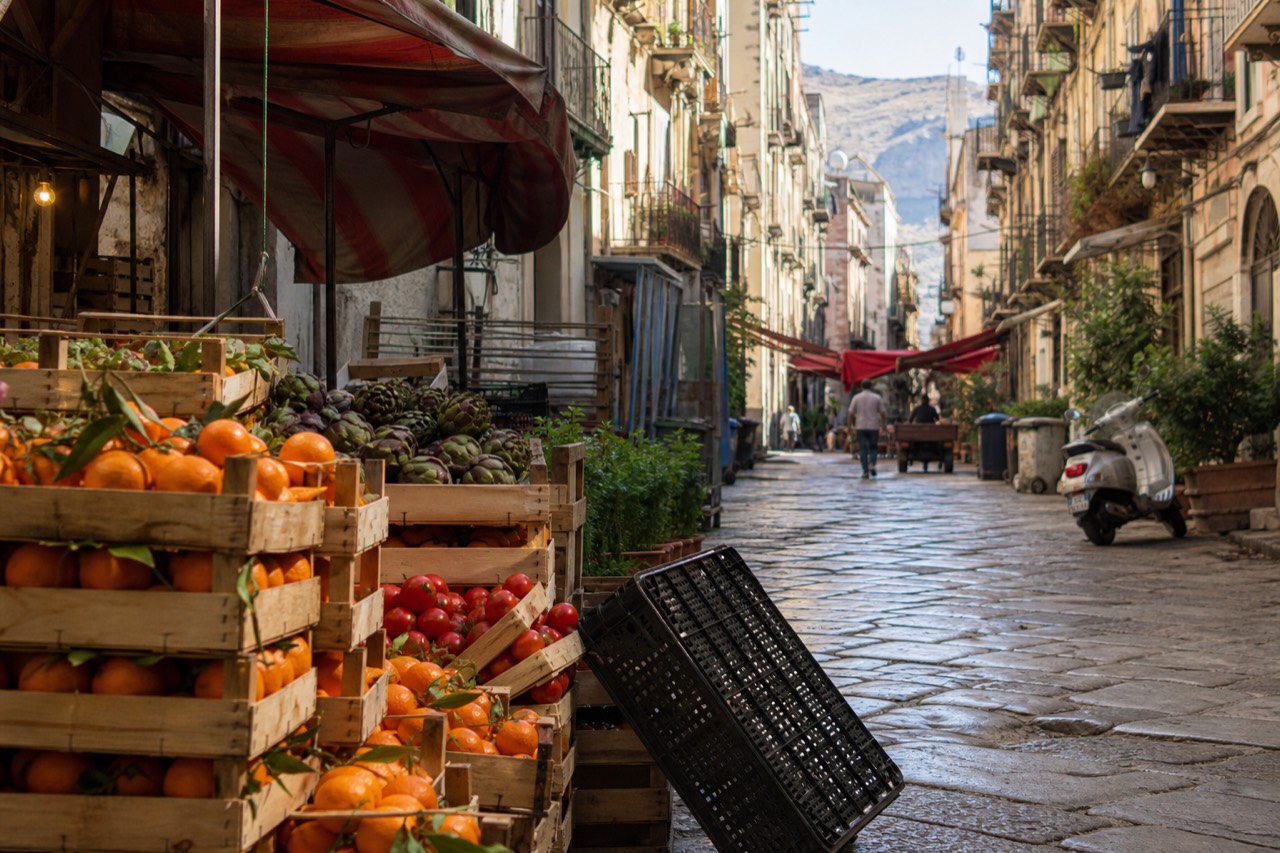
Ballarò is the biggest working food market, open Monday to Saturday 07:30 to 20:00, Sunday mornings only. The Capo is the strongest for street food and trades daily. The Vucciria's daytime market has mostly gone and it works best after dark. Borgo Vecchio is a quiet morning market with almost no tourists.
The Comune di Palermo recognises four historic markets: Ballarò, the Capo, the Vucciria and Borgo Vecchio. On paper they are siblings, fruit and vegetable and fish and meat stalls shouting over each other in lanes that the city's own tourism portal compares to the souks of a Muslim city, some of them created during the Arab domination of the island. In practice they have diverged so far that choosing the wrong one at the wrong hour can define your whole impression of eating in Palermo. One still feeds the city. One has become a stage set that mostly performs after dark. Two sit somewhere in between, in different ways.
Which Palermo Market Should You Visit?
Ballarò for the biggest working market, the Capo for street food, the Vucciria after dark, and Borgo Vecchio if you want the one locals actually shop at with almost no tourists. The Comune di Palermo recognises four historic markets, and they have diverged sharply: one still feeds the city, one has become a nightlife square, and two sit in between.
The shouted sales cry of the hawkers has its own word, "abbanniata", and the city's tourism portal calls listening to it part of the show, folk music of the historic markets. You will hear it in Ballarò and the Capo. In the Vucciria you are more likely to hear a DJ.
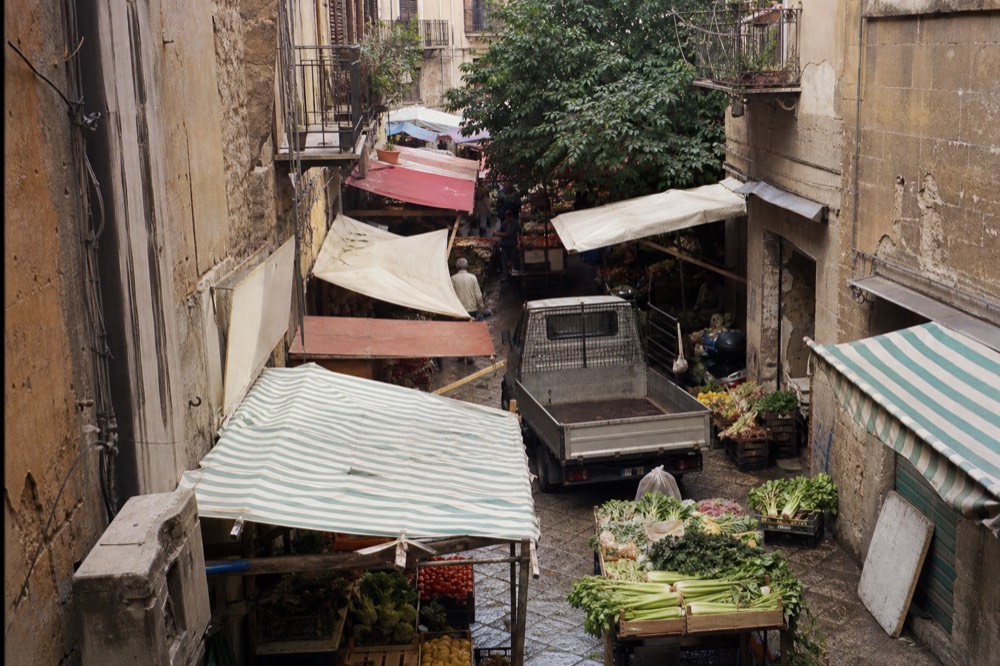
Here is the short version of how the four compare, before we go market by market:
| Market | Quarter | What it is today | Best time to go |
|---|---|---|---|
| Ballarò | Albergheria | Working food market with a thick tourist layer | Early morning, Monday to Saturday |
| Il Capo | Seralcadio | Working market with the strongest street-food lineup | Morning |
| Vucciria | Between via Roma and piazza San Domenico | Daytime market mostly gone; nightlife square | After dark |
| Borgo Vecchio | Behind the Politeama | Quiet morning market, few tourists | Early morning |
Each of the big three has a deeper page of its own: our full Ballarò market guide, the dedicated Capo market page and the Vucciria market walkthrough. This page is the comparison hub, and it is also where Palermo Food Tours keeps the honest version of what each market has become, because the gap between the official descriptions and the street is the single biggest thing most guides get wrong here.
Is Ballarò A Real Food Market Or A Tourist Trap?
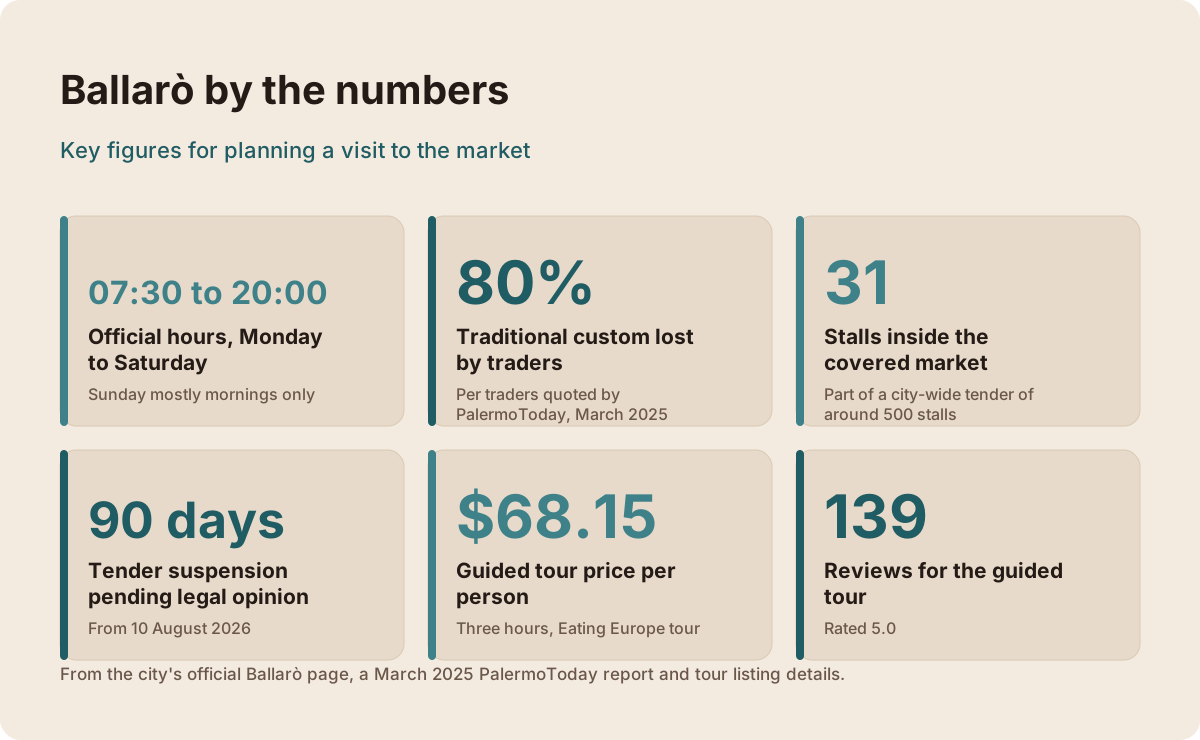
Both at once: Ballarò is the largest market in the city and, in the words of the city's own tourism portal, the oldest, open Monday to Saturday 07:30 to 20:00, yet its tourist layer has grown thick enough that locals now steer visitors toward specific stalls. Go before 10:00 and it is unambiguously a working food market.
Ballarò runs from piazza Casa Professa to the bastions of corso Tukory, in the Albergheria quarter. The city quotes a guidebook of 1800, Gaspare Palermo's Guida, describing the piazza as "una piazza di grascia", a foodstuffs square, marking the traders' specialisation. That is what it still is at its core: the market for early produce and for everything arriving from the surrounding countryside. Even the name is contested. The Comune offers three rival etymologies and prefers none of them: from Bahlara, a village near Monreale whose goods came to the square; from Ag-Vallaraja, a title of the sovereigns of the Sind region, because Deccan spices were sold there; or from Segeballarath, meaning fair or market.
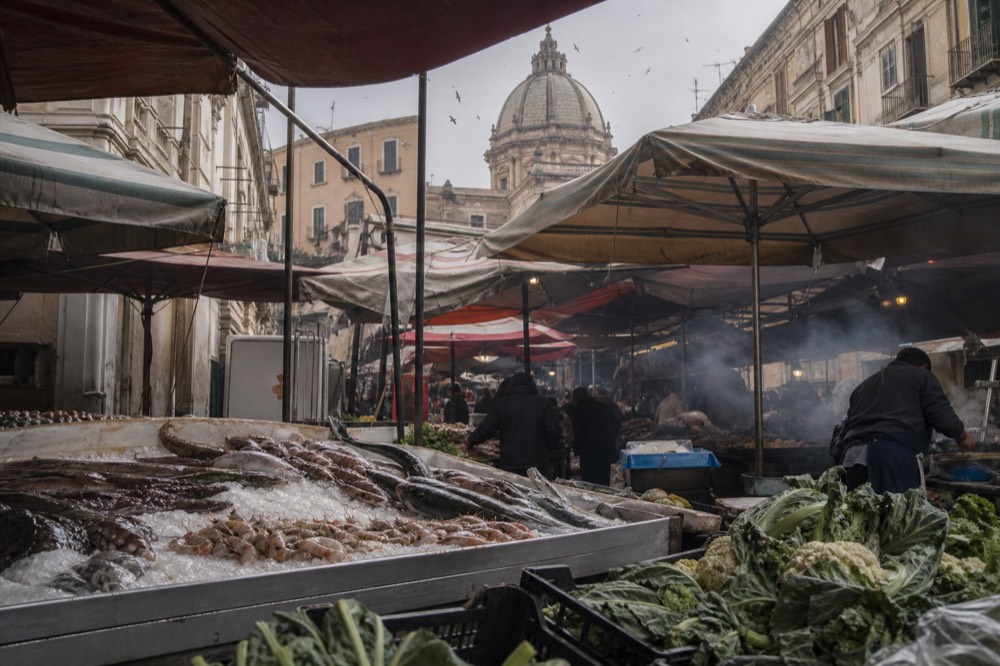
The honest part is the decline. PalermoToday reported in March 2025 that the historic markets are shrinking, with the traders quoted in the piece saying they have lost around 80% of their traditional custom, squeezed by the limited-traffic zone, parking and services. Ballarò was described in the same dossier as still alive but showing the signs of an inexorable transformation, with tourist street food taking the place of traditional stalls. That matches what visitors now report: one traveller thread from September 2025 describes buying arancini at Ballarò and finding them microwaved and pre-made, with locals in the replies directing them to specific friggitorie elsewhere in the city instead.
That is the trap half of the answer, and timing is the defence. The market's official hours are Monday to Saturday 07:30 to 20:00, with Sunday mostly mornings only, per the city's official Ballarò page. Before mid-morning you get the wholesale energy, the abbanniata and the produce that restaurants actually buy. By early afternoon you get the tourist version of the same lanes.
There is also a physical symbol of the market's unresolved state: the covered market at piazza del Carmine, a roughly 500 square metre structure built with EU funding and finished in 2024, which has still not opened for trading:
| Date | What happened at the covered market |
|---|---|
| 15 January 2026 | City council unanimously approved the market's regulation, prioritising historical traders |
| 29 May 2026 | The housing authority formally handed the keys to the city |
| July 2026 | The city published a tender for around 500 market stalls city-wide, 31 of them inside the covered market |
| 10 August 2026 | The tender was suspended for 90 days pending a legal opinion |
| 18 August 2026 | A fire damaged the roof and waste piles inside the still-empty structure |
None of this touches the street market itself, which trades regardless. But it explains why Ballarò feels like a place mid-transition, and why a guide who knows which stalls still fry to order earns their fee here more than anywhere else in the city. The best-reviewed guided option is the Ballarò market and street food tour run by Eating Europe, rated 5.0 across 139 reviews, three hours from $68.15 per person with free cancellation up to 24 hours and only 12 spots per departure.
What Is The Capo Market Like?
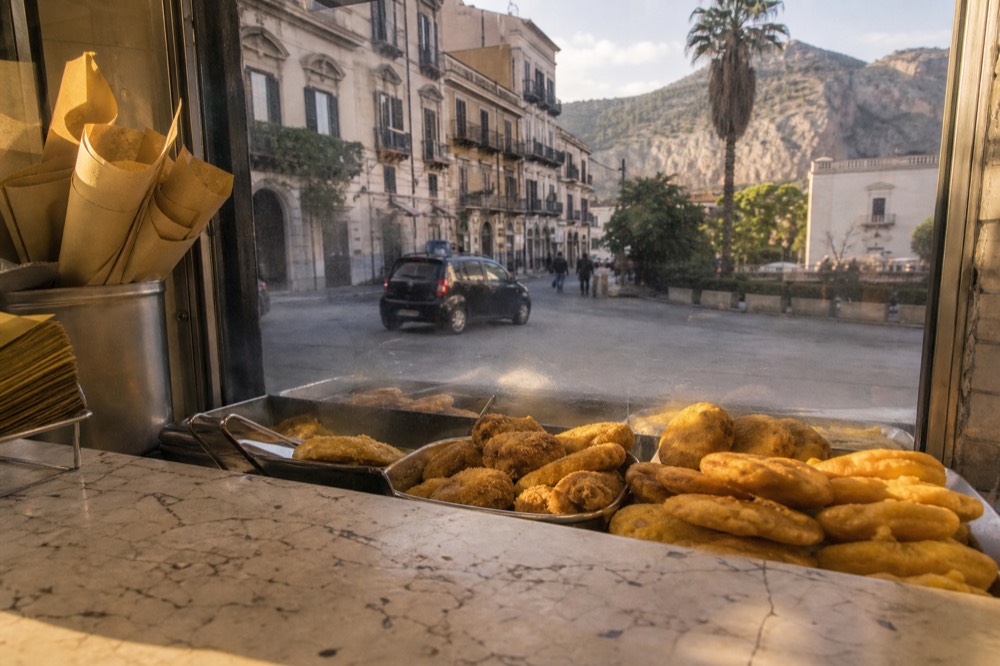
The Capo is Palermo's most dependable eating market: a daily morning-and-afternoon market in the Seralcadio quarter where the city's own tourism portal lists sfincione, pane con la milza, panelle and crocche among the hawker foods. Recent visitor threads consistently rate it the best of the three central markets for actually eating well.
The Capo stretches along via Carini and via Beati Paoli, with its principal entrance at Porta Carini, an 18th-century gate rebuilt on the model of a 15th-century original. The quarter, Seralcadio, formed in the Muslim era, and the market's history is a meat history: the civic slaughterhouse, the "bocceria nuova", once stood nearby, and the dialect word for the butchers' shops here is "carnezzerie", a Spanish-era borrowing rather than the standard Italian "macellerie". The Comune records an unusual custom with a stated historical reason: quarters of meat hung outside the shops, which it attributes to the city's former Jewish presence, for draining the animal of blood.
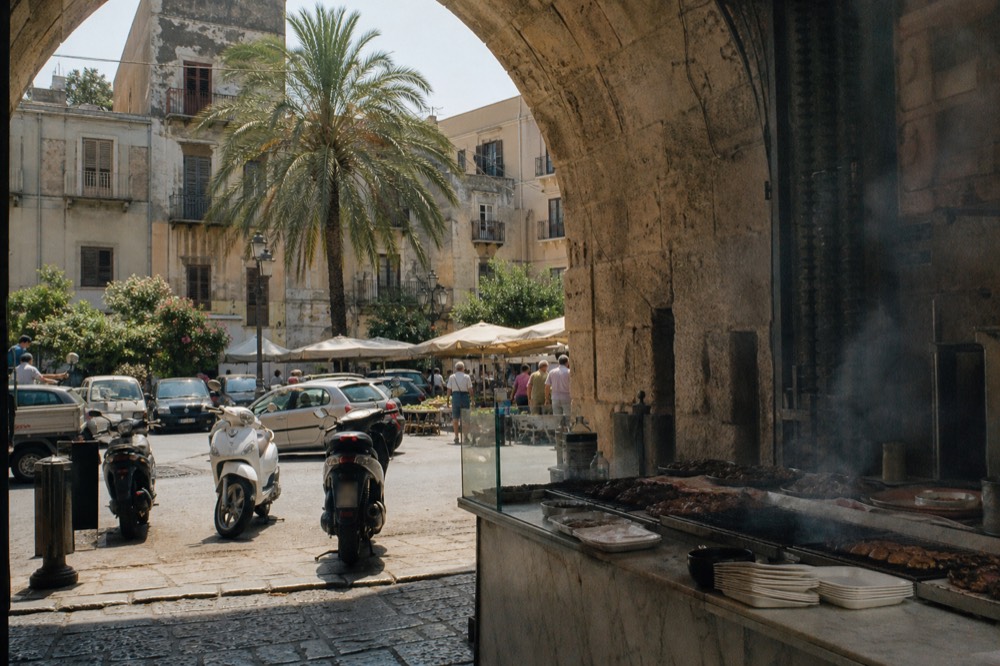
For a visitor, the meat history matters less than the hawker food. The city's own market page lists what the Capo's hawkers sell: sfincione and sfincionello, pane con la milza, pane con le panelle and crocche di patate. That is the densest concentration of the Palermo street-food canon in any of the four markets, and unlike Ballarò it has not become a byword for reheated snacks. In the September 2025 traveller thread mentioned earlier, the same visitor who was disappointed at Ballarò rated the Capo the best of the three central markets for food and shopping.
The official hours are the vaguest of the four, "open every day, morning and afternoon", and free to enter. Take that as a prompt to go in the morning anyway, when the butchers, the friggitorie and the produce stalls are all working at once. If you are building a full eating plan around it, the dedicated Capo market page breaks down the stalls and the street food in detail.
Is The Vucciria Worth Visiting?
Only after dark, and only if you know what you are going for. The Vucciria's daytime food market has largely disappeared, the city has regulated its streets as a pedestrian area through 31 December 2026, and what is left is Palermo's loudest nightlife square. For daytime food, choose Ballarò or the Capo instead.
The history is grand. The Vucciria was anciently the "Bucceria grande", the great butchery, distinguished from the lesser markets, and the most important food square of old Palermo. The name comes from the French "boucherie", butcher's shop, though in Palermitan the word also came to mean uproar, from the shouting. In 1783 the viceroy Caracciolo gave the piazza an orderly arrangement, porticoes around a square loggia, a fountain with four small lions, and it kept that form for centuries until the building of via Roma at the start of the 20th century narrowed the quarter.
Its most famous image is honest about what was lost. Renato Guttuso painted "La Vucciria" between 1 October and 6 November 1974, a three-by-three-metre canvas worked up from real market produce flown north to his studio, and the painter himself decided it should hang at the University of Palermo's Steri palace, ten minutes' walk from the market it depicts. The painting survives as a document of a market that, per the PalermoToday reporting cited earlier, is now, in the outlet's word, largely gone as a daytime trading scene.
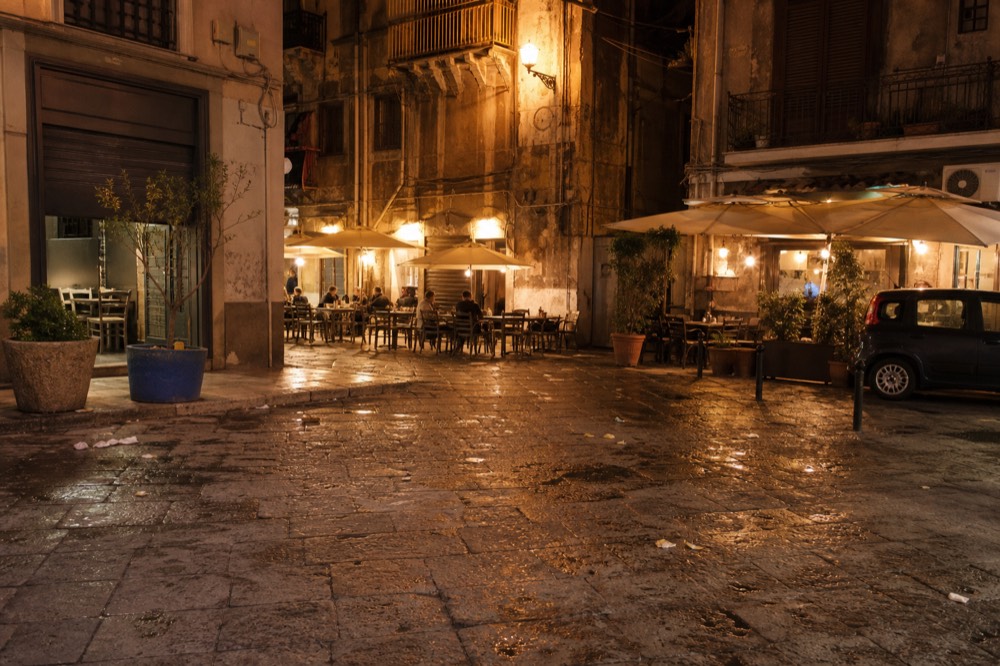
What replaced it is nightlife. Recent visitor reports describe the Vucciria as crowded and loud until around 4am at weekends, and the city has responded with rules rather than denial: the market streets, including piazza Caracciolo, form a regulated pedestrian area extended by municipal ordinance to 31 December 2026, the prefect designated the quarter a strengthened-vigilance area in January 2026, and a July 2026 ordinance restricts takeaway alcohol sales in the movida zones between 01:00 and 07:00. None of this makes it dangerous; it makes it a party district with rules. The odd distinction is that Food & Wine's Global Tastemakers awards still named the Vucciria the best market in the world for food enthusiasts in 2025, a verdict that makes sense only if you weight atmosphere over groceries.
So go at night, eat standing, and do not expect a food market. If what you actually want is the working-market experience with someone to translate it, the guided Ballarò walk covered above is the stronger use of a morning, and it can be cancelled free up to 24 hours before it starts.
What About Borgo Vecchio, The Fourth Market?
Borgo Vecchio is the quiet fourth market: a mornings-only food market in the quarter behind the Politeama theatre, a quarter formed in 1556 around the new port, now gentrifying around pubs and b&bs per the city's own account. Almost no tour groups visit, which is either its whole appeal or its limitation.
Borgo Vecchio is the only one of the four with a hard founding date. The quarter formed in 1556, after the construction of the new port and the Senate of Palermo's purchase of the tonnara di San Giorgio, and it was settled by fishermen and sailors moving out of the Kalsa and La Loggia districts. The food market occupies via Scina, via Principe di Scordia, via Ximenes and piazzetta Nasce, and the Comune's own page states that the quarter has undergone urban gentrification in recent years, with a growing young and tourist presence at night drawn by pubs, taverns, hotels and b&bs.
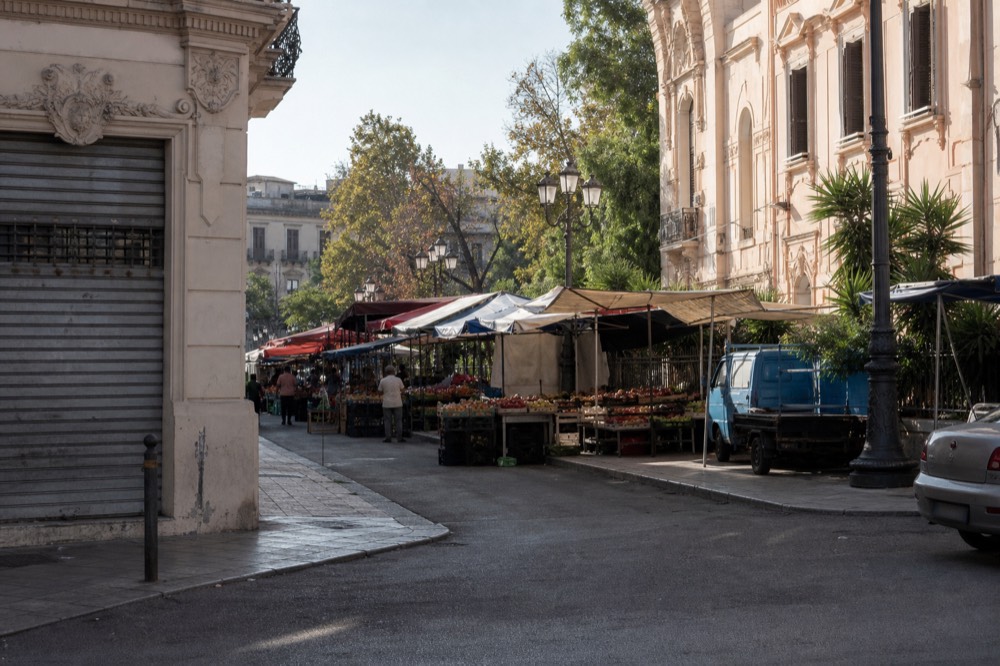
The market itself is officially a morning market, full stop. That is the whole schedule the city publishes. Go early, buy fruit or bread or whatever the stalls have that day, and you will be one of very few cameras in the lane. The surrounding streets have been slowly reclaiming public space too: the rail-ring construction site that sat in nearby piazza della Pace for eleven years was dismantled in April 2026 and the square is being restored. Borgo Vecchio will not fill your eating day the way the Capo will. It will show you a Palermo market that is not performing for you, which some travellers end up rating above all three famous ones.
When Are Palermo's Markets Open, And When Should You Go?
Ballarò keeps the longest hours of the four, Monday to Saturday 07:30 to 20:00 with Sunday mornings only; the Capo trades every day, morning and afternoon; Borgo Vecchio is mornings only; the Vucciria's official hours no longer match its reality. For weather, May, June and September are the walking sweet spots.
Here are the official hours as the city publishes them, alongside what actually happens on the ground:
| Market | Official hours | In practice |
|---|---|---|
| Ballarò | Monday to Saturday 07:30 to 20:00; Sunday mostly mornings only | Best before 10:00, any day |
| Il Capo | Every day, morning and afternoon | A morning market in spirit |
| Vucciria | Listed as every day, morning and afternoon | A nighttime square; daytime trading is minimal |
| Borgo Vecchio | Mornings | Mornings, and early ones |
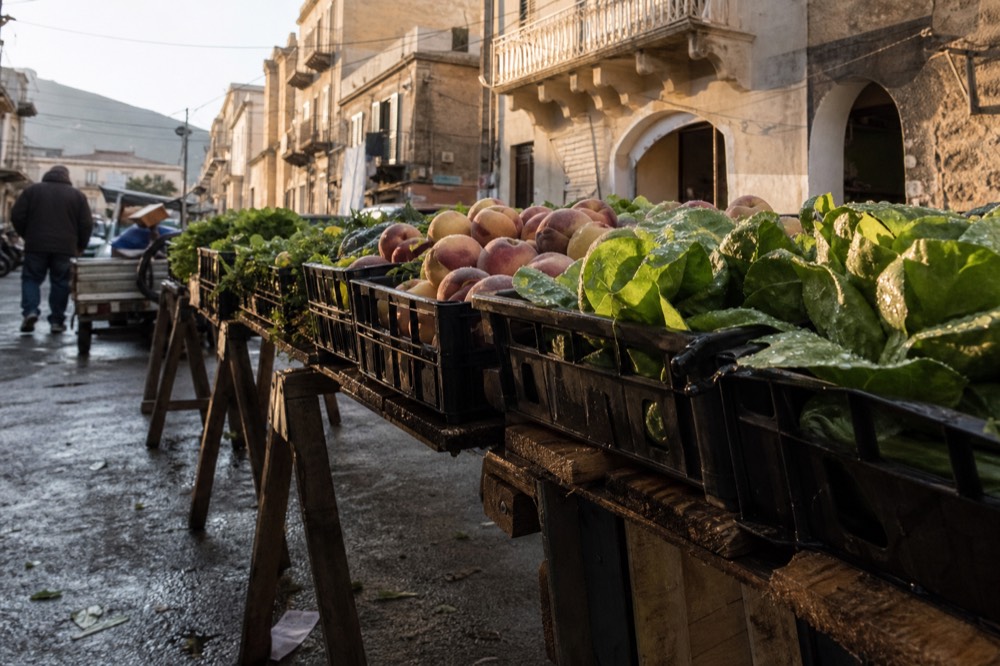
Weather shapes the decision as much as the clock. These are WMO climatological normals for Palermo, and they explain why the shoulder months are when the markets are at their best:
| Month | Mean daily high | Mean rain days |
|---|---|---|
| May | 23.3 C | 4.1 |
| June | 27.2 C | 1.9 |
| July | 29.8 C | 1.2 |
| September | 27.5 C | 5.4 |
| December | 15.8 C | 12.0 |
July is nearly rainless, 6.7 mm across 1.2 rain days on average, but it is also the month the city hands its historic centre to the Festino di Santa Rosalia: on 14 and 15 July the processions run straight through Corso Vittorio Emanuele, the Quattro Canti and piazza Marina, which is to say directly through the ground a market walk covers. August is the hottest month by mean daily maximum at 30.5 C. May, June and September are the months where a two-hour wander through Ballarò is a pleasure rather than an endurance event.
How Much Does Food Cost At Palermo's Markets?
Street food at the markets is cheap but no longer dirt cheap: an arancina or a panelle sandwich in the historic centre runs 3 to 4.50 euros, roughly double 2021 levels, and pizza with a drink now averages 14.56 euros. Sit-down places add a coperto, which is legal but must be clearly printed on the menu.
Local reporting has tracked the inflation honestly. Il Sicilia reported in May 2026 that eating out in the historic centre has become a luxury for residents, with pizza and a drink averaging 14.56 euros across the city, a range of 9 to 28 euros, and a rise of about 60% over five years, the highest increase nationally. The same reporting puts an arancina or a panelle-and-crocche sandwich at 3 to 4.50 euros in the centro storico, roughly double the 2021 level, a shift the outlet attributes to tourism. Even the brioche con gelato has become a local controversy: Giornale di Sicilia reported in 2026 that the traditional item now commonly costs 4 to 5 euros, with the 5-euro versions sparking genuine local backlash.
| Item | Typical price |
|---|---|
| Arancina or panelle sandwich, historic centre | €3 to €4.50 |
| Pizza and a drink, city average | €14.56 |
| Brioche with gelato or granita | €4 to €5 |
| Coperto at sit-down places | Varies; must be printed on the menu |
The coperto deserves one clear explanation, because it surprises visitors. It is legal in Italy and there is no national law capping or banning it, but per the Italian consumer organisation Altroconsumo it must be clearly stated in writing, on the menu or before you order. If it was signalled, ordering means accepting it. If it was not, or the amount is unclear, you can contest it. Sicily has no regional ban on the charge.
One more rule that genuinely matters at market stalls: under EU food-information law, allergen information is mandatory for non-prepacked food, including at market stalls, friggitorie and restaurants. If you have an allergy, ask; the stall is legally obliged to be able to tell you.
Is A Guided Market Tour Worth It In Palermo?
A guide earns the fee in Palermo precisely because the markets are in flux: a local knows which Ballarò stalls still fry to order and which reheat, and the strongest reviewed market walks run about three hours from $68.15 with free cancellation up to 24 hours. Go guided on day one, then return solo.
The case against self-guiding is not safety or language, it is selection. The microwaved-arancini problem at Ballarò is real and recent, and it is invisible from the street: the stall looks identical whether the food is fried on site or reheated from a box. A guide who shops these lanes knows the difference. The case for self-guiding is price and freedom, and it is a fair one once you know where to point yourself.
| Tour | Operator | From | Duration | Cancellation |
|---|---|---|---|---|
| Ballarò Market & Street Food Tour | Eating Europe | $68.15 | 3 hours | Free up to 24 hours |
| Half-Day Cooking Class & Market Tour | Siciliandays | $209.04 | 4 hours | Free up to 24 hours |
| Sicilian Cooking Class | The Sicilian Pantry | $115.95 | 4 hours 30 minutes | Free up to 24 hours |
The Eating Europe Ballarò walk, covered in full above, is the pure market option: 5.0 across 139 reviews, three hours, 12 spots per departure, free cancellation up to 24 hours. If you want the same territory with a kitchen at the end of it, the half-day cooking class and market tour by Siciliandays pairs a market visit with a hands-on session, rated 4.8 across 63 reviews, four hours from $209.04 per person with free cancellation up to 24 hours. It is the most expensive format on this page and the one that buys you the most time with a local cook.
Can You Combine A Market Visit With A Sicilian Cooking Class?
Yes, and it is the format that gets you closest to how Palermitans actually shop and eat: you buy seasonal ingredients at the market, then cook and sit down to a full meal with wine. Market-plus-cooking formats run from $115.95 for a 4.5-hour class to $209.04 for a half-day version.
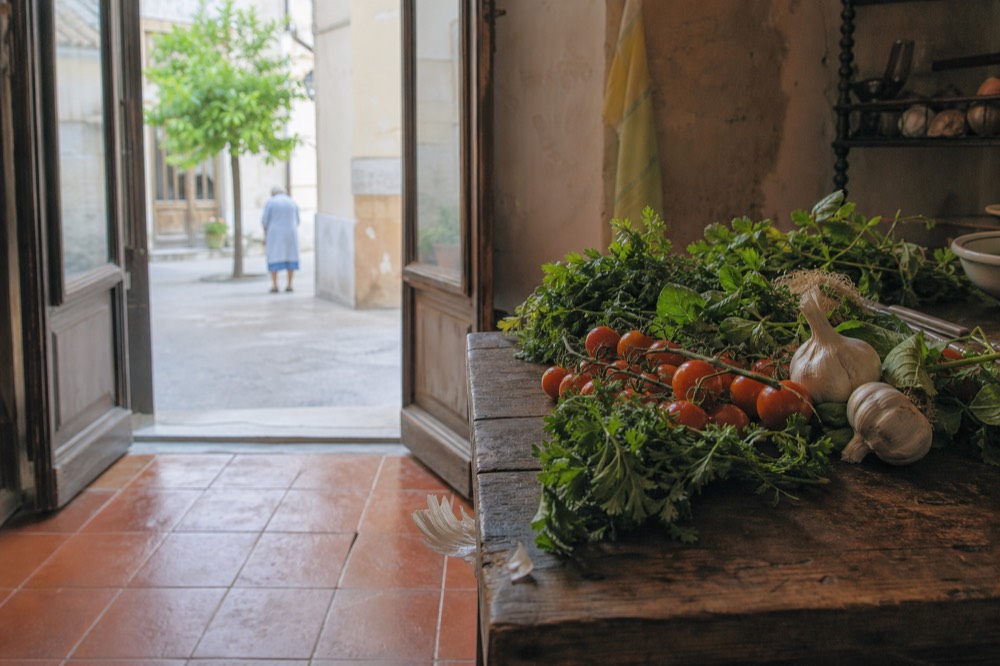
The structure is consistent across operators: you meet, walk a historic market, buy what is seasonal, then move to the kitchen. Current Palermo class listings commonly cover arancini, a fresh pasta such as pasta alla Norma, and cannoli, with the market visit usually at the Mercato del Capo, and several operators note that when the market is closed on Mondays they substitute tastings. Start times cluster around 9am, 10am and 10:30am, with some afternoon slots.
The strongest reviewed of the pure cooking formats is The Sicilian Pantry's Sicilian Cooking Class: 5.0 across 310 reviews, four and a half hours from $115.95 per person, only 8 spots per departure, free cancellation up to 24 hours. Reviews from 2025 and 2026 consistently mention the hands-on elements and the market guidance on seasonal produce, with one 2026 review describing a six-person group. For a fuller comparison of the formats, including what a class costs across Italy, see our market tour and cooking class combinations page.
Planning Your Market Day: Transport, Safety And What To Expect
Go on foot and leave the car behind: Palermo's historic centre sits inside a limited-traffic zone that runs during the day on weekdays and at night at weekends, so every market here is a walking market by design. Keep bags in front in the crowds, and carry small notes for the stalls.
The ZTL is the durable fact. Its summer timetable runs until 31 October 2026, Monday to Thursday 08:00 to 20:00, Friday 08:00 to 24:00, Saturday and Sunday nights, with the details published on the city's police page. The winter timetable differs, so check that page before driving anywhere near the centre; the short version is that a hire car is a liability in market country and every sensible plan is a walking plan.
On safety, the picture is ordinary-city rather than scary. In the Sole 24 Ore crime index, Palermo province ranked 24th of 106 Italian provinces for reported crimes per capita, and reported crimes in the metropolitan area fell 9.24% in 2025, with a further 11.37% decrease in the first quarter of 2026. What travellers actually report is pickpocketing in the tourist lanes, the same as any large European city, and discomfort in the unlit side streets around Ballarò after dark. The Vucciria at night is rowdy rather than dangerous, but it is loud until around 4am at weekends, so plan your hotel location accordingly.
Budget your energy the way you budget your money. Two markets in one morning is realistic; three is a forced march. The classic pairing is the Capo for street food early, then Ballarò before it gets hot, with the Vucciria saved for a drink in the evening once you understand what it has become. Eat standing where the locals queue, ask before you photograph a stall, and treat the abbanniata as the soundtrack it is.
The four markets split cleanly by intent: Ballarò for the biggest working market, the Capo for street food, the Vucciria after dark and Borgo Vecchio for a quiet local morning. The answers below cover the questions travellers ask most often, from opening hours and costs to whether a guided walk is worth the fee.
Common Questions About Palermo's Markets
Which Palermo market should you visit?
Ballarò for the biggest working market and the fullest sensory experience, the Capo for the densest street-food lineup, the Vucciria after dark, and Borgo Vecchio if you want the quiet morning market locals actually shop at. Pair the Capo and Ballarò in one morning if you have the energy, and save the Vucciria for the evening.
Is Ballarò a real food market or a tourist trap?
Both at once. The Comune di Palermo's own tourism portal calls it the city's oldest and largest market, open Monday to Saturday 07:30 to 20:00, but its tourist layer has grown thick enough that some stalls now reheat snacks instead of frying to order. Go before 10:00 and it is unambiguously a working food market.
What is the Capo market like?
A daily market in the Seralcadio quarter with the strongest hawker-food lineup of the four: sfincione, pane con la milza, panelle and crocche. Recent visitor threads consistently rate it the best of the three central markets for actually eating well.
Is the Vucciria worth visiting?
Only after dark, and only if you know what you are going for. Its daytime food market has largely disappeared and what remains is Palermo's loudest nightlife square, regulated as a pedestrian area through 31 December 2026. For daytime food, choose Ballarò or the Capo instead.
When are Palermo's markets open?
Ballarò: Monday to Saturday 07:30 to 20:00, Sunday mostly mornings only. The Capo: every day, morning and afternoon. Borgo Vecchio: mornings only. The Vucciria's listed hours no longer match its reality; treat it as a nighttime destination.
Is a guided market tour worth it in Palermo?
Yes, especially on day one, because the markets are in flux and a local knows which stalls still fry to order and which reheat. The strongest reviewed market walks run about three hours from $68.15 per person with free cancellation up to 24 hours, so there is little risk in trying one.