Cooking Class In Palermo, Sicily: What The Market Tour Version Actually Includes
The shop-then-cook format is the most booked version of a cooking class in Palermo, and its arithmetic is simple: a guided market shop, a hands-on cooking session and the meal at the end. This guide explains the timing hour by hour, what you carry back from the stalls, and what each format costs.
Short answer
A Palermo cooking class with a market tour runs 3 to 5 hours and costs from $60.95 to $209.04 per person depending on format. You shop with the guide at Ballarò or the Capo, cook arancine, fresh pasta and cannoli, then eat the meal. Small-group formats cap at 8 to 12 spots and cancel free up to 24 hours.
Four hours is the shortest market-plus-cooking class on Palermo's roster. Five is the longest. What almost no listing explains is what happens inside that window: how long you actually stand in Ballarò or the Capo, what you carry back to the kitchen, and what you sit down to eat when the cooking is done. This guide does that arithmetic format by format, with the prices, the group sizes and the small print that only shows up on the day.
What Does A Cooking Class With A Market Tour In Palermo Actually Include?
A shop-then-cook class in Palermo pairs a guided walk through a historic market, usually Ballarò or the Capo, with a hands-on cooking session and a sit-down meal of what you prepared. The market-tour versions run four to five hours, and the cooking classes on this site's roster cost from $60.95 to $209.04 per person.
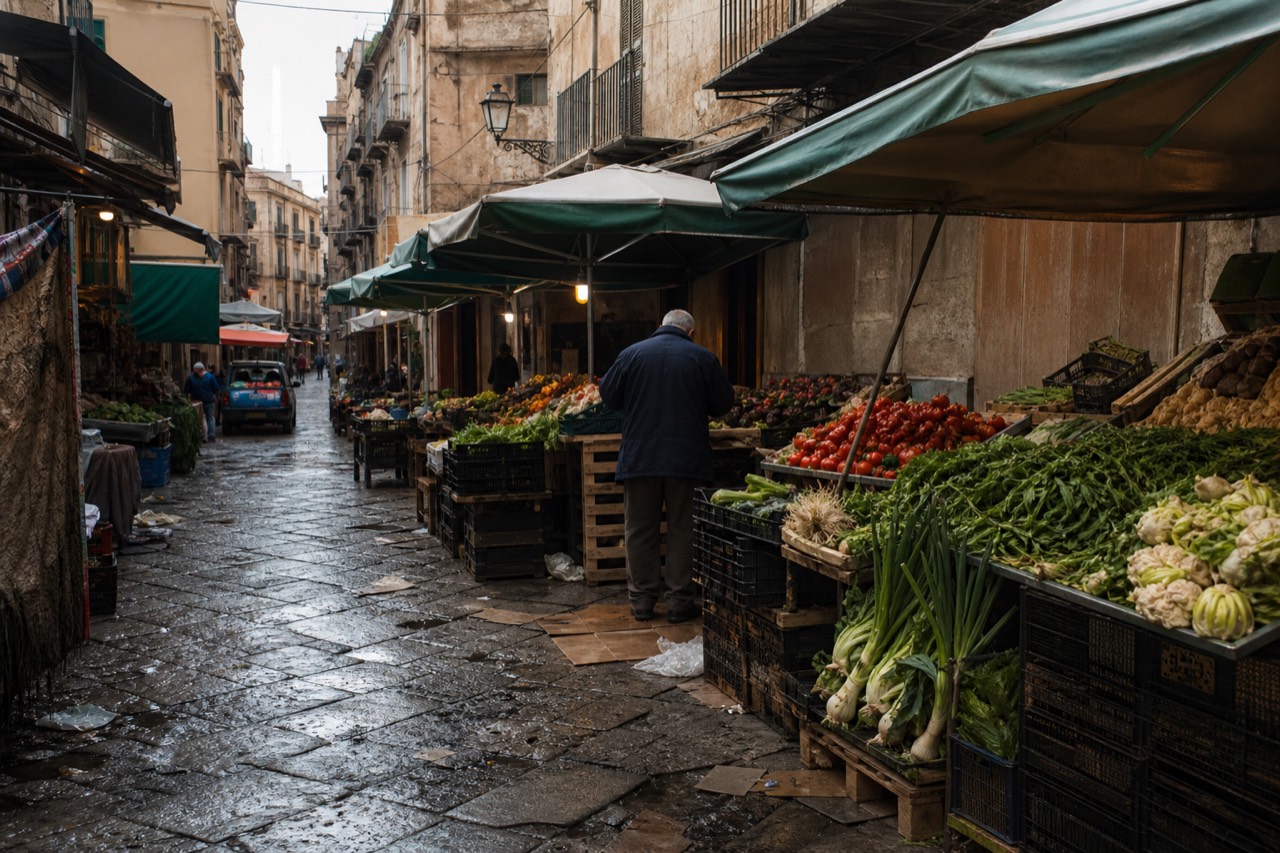
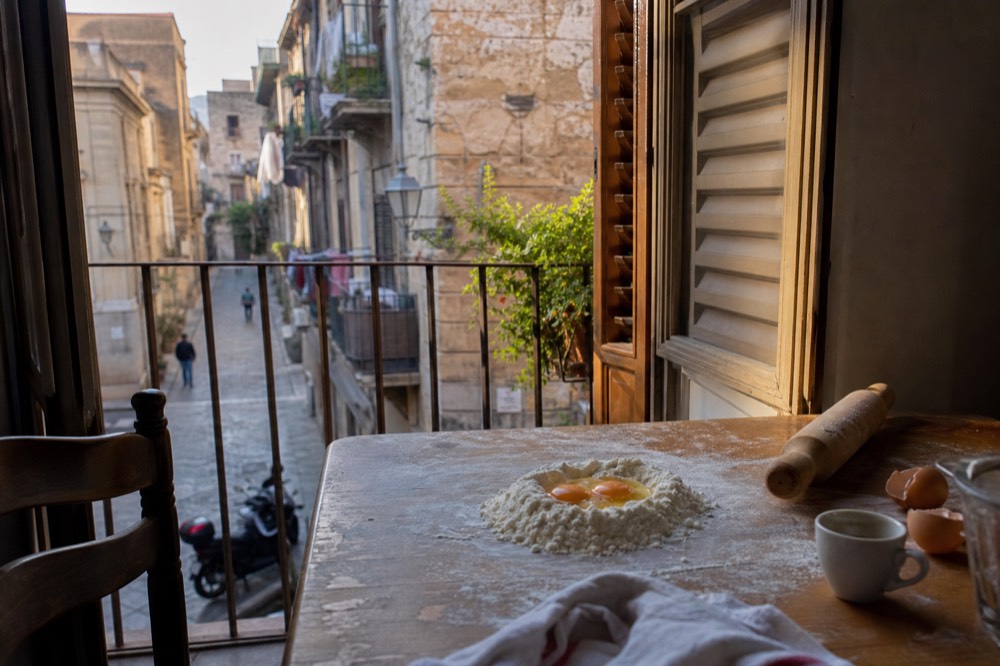
The format has three movements. First the market leg: you meet the guide, walk into one of the historic markets and shop the stalls for the day's menu, which means vegetables, cheese, sometimes fish, and whatever else the recipes call for that morning. Second the kitchen: roughly two hours of hands-on prep, rolling fresh pasta, shaping arancine, filling cannoli shells. Third the table: you eat what you cooked, in most formats with wine, and that meal is usually the final hour of the booking.
It helps to separate this format from the two things it gets confused with. A street food walk, compared in our Palermo street food walk guide, tastes the city without cooking anything. A market tour on its own, covered in the guide to Palermo's historic markets, shops or grazes without a kitchen at the end. The shop-then-cook class is the only format that closes the loop from stall to plate, and that closed loop is why it has become the default booking for travelers who want one food experience in the city.
The exact split varies by operator, but the shape of the day is consistent enough to plan around:
| Segment | Typical share of the class | What happens |
|---|---|---|
| Market shop | The first 60 to 90 minutes | Guided buying at the fish, cheese and produce stalls |
| Hands-on cooking | About two hours | You prep and cook the menu with the instructor |
| The meal | 45 minutes to an hour | Sit-down lunch or dinner, with wine in most formats |
| Total | 3 to 5 hours | Varies by operator and by whether the market leg is a shop or a walk-through |
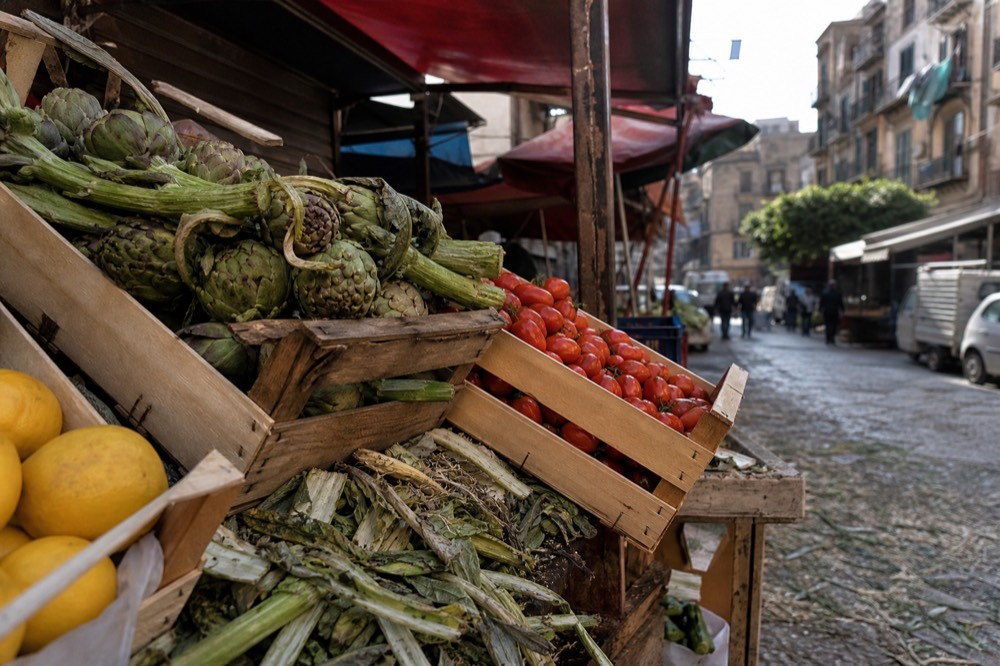
One thing the table cannot show: the market leg is a working shop, not a tasting crawl. You are buying ingredients with the guide, asking the fishmonger questions and learning what to look for in a sheep's ricotta. If you want six tastings and no shopping, that is a different product, and the street food walks cover it better.
How Long Do You Spend In The Market, And What Do You Carry Back?
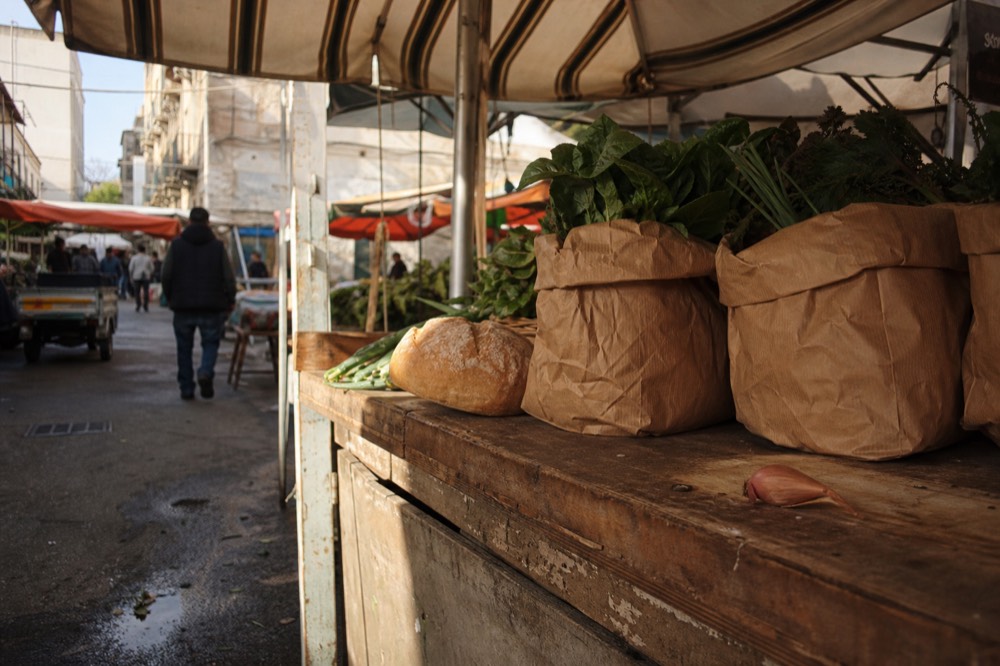
Expect 60 to 90 minutes of market time at the start of the session, spent with the guide at the fish, cheese and produce stalls, buying the ingredients for the menu. You carry back whatever the recipes need that day: seasonal vegetables, cheese and sometimes fish. The cooking takes the remaining two to three hours.
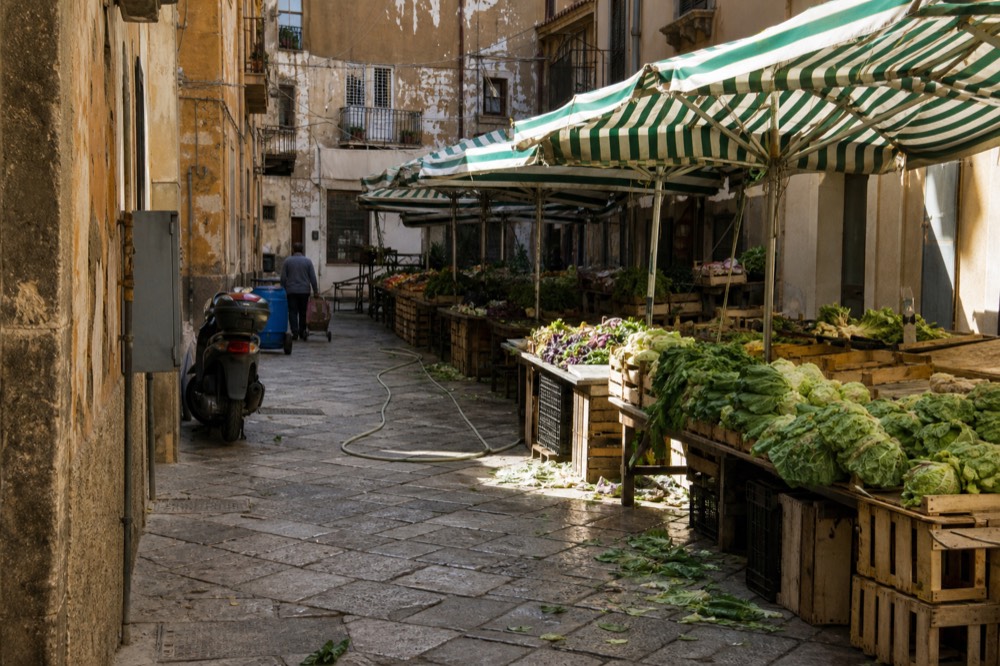
The two markets the classes use are Ballarò and the Capo, and both are morning animals. The city's own tourism portal publishes exact hours for Ballarò: Monday to Saturday from 07:30 to 20:00, with Sunday trading mostly limited to the morning (Comune di Palermo, Mercati storici). The same portal describes the Capo as open every day, morning and afternoon. Current class listings name Mercato del Capo as the shopping ground, with Ballarò appearing in some descriptions, so which one you walk into depends on the operator you pick.
| Market | Official hours | Quarter | What the city says about it |
|---|---|---|---|
| Ballarò | Mon to Sat 07:30 to 20:00, Sunday mostly mornings only | Albergheria | The tourism portal calls it the city's oldest and largest market, a "piazza di grascia", a food market, dating to the era of Arab domination |
| Il Capo | Every day, morning and afternoon | Seralcadio | Historically a meat market; the portal lists sfincione, pane con la milza, panelle and crocchè among the street food sold there |
What goes into the basket depends on the season and the menu. In practice you carry back vegetables for caponata or a pasta sauce, cheese for filling and grating, fish if the menu includes it, and bread or wine for the table. The guide does the talking; you do some of the choosing. That is the point of the leg. You learn what a good artichoke looks like in a Palermo stall in April, and why the ricotta for cannoli is sheep's milk.
One practical note that shapes the whole format: Palermo's historic centre sits inside a restricted traffic zone that is active during the day on weekdays and at night at weekends, so a market cooking class here is a walking format by design. You meet on foot, shop on foot and cook within walking distance of the stalls. A hire car is a liability for this booking, not an asset.
How Much Does A Cooking Class In Palermo Cost?
Palermo cooking classes on this site's roster run from $60.95 for a three-hour pizza and gelato class to $209.04 for a four-hour half-day class with market tour. The market-plus-cooking versions sit between $115.95 and $209.04 per person, and 19 of the 22 tours on the roster allow free cancellation up to 24 hours.
The price ladder is driven by three things: hours, group size and what is on the table at the end. The pizza and gelato class at $60.95 is the entry point, and it includes dinner and wine. The full shop-then-cook formats start at $115.95 and climb to $209.04. Independent listings for comparable market-and-cooking formats elsewhere in the city run $87 to $146 per person, so the roster's spread is roughly the market's spread.
| Class | From per person | Length | Rating | Small-group cap |
|---|---|---|---|---|
| Pizza and gelato class with dinner and wine | $60.95 | 3 hours | 4.9 across 1208 reviews | Often sells out |
| Sicilian cooking lesson at a chef's home | $110.33 | 3 hours | 5 across 124 reviews | Often sells out |
| Sicilian Cooking Class (The Sicilian Pantry) | $115.95 | 4 hours 30 minutes | 5 across 310 reviews | 8 spots per departure |
| At Casa Di Cilla | $132.51 | 5 hours | 5 across 391 reviews | 10 spots per departure |
| Cooking class in a villa with Palermo view | $136.06 | 3 hours | 5 across 178 reviews | 12 spots per departure |
| Half-day cooking class and market tour | $209.04 | 4 hours | 4.8 across 63 reviews | Not stated |
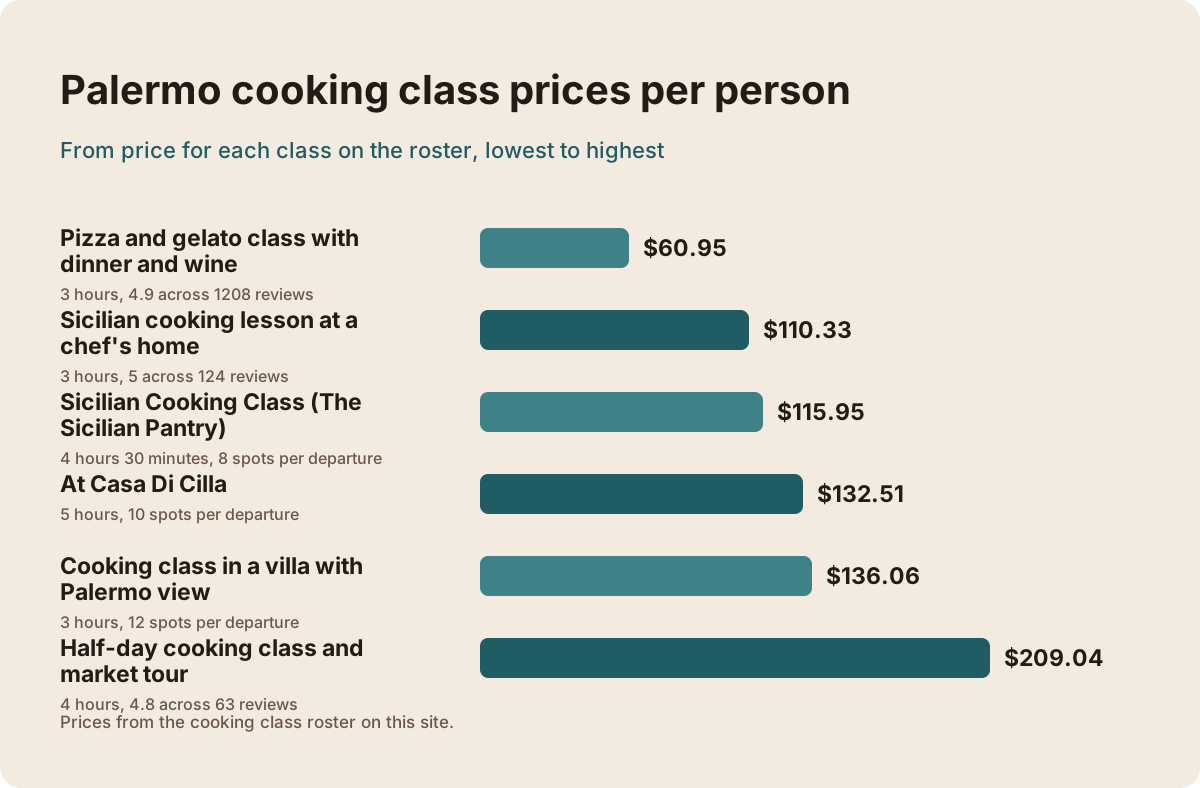
Notice what the ladder does not show. The most expensive class is not the longest; the half-day at $209.04 runs four hours while Casa Di Cilla runs five for less money. What you are paying for at the top is the built-out market-and-cooking structure and the operator's positioning, not extra minutes. At the other end, a two-hour wine tasting with snacks at Bottega Monteleone runs from $51.1 per person, which is the honest floor for a food experience in this city if cooking is not the priority.
Every cooking class on the roster offers free cancellation up to 24 hours, which matters if your itinerary is still moving. The three non-refundable products on the wider roster are all street food and food-and-walk tours from one operator, none of them classes. If a class is the anchor of your day, you can book early without locking yourself in.
What Dishes Do You Cook, And Are They The Real Classics?
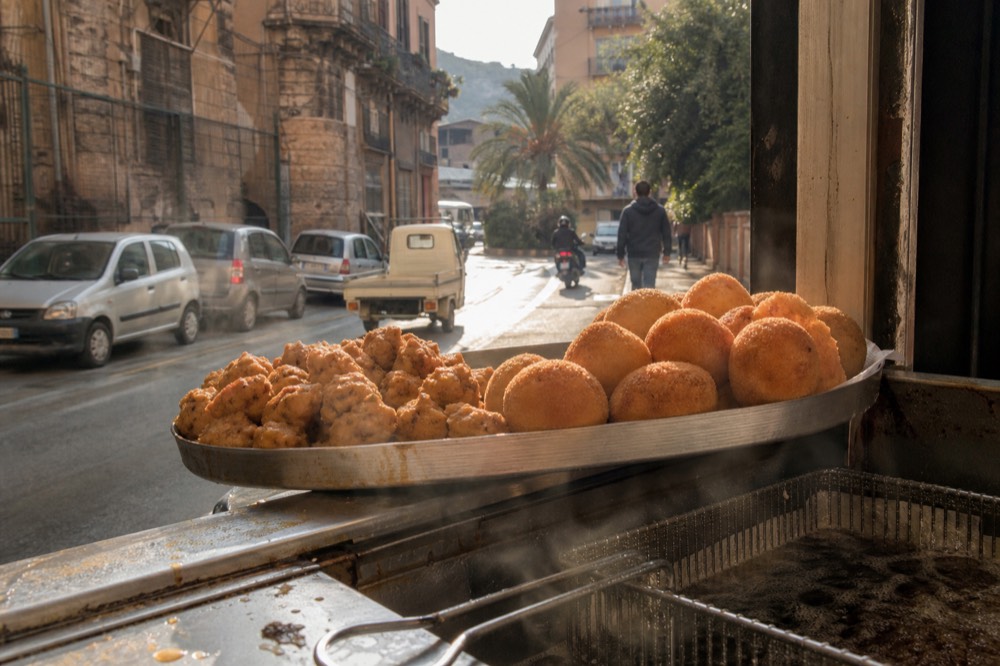
The standard Palermo class menu is arancine, a fresh pasta such as pasta alla Norma, and cannoli for dessert, with caponata and panelle appearing in some formats. Arancini di riso and panelle are both on Sicily's official list of traditional products, and panelle's registered production territory is the city of Palermo itself. A recipe booklet often goes home with you.
Those are the dishes current listings name most often: arancini, a fresh pasta course and cannoli. The interesting part is how official they are. Sicily maintains a regional list of Prodotti Agroalimentari Tradizionali, traditional products whose preparation must have been practised consistently for at least 25 years, and the cooking-class canon sits right on top of it (Regione Siciliana, Schede PAT).
| Dish | On Sicily's PAT list | What the official sheet says |
|---|---|---|
| Arancini di riso | Yes | A rice product, typically spherical, filled with meat, or alternatively ham and mozzarella or spinach |
| Panelle | Yes | A chickpea-flour snack whose production territory is the city of Palermo and parts of its province; the batter is spread half a centimetre thick before frying |
| Caponata di melenzane | Yes | Fried aubergine with celery, olives, tomato, onion, capers, sugar and vinegar; territory is western Sicily |
| Cannolo | Yes | Worked ricotta in a fried shell; the registered territory is the Trapani area, and the name comes from the cane the shell was originally rolled around |
Two of those official notes are worth knowing before you shop. Panelle is the one canon item whose registered territory is Palermo itself, right down to a specified thickness. And the cannolo, the dessert every Palermo class fills, is officially a Trapani product: the technical sheet's territory is Paceco, Erice, Trapani and Valderice. The ricotta you spoon into the shell in a Palermo kitchen belongs to a tradition registered two hours down the coast.
Then there is the word on everyone's lips. In Palermo the fried rice ball is arancina, feminine and round; in Catania it is arancino, often conical. The Accademia della Crusca has examined the whole lexicographic record and found something stranger than a dialect quarrel: no trace of the dish exists in literature, chronicles, dictionaries or recipe books before the second half of the 19th century, and the first dictionary to record the word, Biundi's Sicilian-Italian dictionary of 1857, defines it as a sweet (Accademia della Crusca). Crusca's own conclusion is that the standard Arab-origin story is not supported by the evidence. So when your instructor insists on arancina, that insistence is grammatically standard Italian, and the dish itself is younger than the United States.
If you want the market leg to carry the most weight, Siciliandays' half-day cooking class and market tour is built around exactly that trade: four hours from $209.04 per person, rated 4.8 across 63 reviews, with free cancellation up to 24 hours. It is the priciest class on the roster and the one most explicitly sold on the market-plus-kitchen structure.
What Time Do Classes Start, And Which Month Should You Book?
Current Palermo listings start classes at 9:00, 10:00 or 10:30 in the morning, with some operators adding an afternoon slot around 15:30. The morning starts matter because the markets do: Ballarò trades Monday to Saturday from 07:30 to 20:00, with Sundays mostly given to the morning only, so an early class catches the market at its fullest.
The 9:00 and 10:00 starts are the ones that fit the format. A class that begins at 10:00 reaches the stalls by 10:15, shops for an hour, and has the kitchen by lunchtime, which is exactly how the meal ends up being lunch. The 15:30 afternoon slots flip the day: you cook into the evening and eat at dinner. Both work. What does not work is expecting a full market experience from a late start, because the fish stalls in particular are a morning business.
The month matters almost as much as the hour. Palermo's climate normals from the World Meteorological Organization show why the shoulder seasons are the sweet spot for a format that involves standing in an open market and then standing at a stove:
| Month | Mean daily high | Mean rain days |
|---|---|---|
| April | 18.7 C | 8.6 |
| May | 23.3 C | 4.1 |
| June | 27.2 C | 1.9 |
| July | 29.8 C | 1.2 |
| September | 27.5 C | 5.4 |
| October | 23.5 C | 8.2 |
May and September give you a warm market walk without a stove-side sauna, and June is nearly rainless. July is hotter and drier still, but a kitchen in July is a different proposition from a market square in July. April and October are mild but double the rain days, and a market leg in the rain is a shorter market leg. None of this stops a class; Sicilians cook in every month. It just changes how much you enjoy the first hour.
What Can Go Wrong: Mondays, Allergens And Small Print
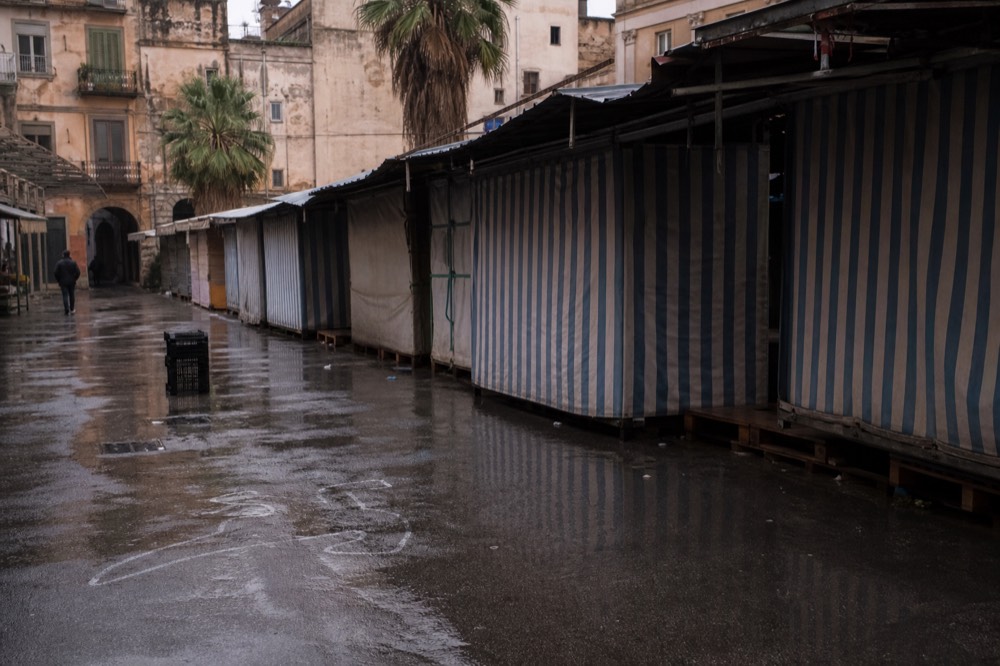
The main catch is Monday: current listings note the market is closed Mondays and classes substitute tastings, so the shop-then-cook experience is not identical every day of the week. The other catches are small: the capped classes run 8 to 12 spots, three products on the wider roster are non-refundable, and hotel pickup is rare.
The Monday issue is the one nobody warns you about. Book a Monday start and the market leg becomes something else, with substitute tastings standing in for the shop. If the shopping is the reason you chose this format over a straight class, book Tuesday to Saturday.
The second catch is dietary. European food information rules have required allergen information for non-prepacked food, including in restaurants, since the regulation entered application in 2014 (European Commission, food information to consumers). A market stall or a cooking school in Palermo is legally obliged to be able to tell you what is in what you are eating. In practice, tell the operator about allergies when you book, not when you arrive at the stall, because the menu is shopped that morning.
The third catch is capacity. The capped classes on the roster run 8 spots at The Sicilian Pantry, 10 at Casa Di Cilla and 12 at the villa class, and the formats without a stated cap often sell out instead. Small numbers are good for the cooking and bad for the booking: the tighter the cap, the earlier you should commit, and every cooking class on the roster cancels free up to 24 hours, so committing early costs you nothing but attention.
The Sicilian Pantry is the tightest of them: 8 spots per departure, 4 hours 30 minutes from $115.95 per person, rated a perfect 5 across 310 reviews, with the market tour included and a recipe booklet to take home. A recent guest review describes a six-person group there, smaller even than the cap, which tells you how intimate the floor of this format can get.
Which Palermo Cooking Class With A Market Tour Should You Book?
For the full shop-then-cook arc, At Casa Di Cilla is the strongest pick: 5.0 across 391 reviews, from $132.51 per person, five hours, free cancellation up to 24 hours and only 10 spots per departure. The Sicilian Pantry runs a tighter 8-spot class at 4 hours 30 minutes from $115.95. Siciliandays' half-day format is the priciest at $209.04.
Casa Di Cilla is the pick because it is the longest class at a mid-roster price, run by Marco Cillari in his own home, and the five hours give the market leg room to breathe without shorting the kitchen. Ten spots per departure keeps the group at a dinner-party scale. The perfect rating across 391 reviews is the largest review base of any small-capped class on the roster, which is the most reassuring combination of popularity and intimacy available here.
The rest of the field sorts by what you want from the day:
| If you want | Best fit | Why |
|---|---|---|
| The full shop-cook-eat arc | At Casa Di Cilla | Five hours, 10 spots, market shopping plus the meal |
| The smallest group | The Sicilian Pantry | 8 spots per departure, recipe booklet included |
| A chef's home kitchen | Andrea Matranga's lesson | 3 hours from $110.33, often sells out |
| A view while you cook | Carlo's villa class | 3 hours from $136.06, 12 spots, terrace over the city |
| The lowest price | Towns of Italy pizza and gelato class | $60.95 including dinner and wine |
| The most built-out market structure | Siciliandays half-day | 4 hours from $209.04, sold on the market tour |
If none of these fit, the wider decision between a class and a tasting walk is covered in our guide to choosing a Palermo cooking class, and the budget question is worked through in what food tours cost in Palermo. The short version: a class is the right call when cooking is the memory you want, and a walk is the right call when eating is.
Five Questions Worth Asking Before You Book Any Cooking Class
Ask five things: whether the market visit is a shopping trip or a walk-through, how many people cook together, whether wine comes with the meal, what the cancellation terms are, and where the class meets. On this roster 19 of 22 tours cancel free up to 24 hours, and the three exceptions all come from one operator.
These are the questions that separate a good booking from a fine one. The operator's live listing answers all five, but only if you know to look:
| Question | Why it matters | What a good answer looks like |
|---|---|---|
| Is the market visit a shop or a walk-through? | Determines whether you buy the ingredients or just look at them | The listing names the market and describes buying the menu |
| How many people cook at once? | Eight cooks and twelve cooks are different experiences | A stated cap, ideally 12 or fewer |
| Is wine included with the meal? | Affects both the meal and the value | Stated explicitly, not implied |
| What are the cancellation terms? | Itineraries change | Free cancellation up to 24 hours |
| Where does the class meet? | The historic centre is a walking zone; a far meeting point eats time | A central, named meeting point near the market |
The meeting-point question is more practical than it sounds. Palermo's restricted traffic zone covers the historic centre by day, so the class meets on foot somewhere walkable, and if your hotel is outside the centre the walk to the meeting point is part of your morning. Only 2 of the 22 tours on this site's roster include hotel pickup, and neither of them is a cooking class, so plan to arrive on foot and hungry.
That is the whole checklist. The format rewards a little planning: pick a Tuesday-to-Saturday morning in May or September, book the capped class that matches your group size, tell the operator about allergies at booking, and arrive ready to shop. The Palermo Food Tours roster puts all of these classes side by side, so the comparison takes minutes rather than an afternoon of tabs.
Cooking classes with market tours in Palermo run 3 to 5 hours, cost from $60.95 to $209.04 per person, shop at the Capo or Ballarò and end with a sit-down meal of what you cooked. The questions below cover the timing, the Monday closures, the meal and the cancellation terms in one place.
Common Questions About Cooking Classes With Market Tours In Palermo
How long does a cooking class with a market tour in Palermo last?
Between 3 and 5 hours on this site's roster. Towns of Italy's pizza and gelato class runs 3 hours, Siciliandays' half-day market tour format 4 hours, The Sicilian Pantry 4 hours 30 minutes, and At Casa Di Cilla 5 hours.
Which market do Palermo cooking classes shop at?
Current listings name Mercato del Capo, with Ballarò appearing in some descriptions. Ballarò trades Monday to Saturday from 07:30 to 20:00 with Sunday mornings only, per the city's tourism portal, and the Capo is described as open every day, morning and afternoon.
Is the meal included in the price?
Yes in the named formats. The pizza and gelato class includes dinner and wine, and The Sicilian Pantry's class ends with a four-course hands-on meal with wine. Check the operator's live listing for the specific class you book.
What happens when the market is closed?
Current listings note the market is closed Mondays and that classes run substitute tastings on those days. Book a Tuesday to Saturday start if the shopping leg is the part you care about.
Can I cancel if my plans change?
Every cooking class on this site's roster offers free cancellation up to 24 hours before the start. The three non-refundable tours on the wider roster are all street food and food-and-walk products from one operator, none of them classes.
What dishes will I cook in a Palermo class?
The standard menu is arancine, a fresh pasta course such as pasta alla Norma, and cannoli for dessert, with caponata and panelle appearing in some formats. Arancini di riso, panelle, caponata and cannoli are all on Sicily's official list of traditional products.