What Is Sicily's Most Famous Dish?
The honest answer to Sicily's most famous dish, from the arancina and pasta alla Norma to cannoli and caponata, with verified history and what locals actually eat.
What Is Sicily's Most Famous Dish?
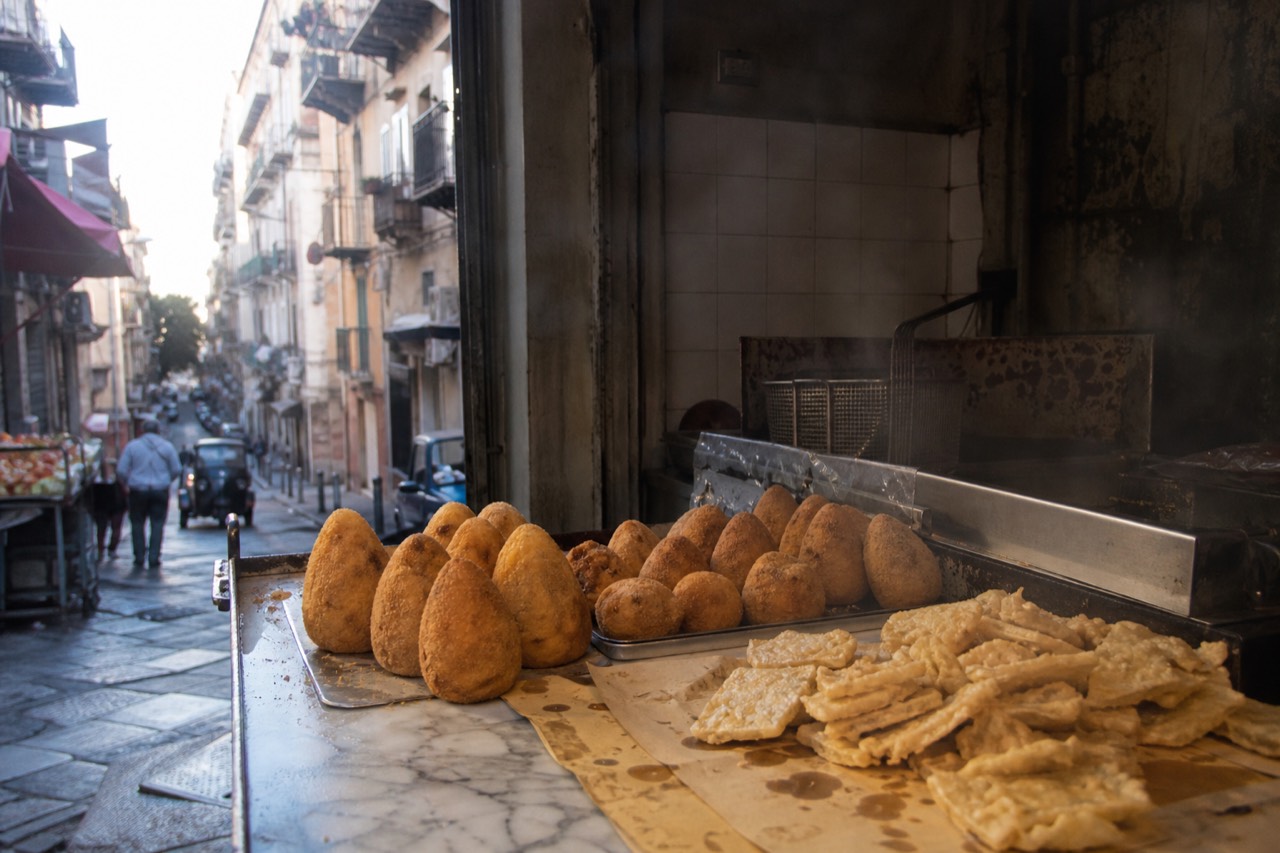
Sicily has no single crowned winner, but the closest thing to a flagship dish is the arancina, the fried rice ball Palermo eats standing up, followed closely by pasta alla Norma in the east and the cannolo everywhere. The Accademia della Crusca, Italy's highest language authority, has documented the arancina since the mid-19th century, and Sicily's official traditional-foods list records all three.
That answer will annoy partisans in Catania and delight nobody in Palermo, which is exactly why it is the honest one. Sicily is an island of two food vocabularies, and even the grammar splits: west of the island's spine the rice ball is la arancina, feminine and round; east of it the same object becomes il arancino, masculine and often pointed. When a single dish cannot even agree on its own article, a definitive ranking is not on offer.
What is on offer is evidence. Sicily maintains an official national register of traditional foods, the PAT list, which the Region publishes and which currently carries 293 Sicilian products. Arancini di riso, Panelle, Crocche di patate, Stigghiola, Cannoli, Cassata siciliana, Sfincione, Caponata di melenzane and Pasta che sardi are all on it. That list, plus the language academy's findings, gives us something better than opinion: a paper trail.
If you want to taste the canon rather than read about it, a guided walk is the most efficient route. The trio below covers three very different ways to do it: a small-group street food walk, an all-inclusive market tour and a wine tasting out in the island's interior.
Why The Arancina Wins On Paper
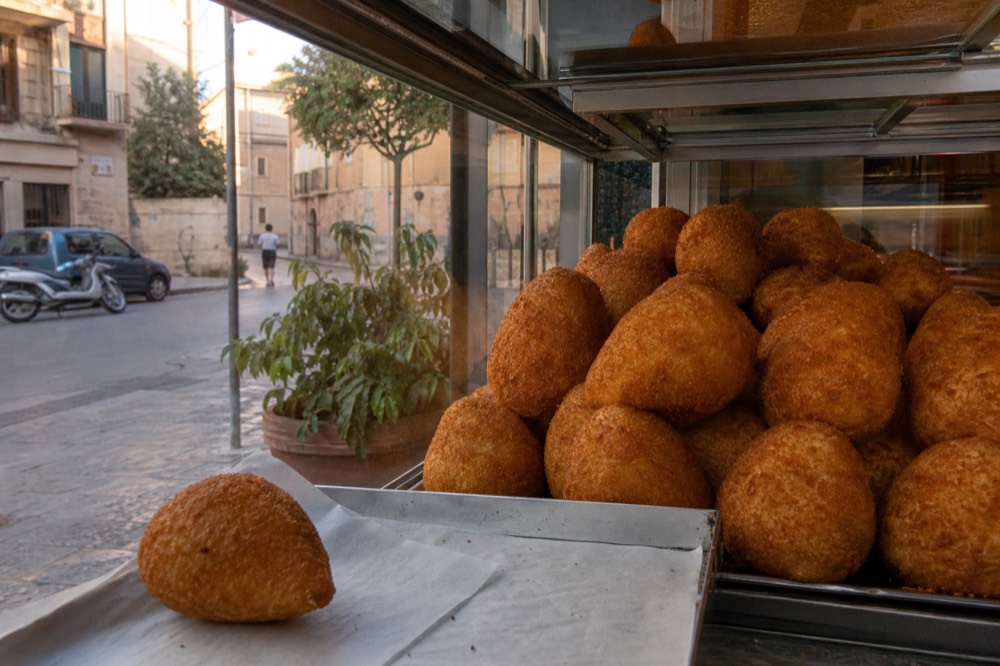
The arancina has the strongest claim to being Sicily's most famous dish because it appears everywhere on the island, at every hour, and because its name is a genuine linguistic fault line recognised by Italy's top language authority. It sits on the official PAT list of traditional Sicilian products, and Palermo even dedicates a day to it in December. Every argument for another dish has to get past it.
Start with the Accademia della Crusca, which published a formal linguistic consultation on the arancino/arancina question. Crusca's findings are more interesting than the usual east-versus-west joke. The word divides the island: arancina, round, in the western half including Palermo, and arancino, round or pointed, in the east including Catania. Palermo's feminine form actually follows standard Italian, where the fruit is feminine and the tree is masculine, while the eastern masculine follows the Sicilian dialect word aranciu. The local pride runs opposite to the grammar.
Then comes the part almost no travel article mentions. Crusca states plainly that there is no trace of this preparation in literature, chronicles, diaries, dictionaries, ethnographic texts or recipe books before the second half of the 19th century. The first Sicilian dictionary to record the word, Biundi's Sicilian-Italian dictionary of 1857, defines arancinu as a sweet rice dish shaped like a bitter orange. Meat and tomato do not appear in the early records at all. Crusca's conclusion is that the popular Arab-origin story no longer looks certain, and that the dish more likely emerged in the mid-to-late 1800s as a sweet that turned savoury almost immediately.
So the arancina is a young dish with a contested backstory and an outsized grip on the island. Palermo even treats 13 December, the feast of Santa Lucia, as an unofficial "Arancina Day", when consumption of arancine al burro or alla meat sauce spikes across the city. That is the behaviour of a flagship dish, whatever the lexicographers say about its birth certificate.
| Claim to fame | Evidence | Where it comes from |
|---|---|---|
| On the official PAT list | "Arancini di riso" in the gastronomy category | Regione Siciliana, June 2025 PAT count |
| Documented since the mid-1800s | First dictionary attestation as a sweet rice dish, 1857 | Accademia della Crusca consultation |
| Splits the island's grammar | Feminine west, masculine east, exceptions in Ragusa and Siracusa | Accademia della Crusca consultation |
| Has its own day | 13 December, feast of Santa Lucia, massive arancina consumption | Local press coverage of the observance |
The regional technical sheet for arancini di riso, part of the official PAT documentation, describes a rice product, typically spherical, filled with meat or alternatively ham and mozzarella or spinach, and even cites the dish's appearance in Federico De Roberto's 1894 novel I Vicere, where the arancine are described as each the size of a melon. The Crusca consultation is the single best source on the word's history; the Region's technical sheets are the best on the product itself.
Is Pasta Alla Norma Actually Sicily's Signature?
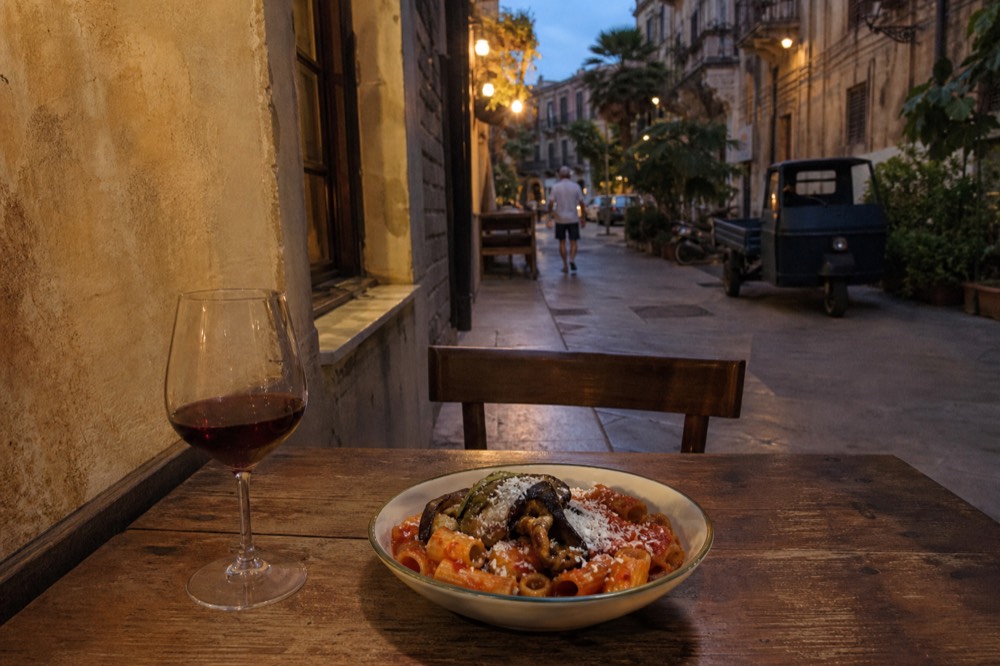
Pasta alla Norma is the strongest challenger in eastern Sicily, a pasta dish of aubergine, tomato, basil and salted ricotta named after a Bellini opera, and it carries one advantage the arancina lacks: it is a sit-down plate rather than street snack, so restaurants worldwide have adopted it as their token "Sicilian" offering. In Catania it is the dish, and its worldwide restaurant presence arguably makes it Sicily's most exported famous dish.
The name is the story. Local tradition ties the dish to Vincenzo Bellini's opera Norma, premiered at Milan's La Scala in the early 1830s, and the common account credits a Catania playwright with comparing the pasta to the opera's perfection. The association with Catania is real and deep: when Stanley Tucci filmed his Sicily episode for Searching for Italy, the pasta alla Norma sequence was filmed at Me Cumpari Turiddu in Catania, with the chef Roberta Capizzi. A dish that television producers reach for when they need one plate to represent Sicily is not a minor dish.
What keeps Norma in second place on the island itself is distribution. The arancina crosses the whole island and all social settings; Norma is a home and trattoria plate, strongest in its home city. Abroad, the ranking reverses, because a warm pasta plate travels onto menus far more easily than a fried rice ball that must be eaten within minutes of the fryer.
The aubergine itself has deep Sicilian roots, deeper than the Norma name. At Mazara del Vallo, archaeologists with the Sicily in Transition project have found the remains of aubergine, spinach, watermelon, cotton and citrus in Islamic-period deposits, all new to the area, with vegetable and fruit production expanding significantly during the 10th century. Caponata, the island's other great aubergine dish, is also on the PAT list, described in the official sheet as a mix of fried aubergine chunks, celery, green olives, tomato sauce, onion, capers, sugar and vinegar, with western Sicily as its production territory.
What About The Cannolo?
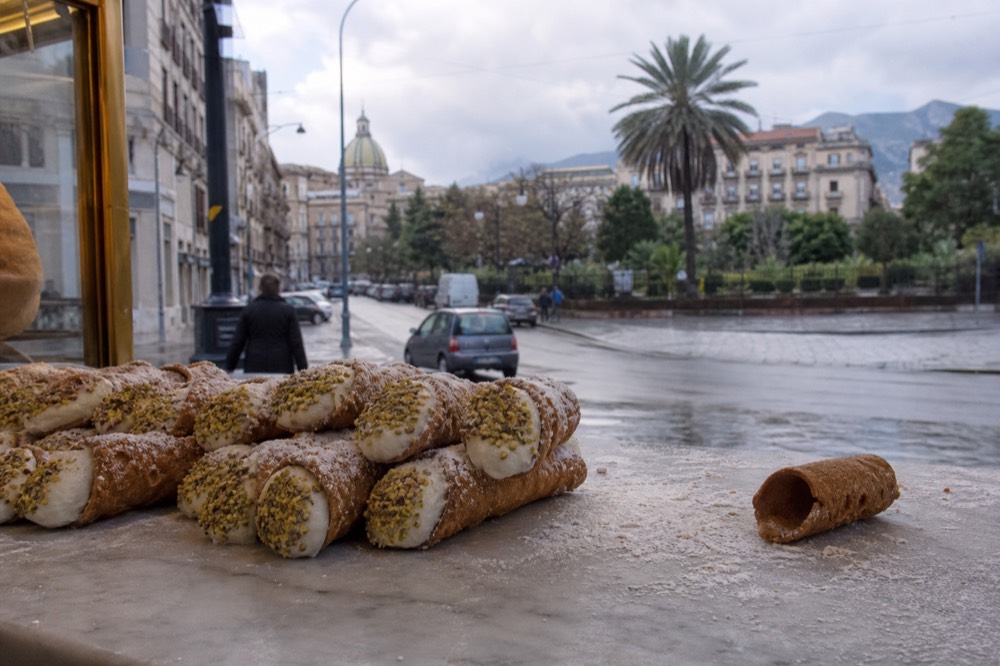
The cannolo is Sicily's most famous sweet and its most recognisable export, a fried shell filled with sweetened ricotta whose official traditional-food territory is actually the Trapani area, not Palermo, and whose name comes from the cane the shell was originally rolled around. For many visitors it is the first Sicilian dish they can name, which makes it famous even if it is not, strictly, one dish of the whole island.
The official PAT technical sheet is unambiguous on the geography: the production territory for "Cannolo alla ricotta, cannolo siciliano" is Paceco, Erice, Trapani and Valderice, the Trapani coast. Treccani, the Italian encyclopaedia institute, defines it as a pastry rolled around a tube, fried, then filled with sugared ricotta flavoured with liqueur, candied fruit and chocolate pieces. The name derives from canna, cane: the shell was originally rolled around a piece of Arundo donax, the common reed.
Palermo has its own claim to cannolo greatness through geography. Piana degli Albanesi, in the Palermo province inland, is the town locals most often name for the island's best cannoli, and it hosts a dedicated Cannolo Fest each May, with pastry shops from across Sicily. Reddit threads on Palermo sweets return the same advice with striking regularity: the best cannoli are filled to order, and shops that fill the shell only when you buy it, like the convent-linked pasticceria near Santa Caterina, are the ones worth queuing at.
A word of caution for cannolo hunters in summer: locals note that summer versions often use imported milk ricotta, which flattens the differences between shops. The sheep's-milk ricotta that makes the winter cannolo extraordinary is a seasonal product. If you are chasing the definitive one, spring beats August.
The cannolo also has a rival within Sicilian pastry, and it is a serious one: cassata. The cassata siciliana is on the PAT list, described as sponge cake soaked in fortified wine, filled with ricotta cream with chocolate, covered in sugar glaze and candied fruit, with the Palermo area using pistachio-green marzipan on parts of the border. Its paper trail is the oldest of any Sicilian sweet on file: the technical sheet cites a document of the Synod of Mazara of 1575 listing cassata among the sweets indispensable at feast days. Even the etymology is a genuine scholarly fight, with Treccani deriving the word from Latin caseus, cheese, and the Region's own sheet suggesting Arabic quas'at. Two authoritative sources, two etymologies, no winner. You can read Treccani's entry at its online dictionary and judge for yourself.
Which Dishes Do Visitors Actually Know Before They Arrive?
Most visitors arrive knowing three or four Sicilian dishes by name: the arancina, the cannolo, pasta alla Norma and granita with brioche, and the street-food canon of Palermo, panelle and sfincione, tends to be discovered on the ground rather than beforehand. That gap between what is famous abroad and what is famous in Palermo is exactly what a food tour exists to close.
Granita deserves its place in that shortlist. It is on the PAT list in multiple flavours, and Treccani derives the name from the granular texture of the ice. In eastern Sicily, particularly the Messina area, granita con brioche is described in current Italian food writing as a standard everyday breakfast, the sweet brioche used to scoop the ice. It is one of the odder genuine Sicilian habits: ice and brioche at 8am, treated as entirely unremarkable.
The Palermo street canon works differently. Panelle, chickpea fritters, hold a distinction no other item in the canon can claim: on the official regional sheet, their production territory is the city of Palermo itself and parts of its province. The sheet even specifies that the chickpea batter is spread to half a centimetre thick before being cut and fried. Crocche di patate are PAT-listed alongside them, and stigghiola, the lamb-offal roll also on the list, carries an official note that it is very probably a legacy of past Jewish culinary culture, offered by the Region as a hedged hypothesis rather than a settled fact.
Sfincione, the spongy Palermo pizza relative, is PAT-listed too, though the exact topping formula is not publishable from any authoritative source, a gap the site flags honestly rather than filling with folklore. What is firmly sourced is the white-versus-red split: the Comune di Bagheria's own festival page calls white sfincione Bagheria's symbol product, with red as the Sicilian tradition, and the town's Sfincione Fest ran its ninth edition in November 2026 on Corso Umberto I.
| Dish | Category on the PAT list | Home territory | Fame abroad |
|---|---|---|---|
| Arancini di riso | Gastronomy | Whole island, west-east split | Very high |
| Pasta alla Norma | Not PAT-listed as such | Catania and the east | Very high on restaurant menus |
| Cannolo | Bakery/pastry | Trapani area per official sheet | Very high |
| Cassata siciliana | Bakery/pastry | All Sicily, Palermo marzipan variant | Moderate |
| Caponata di melenzane | Gastronomy | Western Sicily | Moderate |
| Panelle | Gastronomy | Palermo city and province | Low outside Sicily |
| Sfincione | Bakery | Palermo, white version in Bagheria | Low outside Sicily |
Why The Answer Depends On Where You Stand
Sicily's most famous dish resolves differently by geography: in Palermo the answer is the arancina and the panelle canon, in Catania it is pasta alla Norma and the arancino, in Trapani province it is the cannolo, and abroad it is whichever of those a restaurant menu happened to adopt first. The island was ruled from, and fed by, competing cities for centuries, and its food map still shows the seams.
This is not a cop-out; it is the actual structure of the island's food culture. Sicily spent much of its history as a frontier: Arab then Norman, with UNESCO listing nine Arab-Norman civil and religious structures in Palermo, Cefalu and Monreale as World Heritage precisely for the synthesis of Western, Islamic and Byzantine cultures they represent. That layering shows up on the plate. The archaeobotanical record at Mazara shows aubergine, spinach, watermelon and citrus arriving in the Islamic period; the lexicographic record shows the arancina appearing only in the late 19th century; and the official record shows the cassata already indispensable at feasts in 1575. Sicilian food is an accumulation, not a single invention.
The east-west grammar split tells the same story in miniature. Crusca notes that Ragusa and Siracusa break the arancina/arancino pattern because their local dialect word for the fruit was different, so the Italian word arrived in its standard feminine form. Language, politics and food move across this island in layers, and each layer left a dish behind.
For a visitor, the practical version of this is simple. If your trip is anchored in Palermo, the famous-dish question is answered by the markets and friggitorie: arancine, panelle, crocche, sfincione, cannoli filled to order. If it is anchored in Catania or the east, it is answered by Norma, granita with brioche for breakfast and pointed arancini. The worst mistake is trying to taste the whole island's canon in one city and concluding the other half is overrated.
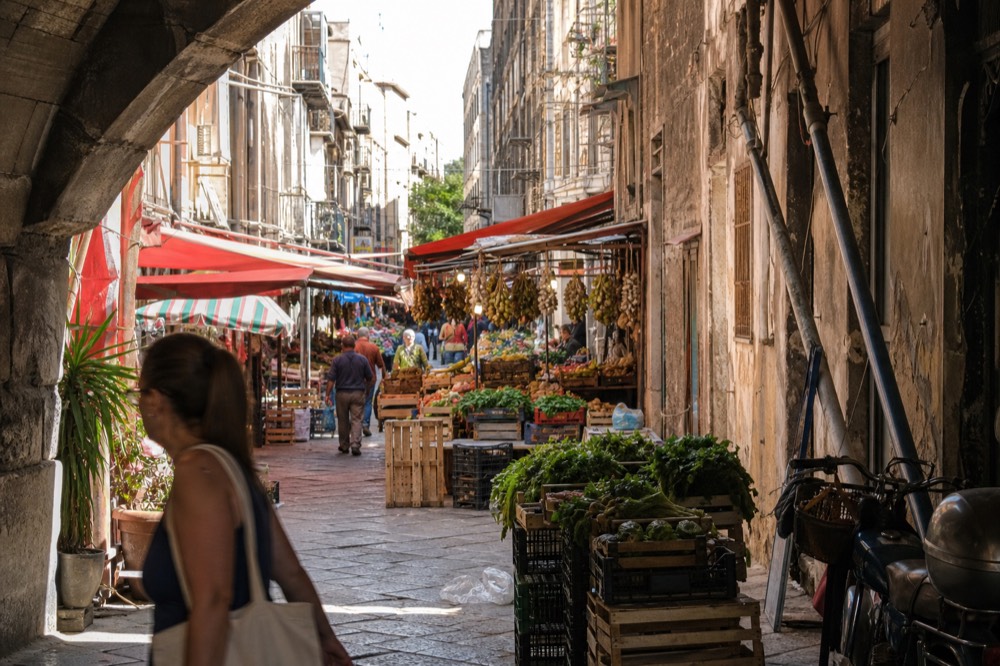
How To Taste The Shortlist In One Trip
A three-hour Palermo street food walk covers the arancina, panelle and cannolo shortlist in a single morning, and adding a market-plus-history format or a wine tasting fills out the rest of the island's food story. Prices for the walks run from $39.83 to $89.33 per person depending on format and tasting count, with most offering free cancellation up to 24 hours.
The small-group Do Eat Better walk is the natural fit for this specific question, because the canon it covers, arancine, panelle, crocche, cannoli, is the western half of the answer. It runs 4.9 across 1,355 reviews, from $52.06 per person, three hours, 12 spots per departure, with free cancellation up to 24 hours. The all-inclusive Streaty market tour, from $81.64 per person and 4.9 across 2,308 reviews, is the same canon with everything included, though note it is one of the few non-refundable products on the market. If you would rather sit down and cook the shortlist yourself, the cooking-class pages on Palermo Food Tours cover formats from a pizza and gelato class to full market-to-table days.
One honest planning note: the famous dish is cheap, but seeing it properly is not only about money. A single arancina or panelle sandwich in the historic centre runs roughly 3 to 4.50 euro, and local reporting has noted those prices have roughly doubled since 2021, a tourism-driven shift residents feel sharply. A guided walk costs more than grazing solo, but it answers the question this page opened with in three hours instead of three days, and a guide will steer you away from the stalls reheating premade arancini, a recurring complaint from visitors at the big markets.
For deeper background before you go, the site's guides on Palermo street food, what Sicilians eat for breakfast and the most popular street food in Sicily unpack each item in the canon at full length.
The short answer: the arancina is Sicily's most famous dish on the island itself, pasta alla Norma leads in the east, and the cannolo is the one the rest of the world knows first. Sicily's official traditional-foods register and Italy's language academy back the arancina's claim, but no single plate rules the whole island without argument. The details below unpack each contender.
Common Questions About Sicily's Most Famous Dish
What Is Sicily's Most Famous Dish?
On paper, the arancina: it is eaten across the whole island, it is on the official traditional-foods list, and its name is the linguistic fault line Italy's language academy has formally documented. Pasta alla Norma is the strongest challenger in the east, and the cannolo is the most famous abroad. The honest answer depends on which end of the island you are standing in.
Arancina or arancino: which is correct?
Both. The Accademia della Crusca confirms arancina is standard in the west including Palermo, arancino in the east including Catania, and neither form is wrong: the Palermo feminine follows standard Italian grammar while the eastern masculine follows the Sicilian dialect.
Where did the arancina come from?
The Arab-origin story is weaker than most guides claim. Crusca found no trace of the dish in any literature, dictionary or recipe book before the second half of the 19th century, and the first dictionary attestation, from 1857, describes a sweet rice dish. The likelier account is a mid-1800s sweet that turned savoury almost immediately.
Is the cannolo from Palermo?
The official traditional-food sheet gives the cannolo's production territory as Paceco, Erice, Trapani and Valderice, the Trapani area. Palermo's claim runs through Piana degli Albanesi in its own province, the town locals most often name for the island's best cannoli.
What is Sicily's most famous pasta dish?
Pasta alla Norma, the Catania dish of aubergine, tomato, basil and salted ricotta named after Bellini's opera Norma. Pasta che sardi, sardine pasta with wild fennel, is the other historic contender and appears on the official PAT list.
Can you taste all of Sicily's famous dishes in Palermo?
You can taste the western canon, arancine, panelle, crocche, sfincione, cannoli and granita, entirely in Palermo, and a three-hour guided walk from $52.06 per person covers it. Pasta alla Norma appears on Palermo trattoria menus too, though its home ground is Catania.