Sicilian Food Vs Italian Food: What Actually Separates The Island's Cooking
Sicilian cooking is Italian cooking the way a dialect is a language: same passport, different pantry. Here is what the official sources actually say separates the island's food from the mainland's, item by item rather than by vibes.
Short answer
Sicily has 293 officially recognized traditional products, including panelle, arancini, stigghiola and caponata, many with no mainland equivalent. The differences that matter are concrete: sheep's milk ricotta instead of cream, fried dough instead of pastry, aubergine and citrus at the center, and a sweet-savoury palate the mainland largely abandoned. A Palermo street food tour runs from $39.83 per person.
Sicilian food is not a regional variation of Italian food in the way Tuscan food or Roman food is. It is a separate pantry that happened to end up inside the Italian state, and its defining habits, sweet-savoury pairings, fried dough, sheep's milk ricotta, aubergine, citrus, have more to do with the island's own history than with anything on the mainland. The Italian agriculture ministry recognizes this formally: Sicily's official list of Prodotti Agroalimentari Tradizionali (PAT), traditional products whose methods must have been practised consistently for at least 25 years, runs to 293 entries as of the June 2025 revision, and a large share of them exist nowhere else in the country.
The problem with most "Sicilian vs Italian" comparisons is that they argue from atmosphere. This page does the opposite. It works from the official product definitions, the linguistic record and the archaeology, and it names where each claim comes from. For a broader map of what to eat in the city, see the Palermo street food guide; for the sit-down side of the island, traditional Sicilian food explained covers the restaurant canon.
What Is The Actual Difference Between Sicilian Food And Italian Food?
The difference is a specific pantry and a set of techniques, not a mood: Sicily leans on fried dough, sheep's milk ricotta, aubergine, citrus and sweet-savoury combinations the mainland mostly dropped. The island holds 293 official traditional products under a national scheme requiring 25 years of documented continuity, and its most famous items, panelle, stigghiola, caponata, cassata, have no mainland twin. Italian food is the umbrella; Sicilian food is a distinct trunk underneath it.
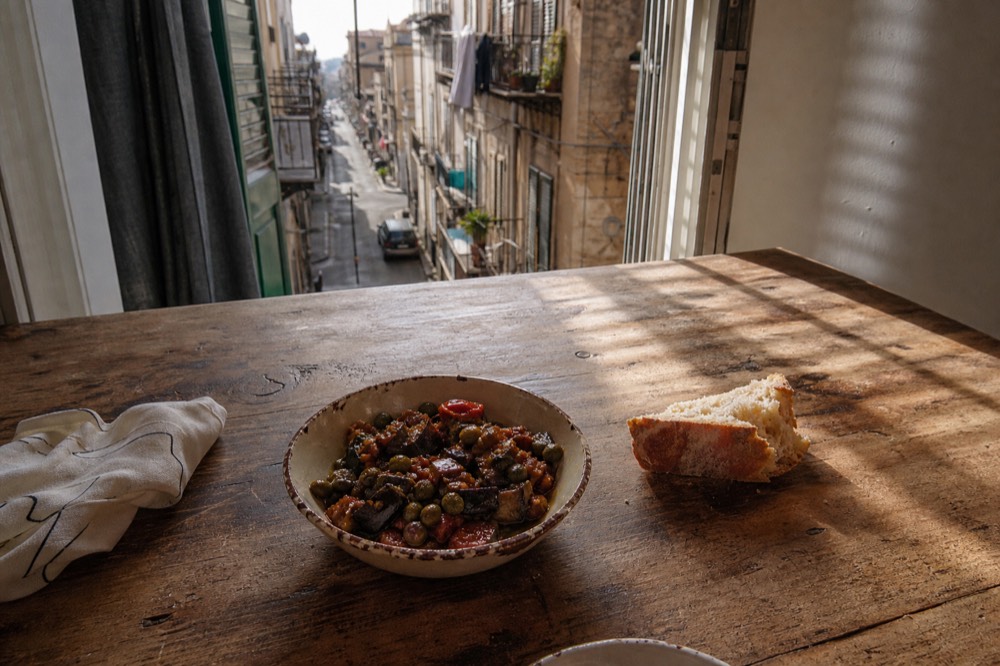
The most honest way to see the gap is through the official technical sheets the Regione Siciliana publishes for each PAT product. Take caponata di melenzane: the official definition is fried aubergine chunks mixed with celery, green olives, tomato sauce, onion, capers, sugar and vinegar. Sugar and vinegar together, in a vegetable dish. That sweet-and-sour axis is the single most cited marker of Sicilian cooking, and it is right there in the government's own product description.
Or take cassata. The PAT sheet defines it as sponge cake soaked in fortified wine, filled with ricotta cream enriched with chocolate, covered in white sugar glaze and candied fruit, with pistachio-green marzipan on the borders in the Palermo version. The ricotta is specified as sheep's milk ricotta. A mainland Italian dessert at this level of ceremony would be built on cream, butter or pastry. Sicily's celebration cake is built on sheep's cheese and candied fruit, and it has a paper trail: the sheet cites a document of the Synod of Mazara of 1575 listing cassata among the sweets indispensable at feast days.
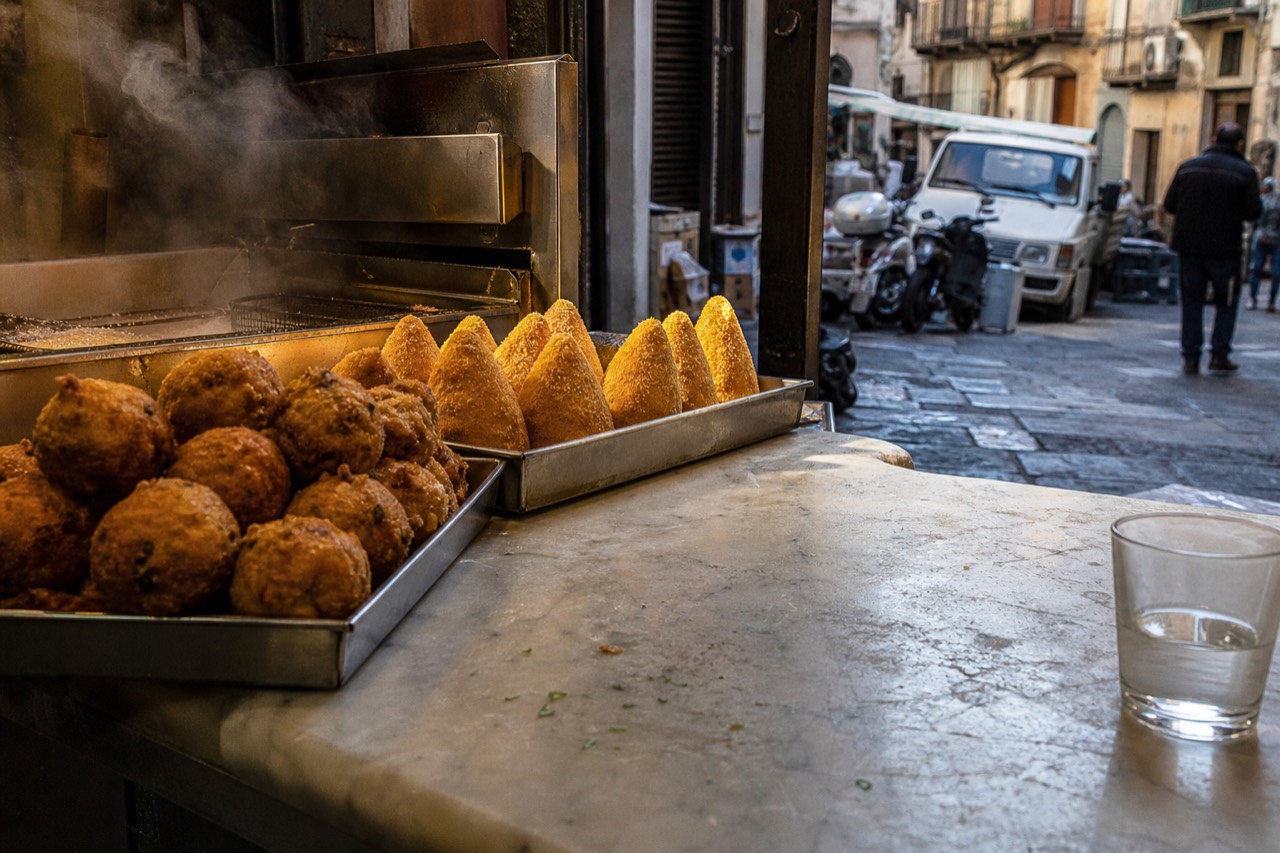
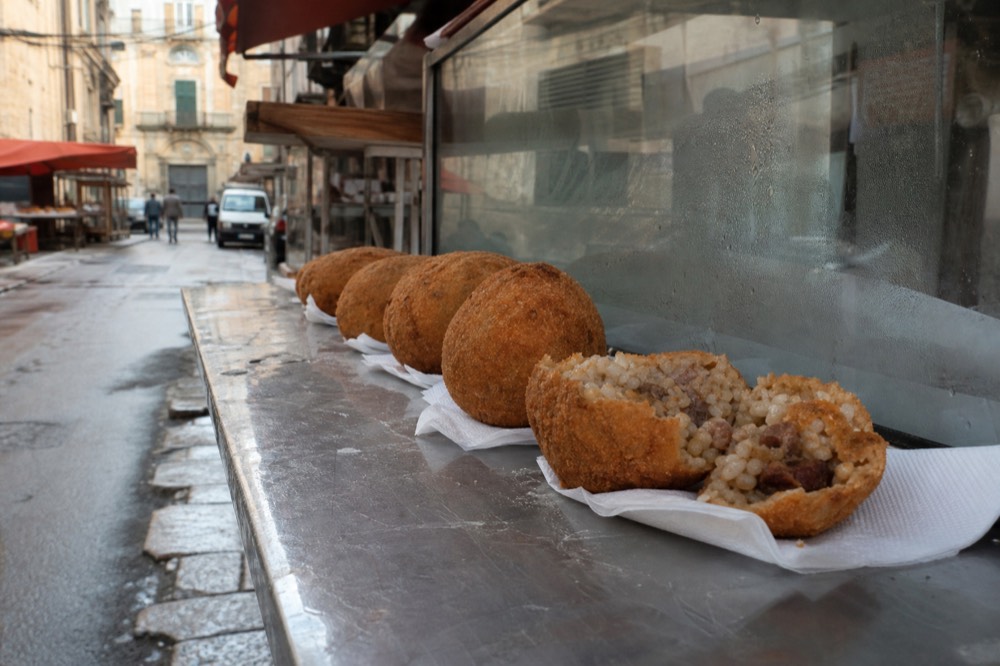
Even where a dish looks familiar, the Sicilian version usually differs in structure. The mainland's supplì and the island's arancina are both fried rice, but the Sicilian PAT sheet specifies a rice shell around a meat filling with peas, tuma and caciocavallo, coated in breadcrumb, egg and flour. The mainland's arancino debate aside, the coating and the cheese mix are the island's own signatures.
Why Do Sicilian Recipes Use Breadcrumbs, Sugar And Vinegar Where The Mainland Uses Cheese And Oil?
Because the island's base layer is fried, starchy and agrodolce rather than dairy-fat-driven: the official arancini sheet lists breadcrumb, eggs, flour and grated caciocavallo as the shell, the official caponata sheet specifies sugar and vinegar in a vegetable dish, and the pastry canon runs on fried dough, lard and sheep's ricotta rather than butter and cream. Where mainland Italy thickens with cheese and oil, Sicily coats, fries and glazes.
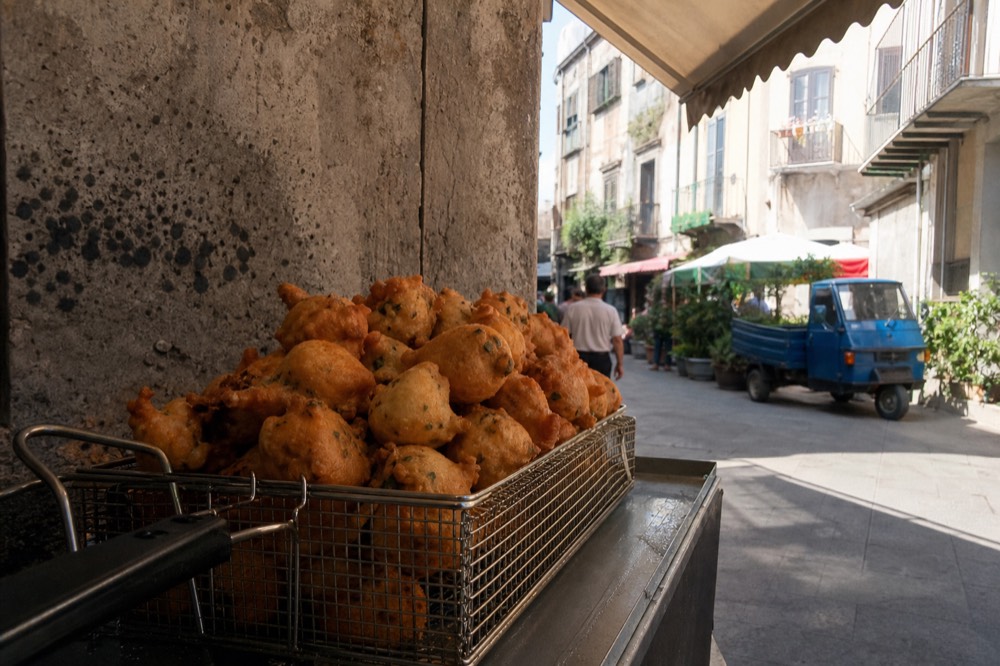
Start with the breadcrumb, because it is the most underrated marker. The arancini di riso sheet's ingredient list reads rice, breadcrumb, eggs, flour, grated caciocavallo, butter, salt and pepper. Breadcrumb is the structural coating. Panelle, the one canon item whose official production territory is the city of Palermo itself, are chickpea flour batter cooled, cut and deep-fried in olive oil. Iris, Palermo's round sweet rosticceria piece, is proved, fried dough filled with ricotta cream. The canon is a fried canon.
The sweet-savoury instinct goes beyond caponata. The same official list carries sarde a beccaficu and pasta che sardi, dishes whose names alone signal the island's habit of pairing fish with sweet elements. You will not find these PAT entries replicated in Lazio or Lombardy's regional lists; they are island-specific in name and in the national register.
| Sicilian habit (official PAT definition) | What it replaces on the mainland | Where it is written down |
|---|---|---|
| Breadcrumb-and-egg coating on fried rice (arancini) | Plain fried supplì coating in Rome | Regione Siciliana PAT sheet, Arancini di riso |
| Sugar and vinegar in aubergine caponata | No sweet element in most mainland vegetable contorni | PAT sheet, Caponata di melenzane |
| Sheep's milk ricotta in cassata and cannolo | Cow's milk cream or mascarpone in mainland dolci | PAT sheets, Cassata; Cannolo alla ricotta |
| Fried sweet dough filled with ricotta (iris) | Baked pastry with custard or cream | PAT sheet, Iris |
| Chickpea fritters in a bun (panelle) | No mainland equivalent in the PAT scheme | PAT sheet, Panelle |
Tasting this side by side is exactly what a good Palermo walk does, and the roster has three strong ways to do it.
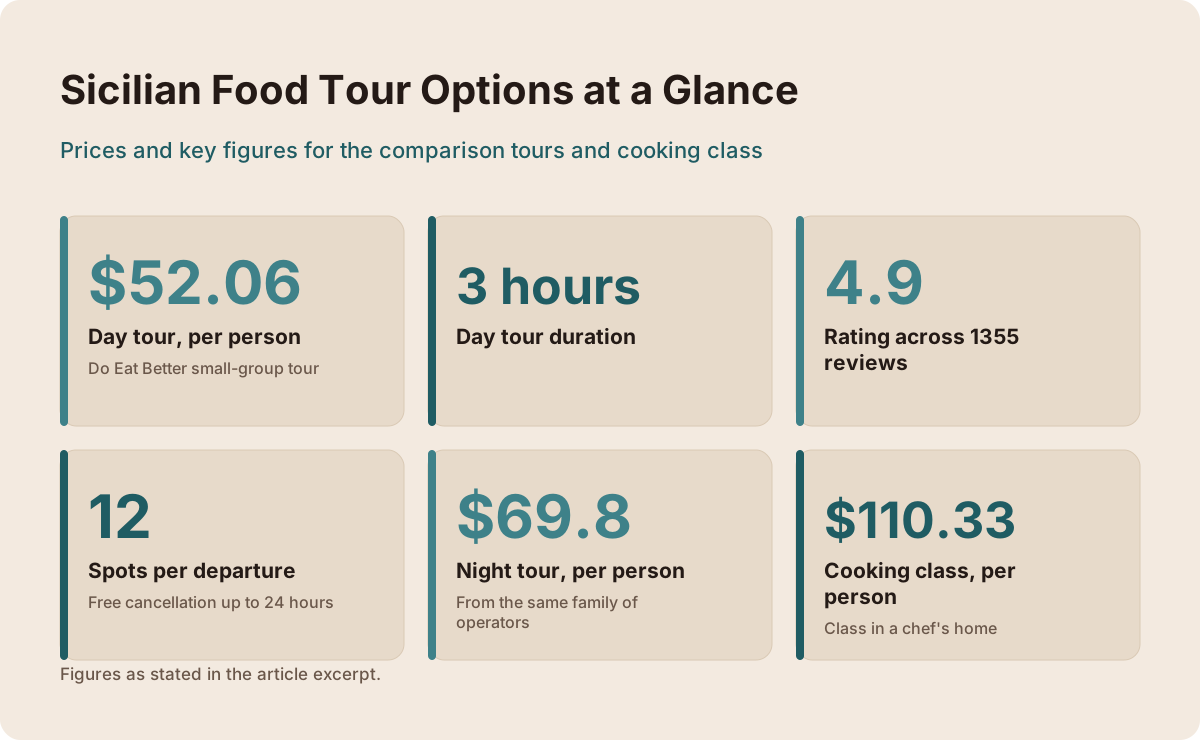
The Do Eat Better small-group tour is the budget comparison test: from $52.06 per person, 3 hours, 4.9 across 1355 reviews, free cancellation up to 24 hours and only 12 spots per departure. The night version from the same family of operators runs from $69.8 per person. And if you want to understand the pantry by cooking from it rather than walking past it, a class in a chef's home runs from $110.33 per person.
Which Sicilian Dishes Are Officially Recognized That You Will Not Find On The Mainland?
Twenty-nine Sicilian products sit on the national traditional-foods register under gastronomy alone, including cuscus di pesce, pasta che sardi, busiati col pesto trapanese and stigghiola, none of which has a mainland counterpart in the national list. The register also carries 100 bakery, pastry and confectionery entries, among them sfincione, cannoli and cassata siciliana. Sicily's total of 293 PAT products is the full measure of how much of the island's food exists only on the island.
The PAT scheme itself is worth understanding, because it is the closest thing Italian law has to a definition of "traditional." It was created by art. 8 of Decreto Legislativo 30 aprile 1998 n. 173, and a product qualifies only if its preparation, conservation and ageing methods have been practised in a consistent, traditional way for not less than 25 years. Sicily's 293 entries break down as follows: 87 vegetable products, 100 fresh pasta, bakery, biscuit and confectionery items, 40 gastronomy products, 25 cheeses, 11 fish preparations and the rest spread across other categories.
The gastronomy category is where the island's distinctness is sharpest. Alongside the famous names, the list carries frascatula, maccu di grano, caciu all'argintera and busiati col pesto trapanese. Some of these are arabophone in structure and name; cuscus di pesce on a Sicilian register is, on its face, the clearest single sign that this kitchen is not simply a southern extension of the mainland's.
It also cuts the other way, and honestly so. Some things the island is famous for are not on the list at all. Pani ca meusa, the spleen sandwich, is not PAT-listed, and neither is frittola, babbaluci or brioche col tuppo. Absence from the register is not a judgement on taste; it is a statement about documentation. But it does mean that the "officially Sicilian" canon and the famous-in-the-street canon are two different sets, and a visitor should know which one a menu is quoting.
If reading product sheets has made you hungry for the real thing, this is the natural place to book.
Is It Arancina Or Arancino, And Why Does The Word Split The Island In Two?
The Accademia della Crusca settled the linguistic question in 2016: both forms are correct, but they map geographically. Palermo and western Sicily say arancina, feminine and round; Catania and the east say arancino, masculine and round or cone-shaped. More surprisingly, Crusca found no trace of the dish in any literature, chronicle, dictionary or recipe book before the second half of the 19th century, and the first dictionary attestation, Biundi 1857, defines it as a sweet.
That last detail is the single most useful fact on this whole page, because almost every English-language food write-up repeats an Arab-origin story for the arancina that the evidence does not support. The Crusca consultation is explicit: "il legame tra il supplì siciliano e la tradizione araba non sembra più così certo," the link between the Sicilian rice ball and Arab tradition no longer seems so certain. The likelier account, in Crusca's own reading, is a mid-to-late 1800s sweet rice dish shaped like a bitter orange that turned savoury almost immediately.
The grammar is also the reverse of what local pride would predict. Crusca's finding is that Palermo's feminine arancina follows standard Italian's rule, feminine fruit, masculine tree, while the eastern masculine follows the Sicilian dialect form aranciu. The campanilismo runs opposite to the grammar: Palermo, the city that most insists on its own word, is the one using the standard-Italian morphology.
| Question | West (Palermo) | East (Catania) | Source |
|---|---|---|---|
| The word | arancina | arancino | Accademia della Crusca, 2016 |
| The shape | round | round or pointed, possibly Etna-inspired | Crusca, hedged as "potrebbe" |
| Dialect basis | standard Italian gender rule | Sicilian aranciu | Crusca |
| Exceptions | Ragusa and Siracusa say arancina too | (same exceptions) | Crusca; local fruit word partuallu |
The morphology verdict, again from Crusca: "chi dice arancino italianizza il modello morfologico dialettale, mentre chi dice arancina non fa altro che riproporre il modello dell'italiano standard." Neither is wrong. Ordering an arancina in Catania is a dialect act; ordering one in Palermo is just correct Italian.
Why Are Sicilian Pasta Shapes And Sauces Different From Mainland Ones?
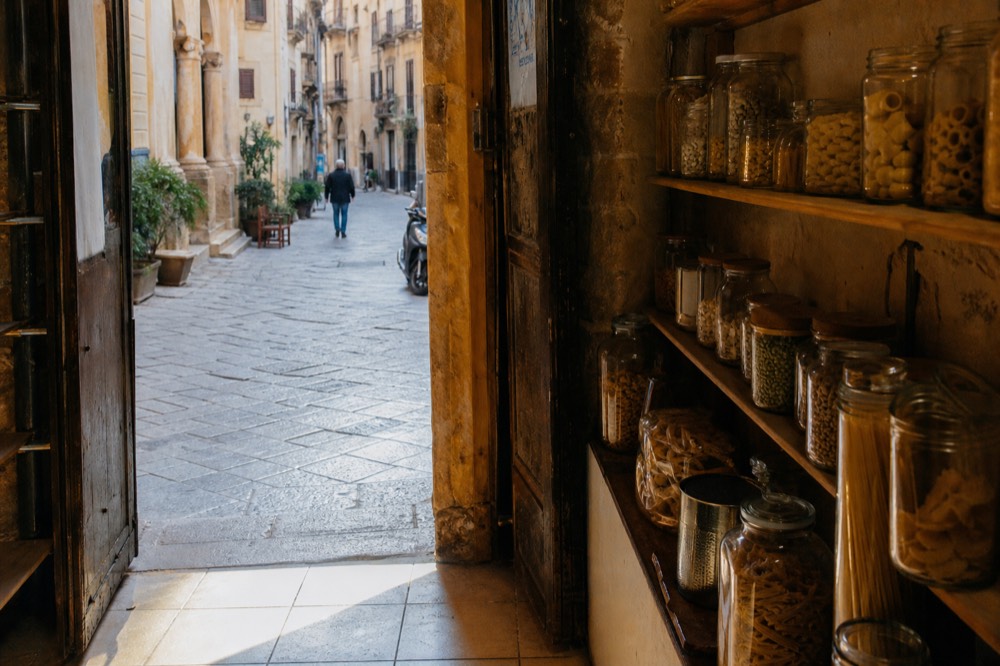
Because the island's pasta canon is built on busiati, couscous and sardine sauces rather than the mainland's egg-dough and cheese-emulsion tradition: the Sicilian PAT list carries busiati col pesto trapanese, pasta che sardi, cuscus di pesce and pasta ca muddica as named national products, none of which exists in northern or central Italy's registers. The island's sauces aggregate small fish, breadcrumbs and nuts; the mainland's emulsify cheese and fat.
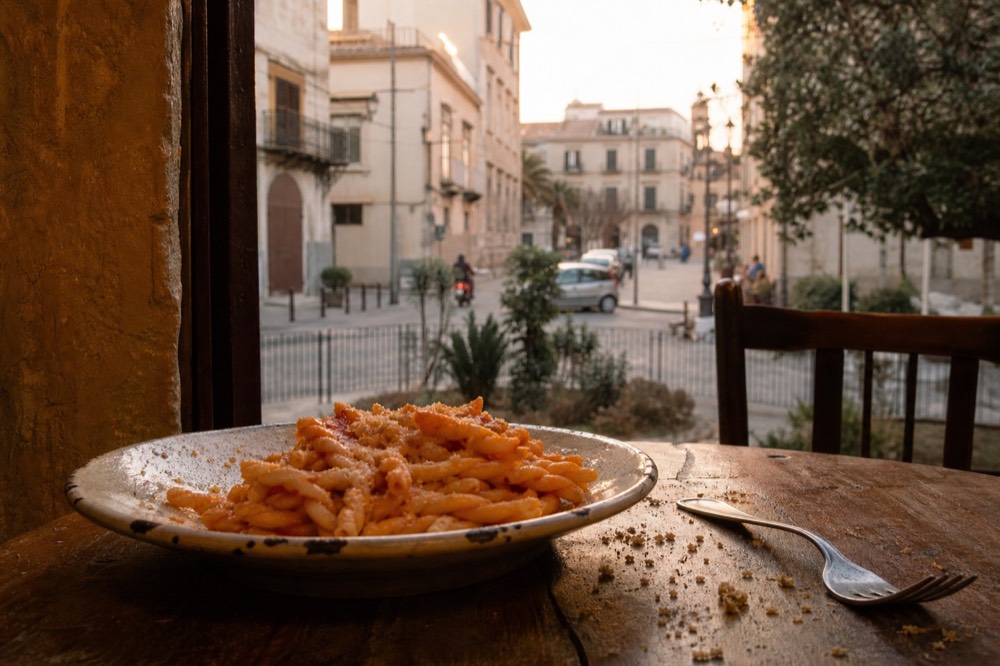
The breadcrumb point deserves its own sentence, because it is the clearest single practical contrast. Pasta ca muddica, breadcrumbs as a pasta condiment, is on the Sicilian PAT list by name. On the mainland, breadcrumb on pasta is what you do with yesterday's bread; in Sicily it is a registered traditional product. Add busiati, the island's twisted spiral shape, and pesto trapanese, and the pasta chapter of Sicilian cooking reads like a different country's cookbook.
There is also a deep-history claim that must be handled carefully. The 12th-century geographer al-Idrisi, writing in Palermo under Norman patronage, described a settlement near Trabia producing and exporting dried pasta, and this passage is often cited as evidence that Sicily invented commercial pasta. The account is genuine, but it is Norman-period, over eighty years after the Normans took Palermo in 1072, so it is not proof of Arab-era industrial production. Treat it as an attributed medieval report, not as settled origin. What is archaeologically solid is different: excavations at Mazara del Vallo have found aubergine, spinach, watermelon, citrus and cotton in Islamic-period deposits, all new to the area, with vegetable and fruit production expanding markedly in the 10th century, per the Sicily in Transition project.
The honest version of "the Arabs brought Sicilian food" is therefore: the archaeology supports new crops arriving under Islamic rule, the scholarly literature debates how much was genuinely Arab-driven, and the island's most famous prepared dish, the arancina, has no documented trail before the 1800s. Sicilian food is layered; the layers do not all point the same way.
How Does Sicilian Sweetness Differ: Sheep's Ricotta, Cassata And The Cannolo Question?
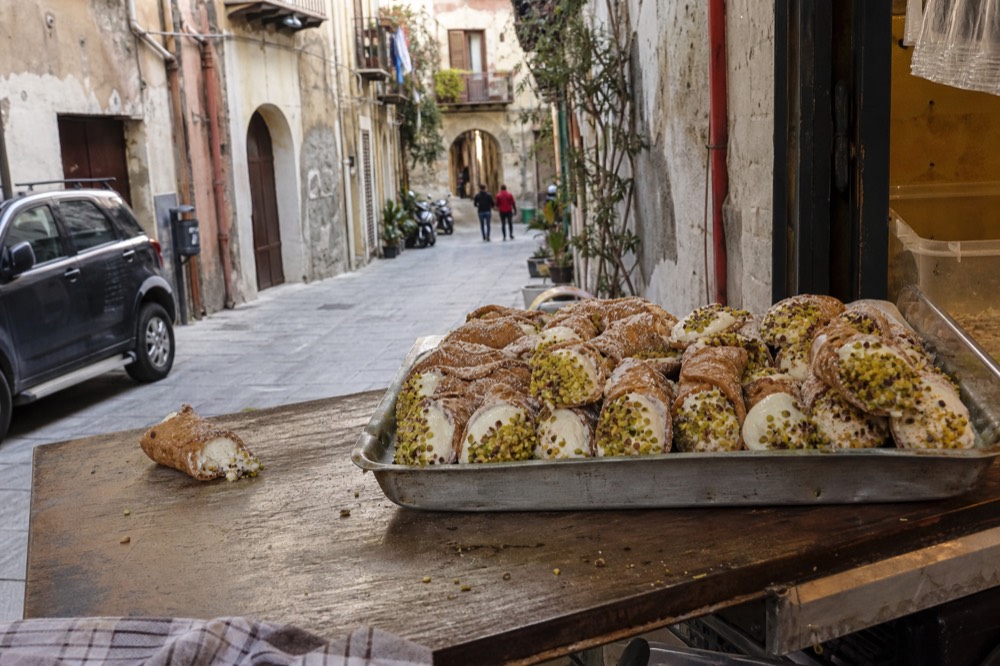
Sicilian pastry runs on sheep's milk ricotta, fried shells, candied fruit and marzipan rather than the mainland's butter, cream and chocolate tradition, and the official sheets say so explicitly: cassata's filling is specified as sheep's milk ricotta with sugar, dark chocolate and cinnamon, while the cannolo shell is flour, water, marsala and lard, fried and filled with sweetened ricotta. Unexpectedly, the PAT cannolo's registered territory is the Trapani area, not Palermo.
The cannolo detail surprises nearly everyone. The technical sheet's territory for "Cannolo alla ricotta, cannolo siciliano" is Paceco, Erice, Trapani and Valderice, and the name comes from the cane, Arundo donax, around which the shell was originally rolled. Palermo eats magnificent cannoli, and local first-hand reports consistently recommend the ones filled to order, but the registered heartland of the product is an hour west of the city. Piana degli Albanesi, inland from Palermo, carries its own separate PAT entry for a traditional cannolo.
| Sicilian sweet | Officially specified base | Registered territory | Source |
|---|---|---|---|
| Cassata siciliana | Sponge cake, sheep's milk ricotta, sugar glaze, candied fruit; pistachio marzipan border in the Palermo area | All Sicily | PAT sheet |
| Cannolo alla ricotta | Fried shell of flour, water, marsala, lard; sheep's ricotta filling | Paceco, Erice, Trapani, Valderice | PAT sheet |
| Iris | Round sweet fried dough filled with ricotta cream, chocolate, cinnamon | Territory of Palermo | PAT sheet |
| Granita di mandorla, gelsi neri, limone | Named traditional granitas | Sicily | PAT list |
| Frutti di Martorana | Almond-paste sweets | Sicily | PAT list |
Cassata's etymology is its own small war between authorities, and it is a genuinely good story to tell at the table. Treccani, the Italian encyclopedia's dictionary, derives "cassata" from Latin caseus, cheese, because ricotta is the principal ingredient. The Regione Siciliana's own PAT sheet says it seems to derive from the Arabic quas'at, meaning either a round bowl or a cheese cake. Two official Italian institutions, two different etymologies, no settlement. Present both; that is more interesting than picking one.
What Role Did Citrus, Aubergine And Arab-Period Agriculture Actually Play?
Archaeobotanical evidence from Mazara del Vallo confirms that aubergine, spinach, watermelon, cotton and citrus were new arrivals found in Islamic-period deposits, with the project reporting that vegetable and fruit production expanded significantly in the 10th century. That is the strong, evidenced claim. The flat claim that "the Arabs introduced" any specific dish is contested in the scholarship, and the Crusca record shows the arancina appearing only in the 19th century as a sweet. Crops, yes; recipes, mostly not provable.
This distinction matters for how you read menus and tour-guide patter. The aubergine in your caponata has a genuine deep past on the island; the specific dish of caponata is documented as a traditional product but not dated to the Arab period by any source on file. The sweet orange arrived later still, and no verified date for its arrival exists, so any guide who tells you exactly when sweet oranges came to Sicily is improvising.
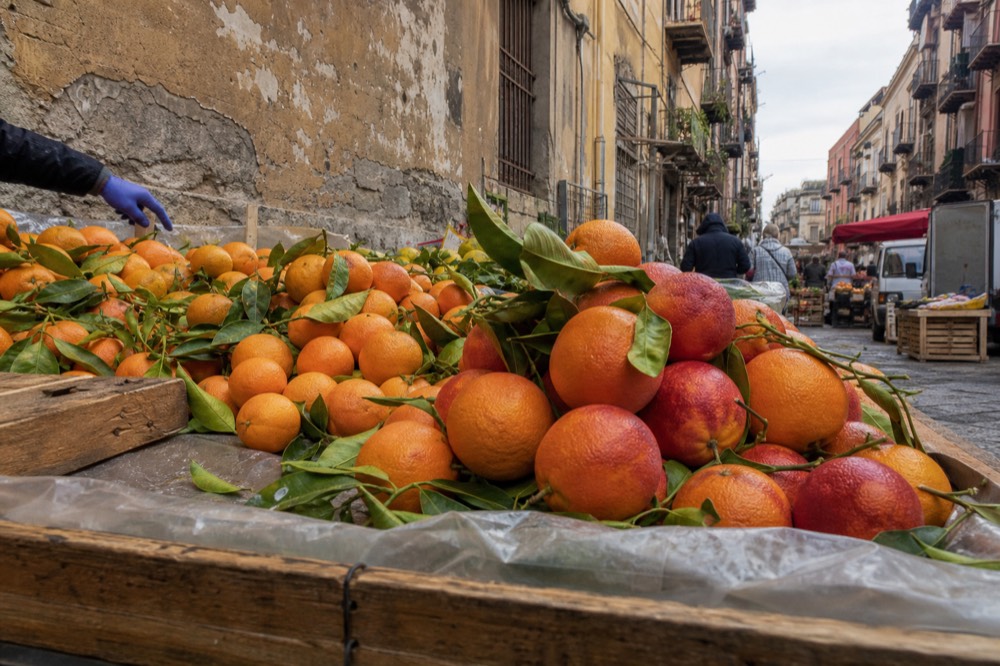
Palermo's own citrus story is more modern and better documented. In the 1940s, in Ciaculli on the edge of the city, a spontaneous mutation of the Avana mandarin produced a late-season variety with few seeds, thin skin and very sweet pulp, harvested January to March. It is now a Slow Food Presidium covering around 80 hectares of growers, and Slow Food notes that the Conca d'Oro, the plain around Palermo, has lost 80% of its cultivated land in the last sixty years. If you visit between January and March, the tardivo di Ciaculli is the single most Palermo-specific thing you can eat that most visitors never hear about.
How Much Does Tasting The Difference Cost In Palermo?
Street food walks in Palermo run from $39.83 to $89.33 per person, cooking classes from $60.95 to $209.04, and wine and cheese tastings from $49.94 to $139.36, all per person on current listings. The decision axis that actually matters is cancellation: 19 of the 22 tours on the roster offer free cancellation up to 24 hours, while the 3 Streaty products, including the top-reviewed market tour, are non-refundable.
That cancellation split is the sharpest real difference in the roster and deserves honest treatment. The Original Palermo Street Food & Market Tour, 4.9 across 2308 reviews from $81.64 per person, is non-refundable. The Do Eat Better small-group walk, 4.9 across 1355 reviews from $52.06, cancels free up to 24 hours. If your plans are firm the Streaty product is excellent value for what it includes; if there is any chance of a schedule shift, the refundable options cost less risk and often less money.
| Format | Cheapest on roster | Most expensive on roster | Typical duration | Reviews at the top end |
|---|---|---|---|---|
| Street food walk | $39.83 (street-food-walk-with-tastings) | $89.33 (secret-food-tours-ten-tastings) | 2.5-3 hours | 4.9 across 2308 |
| Market tour | $68.15 (ballaro-market-eating-europe) | $209.04 (half-day-cooking-class-market-tour) | 3-5 hours | 5 across 139 |
| Cooking class | $60.95 (pizza-and-gelato-class) | $209.04 (half-day-cooking-class-market-tour) | 3-5 hours | 5 across 391 |
| Wine and cheese tasting | $49.94 (urban-winery-wine-and-tapas) | $139.36 (cheese-and-wine-tasting) | 2 hours | 4.8 across 917 |
Capacity is the other quiet constraint. Most of the small-group products cap at 12 spots per departure, one at 10, one at 8, and several are flagged as often selling out. A family of five booking in July should not assume same-day availability. For a fuller breakdown by category, see food tour prices in Palermo.
Is Sicilian Food Spicier, Sweeter Or Healthier Than Mainland Italian Food?
Sweeter, certainly, and more fried: the official product sheets put sugar in caponata, candied fruit on cassata and ricotta cream inside fried dough, a denser sweet-savoury profile than mainland registers carry. Spicier, no; Sicilian cooking's heat comes from black pepper and onion, not chilli. Healthier is not a question the sources answer, so this page will not either, beyond noting that panelle are chickpea-based and much of the canon is fish and vegetable-led.
What can be said with numbers is seasonal. WMO climatological normals for Palermo put August's mean daily maximum at 30.5°C and July's at 29.8°C, with July almost rainless at 6.7mm across 1.2 rain days. May, June and September are the comfortable walking-tour months: 23.3°C, 27.2°C and 27.5°C mean highs respectively, with between 1.9 and 5.4 rain days each. Mid-July gives you over fourteen and a half hours of daylight, which means an evening food walk in the cooler hours is not just possible but the sensible format, and the night street food tour exists precisely for that.
| Month | Mean daily max | Mean daily min | Mean rain days | Walking-tour verdict |
|---|---|---|---|---|
| May | 23.3°C | 15.3°C | 4.1 | Sweet spot |
| June | 27.2°C | 19.2°C | 1.9 | Sweet spot |
| July | 29.8°C | 21.7°C | 1.2 | Hot; go evening |
| August | 30.5°C | 22.7°C | 2.4 | Hottest month |
| September | 27.5°C | 20.1°C | 5.4 | Sweet spot |
On the "is it really Italian" question, the rankings give a usable frame. Time Out's 2026 best food cities survey, based on more than 24,000 residents across 150 cities, places Naples 14th as Italy's highest entry; Palermo does not make that list's top tier. TasteAtlas's 2025/2026 reader-data ranking, built on roughly 590,000 ratings of some 19,000 dishes, puts Naples, Milan, Bologna, Florence and Rome ahead of it too. Those are user polls, not juried verdicts, and this site reports them as such. What they measure is reputation; what the PAT register measures is distinctness, and on that measure Sicily is unmatched in Italy.
The practical conclusion is simple. Do not come to Palermo expecting a better version of mainland Italian food; come expecting a different food tradition that happens to share a currency and a flag. Eat the fried things, ask what is filled to order, order the mandarins if it is between January and March, and if a guide tells you the arancina is a thousand-year-old Arab invention, you now know the paper trail says otherwise. This whole site, Palermo Food Tours, exists to help you eat the island on its own terms.
Common Questions About Sicilian Food Vs Italian Food
Is Sicilian food part of Italian food?
Legally and politically yes, but the island's cooking is a distinct tradition with its own national product register entries. Sicily holds 293 officially recognized traditional products, many with no mainland equivalent, and its defining techniques, fried dough, sheep's milk ricotta, sweet-savoury combinations, are not shared with northern or central Italy.
Is Sicilian food different from Italian food?
Concretely: breadcrumb coatings and fried dough where the mainland uses pastry and cream, sheep's milk ricotta in the sweets, sugar and vinegar together in savoury dishes like caponata, and aubergine, citrus and small fish at the center of the canon. The official PAT sheets document each of these.
Is Sicilian pasta different from mainland pasta?
Yes. The Sicilian traditional register carries busiati col pesto trapanese, pasta che sardi, cuscus di pesce and pasta ca muddica, none of which exists in mainland registers. The island's sauces aggregate sardines, breadcrumbs and nuts rather than emulsifying cheese and butter.
Did the Arabs invent Sicilian food?
Partly, and less than menus claim. Archaeology confirms aubergine, spinach, watermelon, citrus and cotton in Islamic-period deposits at Mazara del Vallo. But the Accademia della Crusca found no trace of the arancina before the second half of the 19th century, and its first dictionary definition, from 1857, describes a sweet dish. Crops arrived early; many famous preparations are much younger than their origin stories.
Is Sicilian food sweeter than mainland Italian food?
Markedly so in the savoury canon. The official caponata definition includes sugar and vinegar, and the island's sweets, cassata, cannoli, iris, are built on sheep's milk ricotta, candied fruit and marzipan, a denser sugar profile than the mainland's cream-and-chocolate tradition.
Where should I taste the difference in Palermo?
A small-group street food walk is the most efficient comparison test: from $39.83 per person at the budget end, with the Do Eat Better small-group tour at $52.06 and the 10-plus-tastings walk at $89.33. For cooking rather than walking, classes run from $60.95 to $209.04 per person. Check cancellation terms before booking; three tours on the roster are non-refundable.