What Not To Miss In Palermo?
The markets, dishes, monuments and timing that matter most in Palermo, from Ballaro's official hours to the real history of the arancina, plus honest guidance on what to skip.
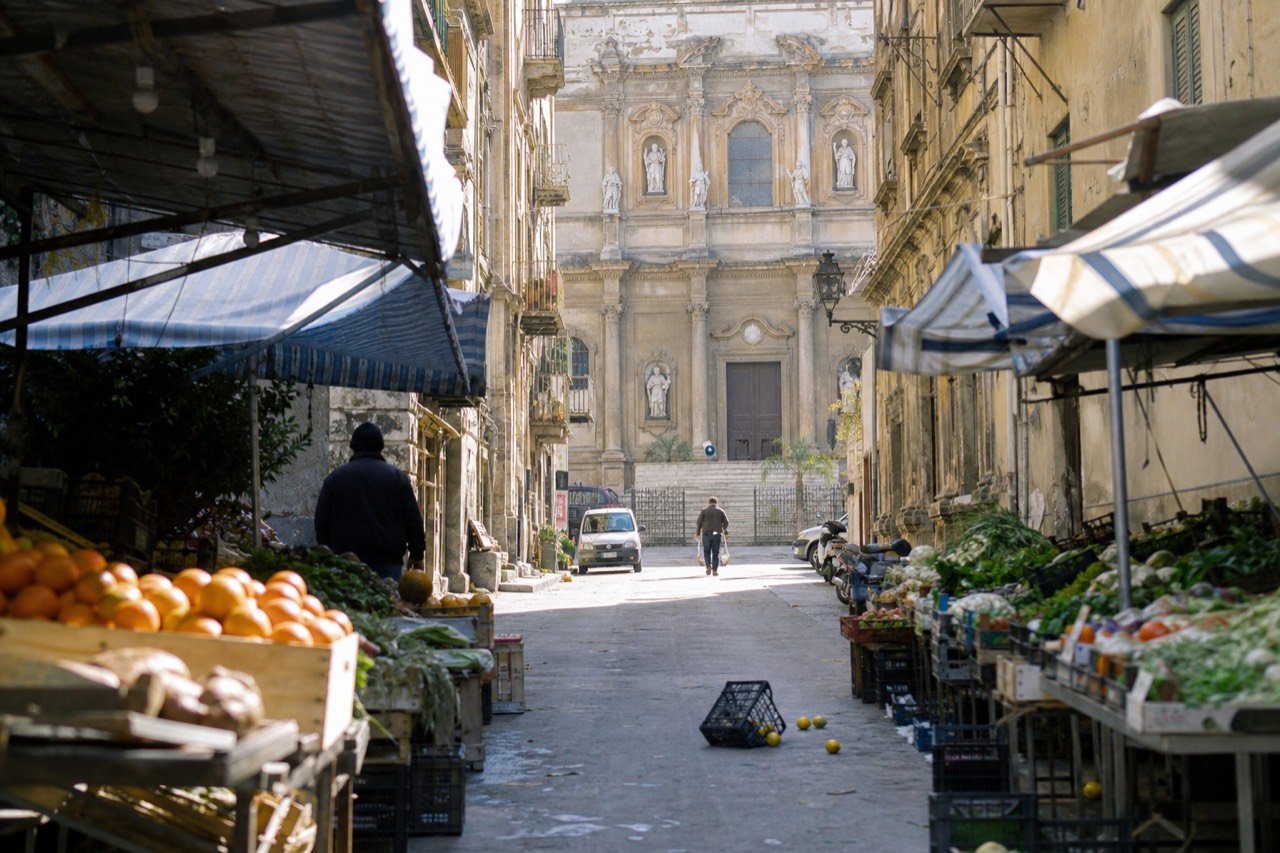
What Not To Miss In Palermo?
If you only have a few days, spend them on the historic markets, the fried street food canon and the Arab-Norman churches: Ballaro, the Capo and the Vucciria for market atmosphere; panelle, arancine and cannoli from busy friggitorie; the UNESCO-listed cathedral and Cappella Palatina; and Renato Guttuso's three-by-three-metre painting of the Vucciria at the Steri. If you are in town in July, add the Festino di Santa Rosalia processions on the 14th and 15th.
That is the short answer. The rest of this page earns it, item by item, with the sources behind each claim, because Palermo attracts more repeated folklore than almost any other food city in Italy. The city's own tourism portal, the Accademia della Crusca and the UNESCO inscription text between them settle most of the questions a first visit raises, and they disagree with the guidebooks more often than you would expect.
Start with the markets, because everything else on the list hangs off them. The fried food is sold in and around them. The painting is of one of them. The UNESCO buildings sit inside the same walking radius. A visitor who does nothing but three market mornings, one cathedral visit and one long street food afternoon will leave Palermo with the core of the experience intact.
The question of how to spend the first market morning well is worth money as well as time. A guided walk with a local operator solves the single most common first-visit mistake, which is buying the wrong thing from the wrong stall, and the best-value options start around the price of a restaurant dinner. These three are the formats that fit most trips:
Which Palermo Markets Should You Visit?
Ballaro first: it is the market the city's own tourism portal calls the oldest and largest, and the only one with published clock times, Monday to Saturday 07:30 to 20:00, Sunday mornings only. Then the Capo for street food, then the Vucciria for atmosphere rather than shopping. Borgo Vecchio, founded in 1556, is a morning market worth a short detour if you are near the port.
The Comune di Palermo's tourism portal publishes a page for each of the four historic markets, and Ballaro's is the most practically useful of the four. It gives the market's extent, from piazza Casa Professa to the bastions of corso Tukory, its quarter, the Albergheria, and those exact opening times. It also quotes a 1800 guidebook describing piazza Ballaro as a "piazza di grascia", a food square, which is what it still is. The same official page is the source for the shouted vendor cry that Palermitans call the "abbanniata", the sales call that is itself part of the show.
| Market | Quarter | What it is known for | Official hours |
|---|---|---|---|
| Ballaro | Albergheria | oldest and largest market, per the city portal | Mon-Sat 07:30-20:00, Sun mornings |
| Il Capo | Seralcadio | historic meat market, street food stalls | daily, morning and afternoon |
| Vucciria | piazza Caracciolo | largely a nightlife square now | described as daily; pedestrian zone |
| Borgo Vecchio | behind the Politeama | morning market, gentrifying quarter | mornings |
The Capo is the street food market. The Comune's own page lists what the hawkers sell there: sfincione, pane con la milza, pane con le panelle and crocche di patate. It also preserves two details most guides drop: the market grew up around the 14th-century church of Sant'Agostino, and the dialect word for its historic butcher shops is "carnezzerie", a Spanish-era borrowing, not the standard Italian "macellerie". The principal entrance is Porta Carini, rebuilt in the 18th century on the model of a 15th-century gate. For the official pages themselves, see the Comune's Palermo markets overview.
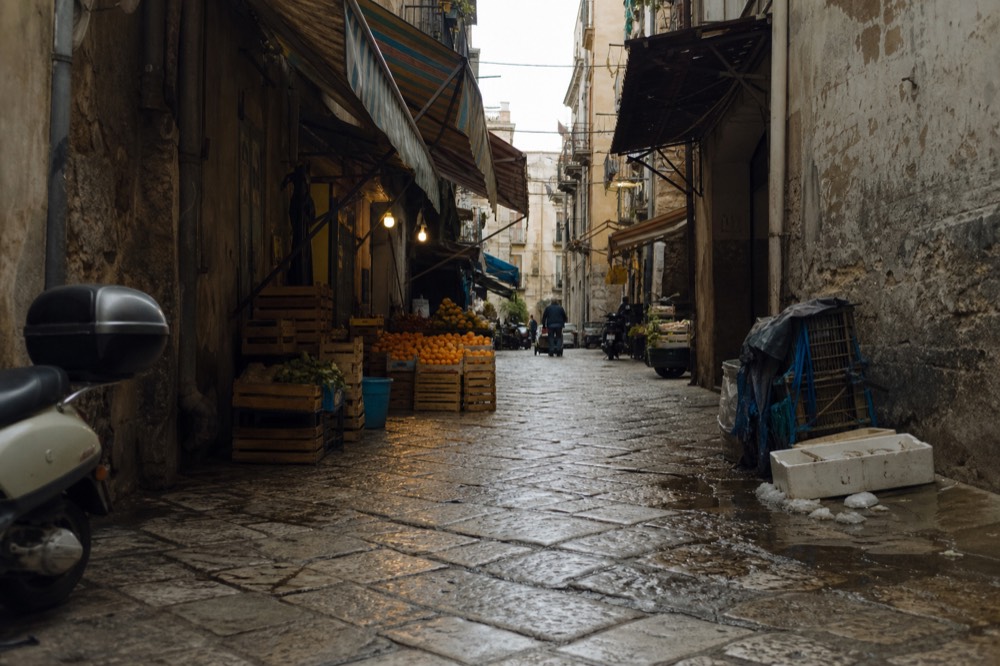
The Vucciria needs honest handling, because the official description and the street-level reality diverge. The Comune page still describes a market open every day, morning and afternoon. PalermoToday reported in March 2025 that the Vucciria is "ormai scomparsa", effectively gone as a food market, with traders quoted saying they have lost around 80 percent of their custom to the ZTL, parking shortages and the emptied-out centre. What remains is a regulated pedestrian area around piazza Caracciolo, established by municipal ordinance in June 2025 and extended to 31 December 2026, which fills with bars at night. Food and Wine Italia reported in July 2025 that the Vucciria had been named the best market in the world for food enthusiasts in the Global Tastemakers awards, an honour that says more about its atmosphere and its history than about its current stall count. Go in the early evening, treat it as a square to drink in, and read the market's decline as part of the story.
Borgo Vecchio is the fourth of the historic markets and the only one with a hard founding date: 1556, after the construction of the new port, when fishermen and sailors moved out of the Kalsa and settled there. The Comune itself notes the quarter has undergone urban gentrification, with a growing young and tourist presence at night. Its food market trades in the morning only.
What Street Food Should You Try First?
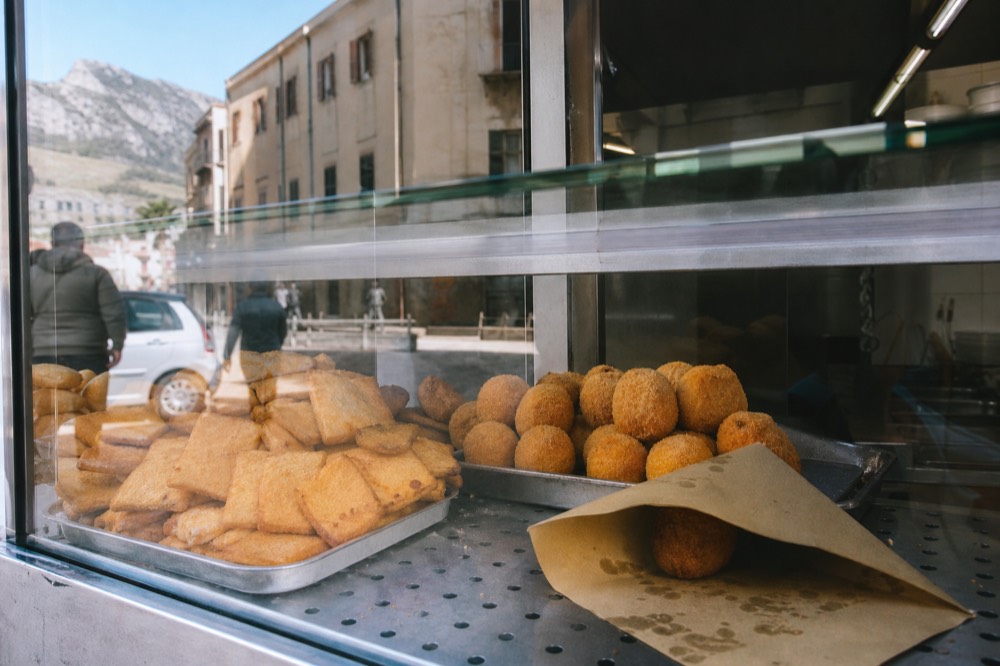
Start with panelle, the one item in the whole Sicilian canon whose official traditional-product territory is the city of Palermo itself, then an arancina, then a cannolo filled to order. Add sfincione if you find it, and cassata if you have room. The Accademia della Crusca's own research says the arancina is likely a 19th-century invention rather than an Arab inheritance, which makes eating one a small history lesson.
Palermo's street food canon is not folklore. Most of it sits on the official Italian PAT list of traditional agri-food products, which requires a preparation to have been practised consistently for at least 25 years, and Sicily carries 293 PAT products in total. The Regione Siciliana's technical sheets fix details that no blog repeats: panelle batter is spread to half a centimetre thick before it is cut and fried; the panelle sheet's production territory is the city of Palermo and parts of its province, the only canon item whose official territory is Palermo itself.
| Item | What it is | Official status |
|---|---|---|
| Panelle | chickpea-flour fritters served hot | PAT; territory: city of Palermo |
| Arancini di riso | fried rice balls with filling | PAT; territory: all Sicily |
| Cannolo | fried shell filled with sheep's ricotta | PAT; territory: Paceco, Erice, Trapani, Valderice |
| Sfincione | soft topped street slice | PAT; white version is Bagheria's symbol product |
| Cassata siciliana | ricotta cake, candied fruit, marzipan | PAT; paper trail to 1575 |
| Stigghiola | rolled lamb offal with onion | PAT; sheet suggests a possible Jewish culinary legacy |
The arancina deserves a paragraph of its own, because the truth is better than the myth. The Accademia della Crusca's linguistic consultation on "arancino o arancina" establishes three things. First, the geography: feminine and round in Palermo and the west, masculine and often pointed in Catania and the east. Second, the dish is young: no trace of it exists in literature, chronicles, dictionaries or recipe books before the second half of the 19th century. Third, the first Sicilian dictionary to record the word, Biundi's of 1857, defines it as a sweet rice dish shaped like a bitter orange, and neither meat nor tomato appears in the early records at all. Crusca's conclusion is that the Arab-origin story "no longer seems so certain". Order an arancina al burro or al ragu at a busy friggitoria and you are eating a dish with a documented paper trail barely 150 years old.
The cannolo has a similar surprise. The PAT technical sheet's production territory is not Palermo but the Trapani area: Paceco, Erice, Trapani and Valderice. The name comes from the cane, Arundo donax, around which the shell was originally rolled. In Palermo, the practical rule is simple and confirmed by local voices online: get it filled to order, not sitting pre-filled in a case. Cassata, meanwhile, carries a document trail to the Synod of Mazara of 1575, which lists it among the sweets indispensable at feast days, and even its etymology is a live disagreement between two authoritative Italian sources: Treccani derives it from Latin caseus, cheese, while the regional PAT sheet suggests Arabic quas'at. Both are on record. Neither wins.
For sfincione, the official split is geographic and municipal: the Comune di Bagheria's own festival page calls white sfincione Bagheria's symbol product, with the red version following the wider Sicilian tradition. Bagheria, twenty minutes from Palermo, runs a Sfincione Fest each November, with the 2026 edition scheduled for 20 to 23 November on Corso Umberto I. If your trip falls in the first three months of the year, add the Ciaculli late mandarin, a Slow Food Presidium product grown on around 80 hectares on the edge of the city, harvested January to March: it is the one genuinely seasonal item on this list.
Doing this alone works, but the learning curve is steep on a short trip. The Do Eat Better small-group street food walk exists precisely for this problem: it runs about 3 hours, caps departures at 12 spots, and starts from $52.06 per person. It rates 4.9 across 1355 reviews, and it can be cancelled free up to 24 hours before, which matters if your plans shift.
One practical note on booking anything food-related in Palermo: of the 22 tours in our roster, 19 offer free cancellation up to 24 hours before, and the three exceptions are all from the same operator. Check the cancellation terms on the live listing before you book anything non-refundable, especially if your itinerary depends on a ferry or a flight.
For a deeper run through the individual dishes and where each one comes from, our guide to the best food in Palermo breaks the canon down dish by dish.
Is The Arab-Norman Heritage Worth Seeing?
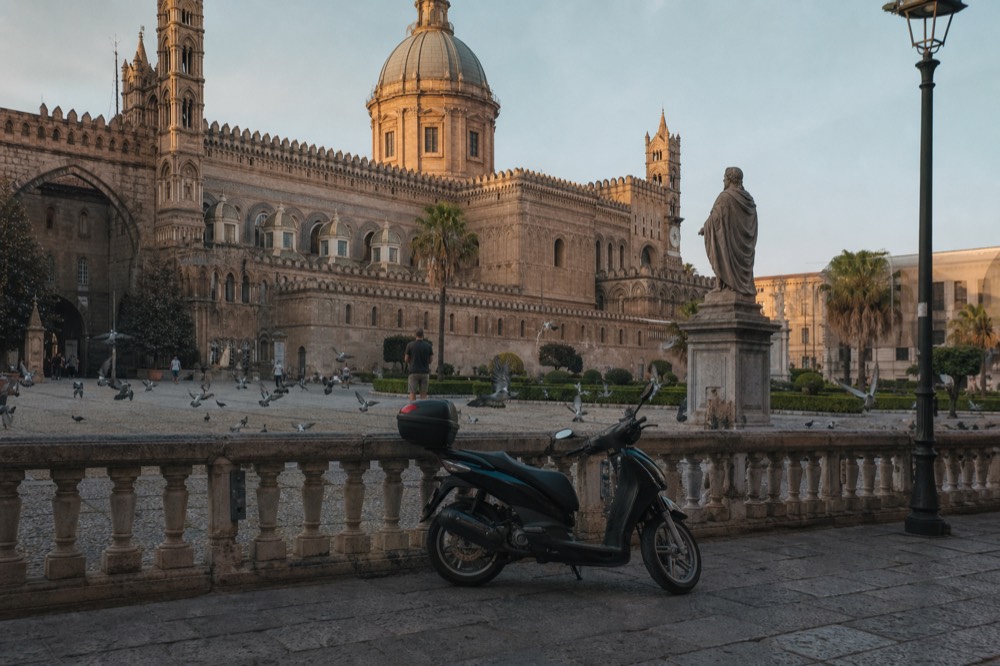
Yes. The Arab-Norman buildings are why Palermo is on the UNESCO World Heritage List at all: nine civil and religious structures from the era of the Norman kingdom of Sicily, 1130 to 1194, inscribed in 2015 under criteria (ii) and (iv) as an example of coexistence between Western, Islamic and Byzantine cultures. The cathedral and the Cappella Palatina are the two most food-adjacent stops, both inside the walking tour zone.
The UNESCO inscription, "Arab-Norman Palermo and the Cathedral Churches of Cefalu and Monreale", covers two palaces, three churches, a cathedral, a bridge, and the cathedrals of Cefalu and Monreale. UNESCO's own text describes a social-cultural syncretism between Western, Islamic and Byzantine cultures that generated new concepts of space, structure and decoration, and testimony to the coexistence of people of Muslim, Byzantine, Latin, Jewish, Lombard and French origin. For a food visitor this is not a detour from the subject. The same exchange of cultures that produced the buildings shaped the pantry: archaeologists working at Mazara del Vallo have found aubergine, spinach, watermelon, citrus and cotton in Islamic-period deposits, all new to the area, with fruit and vegetable production expanding markedly in the 10th century.
Two practical warnings for the Cappella Palatina. Its mosaics have been under restoration since January 2025, and the right nave was still under scaffolding as of August 2026, with the left nave and presbytery completed and entry from the main door assured. The Palazzo Reale also closes on Tuesdays and Wednesdays when the Sicilian Regional Parliament sits, and can shut partially or fully without notice for institutional reasons. Standard hours on open days run Monday, Thursday, Friday and Saturday from 8:30 to 16:30, with Sunday hours to 12:30. Plan the chapel for a morning other than Tuesday or Wednesday, and check the official page before you set out.
One more piece of art belongs on this list, and it is a food-market painting. Renato Guttuso painted "La Vucciria" between 1 October and 6 November 1974, on a three-by-three-metre canvas, with the market's produce flown up from Palermo so he could work from the real thing. The painter himself decided it should hang at the University of Palermo's Steri complex, ten minutes' walk from the market it depicts. It is the closest thing the city has to a portrait of its food culture, and almost no visitor itinerary includes it.
When Is The Best Time To Visit Palermo?
May, June or September. World Meteorological Organization normals for Palermo put May at a 23.3 degree average high with 4.1 rain days, June at 27.2 with 1.9, and September at 27.5 with 5.4. July is nearly rainless at 6.7 mm but the city hands its historic centre to the Festino processions on the 14th and 15th, and August is the hottest month at a 30.5 degree average high.
The WMO climatological normals for Palermo settle the timing question with actual data rather than instinct. April looks tempting at an 18.7 degree high but averages 8.6 rain days, more than double May's. December is the wettest month at 123.7 mm across 12 rain days, with November just behind at 117.5 mm. The wet half of the year, October through March, carries 632.4 mm of the annual total against 223.1 mm for April through September.
| Month | Mean daily high (C) | Mean daily low (C) | Mean rain days |
|---|---|---|---|
| May | 23.3 | 15.3 | 4.1 |
| June | 27.2 | 19.2 | 1.9 |
| July | 29.8 | 21.7 | 1.2 |
| August | 30.5 | 22.7 | 2.4 |
| September | 27.5 | 20.1 | 5.4 |
| December | 15.8 | 10.2 | 12.0 |
Daylight matters as much as rain for a market city. Mid-January gives Palermo under ten hours of daylight, with the light gone before 17:15, so a morning market is effectively the whole day. Mid-July gives fourteen and a half hours, but the middle of the day averages a 29.8 degree high, so the useful hours are early morning and after 19:00. That rhythm suits the night street food format well: several operators run evening walks, and the Streaty night tour runs 3 hours from $69.8 per person, though note it is one of the non-refundable listings.
July brings the Festino di Santa Rosalia, the city's biggest annual event, with the 2026 edition the 402nd. The religious programme fixes the key dates: solemn vespers and the civic night on 14 July, then the city procession of the relics on 15 July, with a route that runs from the Cathedral along Corso Vittorio Emanuele through the Quattro Canti and Piazza Marina, finishing with a pyromusical display at 23:00. The procession ground is the same ground a market food tour walks. If you are in Palermo on those two nights, the Festino is the thing not to miss; if you want quiet markets, book around it.
Should You Book A Food Tour Or A Cooking Class?
A walking food tour if you are in Palermo two days or fewer and want the markets decoded; a cooking class if you have three days or more and want to take something home. Small-group street food walks run from $39.83 per person for about two and a half hours, while the best-reviewed cooking classes run three to five hours from $110.33 per person, and almost all can be cancelled free up to 24 hours before.
The decision is really about what you want to leave with. A walk gives you the city: the markets, the friggitorie, the shorthand for ordering. A class gives you the recipe and the technique, and Palermo's class formats typically pair a market visit for ingredients with a hands-on session and a sit-down meal. Current listings show classes starting at 9am, 10am or 10:30am, with afternoon slots around 3:30pm, and the dishes most commonly taught are arancini, fresh pasta such as pasta alla Norma, and cannoli.
| Experience | Format | Length | Price | Rating | Cancellation |
|---|---|---|---|---|---|
| Do Eat Better small-group street food walk | guided walk with tastings | 3 hours | from $52.06 | 4.9 across 1355 reviews | free up to 24 hours |
| Secret Food Tours, 10+ tastings | guided walk with tastings | 3 hours 30 minutes | from $89.33 | 5 across 782 reviews | free up to 24 hours |
| Casa Di Cilla cooking class | hands-on class | 5 hours | from $132.51 | 5 across 391 reviews | free up to 24 hours |
The cancellation axis is the sharpest real difference across the whole catalog at Palermo Food Tours: 19 of the 22 tours we track can be cancelled free up to 24 hours before, and the three that cannot are all Streaty products, including the popular all-inclusive market walk and the night tour. If your itinerary has any give in it, the refundable options buy you flexibility at no premium. Group size is the second axis: several of the best-rated walks cap departures at 12 spots, and the smallest cooking classes run at 8 to 10.
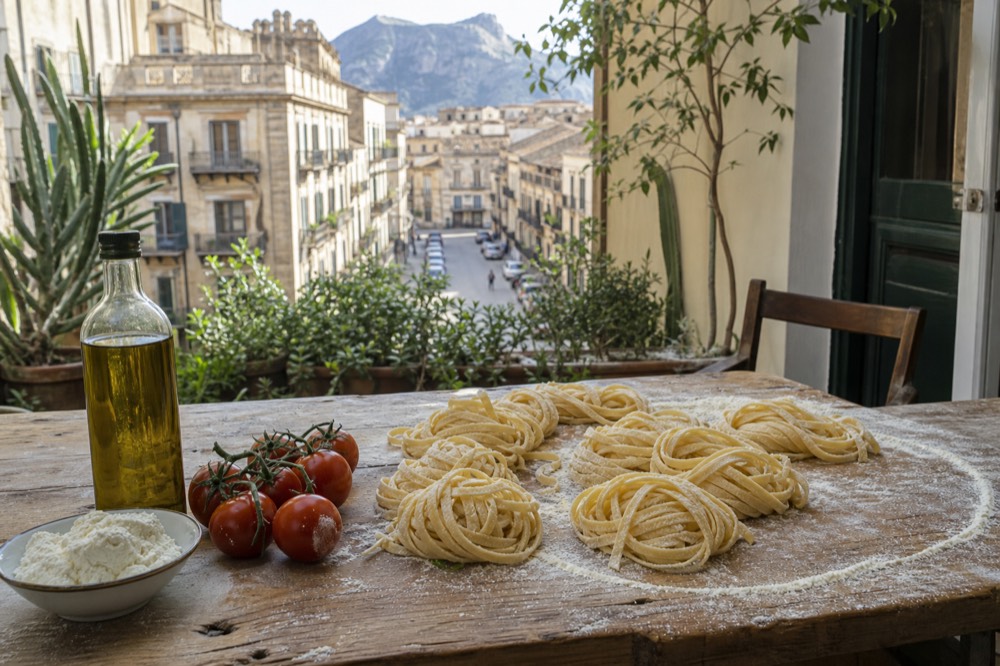
For the class route, Casa Di Cilla is the standout on paper: a 5-hour format from $132.51 per person, capped at 10 spots, rated 5 across 391 reviews, and free to cancel up to 24 hours before. Recent reviews point to hands-on preparation and an enjoyable group meal, which is the format that actually teaches you something you can reproduce at home.
If you want to compare the class options in detail, including the market-tour-and-class combinations, our Palermo cooking class guide lays out the formats side by side.
What Day Trips Are Worth Adding From Palermo?
Erice and the Marsala salt pans, as a single long day trip: the most-booked option runs nine hours from $131.7 per person and often sells out. Closer to town, the vineyard tastings at Partinico and Camporeale are genuine winery visits at $55.74 and $69.68, but note that transport to the estates is not included, so you drive yourself or you do not go.
The Erice and Marsala salt pans tour, run by Towns of Italy, is the strongest food-adjacent day trip on the roster: 9 hours, from $131.7 per person, rated 4.8 across 349 reviews, with lunch and a tasting included and free cancellation up to 24 hours. It often sells out, which is worth knowing before you build a week around it. Erice sits on a mountain above Trapani, and the salt pans at Marsala are one of the more photogenic working landscapes in western Sicily.
The two vineyard options deserve a clear warning that their listings do not shout about. The Partinico historic vineyard tasting, from $55.74 for 2 hours at a 4.9 rating across 43 reviews, and the Camporeale wine discovery at Tasca D'Almerita's Sallier de La Tour estate, from $69.68 for 2 hours, both state plainly that transport to the estate is not included. You rent a car or you arrange your own transfer. Factor that into the real cost before comparing them against all-inclusive city tours.
Two festival dates can anchor a whole western Sicily trip. The Cous Cous Fest at San Vito Lo Capo runs 18 to 27 September, with free beach concerts alongside the competition programme. Sfincione Fest in Bagheria follows on 20 to 23 November, in Corso Umberto I, with tastings and chef demonstrations. Both are within reach of Palermo by public transport or a short drive, and our day trips from Palermo guide covers the logistics in full.
What Should You Skip In Palermo?
Skip anything sold to you as ancient without a source. Palermo has been trading on a 2012 Forbes list that called it the fifth-best street food city in the world, but that ranking was a reader survey run by a travel site that has since closed, and no newer verified ranking exists. Also skip the ambition of doing everything: the markets alone will happily fill two mornings.
The "fifth in the world" claim deserves its own paragraph because it is the single most repeated sentence about Palermo food in English. The original is a Forbes article by Andrew Bender published on 19 September 2012, and its own methodology paragraph says it was a survey of VirtualTourist.com members about their favourite street food experiences. VirtualTourist no longer exists. The list is fourteen years old, it was a reader poll rather than editorial research, and no newer global ranking placing Palermo has been verified since. Palermo's street food is genuinely excellent and does not need a dead website's blessing. Eat the panelle and skip the slogan.
The same honest-broker rule applies to origin stories. The arancina's Arab inheritance is not supported by the lexicographic record, as Crusca sets out. The pani ca meusa origin story, the one about medieval Jewish butchers paid in offal, is repeated everywhere and documented nowhere authoritative, and the regional stigghiola sheet only offers a hedged suggestion of a Jewish culinary legacy for its own product. Enjoy the food; hold the folklore lightly.
Practically, the things to skip are over-scheduling and the wrong market hours. Ballaro trades Monday to Saturday from 07:30 to 20:00 but Sunday mornings only, and Borgo Vecchio is a morning market, so a late start costs you the show. The Vucciria is worth an evening drink and the Guttuso painting is worth the walk to the Steri, but neither is worth a food-shopping mission. One visitor report from September 2025 described buying pre-made arancini reheated in a microwave at a market stall and being disappointed by it; the consistent local advice in reply was to buy from the busy dedicated friggitorie rather than the nearest market stall, and that advice holds for any first visit.
With the must-sees settled, the last decision is only which format fits your days. A small-group walk, a ten-tasting tour or a hands-on class will each cover the ground above with a local beside you:
The short answers: three markets and a handful of fried things carry the food side of a Palermo trip, the UNESCO-listed Arab-Norman buildings carry the sightseeing side, and May, June or September is when to do both comfortably. Everything below condenses the detail on this page into quick answers, from Ballaro's official hours to whether the Vucciria is still worth the walk.
Common Questions About What Not To Miss In Palermo
What Not To Miss In Palermo?
The historic markets of Ballaro, the Capo and the Vucciria; the fried street food canon of panelle, arancine and cannoli; the UNESCO-listed Arab-Norman cathedral and Cappella Palatina; and Guttuso's painting of the Vucciria at the Steri. In July, the Festino processions on the 14th and 15th. Everything on that list sits inside the walkable historic centre except the Festino route's outer legs and the day trips.
What is the must-eat street food in Palermo?
Panelle first, since it is the one canon item whose official PAT production territory is the city of Palermo itself. Then an arancina from a busy friggitoria, a cannolo filled to order, and sfincione if you find a slice. All four are on the official Sicilian PAT list of traditional products.
How many days in Palermo is enough?
Two full days covers the markets, the core street food and the main Arab-Norman sights. Three days adds a cooking class or a day trip to Erice and the Marsala salt pans, and four lets you do both without rushing. The markets are morning activities, so each day effectively starts early.
What is the best month to visit Palermo?
May, June or September, per World Meteorological Organization normals: May averages a 23.3 degree high with 4.1 rain days, June 27.2 with 1.9, September 27.5 with 5.4. July is nearly rainless but hosts the Festino crowds, and August is the hottest month at a 30.5 degree average high.
Is the Vucciria still worth visiting?
As a food market, no: PalermoToday reported in March 2025 that traders say they have lost most of their custom and the square now runs on nightlife. As an evening square with history, yes, and Food and Wine Italia reported in July 2025 that it was named best market in the world for food enthusiasts in the Global Tastemakers awards. Pair it with Guttuso's painting of it at the Steri.
Can you drink tap water in Palermo?
Yes. The local utility AMAP publishes the water's identity card, with zero coliform bacteria, zero Escherichia coli and zero enterococci per 100 ml, and describes it as suitable for daily consumption. The governing quality law is Decreto Legislativo 18/2023, in force since March 2023.