Best Palermo Food: Dishes, Markets And Where To Eat
Palermo’s food scene is a collision of Arab, Norman, Spanish and Italian influences, and the best way into it is through the city’s markets and street stalls. This guide covers the dishes that define the city, the specific counters and trattorias that do them best, and how to plan your eating around the rhythms of the day.
Short answer
The best food in Palermo is found at its historic markets and friggitorie. Start with an arancina at Bar Vabres, a pane con le panelle at Nni Franco u Vastiddaru, and a cannolo from I Segreti del Chiostro. For a sit-down meal, try Trattoria Piccolo Napoli. The city’s food is affordable: street snacks cost €2.50–4, a full trattoria meal around €20–25.
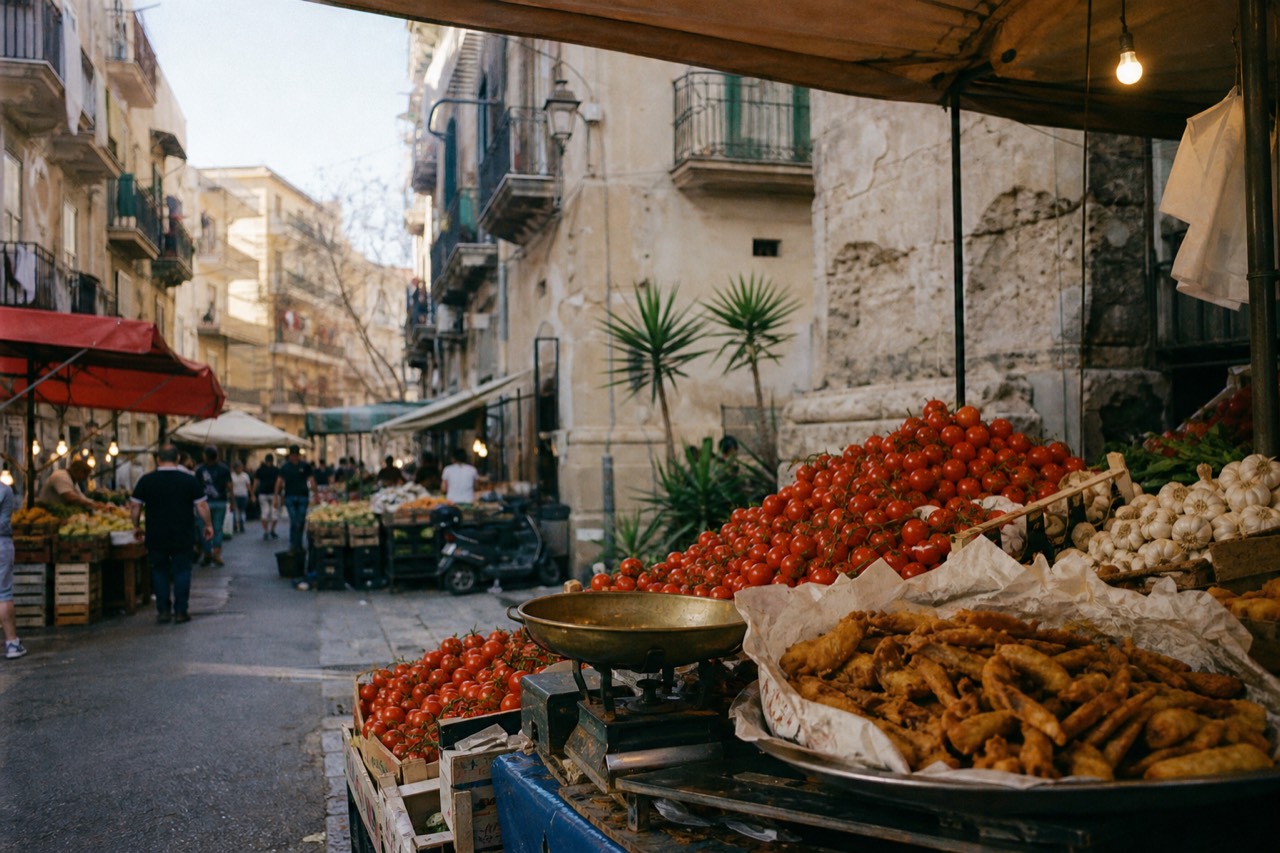
Palermo’s food is not a single cuisine but a layered history you can eat. The city’s markets are the living pantries of that history, and the best way to understand it is to walk through Ballarò, Capo or the Vucciria and eat what’s in front of you. This guide from Palermo Food Tours focuses on the specific dishes, the specific counters, and the rhythms that make Palermo one of Italy’s most rewarding food cities.
What Is The Best Food In Palermo?
The best food in Palermo is its street food, eaten standing at a friggitoria or market stall. The canon is arancine, panelle, crocchè, sfincione, and cannoli, each best from a specific address. For a sit-down meal, the city’s trattorias serve seafood, pasta alla Norma, and caponata that reflect the island’s produce.
Palermo’s street food canon is short, specific, and protected. Several items appear on Italy’s official PAT list of traditional agri-food products, including arancini di riso, panelle, crocchè di patate, sfincione, and cannoli. The PAT recognition means the preparation methods have been practised consistently for at least 25 years, and the Regione Siciliana publishes technical sheets defining each product. That official backing gives you a shortlist of what to eat first.
The arancina (or arancino, depending on which side of the island you stand on) is the city’s signature snack: a deep-fried rice ball filled with meat ragù, peas, and cheese. The Accademia della Crusca, Italy’s language authority, notes that the feminine form dominates in Palermo and western Sicily, while the masculine is used in Catania and the east. The first dictionary entry, from 1857, describes it as a sweet rice dish, not savoury, a reminder that the modern arancina is a relatively recent invention. The best ones in Palermo are found at Bar Vabres, a pasticceria and rosticceria near the centre, and at I Cuochini, a tiny historic shop on Via Ruggero Settimo.
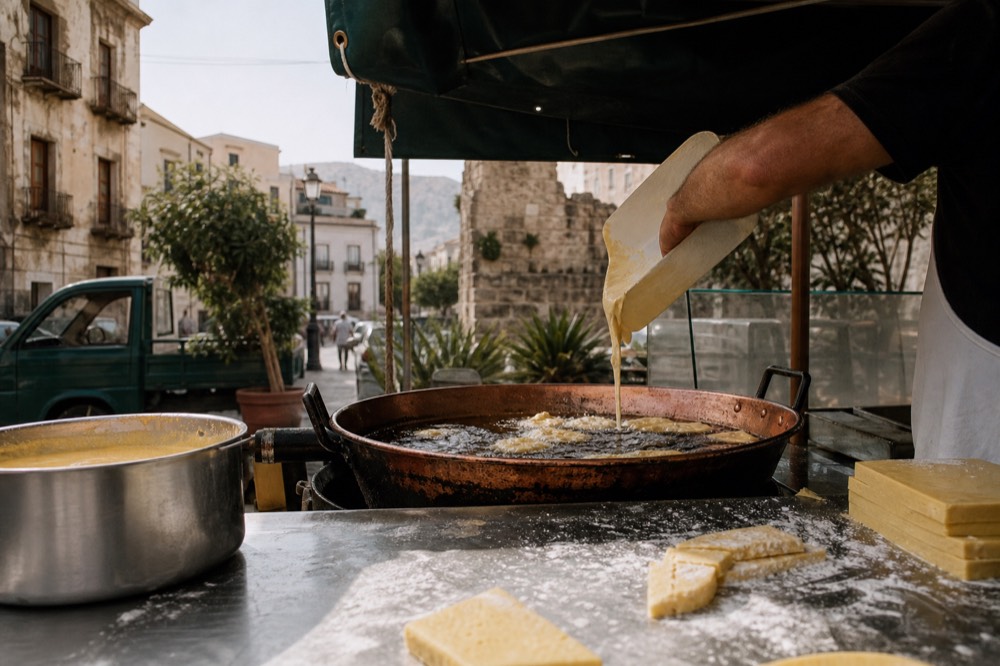
Panelle are chickpea-flour fritters, cut into rectangles and fried until golden. The PAT sheet specifies a thickness of half a centimetre and a batter of chickpea flour, water, salt, and pepper. They are almost always served in a soft roll, often alongside crocchè (potato croquettes). Nni Franco u Vastiddaru, on Via Vittorio Emanuele, is the most-recommended spot by locals and visitors alike. Friggitoria Chiluzzo, near the port, is another reliable choice.
Sfincione is Palermo’s spongy, tomato-topped focaccia, distinct from mainland pizza. The Comune di Bagheria, a town just east of Palermo, holds an annual Sfincione Fest every November and distinguishes between the red version (tomato, onion, caciocavallo, anchovies) common in Palermo and the white version (without tomato, with tuma cheese and breadcrumbs) that is Bagheria’s symbol product. Antico Forno Valenti in Bagheria is the place to try both.
Cannoli are a Sicilian icon, but the PAT technical sheet lists their production territory as the Trapani area, not Palermo. The name comes from the cane (Arundo donax) the shell was originally rolled around. In Palermo, I Segreti del Chiostro, inside the Santa Caterina monastery, fills each cannolo to order with fresh sheep’s-milk ricotta. Pasticceria Cappello, on Via Colonna Rotta, is another long-standing favourite. For a broader look at the city’s street food, see our Palermo street food guide.
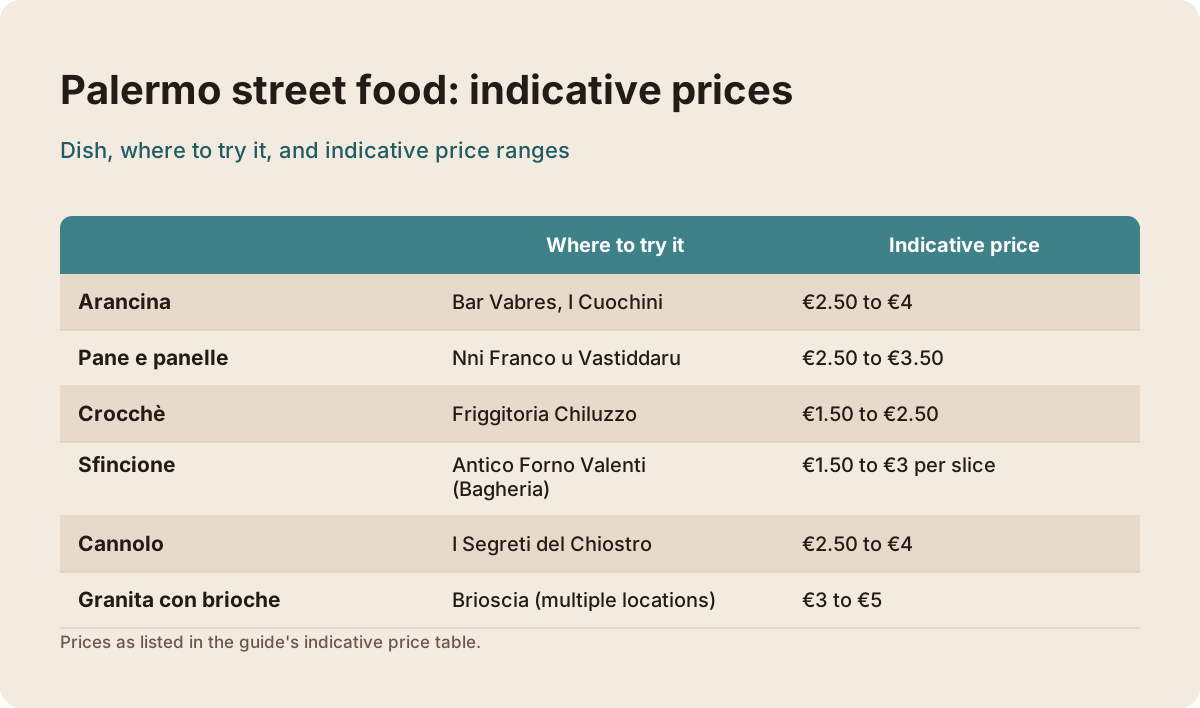
| Dish | What it is | Where to try it | Indicative price |
|---|---|---|---|
| Arancina | Deep-fried rice ball with ragù | Bar Vabres, I Cuochini | €2.50–4 |
| Pane e panelle | Chickpea fritter sandwich | Nni Franco u Vastiddaru | €2.50–3.50 |
| Crocchè | Potato croquettes | Friggitoria Chiluzzo | €1.50–2.50 |
| Sfincione | Spongy tomato-topped focaccia | Antico Forno Valenti (Bagheria) | €1.50–3 per slice |
| Cannolo | Fried shell with ricotta | I Segreti del Chiostro | €2.50–4 |
| Granita con brioche | Semi-frozen dessert with brioche | Brioscia (multiple locations) | €3–5 |
Where To Find The Best Street Food In Palermo?
The best street food is concentrated in the historic markets and along Via Maqueda. For arancine, head to Bar Vabres or I Cuochini. For panelle and crocchè, Nni Franco u Vastiddaru or Friggitoria Chiluzzo. For cannoli, I Segreti del Chiostro fills to order. The markets themselves are best in the morning when the stalls are freshest.
The four historic markets: Ballarò, Capo, Vucciria, and Borgo Vecchio, are the traditional heart of Palermo’s street food scene. Each has a different character, but all share the shouted sales cry the Comune di Palermo calls the “abbanniata,” a folkloristic soundtrack that is as much part of the experience as the food. The markets are where you will find the freshest panelle, the hottest arancine, and the most chaotic, wonderful eating in the city.
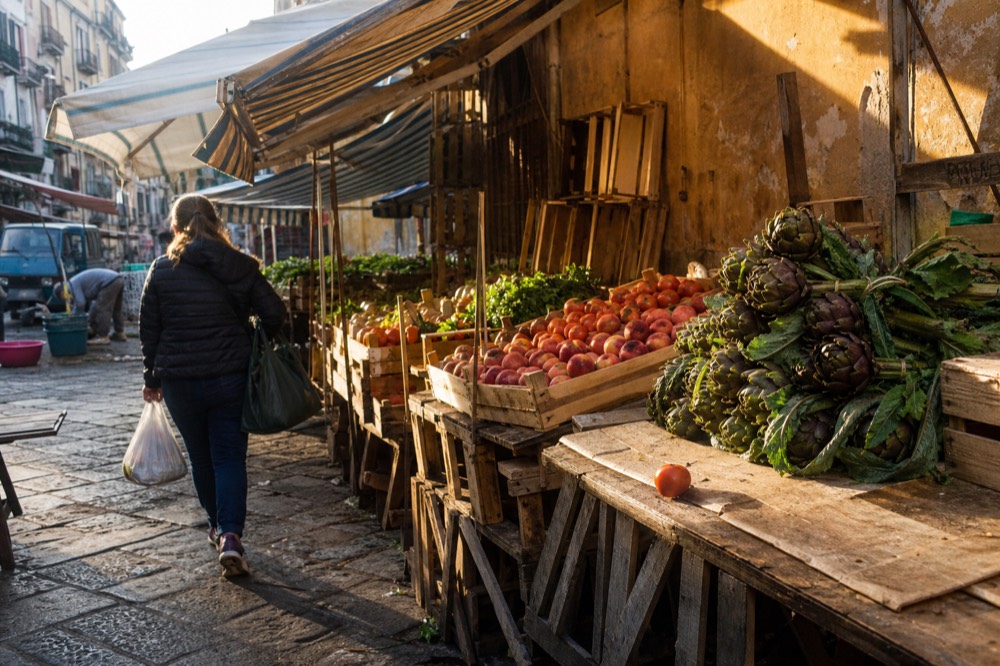
Ballarò, in the Albergheria quarter, is described by the Comune di Palermo's tourism portal as the city's oldest and largest market, open Monday to Saturday 7:30 to 20:00 and Sunday mornings only. It stretches from Piazza Casa Professa to Corso Tukory and is the place for early produce and everything from the surrounding countryside. The Comune di Palermo’s tourism portal calls it the “mercato più antico e grande della città.” Here you will find stalls selling warm sfincione, boiled octopus, and vegetable caponata alongside the fruit and fish vendors.
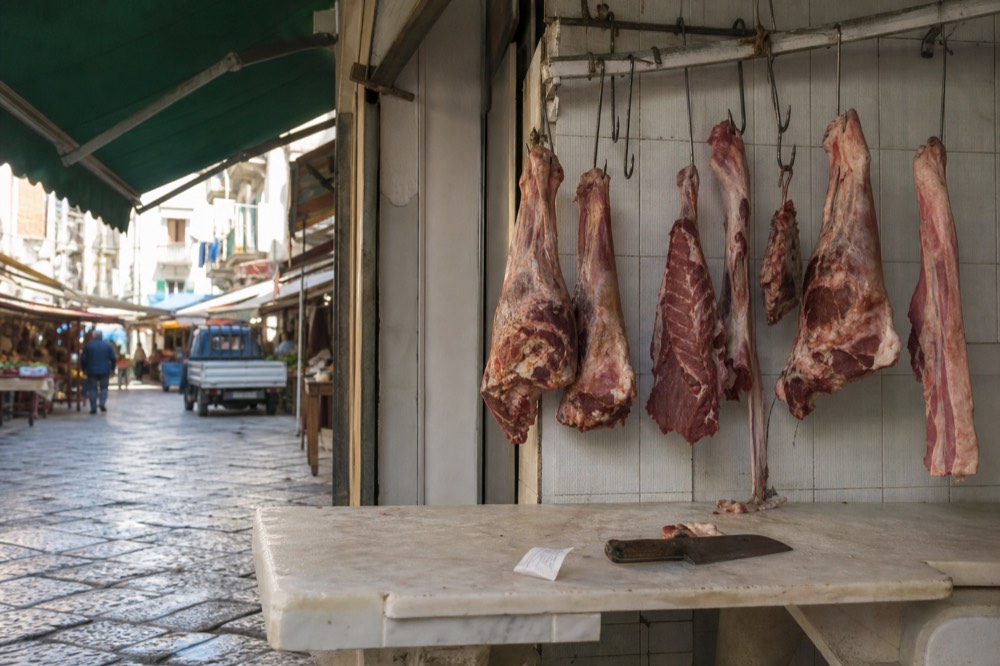
Il Capo, in the ancient Seralcadio quarter, runs along Via Carini and Via Beati Paoli. Historically a meat market, it still has butchers displaying quarters of meat outside their shops, a custom the Comune attributes to the city’s former Jewish presence for draining the blood. The Capo is also where you will find some of the best street food: sfincione, pane con la milza, and pane con le panelle are all sold from stalls along the main drag. It is open every day, morning and afternoon.
The Vucciria, once the city’s great food market, is now largely a nightlife district. The Comune’s official page still describes it as open daily, but independent reporting and visitor accounts confirm that the daytime food stalls have dwindled. The market area around Piazza Caracciolo is a regulated pedestrian zone, extended by municipal ordinance until 31 December 2026. In the evening, it fills with bars, street food vendors, and crowds. For a daytime food market, Ballarò and Capo are better bets.
Borgo Vecchio, behind the Politeama theatre, was founded in 1556 when fishermen and sailors moved out of the Kalsa district. It is a morning market, open only in the mornings, and has undergone a wave of gentrification in recent years, with new bars and taverns drawing a younger crowd at night. For a detailed look at each market, read our Palermo markets guide.
Which Palermo Markets Have The Best Food?
Ballarò has the widest variety of produce and street food, Capo has the best meat and sfincione, and Borgo Vecchio is a quieter morning market. The Vucciria is now mostly a nightlife spot, not a daytime food market. For a food-focused visit, go to Ballarò in the morning, then walk to Capo for a second round of snacks.
Ballarò’s sheer scale makes it the best all-round food market. The Comune di Palermo’s official page gives its hours as Monday to Saturday 7:30 to 20:00, with Sunday mornings only. The market is at its liveliest between 9:00 and 13:00, when the abbanniata is in full voice and the stalls are piled high with seasonal produce. The street food stalls cluster near the Piazza Ballarò end, where you can eat panelle, crocchè, and arancine while watching the fishmongers and butchers at work.
Il Capo is more compact and feels more local. The Comune notes that the butchers’ shops are called “carnezzerie,” a Spanish-era borrowing, and that on certain feast days you may see whole kids and lambs skinned except for the tail tuft, arranged as a backdrop. The market is open every day, morning and afternoon. The street food here is particularly good for sfincione and pane con la milza, sold from stalls along Via Carini.
The Vucciria’s transformation from food market to nightlife hub is well documented. PalermoToday reported in March 2025 that traders said they had lost 80% of their custom, and that the market was “ormai scomparsa” as a traditional food market. The Comune’s own pedestrian-area ordinance, in force until the end of 2026, regulates the evening crowds. For a food market experience, the Vucciria is no longer the place. For a drink and a late-night snack, it is.
Borgo Vecchio is the smallest of the four and the least touristy. It is a morning market only, and its stalls sell fruit, vegetables, fish, and meat to a largely local clientele. The Comune notes that the quarter has undergone “gentrificazione urbano” in recent years, with new pubs and taverns opening alongside the traditional vendors.
| Market | Quarter | Hours | Best for |
|---|---|---|---|
| Ballarò | Albergheria | Mon–Sat 7:30–20:00, Sun morning | Produce, street food, atmosphere |
| Capo | Seralcadio | Daily, morning and afternoon | Meat, sfincione, pane con la milza |
| Vucciria | La Loggia | Officially daily; now mostly evening | Nightlife, drinks, late snacks |
| Borgo Vecchio | Politeama | Morning only | Local produce, quieter experience |
How Much Does Food Cost In Palermo?
Street food is cheap: an arancina costs €2.50–4, a panino con panelle €2.50–3.50, and a cannolo €2.50–4. A full sit-down meal in a trattoria averages €20–25 per person, including a primo, a drink, and coperto. Prices in the historic centre have risen sharply with tourism, but Palermo remains one of Italy’s most affordable food cities.
The indicative price ranges for Palermo street food in 2026 are well established. An arancina runs €2.50 to €4, depending on the filling and the location. Pane e panelle is €2.50 to €3.50. A slice of sfincione costs €1.50 to €3. A cannolo is €2.50 to €4. Granita con brioche, the classic Sicilian breakfast, now commonly costs €4 to €5, a price that has sparked local backlash as excessive for a traditional item.
Sit-down meals are more variable. The coperto (cover charge) is typically €1.50 to €3 per person and must be clearly stated on the menu under Italian law. A primo (first course) in a trattoria runs €7 to €12. A pizza and a drink averages €14.56 in Palermo, according to a 2026 survey reported by Il Sicilia, which noted that prices have risen about 60% in five years, the highest increase nationally. A full meal with a primo, a secondo or contorno, a drink, and coperto usually lands between €20 and €25.
The city’s tourist tax, in effect from 1 July 2025, is €4 per person per night for B&Bs and short-term rentals, and €3 to €5 for hotels depending on the star rating, capped at four consecutive nights. That is a small addition to a food budget but worth knowing.
| Expense | Typical cost | Notes |
|---|---|---|
| Arancina | €2.50–4 | Price varies by filling and location |
| Pane e panelle | €2.50–3.50 | Often sold with crocchè |
| Cannolo | €2.50–4 | Filled to order at best spots |
| Granita con brioche | €3–5 | Breakfast staple, price has risen |
| Coperto | €1.50–3 per person | Must be on menu by law |
| Primo in trattoria | €7–12 | Pasta, risotto, soup |
| Pizza + drink | ~€14.56 | National average, Palermo higher |
| Full trattoria meal | €20–25 | Primo, drink, coperto |
| Tourist tax (B&B) | €4 per night | Max 4 nights |
What Makes Palermo Food Different?
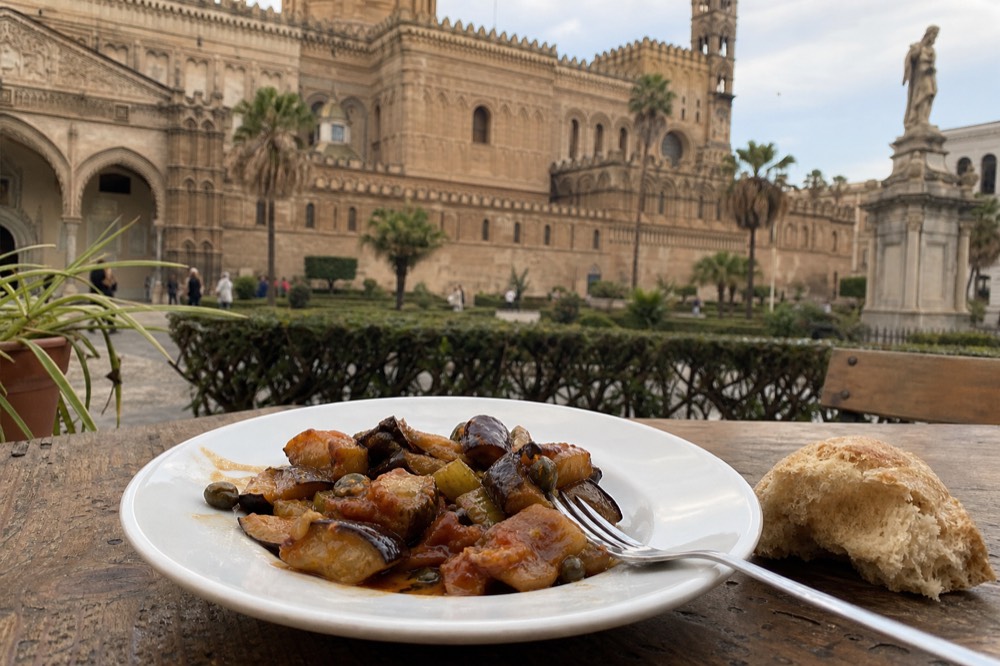
Palermo’s food is a layered record of its rulers: Arab irrigation and ingredients, Norman and Spanish trade, and Italian peasant cooking. The result is a cuisine that uses sweet and sour, fried and fresh, in ways that set it apart from mainland Italy. The city’s street food canon is older, more varied, and more central to daily life than in almost any other Italian city.
The Arab period, from the 9th to the 11th century, left a deep mark. Archaeologists working at Mazara del Vallo, on Sicily’s west coast, have found remains of aubergine, spinach, watermelon, citrus, and cotton in Islamic-period deposits, and the Sicily in Transition project states that vegetable and fruit production expanded significantly during the 10th century. The sweet-and-sour flavour profile that runs through caponata and pasta con le sarde is often traced to this period, though the scholarly debate is ongoing.
The Norman kingdom that followed created the conditions for the Arab-Norman architectural synthesis that UNESCO recognised in 2015, listing nine monuments including the Palermo cathedral and the Palazzo dei Normanni. That same cultural mixing shaped the food: the Norman court employed Arab cooks, and the trade routes they controlled brought spices, dried fruits, and new techniques.
What Is The Best Food Tour In Palermo?
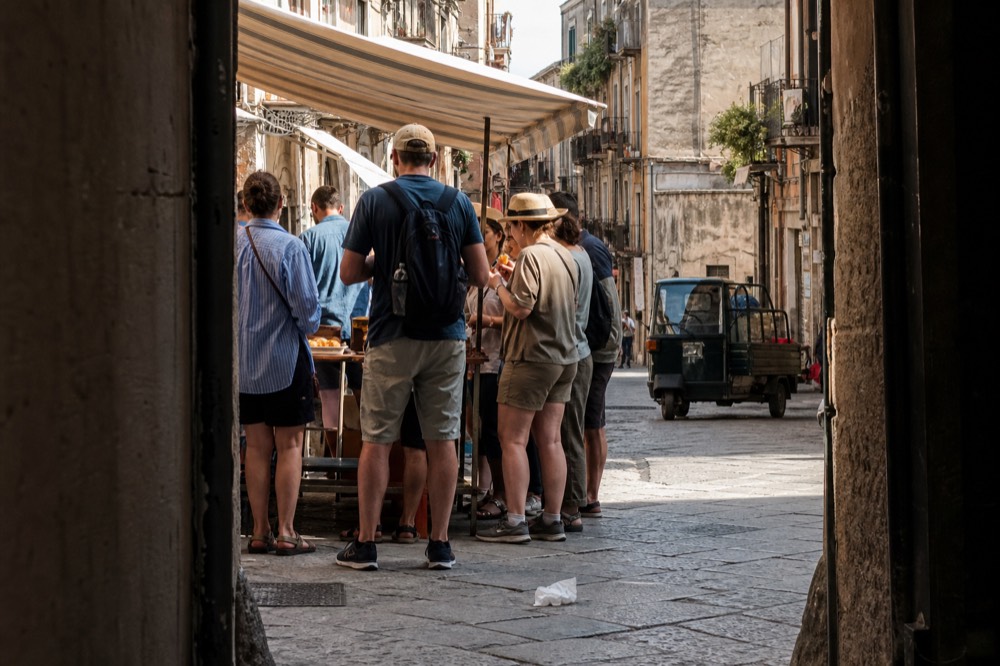
The best food tour depends on what you want: a deep dive into street food, a market-focused walk, or a cooking class. The Secret Food Tours Palermo experience covers 10+ tastings including arancini, cannoli, and wine over 3.5 hours. Streaty’s original street food tour is all-inclusive and highly rated. A market tour and cooking class combination gives you skills to take home.
A guided food tour is the most efficient way to sample the city’s best bites without the guesswork of finding the right stall. The top-rated options cluster around the historic markets and vary in focus, duration, and price.
The Secret Food Tours Palermo outing is a 3.5-hour walk that includes more than ten tastings, from arancini and cannoli to local wine. With a perfect 5-star rating across 782 reviews and a price of $89.33 per person, it is the highest-rated tour of its length on the roster. The group size is capped at 12, and free cancellation is available up to 24 hours before.
Streaty’s original street food and market tour is the most-reviewed option on the site, with a 4.9 rating across 2,308 reviews. At $81.64 per person for three hours, it is all-inclusive and limited to 12 spots per departure. Note that it is non-refundable, unlike most other tours on the roster.
Eating Europe’s Ballarò market and street food tour is a newer entry with a perfect 5-star rating across 139 reviews. Priced at $68.15 per person for three hours, it focuses on the city’s largest market and includes free cancellation up to 24 hours. The group size is capped at 12.
| Tour | Duration | Rating | Price (per person) | Cancellation |
|---|---|---|---|---|
| Secret Food Tours Palermo | 3h 30m | 5.0 (782 reviews) | $89.33 | Free up to 24h |
| Streaty Original Street Food Tour | 3h | 4.9 (2,308 reviews) | $81.64 | Non-refundable |
| Eating Europe Ballarò Market Tour | 3h | 5.0 (139 reviews) | $68.15 | Free up to 24h |
What Are The Best Sit-Down Restaurants In Palermo?
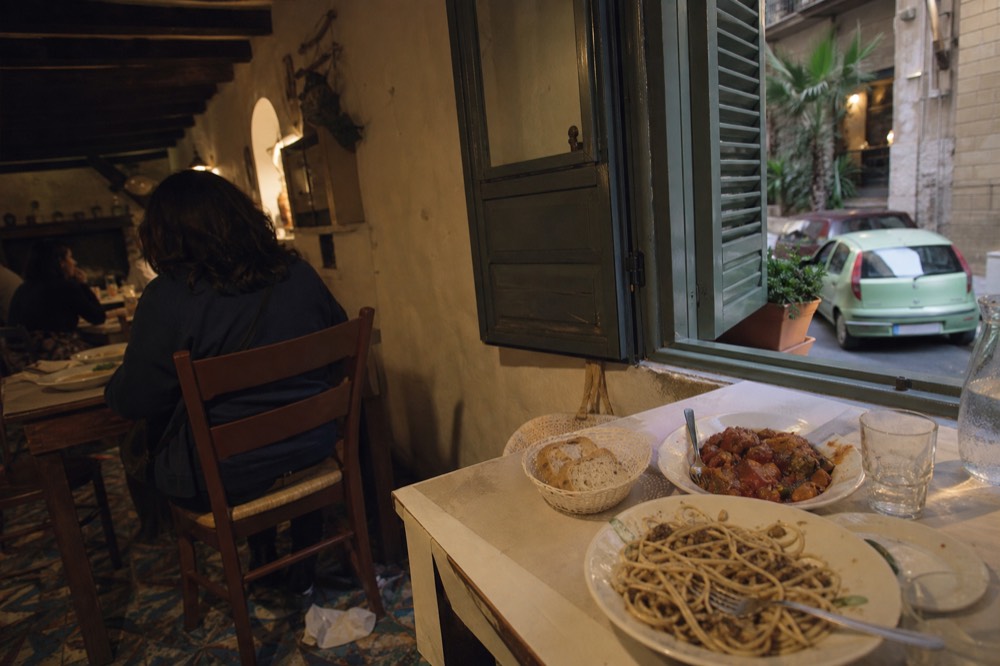
Trattoria Piccolo Napoli is the city’s most famous traditional restaurant, visited by Anthony Bourdain. Buatta Cucina Popolana holds a Bib Gourmand. Mec Restaurant has one Michelin star. For seafood, Ristorante Riccio is a reliable choice. A typical trattoria meal costs €20–25 per person.
Palermo’s restaurant scene ranges from century-old trattorias to modern fine dining. Trattoria Piccolo Napoli, on Piazzetta della Messinese, was featured in Anthony Bourdain’s Parts Unknown Sicily episode in 2013 and remains open. It serves classic Palermitan seafood: pasta con le sarde, swordfish involtini, and fried calamari. Expect to pay around €25–30 for a full meal.
Buatta Cucina Popolana, in the Kalsa district, is a Bib Gourmand entry in the Michelin Guide Italia 2026, recognised for good value cooking. The menu changes with the seasons but always includes pasta alla Norma, caponata, and a selection of Sicilian wines. A meal here runs €25–35.
Mec Restaurant, near the Teatro Massimo, holds one Michelin star and is the city’s only starred restaurant. Chef Carmelo Trentacosti’s tasting menus start around €80 and focus on reinterpreted Sicilian classics. It is the splurge option.
For seafood, Ristorante Riccio reopened in late 2025 after renovation and focuses on fresh fish and shellfish. Ristorante Charleston, in its historic Piazzetta Flaccovio location, also reopened in 2025 with chefs Giovanni Solofra and Roberta Merolli.
| Restaurant | Style | Price range (per person) | Notable for |
|---|---|---|---|
| Trattoria Piccolo Napoli | Traditional | €25–30 | Bourdain visit, seafood |
| Buatta Cucina Popolana | Bib Gourmand | €25–35 | Seasonal Sicilian, wine list |
| Mec Restaurant | Michelin-starred | €80+ | Tasting menus, fine dining |
| Ristorante Riccio | Seafood | €30–40 | Fresh fish, renovated space |
| Ristorante Charleston | Fine dining | €50–70 | Historic location, new chefs |
What Should I Know Before Eating In Palermo?
Palermo’s food rhythms are different from mainland Italy. Lunch is the main meal, many restaurants close between 15:00 and 19:00, and dinner starts late. The ZTL (limited traffic zone) means a car is a liability in the historic centre. July and August are hot but offer the Festino di Santa Rosalia and long evenings. May, June, and September are the best months for walking and eating.
The city’s eating schedule is worth internalising. Most trattorias serve lunch from 12:30 to 14:30 and dinner from 19:30 to 22:30. Between 15:00 and 19:00, many kitchens close, and the only food available is street food from the markets and friggitorie. That is actually the perfect time for a food tour: the markets are quieter, the light is good, and the evening crowds have not yet arrived.
The ZTL covers most of the historic centre and is active Monday to Thursday 8:00 to 20:00, Friday 8:00 to midnight, Saturday 0:00 to 6:00 and 20:00 to midnight, and Sunday 0:00 to 6:00 (summer timetable, in force to 31 October 2026). If you are driving, park outside the centre and walk. A food tour is, by design, a walking tour.
The climate shapes the food year. July averages a 29.8°C high and just 1.2 rain days, making it the driest month, but the heat can be punishing in the middle of the day. August is hotter still, with a 30.5°C mean daily maximum. May (23.3°C), June (27.2°C), and September (27.5°C) are the sweet spots for walking and eating. The Festino di Santa Rosalia, the city’s biggest annual celebration, fills the historic centre with processions on 14 and 15 July, including a route that passes directly through the market districts. It is a spectacular time to be in Palermo, but the crowds are enormous.
| Month | Mean daily max (°C) | Mean rain days | Notes |
|---|---|---|---|
| January | 14.7 | 9.0 | Cool, wet, short days |
| April | 18.7 | 8.6 | Mild but still rainy |
| May | 23.3 | 4.1 | Ideal walking weather |
| June | 27.2 | 1.9 | Hot but dry, long days |
| July | 29.8 | 1.2 | Driest month, Festino |
| August | 30.5 | 2.4 | Hottest, busy |
| September | 27.5 | 5.4 | Warm, rain returns |
| October | 23.5 | 8.2 | Cooling, wetter |
Palermo’s food culture is unique, and visitors often have practical questions about what to eat, where to find the best street food, how much to budget, and when to visit. The answers below cover the essentials for planning your food experience in the city.
Common Questions About Palermo Food
What is the most famous food in Palermo?
The arancina is Palermo’s most famous food: a deep-fried rice ball filled with meat ragù, peas, and cheese. It is eaten as a street snack and is available at friggitorie and markets across the city.
What is a must-eat in Palermo?
You must try an arancina from Bar Vabres or I Cuochini, a pane con le panelle from Nni Franco u Vastiddaru, and a cannolo from I Segreti del Chiostro. These three dishes, from these three places, are the essential Palermo food experience.
Is Palermo food spicy?
Palermo food is not spicy in the chilli-heat sense. It uses sweet-and-sour contrasts, with sugar, vinegar, raisins, and pine nuts appearing in savoury dishes like caponata and pasta con le sarde.
What is the best time of year to visit Palermo for food?
May, June, and September offer the best combination of warm weather, low rainfall, and manageable crowds. July and August are hotter but coincide with the Festino di Santa Rosalia and long, lively evenings.
How much does a food tour cost in Palermo?
Palermo food tours range from about $40 to $150 per person, depending on duration, inclusions, and group size. The most popular street food tours cost $50–90 for three to three and a half hours.
Do I need to book restaurants in advance?
For popular trattorias like Piccolo Napoli and Buatta, booking a day or two ahead is wise, especially on weekends and in high season. For street food stalls, you can walk up at any time.