Why Is Palermo So Famous?
Palermo is famous for UNESCO-listed Arab-Norman architecture, four working street markets and one of Europe's densest fried-food cultures. The sourced story behind the city's reputation.
Why Is Palermo So Famous?
Palermo is famous as the capital of Sicily's street-food culture, as a UNESCO World Heritage city of Arab-Norman architecture, and as a port that receives roughly a million cruise passengers a year and has rebuilt its reputation since the mafia era. Few European cities pack those three stories into one walkable centre.
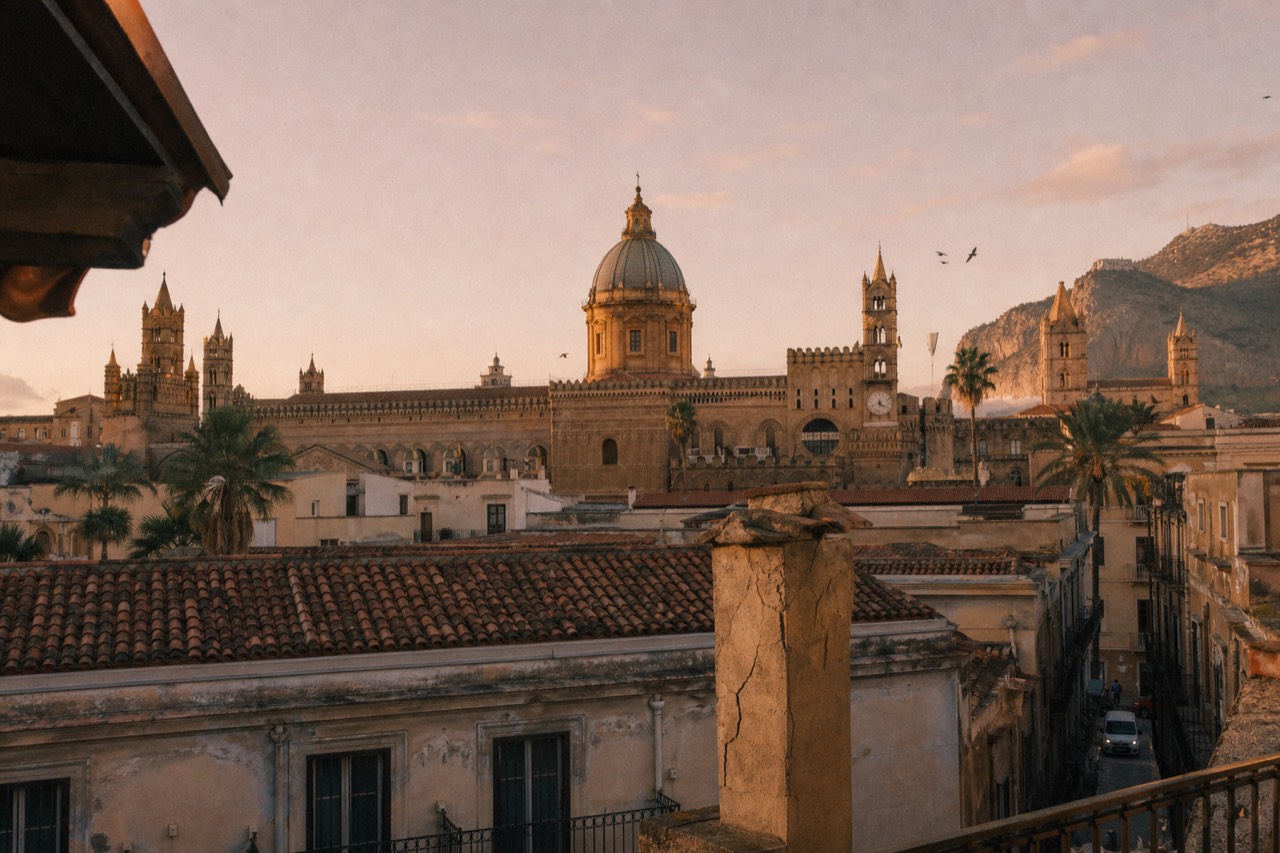
Start with the architecture, because it is the part with a certificate. In 2015 UNESCO inscribed "Arab-Norman Palermo and the Cathedral Churches of Cefalu and Monreale" on the World Heritage List, covering nine civil and religious structures built during the era of the Norman kingdom of Sicily, which lasted from 1130 to 1194. UNESCO's own description credits the buildings with a "fruitful coexistence" of Muslim, Byzantine, Latin, Jewish, Lombard and French communities, and with a stylistic synthesis that produced new concepts of space, structure and decoration. That is a dense sentence, but the physical reality is simple: within a short walk of each other stand a royal palace, a cathedral, a bridge and several churches that look like nowhere else in Europe, because they were built by a court that drew on three continents at once.
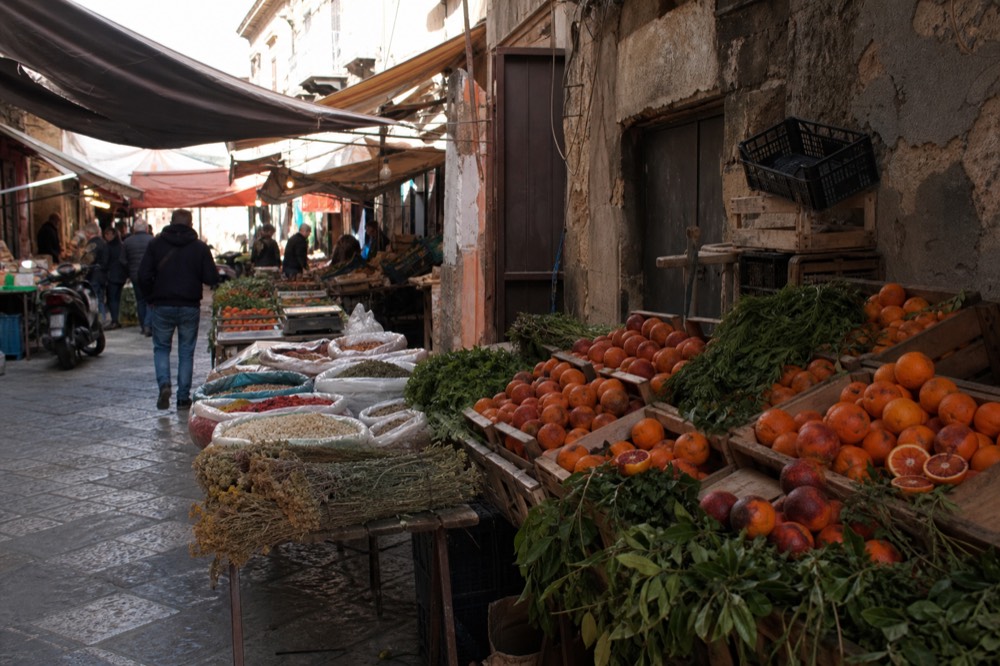
The second pillar is food. Palermo's fame as an eating city does not rest on restaurants, though it has a Michelin-starred one, but on things eaten standing up: fried chickpea fritters from a friggitoria, a rice ball from a bar counter, a slice of spongy sfincione from a market stall. The setting for most of this is the four historic markets, Ballaro, the Capo, the Vucciria and Borgo Vecchio, whose layout and shouted vendor cries the city's own tourism portal traces to the Arab period. We come back to both the food and the markets below, because each deserves its own section.
The third pillar is the rebirth. For much of the late twentieth century Palermo was internationally known for the wrong reasons, and that reputation still shapes the questions visitors ask. The current reality is a city whose tourism numbers, cruise traffic and airport traffic are all setting records, and whose reported crime has fallen two years running. A place can be famous for its past and famous for having moved on from it at the same time, and Palermo is that place.
Put together, the three stories explain why the city pulls visitors who could equally have gone to Florence or Lisbon. The most efficient way to taste the food half of the fame, especially on a first visit, is a guided walk through the markets, and these three are the ones worth comparing first.
What Food Is Palermo Famous For?
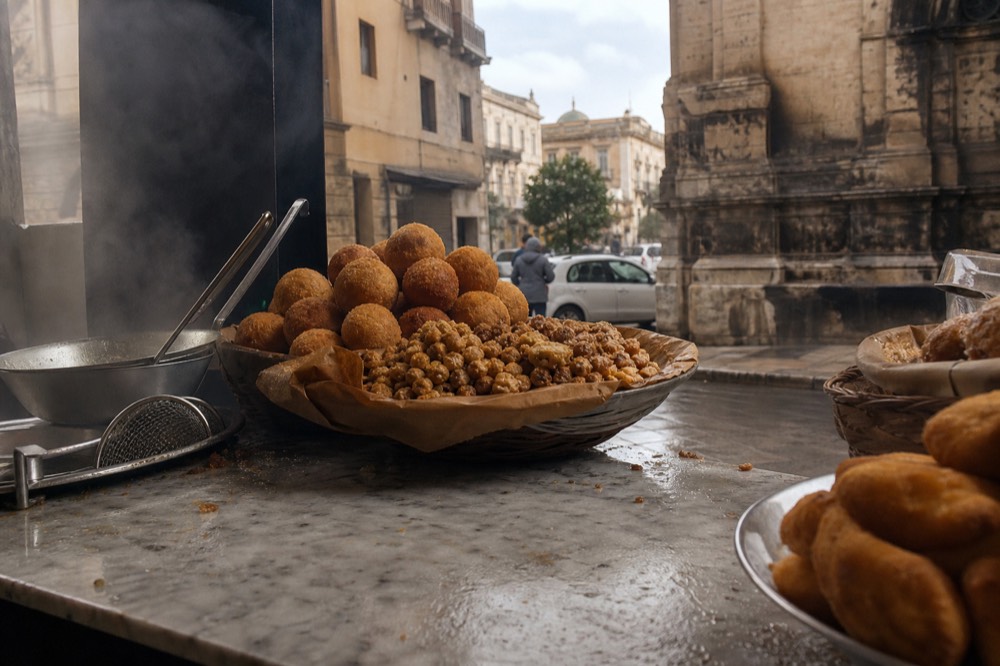
Palermo is famous for fried street food eaten standing up: panelle chickpea fritters, potato crocche, rice arancine and spleen sandwiches, sold from friggitorie and market stalls. Panelle is the one item on Sicily's official traditional-product list whose production territory is the city of Palermo itself, and the markets sell it by the paper bag.
Sicily carries 293 recognised traditional products on the national PAT list, and the Palermo canon sits inside it with some surprises. The official technical sheet for panelle, the chickpea-flour fritter, names the production territory as the city of Palermo and parts of its province, the only canon item whose official territory is the city itself, and even fixes the thickness the batter is spread to before frying: half a centimetre. The arancina, the round fried rice ball Palermo argues about with Catania, has a properly documented linguistic history. The Accademia della Crusca settles the gender question, feminine and round in the west, masculine and often pointed in the east, and then unsettles the origin story: the first dictionary to record the word, Biundi's Sicilian-Italian dictionary of 1857, defines it as a sweet rice dish shaped like a bitter orange, and no meat or tomato appears in any 19th-century record. The widely repeated claim that the arancina is an Arab inheritance is, in Crusca's own conclusion, no longer so certain.
The cannolo has a twist of its own. The official production territory on the PAT sheet is not Palermo at all but the Trapani area, Paceco, Erice, Trapani and Valderice, and the name comes from the cane, Arundo donax, around which the fried shell was originally rolled. Cassata goes back further on paper than either: the PAT sheet cites a document of the Synod of Mazara of 1575 listing it among the sweets indispensable at feast days. Even its etymology is a genuine, citable disagreement, with Treccani deriving the word from the Latin for cheese and the regional sheet suggesting Arabic. Sfincione, the spongy Palermo street pizza, is on the traditional list too, and the town of Bagheria just outside the city celebrates its own white version with a municipal festival every November.
| Dish | What the sourced record says |
|---|---|
| Panelle | Chickpea-flour fritters; the only canon item whose official production territory is Palermo itself, spread half a centimetre thick before frying |
| Arancine | Round and feminine in Palermo, pointed and masculine in Catania; the first dictionary record, 1857, describes a sweet |
| Cannolo | The official sheet's territory is the Trapani area, not Palermo; named for the cane the shell was rolled around |
| Cassata | Listed among feast-day sweets in a 1575 Synod of Mazara document; two authorities disagree on the etymology |
| Sfincione | On Sicily's traditional-product list; Bagheria celebrates its white version with a November festival |
One piece of fame deserves a fact-check, because almost every article repeats it. Palermo is often called the fifth-best street-food city in the world. That ranking is real but old: it appeared in a 2012 Forbes piece, which was itself reporting a reader survey by the travel site VirtualTourist, a site that has since closed. It is fourteen years old, it was a member poll rather than editorial research, and no newer verified global ranking placing Palermo has been found since. The food is not the problem. The credential is.
The practical way to eat through the canon is a guided walk, and the deepest one on the roster is the Secret Food Tours route, which covers more than ten tastings including arancini, cannoli and wine, runs about three and a half hours, and costs from $89.33 per person. It rates 5 across 782 reviews, caps departures at 12 spots, and allows free cancellation up to 24 hours before.
The busiest street-food walk in the city, by review count, is the Streaty Food Tours original market tour, an all-inclusive 3-hour route rated 4.9 across 2308 reviews, from $81.64 per person, also capped at 12 spots. One honest difference matters before you book: the Streaty tour is non-refundable, while most of the rest of the city's roster, including the Secret Food Tours walk above, offers free cancellation up to 24 hours. If your travel dates are still moving, that is the decision axis.
If you would rather plan it yourself, the question of what to eat first has a whole article of its own: our companion piece on what food Palermo is actually famous for goes dish by dish. That question, what to eat first and where, is exactly the one Palermo Food Tours was built to answer.
Why Are Palermo's Historic Markets So Famous?
Palermo has four historic markets, Ballaro, the Capo, the Vucciria and Borgo Vecchio, whose street plan and shouted vendor cries the city's own tourism portal traces to the Arab period. Ballaro trades Monday to Saturday from 07:30 to 20:00 and Sunday mornings mostly, and it is the only one of the four with published clock times.
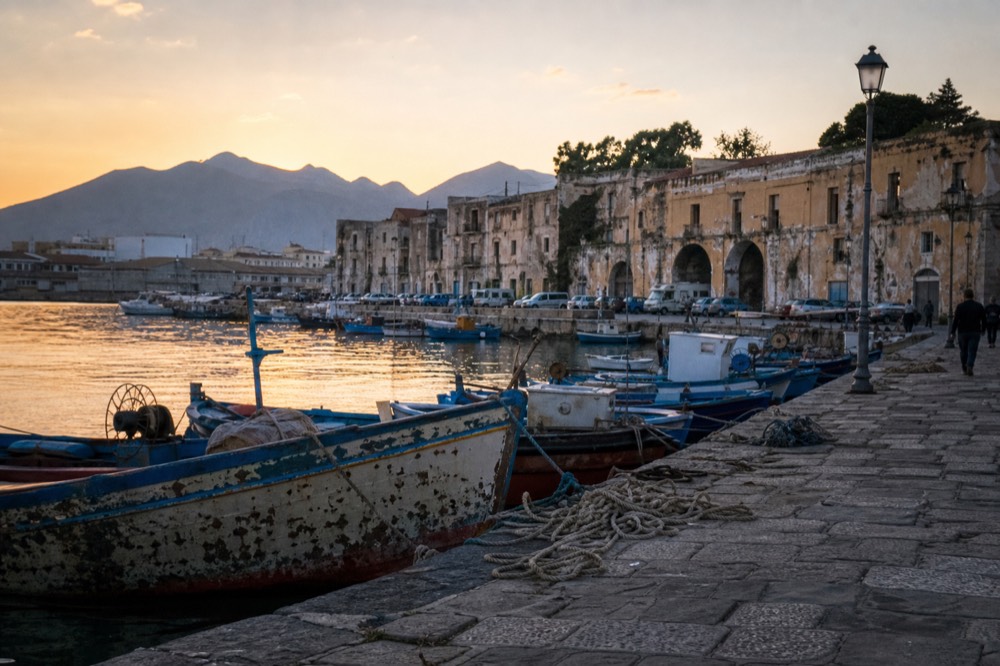
The markets are the stage on which the food fame happens, and the city's tourism portal is the primary source for all four. The shouted sales cry of the hawkers even has a name in Palermitan dialect, the "abbanniata", and the portal calls listening to it part of the show. Ballaro, in the Albergheria quarter, is described by the portal as the city's oldest and largest market, a characterisation worth keeping attributed since it carries no scholarly citation behind it. The Capo, entered through the 18th-century Porta Carini, was historically the meat market, and the portal records the old dialect word for its butchers' shops, "carnezzerie". Borgo Vecchio is the only one with a hard founding date: the quarter formed in 1556 after the new port was built, settled by fishermen and sailors.
| Market | Quarter | What the city's portal says | Hours on record |
|---|---|---|---|
| Ballaro | Albergheria | The city's oldest and largest market; produce from the surrounding countryside | Mon-Sat 07:30-20:00, Sunday mornings mostly |
| Capo | Seralcadio | Historic meat market behind Porta Carini; street food sold by hawkers | Open daily, morning and afternoon |
| Vucciria | Via Argenteria to piazza Garraffello | Once the great food square of old Palermo, rearranged by the viceroy Caracciolo in 1783 | Officially daily; the food market has contracted in practice |
| Borgo Vecchio | Behind the Politeama | Quarter dates to 1556; morning market, now with a nightlife scene | Mornings |
The Vucciria is where the honest version of this story gets complicated. The city's page still describes a market open all day, but PalermoToday reported in March 2025 that the Vucciria has all but disappeared as a food market, the Capo is slowly emptying and Ballaro is transforming, with traders quoted saying they have lost around 80% of their traditional custom to the traffic zone, parking scarcity and the emptied-out centre. What has replaced the greengrocers is nightlife, and the city has formally made the area a regulated pedestrian zone, an arrangement extended by ordinance to 31 December 2026. The market's most famous image survives ten minutes' walk away: Renato Guttuso painted "La Vucciria" on a three-by-three-metre canvas between 1 October and 6 November 1974, flying the produce up from Palermo to work from the real thing, and chose that it hang at the university's Steri palace.
None of this means skip the markets. It means the eating there is now aimed squarely at visitors, with the quality variance that implies, and a guided walk earns its fee by steering you to the stalls that still cook rather than reheat. If a guided walk through all of this appeals, the ten-tastings route above is the one that covers the most ground.
For the full picture of all four, including what to buy where, our guide to Palermo's historic markets goes market by market.
Is Palermo Famous Because Of The Mafia?
Partly. Palermo's international reputation in the late twentieth century owed a great deal to organised crime, and visitors still ask about it before almost anything else. The modern story runs the other way: reported crime in the Palermo metropolitan area fell 9.24% in 2025 and a further 11.37% in the first quarter of 2026, while tourism grew.
There is no honest version of this article that skips the subject, because for decades the city's name abroad was inseparable from the mafia trials, and that history is part of why the rebirth reads as a story at all. But the numbers now point in one direction. Interior Ministry figures reported by the local press show reported crime in the metropolitan area down 9.24% in 2025 compared with 2024, with a further 11.37% fall in the first quarter of 2026. The 2025 Sole 24 Ore quality-of-life ranking still places Palermo province 97th of 107 Italian provinces, so this is not a city claiming to have solved everything, though it gained three places on the prior year.
What visitors actually report is mundane and familiar: pickpocketing in crowded tourist areas, the same as any large European city, and a historic centre that is livelier and safer-feeling than its old reputation suggests. First-hand accounts from recent travellers consistently describe the surprise, that the city they were warned about turned out to be walkable, cheap to eat in and full of people at all hours. The fame has simply not caught up with the facts, which is a slow process everywhere.
The food side of the mafia story has its own chapter, and it is a genuinely Sicilian one: the anti-racket movement and the restaurants that refused protection money are part of recent civic history. But for a visitor planning a trip, the practical takeaway is smaller and simpler. Take the usual city precautions around bags and phones in markets, and otherwise plan around food and architecture rather than around fear.
How Many Tourists Visit Palermo Now?
Palermo recorded more than 916,000 arrivals and about 2.1 million tourist presences in 2025, up 7.3% on the previous year, with foreigners accounting for 63.8% of stays. The port handled 996,484 cruise passengers across 284 calls the same year, and the airport closed 2025 with a record 9.2 million passengers.
The scale of the turnaround is the point. The city's own figures, drawn from the regional tourism observatory, put 2025 as the year Palermo passed two million presences for the first time in this counting series. The port numbers matter almost as much for the city's character: nearly a million cruise passengers across 284 calls means the market squares fill and empty in waves, and a food walker who times a market visit between ship arrivals eats in a different city from one who does not.
| Indicator | 2025 figure |
|---|---|
| Tourist arrivals | More than 916,000 |
| Tourist presences | About 2.1 million, up 7.3% on 2024 |
| Foreign share of stays | 63.8% |
| Cruise passengers | 996,484 across 284 calls |
| Airport passengers | 9.2 million, a record, up 3.3% on 2024 |
There is a budget consequence worth knowing before you book anything. Palermo charges a tourist tax, in force since 1 July 2025, of up to €5 per person per night depending on the category of accommodation, with B&Bs and short-term rentals at €4, capped at four consecutive nights and with under-12s exempt. It is small, but on a family trip it adds up, and it is usually collected by the property rather than included in a room rate quoted online.
When Is The Best Time To Visit Palermo?
May, June and September are the walking-tour sweet spots. WMO climatological normals give May a 23.3 C average daily high with 4.1 rain days, June 27.2 C with 1.9 and September 27.5 C with 5.4. July is the driest month at 6.7 mm of rain, but it is also Festino month, when the centre fills with processions.
The climate record for Palermo, from the World Meteorological Organization's published normals, splits the year cleanly. August is the hottest month by mean daily maximum at 30.5 C, with July just behind at 29.8 C. July is also the driest, averaging 6.7 mm of rain across 1.2 rain days. December is the wettest at 123.7 mm across 12 rain days, and the wet half of the year runs October through March, carrying 632.4 mm against 223.1 mm for April through September. April is mild but averages 8.6 rain days, more than double May's, which is why May and not April is the sweet spot.
| Month | Mean daily max | Mean rain days |
|---|---|---|
| January | 14.7 C | 9.0 |
| April | 18.7 C | 8.6 |
| May | 23.3 C | 4.1 |
| June | 27.2 C | 1.9 |
| July | 29.8 C | 1.2 |
| August | 30.5 C | 2.4 |
| September | 27.5 C | 5.4 |
| December | 15.8 C | 12.0 |
Daylight matters more than visitors expect. A mid-January Palermo day has under ten hours of light, gone before 17:15, which makes a morning market effectively the whole day. A mid-July day has over fourteen and a half hours, with the useful hours at the edges, early morning and after 19:00, because the middle of the day averages a 29.8 C high.
July has a second complication, and it is a glorious one. The Festino di Santa Rosalia, the city's biggest annual event, puts its main procession night on 14 July, with the relics procession through the Quattro Canti and Piazza Marina on the 15th and a fireworks display on the cathedral forecourt at 23:00. The 2026 edition was the 402nd. If you are there for it, the centre is unforgettable and impassable in equal measure; if you are not, book around it.
What Else Is Palermo Famous For?
Beyond food, Palermo is famous for Guttuso's three-by-three-metre painting of the Vucciria market, a Michelin-starred restaurant in Mec, the Ciaculli late mandarin grown on the city's edge, and the wine country of the interior, from Camporeale to the Marsala salt pans. The city also works as a base for Cefalu, Monreale and Erice.
The table-fame is real and current. Mec Restaurant holds the city's one Michelin star in the 2026 guide, and Buatta Cucina Popolana retained its Bib Gourmand, with two new Bib entries in the wider province. On the sweeter side of the province's agriculture, the Ciaculli late mandarin, a spontaneous mutation of the Avana mandarin that appeared in the 1940s on Palermo's eastern edge, is a Slow Food Presidium covering around 80 hectares of growers, harvested January to March: a winter visitor is eating a fruit that a summer visitor never sees.
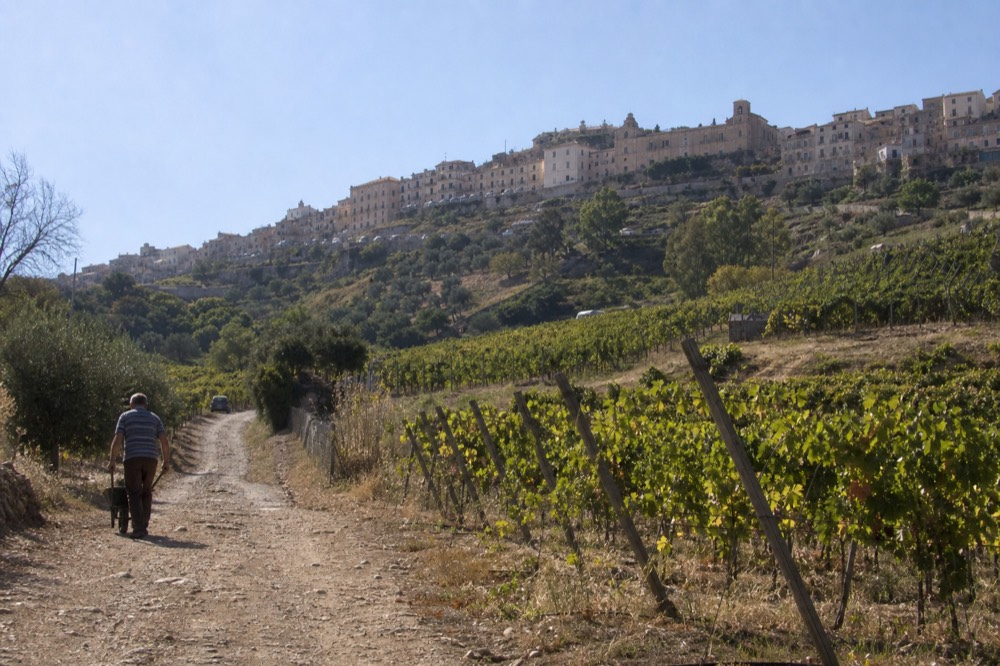
Then there is the wine country, which most first-time visitors underestimate. A nine-hour Erice and Marsala salt pans excursion from Palermo, rated 4.8 across 349 reviews and from $131.7 per person, bundles a hill town, a sea-salt landscape and lunch into one long day. Closer to hand, the Sallier de La Tour estate at Camporeale runs a two-hour wine discovery tour, rated 4.9 across 10 reviews and from $69.68 per person, with free cancellation up to 24 hours. One planning note the listing is explicit about: transport to the estate is not included, so you drive yourself, which makes it a natural add-on if you have a car day rather than a walking day.
For planning beyond the city, our guide to day trips from Palermo covers Cefalu, Monreale and the western towns, and if you are still weighing the city against other Sicilian stops, we have a separate piece on whether Palermo is worth visiting.
So, why is Palermo so famous? For a UNESCO-certified architectural synthesis that exists nowhere else, for a fried-food culture with a paper trail back to 1575 and a linguistic argument running through it, for four markets that are honestly documented as changing under tourism's weight, and for a city that turned the hardest chapter of its recent history into a record tourism year. Not many cities can answer the question three different ways, all of them true.
The questions below cover what readers ask most about Palermo's fame: which food made its name, whether the city is safe, whether it is worth the trip, and when to go. Each answer sticks to the sourced figures used throughout this article, from the UNESCO inscription to the 2025 tourism and climate records.
Common Questions About Why Palermo Is Famous
Why Is Palermo So Famous?
Palermo is famous for its UNESCO-listed Arab-Norman architecture, its four historic street markets and the fried street-food culture sold in them, and its rebirth from a mafia-era reputation into a city of over 916,000 tourist arrivals and about 2.1 million presences in 2025. The three stories sit within one walkable centre.
What food is Palermo most famous for?
Panelle, the chickpea fritter whose official production territory is the city itself, plus arancine, potato crocche, sfincione and cannoli. The fried items are eaten standing, bought from friggitorie and market stalls rather than restaurants.
Is Palermo safe for tourists?
Reported crime in the metropolitan area fell 9.24% in 2025 and a further 11.37% in the first quarter of 2026. Visitor reports mostly mention pickpocketing in crowded tourist areas, as in any large European city, rather than violent crime.
Is Palermo worth visiting?
Yes, if food and architecture are what you travel for. A Michelin-starred restaurant, a record 9.2 million airport passengers in 2025 and a two-million-presence tourism year all point the same way, and the historic centre is compact enough to cover on foot.
What is the best month to visit Palermo?
May, June or September. WMO normals give those months average daily highs of 23.3 C, 27.2 C and 27.5 C with 4.1, 1.9 and 5.4 rain days respectively. Avoid mid-July only if you do not want the Festino di Santa Rosalia crowds on 14 and 15 July.