Is Palermo In Sicily Worth Visiting?
An honest answer to whether Palermo is worth visiting: the food, the costs, the safety question, the rough edges, and who the city suits best.
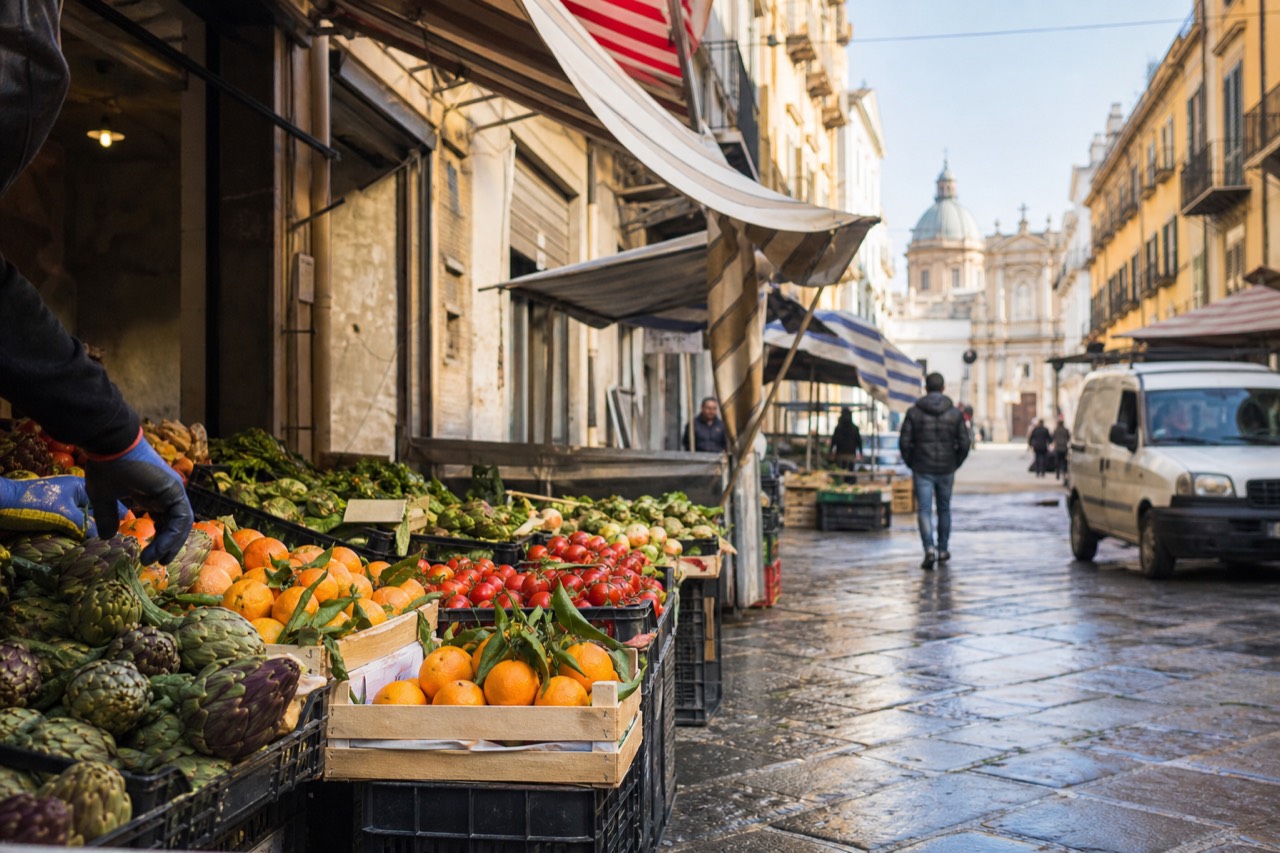
Is Palermo In Sicily Worth Visiting?
Yes, for most travellers who rank food and street life above polish, Palermo is worth visiting, and the numbers back that up: the city recorded over 916,000 arrivals and around 2.1 million presences in 2025, a 7.3 percent rise in presences over the previous year, with foreigners making up 63.8 percent of the total. Palermo is not a museum city in the Florence sense. It is a working port capital where the Arab-Norman architecture, the UNESCO-listed churches and the shouted market cries share the same streets, and where a fried chickpea fritter in a bun costs a couple of euros. Whether that appeals depends entirely on what you travel for, and this page works through the honest case both ways.
The strongest argument is density. Very few European cities pack a UNESCO World Heritage inscription, four historic street markets, a distinctive fried-food culture and a Michelin-starred restaurant into a historic centre you can cross on foot in under an hour. The weakest argument is also real: the city is gritty, August is fiercely hot, some market areas feel uncomfortable at night, and the infrastructure shows its age. Both halves are true at once, and pretending otherwise does a visitor no favours.
The food alone justifies the trip for many people. If that is you, the most efficient first evening is a guided walk through the markets with someone who knows which stalls fry to order:
The trio above spans the practical range: a history-and-tastings walk from $56.91, a small-group street food tour from $52.06 capped at 12 spots per departure, and a two-hour Sicilian wine and tapas tasting from $49.94 for the evening you want to sit down. All three offer free cancellation up to 24 hours, which matters when you are still shaping an itinerary.
What Actually Makes Palermo Worth The Trip?
The concentration of food, markets and layered history is the reason to go: Sicily's official traditional-products list runs to 293 items, Palermo's panelle is the one street-food canon item whose official production territory is the city itself, and the UNESCO inscription covering the Arab-Norman monuments dates from 2015. That combination, a living food culture plus world-heritage architecture within walking distance of each other, is what separates Palermo from prettier, quieter Sicilian towns. You are not choosing between a food destination and a culture destination here. You get both in the same afternoon.
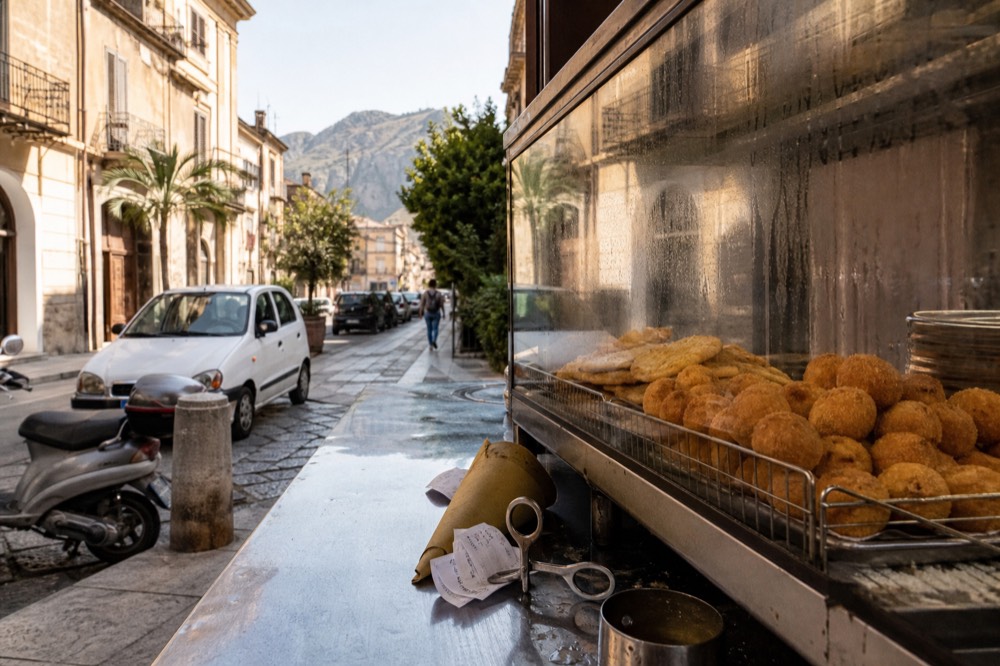
Start with the food, because it is the city's loudest credential. The Comune di Palermo's own tourism portal lists four historic markets, Ballarò, il Capo, la Vucciria and Borgo Vecchio, and describes the shouted hawker's cry, the "abbanniata", as folk music in its own right. Sicily's PAT register of traditional foods, run under a national scheme that requires at least 25 years of consistent traditional practice, lists panelle, crocchè, arancini di riso, stigghiola, sfincione and cannoli among its 293 entries. Palermo's fried-food tradition is not a tourist invention; it is the thing locals eat standing up on their lunch break, and the best versions still cost less than a coffee in northern Europe.
The history is just as dense. The Arab-Norman Palermo inscription, reference 1487 on the UNESCO World Heritage List, covers nine civil and religious structures from the era of the Norman kingdom of Sicily, 1130 to 1194, including the cathedrals of Cefalù and Monreale. UNESCO's own framing is worth reading: the buildings testify to "the fruitful coexistence of people of different origins and religions", Muslim, Byzantine, Latin, Jewish, Lombard and French. That layering is visible in the food too. Archaeologists working at Mazara del Vallo have found aubergine, spinach, watermelon and citrus in Islamic-period deposits, evidence that the island's pantry changed shape a thousand years ago. You can read the entry at the UNESCO World Heritage Centre.
There is also a high-end layer people do not expect. The Michelin Guide Italia 2026 gives Palermo one one-star restaurant, Mec, and three Palermo-province restaurants appear among the new Sicilian Bib Gourmand entries. The city can do splurge and snack on the same day. For planning, here is the honest shape of what a day costs:
| Item | Typical planning range | Notes |
|---|---|---|
| Arancina or panelle bun | 2.50 to 4.50 euro | Centro storico prices, roughly double 2021 levels |
| Cannolo | 2.50 to 4 euro | Filled to order in the better pasticcerie |
| Pizza with a drink | averages 14.56 euro | Range runs 9 to 28 euro |
| Sit-down trattoria meal | 20 to 25 euro with a drink | Primi usually 7 to 12 euro |
| Coperto (cover charge) | 1.50 to 3 euro per person | Legal in Sicily, must be shown on the menu |
Treat those as planning ranges, not promises: markets and trattorie vary, and prices in the centro storico have risen faster than anywhere else in Italy. One local report on centro storico prices found pizza-and-drink costs had climbed about 60 percent in five years, the sharpest rise in the country. Palermo is still cheap by northern European standards, but it is no longer the near-free food city older guidebooks describe.
Does The Food Live Up To The Hype?
Mostly yes: Palermo's street food reputation rests on a real, locally consumed canon, but the famous "fifth best street food city in the world" claim traces back to a 2012 Forbes article reporting a reader survey by a travel website that has since closed, so treat the ranking as history rather than a live credential. The food itself needs no borrowed trophy. The honest version of the story is that Palermo has been trading on that 2012 list ever since, while the actual eating experience has kept changing underneath it, partly for the better and partly not.
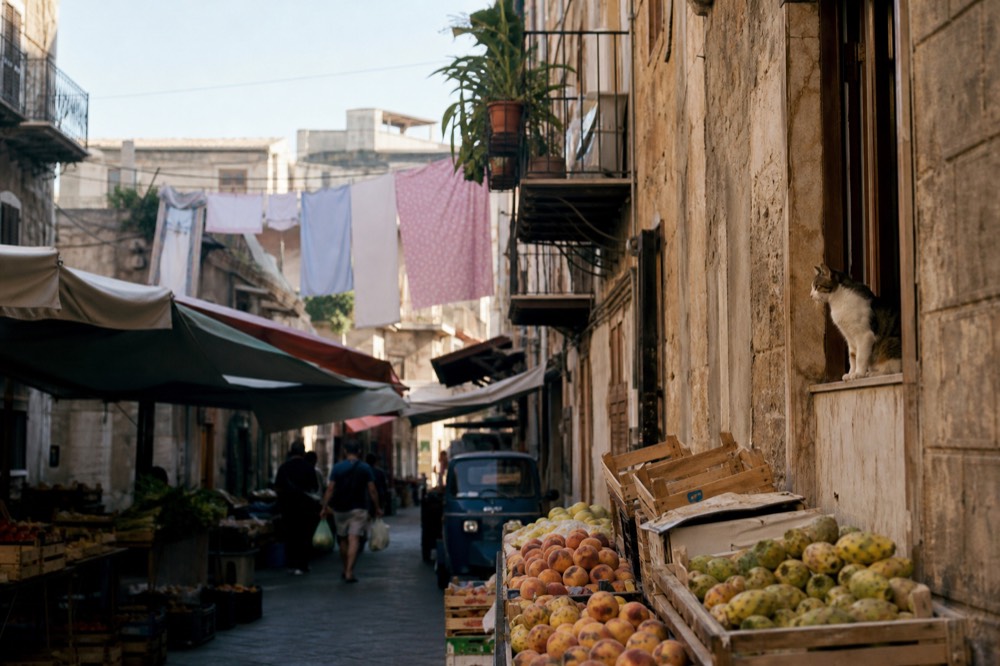
The changes cut both ways. PalermoToday reported in March 2025 that traders in the historic markets say they have lost around 80 percent of their traditional customers, blaming the traffic-limited zone, parking and thin services, with tourist street food filling the gap. A visitor report from September 2025 complained of microwaved pre-made arancine at one Ballarò stall, while replies pointed to the fry shops along and around via Maqueda as the reliable alternatives. The lesson for a visitor is simple: the market atmosphere is genuine, but the best fried food in Palermo is not automatically at the most photogenic market stall.
The canon deserves a short detour, because it is more interesting than the standard write-ups suggest. The Accademia della Crusca, Italy's top language authority, examined the arancina question and found no trace of the dish anywhere in the written record before the second half of the 19th century, and the first dictionary to record the word, in 1857, defines it as a sweet rice dish shaped like a bitter orange. Neither meat nor tomato appears in the early records at all. Crusca's conclusion, set out in its linguistic consultation on arancino or arancina, is that the usual Arab-origin story does not hold up and that the dish probably emerged as a Victorian-era sweet that turned savoury almost immediately. Palermo's version, round and feminine, follows standard Italian grammar; Catania's cone, masculine, follows Sicilian dialect. Eating an arancina in Palermo is therefore biting into a genuinely contested piece of linguistic history, which is more than most snacks can say.
A guided walk solves the "which stall" problem efficiently. The Palermo: Street Food and History Walking Tour, run by Cavallaro Fabrizio, pairs five tastings including cannoli and a drink with a walk that takes in the Capo market, rated 4.9 across 1,672 reviews, running 3 hours from $56.91 per person with free cancellation up to 24 hours. It often sells out, which tells you something about demand. For a sense of what the markets themselves are like before you commit, our guide to Palermo's four historic markets breaks down what each one actually sells now.
What Are The Downsides You Should Know About?
The honest negatives are grit, heat, uneven upkeep and a night-time comfort problem in parts of the centre: Palermo province ranked 97th of 107 Italian provinces on the Sole 24 Ore quality of life index, dead last on waste recycling, and first-hand reports consistently flag Ballarò's side streets and the Vucciria after dark as places to avoid on foot. None of that makes the city not worth visiting. It does mean the trip rewards a bit of planning, the same way Naples or Marseille does.
The Vucciria deserves a specific mention because guidebooks and reality have diverged. The city's tourism portal still describes an all-day food market, but the daytime market has largely given way to nightlife, and the city council has formally regulated the area as a pedestrian zone, with the current extension running to 31 December 2026. Recent visitor threads describe the area as crowded, loud until the early hours and occasionally sketchy, and recommend the streets around Teatro Massimo and Politeama for evening comfort instead. During the day, the Vucciria is still worth a walk, and Renato Guttuso's enormous 1974 painting of it, three metres by three metres, hangs at the University of Palermo's Steri a short distance away.
Heat is the other practical constraint. World Meteorological Organization climatological normals for Palermo put August's mean daily maximum at 30.5 degrees and July's at 29.8, with July also the driest month at 6.7 millimetres of rain. In mid-January, by contrast, you get under ten hours of daylight. The sweet spots for walking-based travel are May, June and September, which combine highs between 23 and 28 degrees with four or fewer rain days on average. July has one further complication: on 14 and 15 July the historic centre is given over to the Festino di Santa Rosalia processions, which is either a reason to come or a reason to rebook depending on your tolerance for enormous crowds.
Here is how the year shakes out for a food-focused visit:
| Period | Mean daily high | Rain days | Verdict for a food trip |
|---|---|---|---|
| May | 23.3 C | 4.1 | Excellent: warm, dry, markets in full swing |
| June | 27.2 C | 1.9 | Excellent, getting hot by late month |
| July | 29.8 C | 1.2 | Fine, but Festino crowds on 14-15 July |
| August | 30.5 C | 2.4 | Hottest month; plan around mornings and evenings |
| September | 27.5 C | 5.4 | Very good: warm sea, fewer cruise crowds early on |
| October to April | 14.5 to 23.5 C | 8 to 12 | Cooler and wetter; indoor food and trattoria season |
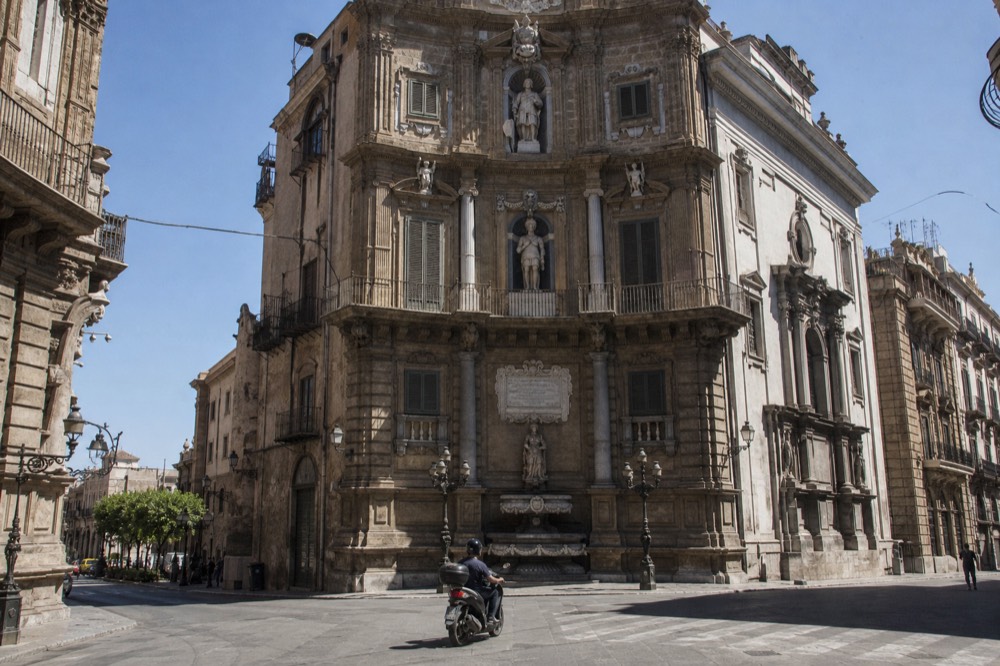
The grit question, finally, has a data answer rather than an anecdotal one. Reported crimes in the Palermo metropolitan area fell 9.24 percent in 2025 versus 2024, and a further 11.37 percent in the first quarter of 2026, according to police data reported locally. The realistic risks for a visitor are pickpocketing in crowded tourist streets and discomfort rather than danger, the same profile as most large Mediterranean cities. Keep the bag in front of you at the markets and the Quattro Canti, and the ordinary precautions carry the day. Our where to avoid in Palermo piece goes deeper on specific streets and neighbourhoods.
How Many Days Does Palermo Need?
Three full days is the comfortable answer for a first visit built around food: one day for the centro storico and its markets, one for the Arab-Norman circuit and the Capo, and one for a day trip, with a fourth day adding Monreale or Cefalù without rush. Recent traveller reports back this up, with several concluding that roughly six days including day trips was comfortable and unhurried, and that two full days in the city itself was workable but tight. The city's food culture rewards slowness, because the markets run on a morning rhythm and the best friggitorie sell out.
The first-day shape almost writes itself. Ballarò trades Monday to Saturday from 07:30 to 20:00, with Sundays mostly mornings only, and the Capo runs mornings and afternoons. A morning market walk, a standing lunch of panelle and crocchè, an afternoon among the Norman monuments and an evening in a trattoria covers the essential city without exhausting anyone. Day two is the turn toward the kitchen: a cooking class, a wine tasting, or the deeper market corners you missed while eating. Day three is the day trip, and the options are unusually good, Monreale's cathedral is inside the UNESCO inscription, Cefalù is a direct train ride away, and the Erice and Marsala salt pans tour runs a long but rewarding 9 hours, with the price on the operator's live listing.
Budget the food dimension separately from the hotel dimension, because they behave differently. The city's tourist tax, updated with effect from 1 July 2025, runs 3 to 5 euro per person per night depending on the property category, capped at four consecutive nights, with short-term rentals and B&Bs at 4 euro. A rough shape for a comfortable food-first day:
| Budget element | Planning range per person |
|---|---|
| Street food lunch | 5 to 10 euro |
| Trattoria dinner with wine | 20 to 30 euro |
| Guided food tour (3 hours) | from about $40 to $90 |
| Cooking class (3 to 5 hours) | from about $60 upward |
| Wine tasting (2 hours) | from about $50 |
Those tour figures come from the current live listings of the operators on this site, and the ranges are real: the most affordable guided walk in the city starts at $39.83, while the longest cooking class with market tour sits at the top of the city's class price range. Where a specific tour's price matters to your decision, check the operator's live listing, since promotional pricing does circulate.
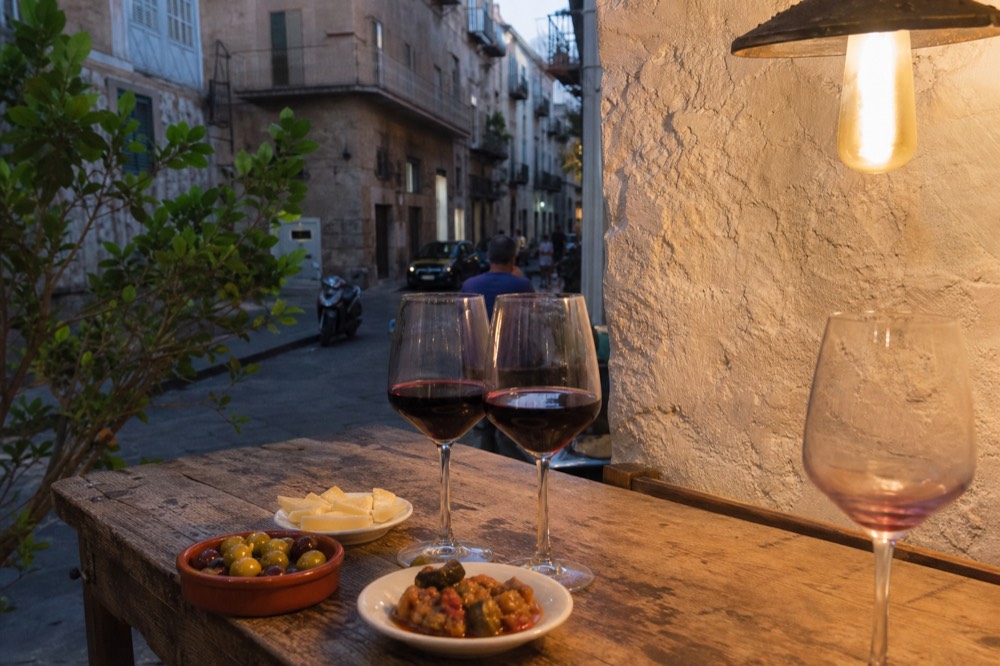
For the evening you would rather sit than walk, the two-hour Palermo: Wine Tasting with Sicilian Tapas at 26mq Urban Winery runs from $49.94 per person, rated 4.8 across 204 reviews, with free cancellation up to 24 hours. It pairs naturally with a second or third night once the fried-food pace of the first day has caught up with you.
Palermo Or The Alternatives: Which Suits You?
Choose Palermo over Catania or Taormina if food and markets are the point of the trip; choose Taormina for polished views and easy chic, Catania for a bigger, brasher base near Etna, because the three cities deliver genuinely different trips rather than better or worse versions of the same one. Palermo is the food capital by a distance: it is the city whose markets, friggitorie and UNESCO layers this whole site, Palermo Food Tours, exists to document, and where a first-time visitor can eat brilliantly for under 20 euro a day. The trade is roughness. Taormina is beautiful, small and expensive; Catania is a working city with its own arancino culture and easier access to the volcano and the east coast.
The honest framing is that Palermo suits travellers who like their cities a bit unfinished. The same visitor who loved Naples, Lisbon's older quarters or Marseille will feel at home here. The traveller who wants immaculate streets, resort comfort and predictable evenings will be happier elsewhere, and there is nothing wrong with that. If you are still weighing the island's two big cities, our Palermo or Catania comparison breaks the choice down dish by dish.
One final point in Palermo's favour that rarely makes the brochures: it is unusually easy to eat well here without a car. The historic centre is a daytime traffic-limited zone by design, which makes a walking food tour not just a product but the natural way to experience the city. Buses and trains handle the main day trips. A car is a liability in the centre and only earns its keep for the western vineyard routes, and even there the vineyard tastings near Partinico and Camporeale require you to drive yourself, as transport is not included in either.
If the food-first case has won you over, these three cover the classic first-visit formats, a market walk with history, a small-group street food tour, and a sit-down wine and tapas evening:
These are the questions travellers ask most often about Palermo, answered with the same figures used throughout this page: how many days you need, what it costs, when to go, and whether the city is safe, so you can finish planning with the key decisions settled. Each answer keeps to the verified numbers, and where a figure such as a tour price can move, the answer says so plainly rather than printing a stale number.
Common Questions About Palermo
Is Palermo In Sicily Worth Visiting?
Yes, if food, markets and layered history rank high for you. Palermo recorded over 916,000 tourist arrivals and about 2.1 million presences in 2025, and the city combines a UNESCO World Heritage inscription with a distinctive fried-food culture at low prices. It is not worth it if you want polished, quiet resort comfort.
Is Palermo safe for tourists?
For ordinary city precautions, yes. Reported crimes in the Palermo metropolitan area fell 9.24 percent in 2025 and a further 11.37 percent in the first quarter of 2026. The realistic risks are pickpocketing in crowded areas and discomfort in some neighbourhoods after dark, particularly around the Vucciria and Ballarò's side streets.
How many days do you need in Palermo?
Three full days is comfortable for a first food-focused visit: markets and the centro storico, the Arab-Norman monuments and a cooking class or tasting, then a day trip to Monreale or Cefalù. Two days works but feels rushed; a week lets you add the western vineyards without hurrying.
What is the best month to visit Palermo?
May, June and September balance warm weather with low rainfall: mean daily highs of 23.3, 27.2 and 27.5 degrees respectively, with five or fewer rain days each. July and August are hottest and busiest, and mid-July brings the Festino di Santa Rosalia processions through the centre on 14 and 15 July.
Is Palermo expensive?
Not by northern European standards, though centro storico prices have risen sharply. A street food lunch runs 5 to 10 euro, a trattoria dinner with a drink about 20 to 25 euro, and the tourist tax adds up to 5 euro per person per night for a maximum of four nights depending on your accommodation category.
Do you need a car in Palermo?
No. The historic centre is a daytime traffic-limited zone, so a walking tour is the natural way to see it, and trains and buses cover Cefalù, Monreale and other day trips. A car only earns its keep for western vineyard routes, and note that the Partinico and Camporeale wine tastings do not include transport to the estate.