Sicilian Street Food: The Dishes, The Regional Split, And What Palermo Actually Owns
Most Sicilian street food articles blend the island into one happy blur. The reality is more interesting: some classics are island-wide, some belong to Palermo alone, and the east coast claims a few back.
Short answer
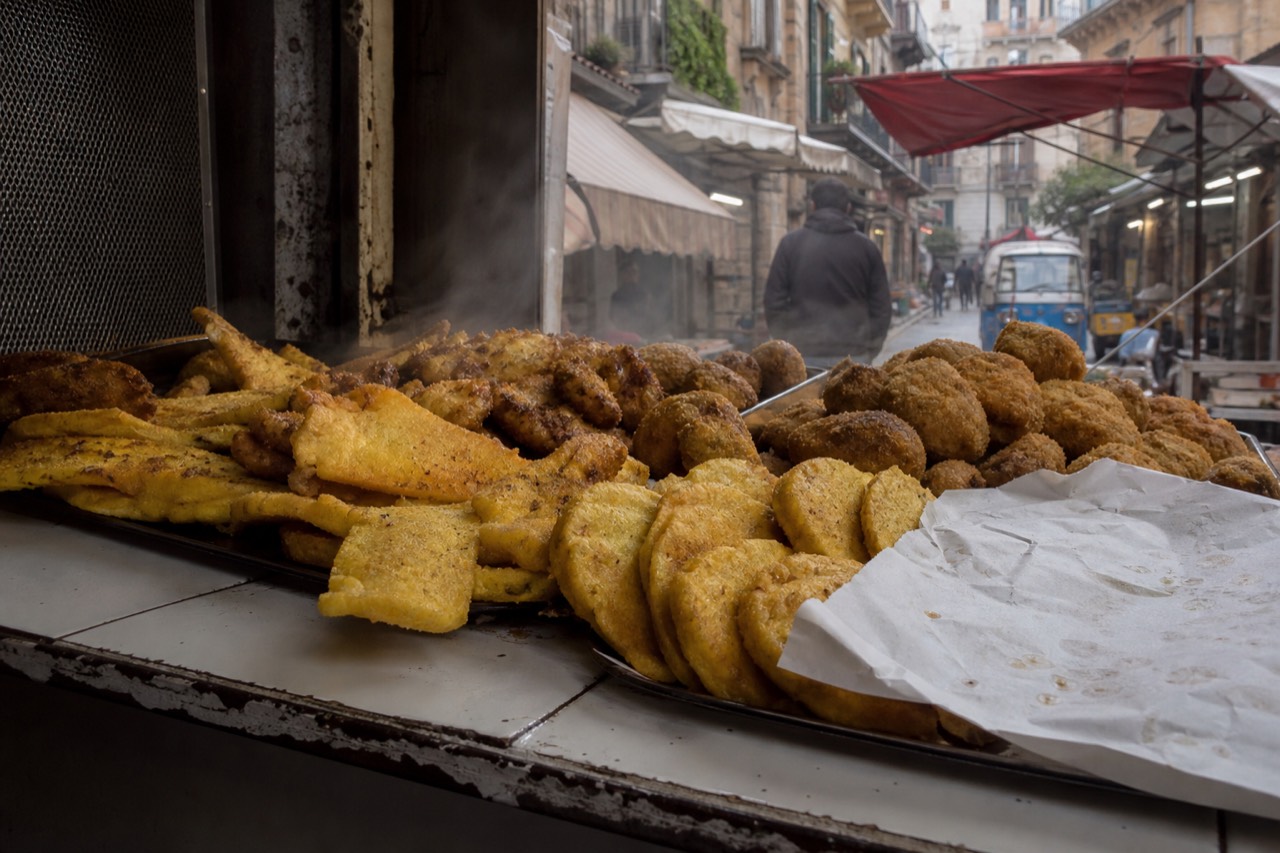
Sicilian street food spans arancine, panelle, cannoli, sfincione, stigghiola and more, but ownership is split: panelle are officially Palermo's, cannoli are a Trapani product on the official PAT list, and the east of the island says arancino where Palermo says arancina. A 3-hour guided walk costs from about $40 to $89 per person.
What Counts As Sicilian Street Food?
Sicilian street food is a defined, state-recognised category, not a marketing label. Italy's national PAT register lists 293 Sicilian traditional products, and 40 of them are gastronomy items plus 100 bakery, pastry and confectionery products, many of them fried, filled or served from a counter. Arancini di riso, panelle, crocche di patate, stigghiola, sfincione and cannoli all sit on that official list, which requires a preparation method proven for at least 25 years.
That register is worth knowing about because it settles arguments that food blogs cannot. The Prodotti Agroalimentari Tradizionali scheme was created by Italian law in 1998, and the Sicilian region publishes technical sheets for each recognised product through its agriculture department. Some of those sheets carry surprises: the cannolo's official production territory is the Trapani area, not Palermo, and the sfoglio belongs to Castellana Sicula in the Madonie, not Monreale.
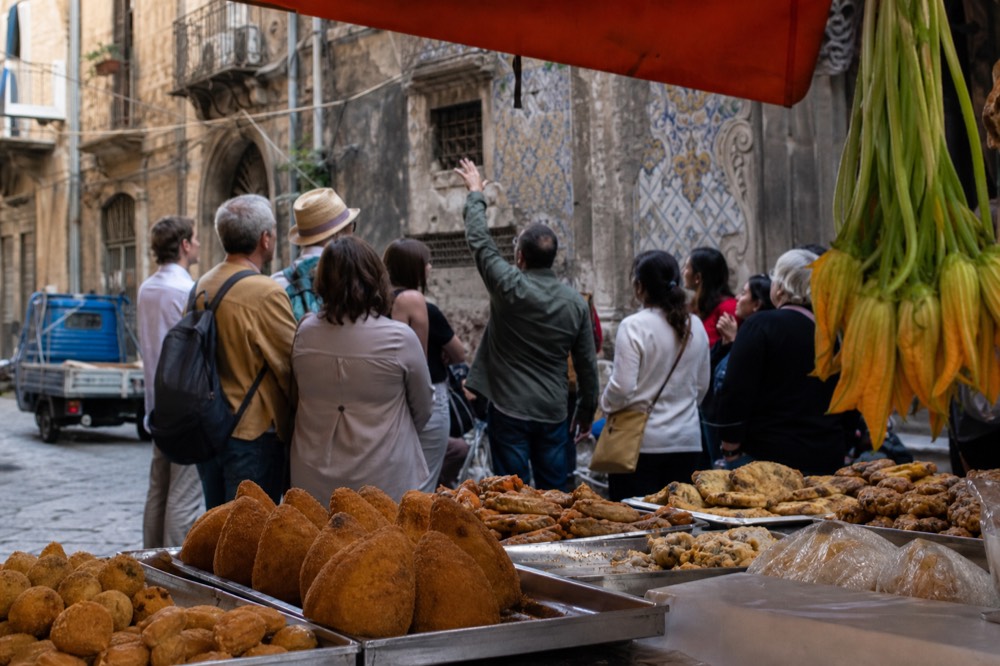
Street food in Sicily also means the friggitoria, the fried-food shop, and the market stall. The Comune di Palermo's own tourism portal lists what hawkers sell in the Capo market: sfincione, pane con la milza, pane con le panelle and crocche di patate. Those four items, plus the sweets that follow, form the working canon for this guide.
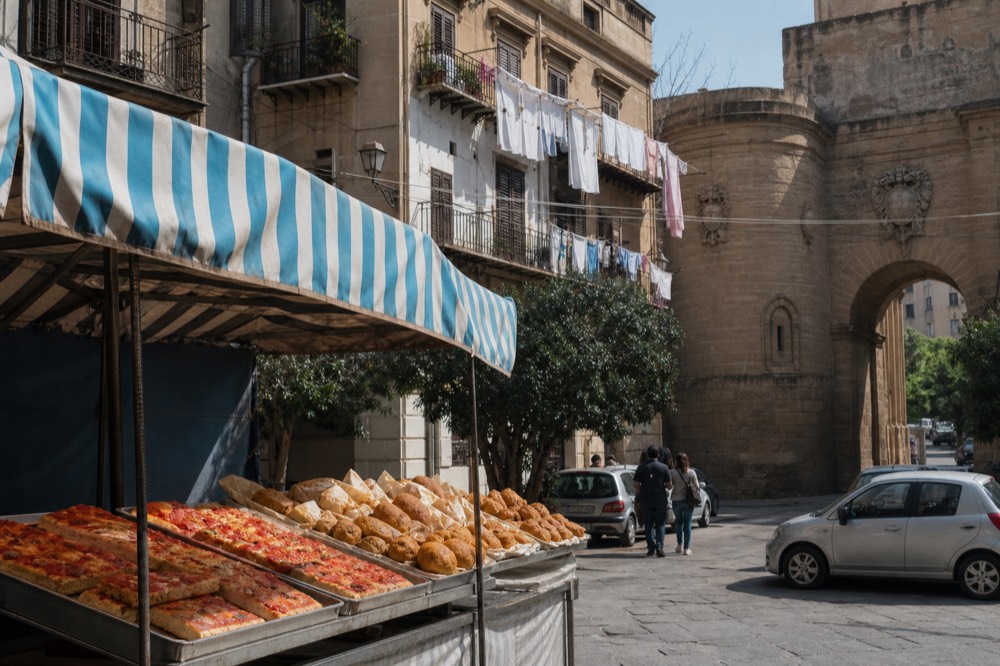
One more framing fact. Palermo has traded for years on a line about being fifth in the world for street food. That ranking is real but old: it was a 2012 Forbes article reporting a reader survey run by VirtualTourist, a travel site that no longer exists. Treat it as history, not a live credential. The food itself needs no borrowed ranking.
If you want the Palermo-specific slice of this canon in more depth, our guide to Palermo street food covers the city's stalls dish by dish.
The Island-Wide Classics: Arancine, Panelle, Cannoli And More
Six street foods are genuinely Sicilian-wide and appear in every town: the fried rice ball, the chickpea fritter, the potato crocche, the cannolo, the cassata and the granita. All six are on the official PAT register for the whole island or large parts of it. The differences are in the details: the rice ball changes gender across the island, and the cannolo, famously Palermo-adjacent, is officially a product of the Trapani area.
Start with the rice ball, because it is the dish most articles get wrong. The Accademia della Crusca, Italy's highest language authority, published a detailed study of arancino versus arancina: feminine and round in the west, so arancina in Palermo, masculine and round or pointed in the east, so arancino in Catania, with exceptions around Ragusa and Siracusa. Neither form is wrong. Crusca notes that Palermo's feminine actually follows standard Italian grammar while the eastern masculine follows the Sicilian dialect form.
Crusca's more surprising finding concerns age. There are no traces of the dish in literature, chronicles, dictionaries or recipe books before the second half of the 19th century, and the first Sicilian dictionary to record the word, Biundi's of 1857, defines it as a sweet rice dish shaped like a bitter orange. Neither meat nor tomato appears in the early records at all. Crusca concludes that the link to Arab tradition "does not seem so certain any more". The dish is younger than almost every menu implies, which is the single best fact to hold in your head when a guide tells you the Arabs invented it. For the full linguistic story, see our post on what Sicilians call arancini.
| Street food | Official PAT status | Official production territory | Notes |
|---|---|---|---|
| Arancini di riso | Listed | Whole island | Named in De Roberto's 1894 novel I Vicere |
| Panelle | Listed | City of Palermo and parts of its province | The only canon item whose territory is Palermo itself |
| Crocche di patate | Listed | Gastronomy category | Island-wide fried potato croquettes |
| Cannolo | Listed | Paceco, Erice, Trapani, Valderice | Shell originally rolled around a cane, Arundo donax |
| Cassata | Listed | All Sicily | Sheep's-milk ricotta filling specified on the sheet |
| Sfincione | Listed | Bakery category | White version is Bagheria's symbol product |
| Stigghiola | Listed | Gastronomy category | Official sheet says it must be eaten within 72 hours |
| Iris | Listed | Territory of Palermo | Fried sweet dough filled with ricotta cream |
The cannolo deserves its own sentence: the official Regione Siciliana technical sheet gives its production territory as Paceco, Erice, Trapani and Valderice, and the name comes from the cane the shell was originally rolled around. Palermo makes superb cannoli, but the official product is a Trapani one, and the towns around Trapani hold their own cannoli festivals each spring.
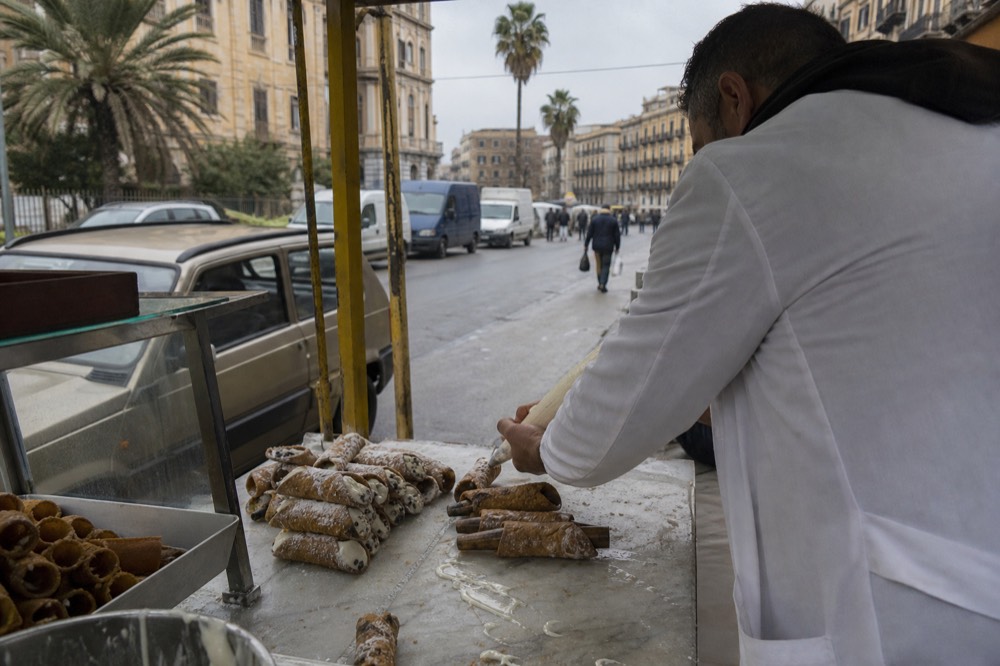
Learning to read the canon by territory rather than by photo is exactly the kind of thing a good guided walk does well, and the street-food walks on our site are built around that split between the official record and the folklore.
What Belongs To Palermo Alone?
Three official items name Palermo as their production territory: panelle, whose technical sheet covers the city and parts of its province; the iris, a round fried sweet dough filled with ricotta cream; and, in practice, the market culture that sells them, since the Comune's own pages document pane con la milza, sfincione and panelle as the Capo market's street foods. Panelle are the one canon item every Palermo food writer can claim without qualification.
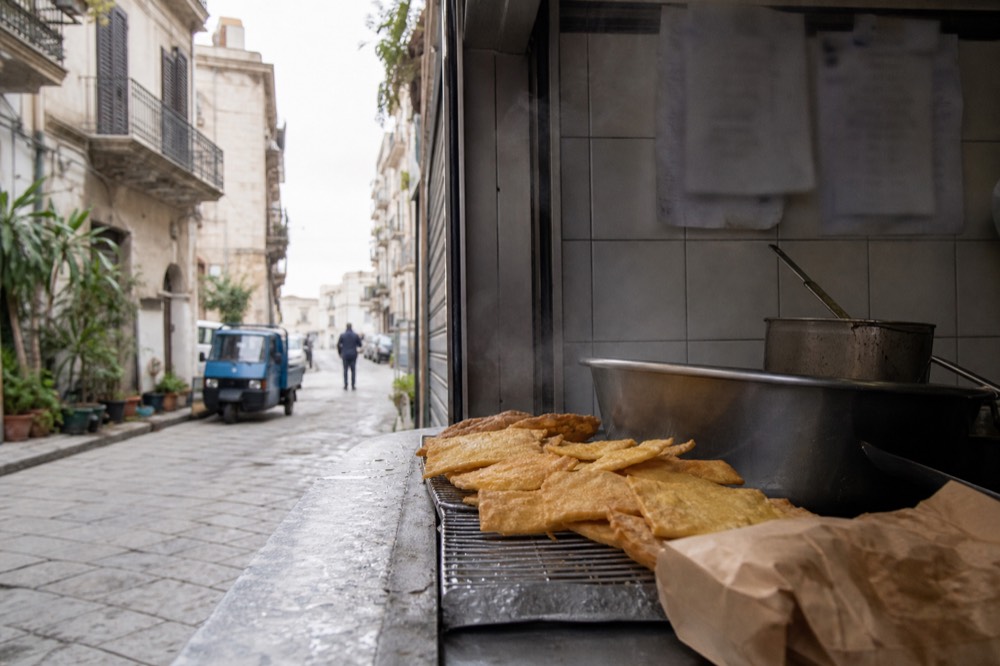
The panella sheet is unusually specific. It fixes the batter, chickpea flour, water, salt and pepper; the method, stirred until it comes away from the pan, spread half a centimetre thick, cut cold into rectangles and deep-fried in olive oil; and the service, dusted with pepper and eaten very hot. Served in a sesame roll with crocche, the pane e panelle is the city's everyday lunch, and it is a dish you will not find done properly outside western Sicily.
The iris is the other Palermo-only item, and most visitors have never heard of it. The official description is a round piece of Palermo rosticceria, sweet proved dough that is fried and filled through a hole cut in the base with ricotta cream, chocolate and cinnamon. It is breakfast food, and it sits beside the savoury rosticceria pieces in every neighbourhood bakery.
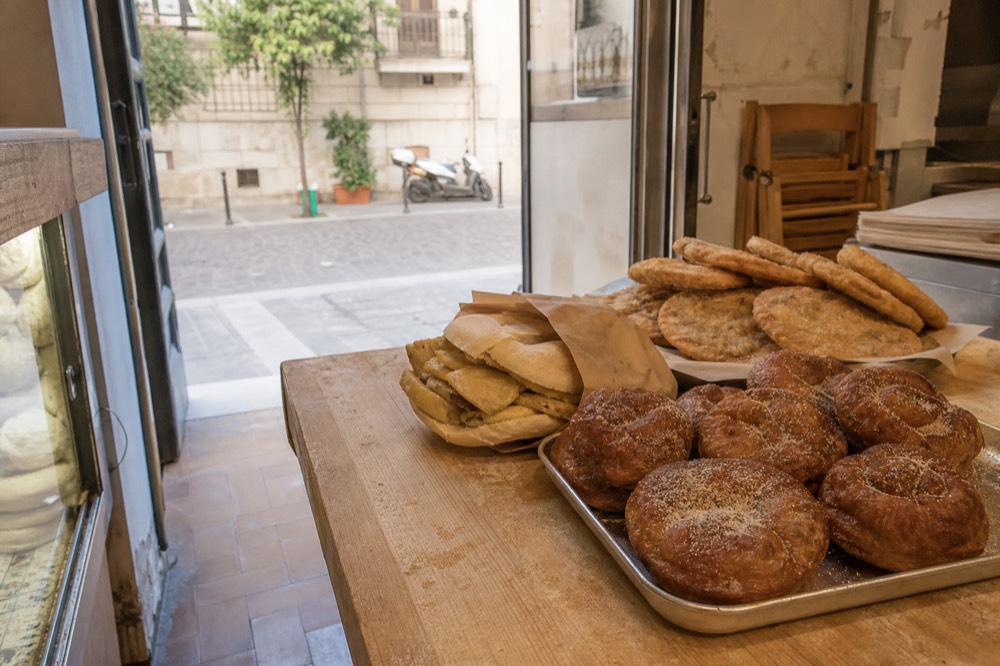
The city also owns the disputed items. Pane con la milza, the spleen sandwich, is confirmed by the Comune as sold in the Capo market, but its composition and the famous "schetta" and "maritata" serving terms have no authoritative source behind them, so a page that lists the ingredients is guessing. Stigghiola, skewered rolled gut, is PAT-listed with an official ingredient sheet, and that sheet itself hedges that the traditional version is "very probably a legacy of past Jewish culinary culture", offered as a hypothesis, not a fact. Snails appear on the PAT list as Vaccareddi, a recognised traditional product, though the Palermitan name babbaluci is not itself on the register.
This is where a guide who knows which stalls fry to order earns their fee. PalermoToday reported in March 2025 that traders in the historic markets say they have lost around 80% of their traditional customers, and that tourist street food has taken the place of many old bancarelle; one visitor's report from September 2025 complained of microwaved pre-made arancini at Ballaro stalls. That tension is real, and a local guide routes you around it.
The street food and history walk by Cavallaro Fabrizio is built for exactly this: 3 hours, 4.9 across 1672 reviews, from $56.91 per person, with free cancellation up to 24 hours, and it frequently sells out.
One point worth weighing before you book that walk: it pairs the food with the city's history rather than maximising the tasting count, so it suits visitors who want the story of what they are eating, not just the largest number of stops. If your priority is volume, the ten-tasting format in the next section is the stronger fit.
What Catania Claims Back: The East-West Split
The sharpest dividing line in Sicilian street food is the arancina-arancino border: west of it, in Palermo, the rice ball is feminine and round; east of it, in Catania, the word is masculine and the shape is often conical, a form the Accademia della Crusca says may be inspired by the profile of Mount Etna. Crusca records exceptions around Ragusa and Siracusa, where the local dialect word for the fruit differs and the feminine returns.
That border matters more than a joke about grammar. Palermo's claim to the dish is partly linguistic: the earliest attestations of the feminine form include De Roberto's 1894 novel I Vicere and a 1920 linguistic study of Palermo usage, while the masculine form was flagged as Sicilian dialect in Italian dictionaries from 1942 and is the form used on the national PAT list, which reads "arancini di riso". Camilleri's Montalbano stories, set in the east, made the masculine form internationally famous.
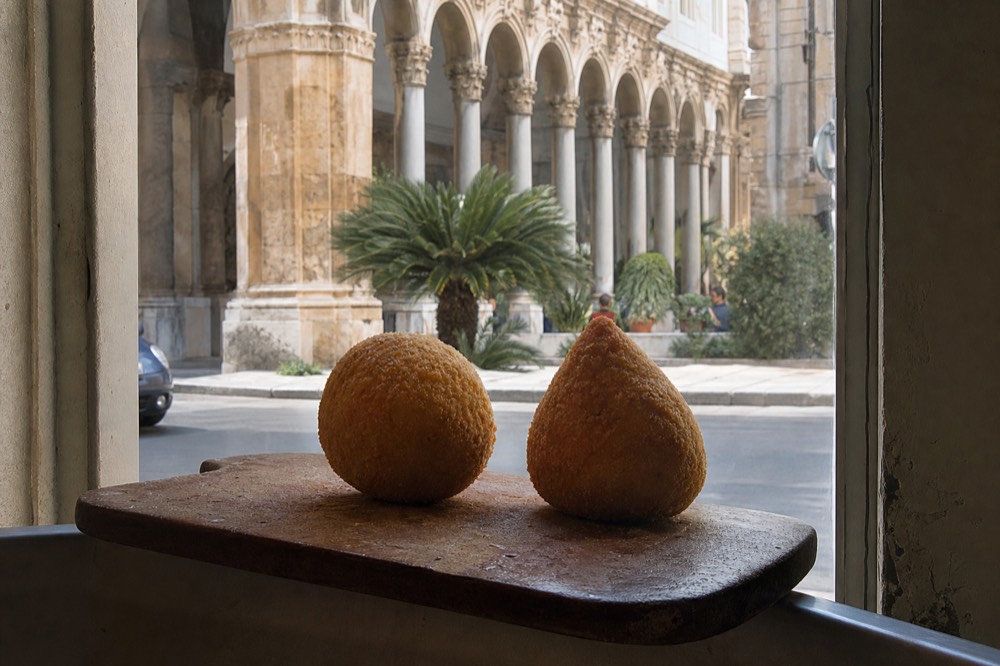
The east-west split runs through other dishes too, though less officially. Sfincione comes in two traditions that an official municipal source does separate: the Comune di Bagheria states that white sfincione is Bagheria's symbol product while red sfincione follows the broader Sicilian tradition. Bagheria, just outside Palermo, runs an annual Sfincione Fest in November, confirmed for 20 to 23 November in 2026, with tastings on Corso Umberto I. What no source supports is a full published ingredient list for either version, so be sceptical of any page that prints one.
| Question of ownership | Palermo says | Catania and the east say | The official record |
|---|---|---|---|
| Rice ball | Arancina, round | Arancino, often conical | PAT lists "arancini di riso"; Crusca says both genders are correct |
| Cannolo | Made everywhere in the city | Made everywhere too | PAT territory is Paceco, Erice, Trapani, Valderice |
| Iris | A Palermo rosticceria classic | Not a local name | PAT territory is Palermo |
| Orange citrus | Sweet and bitter both grown | Blood oranges are the eastern icon | Arancia Rossa di Sicilia IGP rules updated in 2026 |
| Horse meat dishes | Common in city trattorie | Less prominent | Not PAT-listed |
If your trip covers both cities, plan to eat the rice ball in both and argue about it later. Our comparison of Palermo versus Catania covers the wider food-and-city rivalry.
A ten-tasting walk is a good way to cover the whole canon in one afternoon if you would rather sample widely than chase individual stalls: the Secret Food Tours route runs 3 hours 30 minutes, is rated 5 across 782 reviews, costs from $89.33 per person and caps departures at 12 spots.
Where Sicilian Street Food Is Actually Sold: Markets And Friggitorie
Sicilian street food lives in two places: the friggitoria, a shop that fries to order, and the historic market. Palermo has four official historic markets, Ballaro, the Capo, the Vucciria and Borgo Vecchio, all documented by the city's tourism portal, and the shouted sales cry of the hawkers has its own Palermitan word, "abbanniata". The markets look like the souks of a Muslim city, a comparison the Comune itself makes, and some were created during the Arab period.
Ballaro is the one the Comune calls the city's oldest and largest market, an attribution to use carefully because there is no date behind it. What is official and specific are its hours: Monday to Saturday 07:30 to 20:00, Sunday mostly mornings only. The Capo, in the Seralcadio quarter with its principal entrance at Porta Carini, is where the street foods listed above are sold, and it carries an unusual officially documented custom: quarters of meat hung outside the butchers' shops, which the Comune attributes to the city's former Jewish presence, for draining the blood.
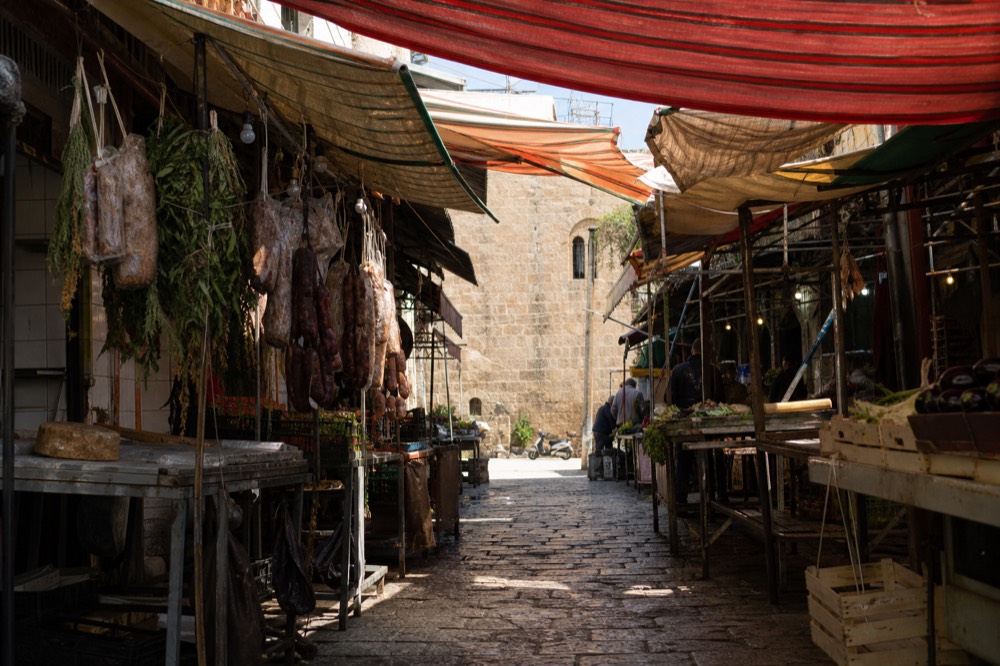
The Vucciria is the complicated one. The Comune's page still describes a market open every day, but the city's own records show the area has been a formally regulated pedestrian zone, established by ordinance in June 2025 and extended to 31 December 2026, and PalermoToday's March 2025 reporting described the daytime food market as having largely given way to nightlife. Both facts are true at once. Our guide to Palermo's markets carries the full honest picture, and there is a famous image to seek out: Guttuso painted "La Vucciria" on a 3 by 3 metre canvas in 37 days in 1974, and it hangs at the University of Palermo's Steri, minutes from the market itself.
Borgo Vecchio is the only market quarter with a hard founding date, 1556, when the new port drew fishermen and sailors out of the Kalsa. It trades in the mornings and, per the Comune, has undergone urban gentrification, with young and tourist presence at night.
| Market | Quarter | Official character | Documented hours |
|---|---|---|---|
| Ballaro | Albergheria | Oldest and largest, per the Comune's own wording | Mon-Sat 07:30-20:00, Sun mornings only |
| Il Capo | Seralcadio | Historic meat market, street food hub | Every day, morning and afternoon |
| Vucciria | La Loggia | Formerly the great food market, now mostly nightlife | Officially daily; pedestrian zone to 31 Dec 2026 |
| Borgo Vecchio | Behind the Politeama | Morning market, quarter founded 1556 | Mornings |
What Sicilian Street Food Costs
In Palermo's historic centre, an arancina or a panelle and crocche roll costs roughly 3 to 4.50 euros, a range reported by local press in 2026 as having roughly doubled since 2021. Guided street food walks run from $39.83 to $89.33 per person for 2.5 hours to 3 hours 30 minutes, and premium tasting formats reach $150 per person. Sweets are cheaper: budget a few euros each for a cannolo or a granita with brioche.
The price rise is real and locally resented. Il Sicilia reported in May 2026 that eating out in Palermo's centre has become a luxury for residents, with pizza plus a drink averaging 14.56 euros and the sharpest five-year increase of any Italian city. For a visitor, the practical takeaway is that street food is still cheap relative to a sit-down meal, but the folklore prices in older guidebooks are gone.
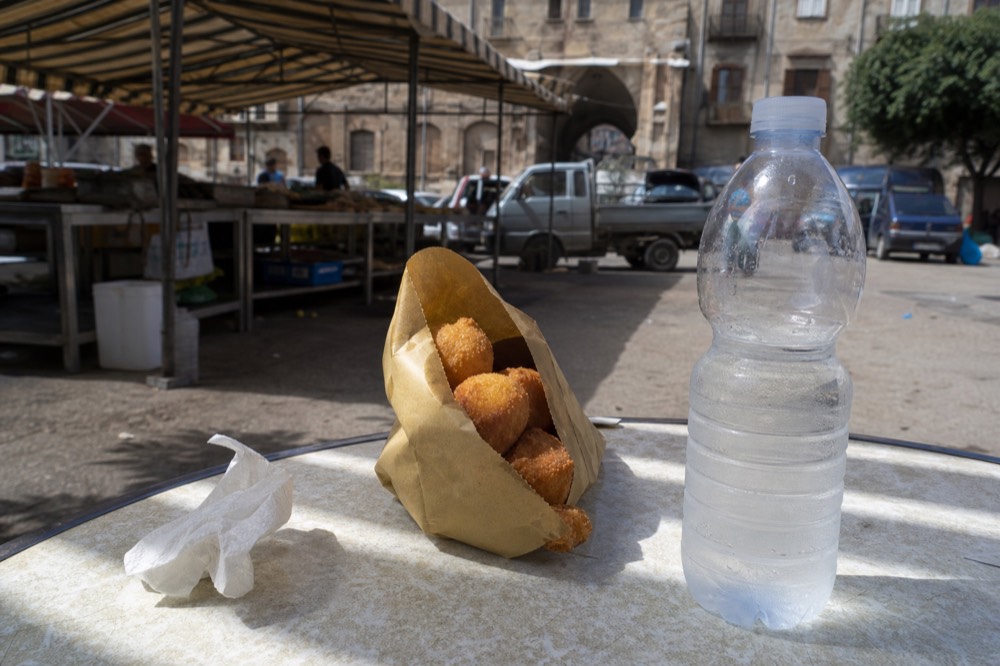
Treat any price you read online, including here, as a planning range and check the board or the menu at the counter before you order. A stall's posted price list is also legally meaningful, which brings us to the rules section below.
| Item | Planning range in Palermo centre | Notes |
|---|---|---|
| Arancina | 3-4.50 EUR | Roughly double 2021 levels per local press |
| Pane e panelle | 3-4.50 EUR | Palermo's everyday lunch |
| Sfincione slice | 1.50-3 EUR | Sold from bikes and bakeries |
| Cannolo | 2.50-4 EUR | Ask for it filled to order |
| Granita with brioche | 3-5 EUR | Prices around 5 EUR sparked local backlash in 2026 |
| Guided street food walk | $39.83-$89.33 | 2.5 hours to 3 hours 30 minutes, per person |
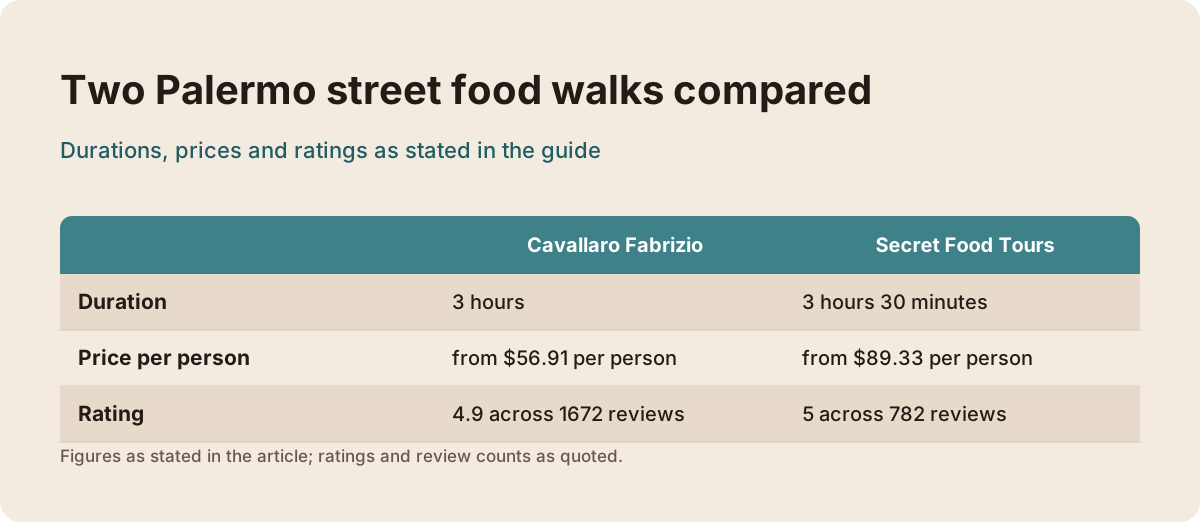
Our full breakdown of food tour prices in Palermo does this arithmetic tour by tour.
Rules That Actually Protect You: Allergens, Coperto And Tap Water
Two food laws genuinely matter on a Sicilian street food trip. EU Regulation 1169/2011 makes allergen information mandatory for non-prepacked food, including market stalls, friggitorie and cafes, so you can legally ask whether a fried item contains gluten, nuts or lactose. And coperto, the cover charge, is lawful in Sicily, has no national cap, but must be clearly stated in writing before you order; if it was not signalled, you can contest it.
That allergen rule is the European Commission's own summary of the regulation, which took full effect in December 2016. In practice it means a stall selling panelle or a sweet filled with ricotta should be able to tell you what is in it, and a cooking class or tour operator should handle allergy questions without improvising. Celiac travellers are better served in Sicily than in much of Italy, but ask rather than assume.
On coperto, the Italian consumer organisation Altroconsumo sets out the rule: the charge is legal, it must appear clearly on the menu or be signalled before you order, and if it was not, the customer may refuse to pay it. Lazio is the one Italian region that bans coperto outright by regional law; Sicily is not Lazio, so expect the charge at sit-down places, typically a euro or three per person.
Tap water, a constant traveller question, is settled for Palermo: the utility AMAP publishes its water quality card showing zero coliform bacteria, zero E. coli and zero enterococci, with hardness and sodium well within legal limits, and states the water is suitable for daily consumption. Ask for tap water at a restaurant and you may still be sold a bottle, but you do not need to buy bottled water for safety on the street.
| Rule or fact | What it means for you | Source of the rule |
|---|---|---|
| Allergen information mandatory | Ask any stall or tour about gluten, nuts, lactose | EU Regulation 1169/2011, in force since Dec 2016 |
| Coperto is legal, must be shown | Check the menu; unlisted charges can be contested | Italian consumer law per Altroconsumo |
| Tap water is drinkable | No need to buy bottles for safety | AMAP, the Palermo water utility |
| Ballaro's Sunday hours | Sunday trading is mostly mornings only | Comune di Palermo tourism portal |
Guided Tour Or Go Alone: How To Decide
Go alone if you know the canon, can spot a stall that fries to order and are happy planning around market hours; book a walk if you want the territory explained, the tourist traps filtered out and eight to ten tastings inside three hours. The decision axis most people miss is refund policy: three of the 22 tours on this site, all from one operator, are non-refundable, while the other 19 allow free cancellation up to 24 hours.
A good guide is not just a queue-skipper. The material in this guide, the Crusca linguistics, the PAT territories, the difference between a stall frying to order and one reheating, is exactly what a well-briefed local guide delivers in real time, and the same knowledge applied on your own takes a day or two of trial and error. The value case is strongest on a short stay: one 3-hour walk can cover the equivalent of a dozen solo stops.
If you decide to book, check the cancellation terms before the price. The cheapest walk on the roster, from $39.83 per person for 2.5 hours, cancels free up to 24 hours and often sells out; the most-reviewed, at 4.9 across 2308 reviews and from $81.64, is non-refundable. Both are good products for different travellers. For the sit-down side of Sicilian eating, see our guide to the best food in Palermo and our run-down of the best restaurants in Palermo.
| Format | Price range per person | Duration | Best for |
|---|---|---|---|
| Solo market grazing | A few euros per item | Your own pace | Confident, unhurried visitors |
| Budget guided walk | From $39.83 | 2.5 hours | First-timers on a short stay |
| Standard guided walk | $52.06 to $89.33 | 3 hours to 3 hours 30 minutes | The sweet spot for most visitors |
| Market-plus-cooking class | From $209.04 | 4 hours | Visitors who want to cook it themselves |
A market-focused option that pairs well with this guide's territory theme is the Eating Europe Ballaro market walk: 3 hours, rated 5 across 139 reviews, from $68.15 per person, capped at 12 guests, with free cancellation up to 24 hours.
Whichever way you go, this site, Palermo Food Tours, exists to keep the official record and the honest prices in one place, so the folklore has to compete with the sources.
The six questions visitors ask most are about the arancina-arancino split, the Arab-origin story, which dishes Palermo actually owns, what things cost, whether the markets are worth it and whether a tour is necessary. The short answers: both word forms are correct, the Arab story is shakier than advertised, panelle are the one true Palermo PAT item, snacks cost a few euros, Ballaro and the Capo are worth a morning, and a walk is optional but low-risk given free cancellation on 19 of 22 tours.
Common Questions About Sicilian Street Food
What is the difference between arancina and arancino?
Gender and geography. Palermo and western Sicily say arancina and make it round; Catania and the east say arancino and often make it conical. The Accademia della Crusca has studied the question and says both forms are correct, and that Palermo's feminine actually follows standard Italian grammar while the eastern masculine follows the Sicilian dialect.
Is the arancina really an Arab invention?
The evidence is weaker than the folklore. Crusca found no trace of the dish in any literature, chronicle or recipe book before the second half of the 19th century, and the first dictionary record, from 1857, describes a sweet rice dish with no meat or tomato. Crusca's own conclusion is that the Arab-origin link "does not seem so certain any more".
Which Sicilian street food is officially Palermo's?
Panelle and the iris. The panelle technical sheet names the city of Palermo and parts of its province as the production territory, the only canon street food with that distinction, and the iris sheet names the territory of Palermo. The cannolo, by contrast, is officially a Trapani-area product.
What does Sicilian street food cost?
In Palermo's historic centre, an arancina or a panelle roll runs about 3 to 4.50 euros, a sfincione slice 1.50 to 3 euros and a cannolo 2.50 to 4 euros. Guided walks cost from $39.83 to $89.33 per person for 2.5 hours to 3 hours 30 minutes. Treat all figures as planning ranges and check the posted price list.
Are the Palermo markets worth visiting?
Ballaro and the Capo remain working food markets and are worth a morning; the Vucciria's daytime market has largely given way to nightlife, though the area is now a regulated pedestrian zone and its famous Guttuso painting hangs nearby at the Steri. Ballaro trades Monday to Saturday 07:30 to 20:00, Sundays mostly mornings only.
Do I need to book a street food tour?
You do not need one, but on a short stay a guide filters out the stalls that reheat rather than fry to order, and that distinction is hard to judge as a visitor. Most walks cost under $90 per person and 19 of the 22 tours on this site allow free cancellation up to 24 hours, so the risk of booking ahead is low.