Free Things To Do In Palermo: Markets, Monuments And Two-Euro Food
Most of what makes Palermo worth visiting costs nothing to walk through: four historic markets, a UNESCO-listed street plan, festival processions and squares that function as the city's living room. This guide separates the genuinely free from the pocket change.
Short answer
Palermo's four historic markets cost nothing to enter, the Arab-Norman UNESCO exteriors are free to walk among, and the Festino processions on 14 and 15 July fill the centre at no charge. Add street food at 3 to 4.50 euro for an arancina or panino and a full free day is realistic on any budget.
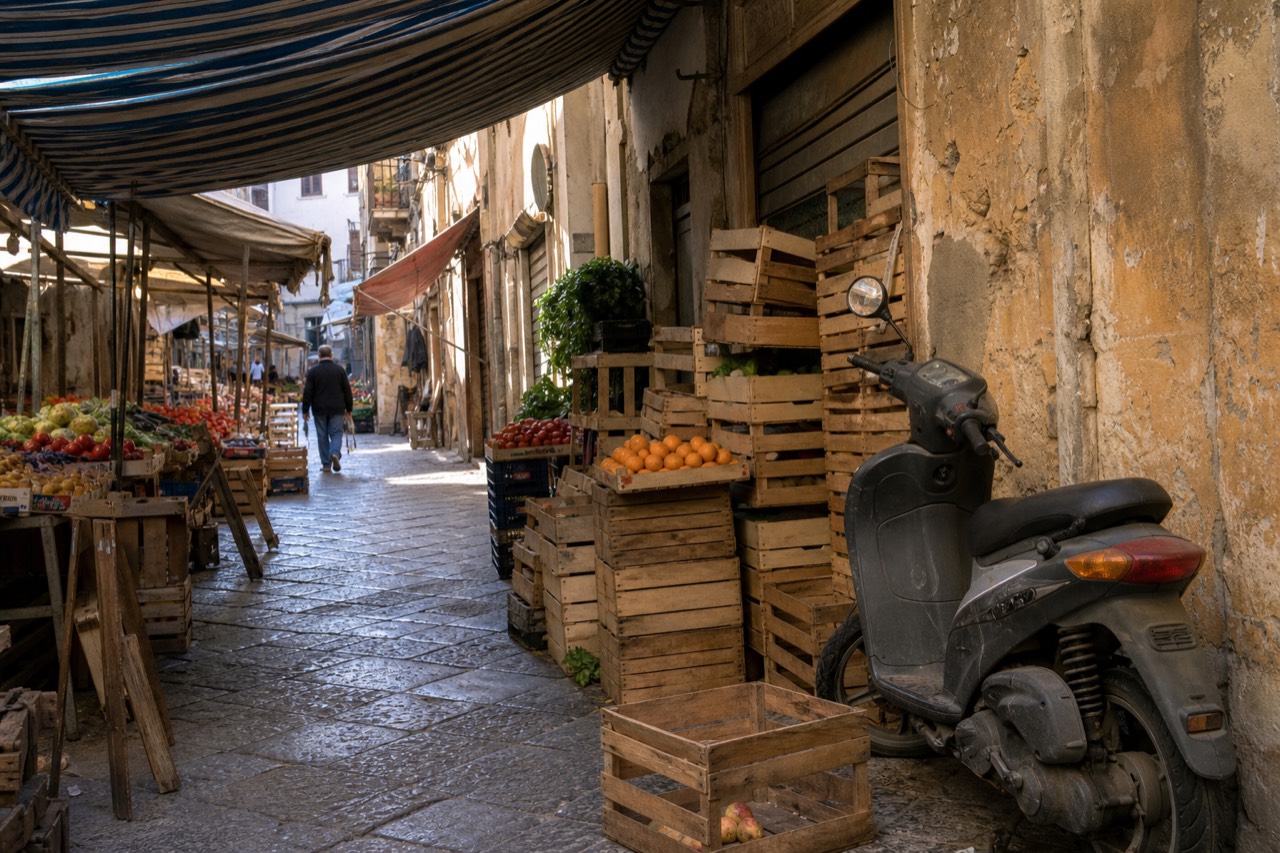
Palermo is one of the few major Italian cities where the headline attraction is free. The attraction is the street itself: four working historic markets, a UNESCO-inscribed layer of Arab-Norman buildings you can walk between, and a food culture that spills out of shopfronts rather than sitting behind ticket desks. In 2025 the city recorded over 2 million tourist presences, with 916,000 arrivals, and a large share of those visitors spent their days exactly the way locals do, on foot, in the markets, spending almost nothing.
The honest version of this guide has two parts. The first is what is genuinely free: market wandering, monument exteriors, piazzas, festival processions and the street theatre of the city. The second is what costs pocket change, the one-to-four euro tier of fried food and brioche that functions as free once you have already decided to eat lunch. Both parts are below, with the practical details that actually change a plan: opening hours, dates, weather and the moments when free stops being enough.
What Is Actually Free In Palermo?
The genuinely free list is longer than most guides admit: entry to all four historic markets, the exteriors of the Arab-Norman UNESCO monuments, the Festino di Santa Rosalia processions in July, free beach concerts at the Cous Cous Fest in September, and the simple act of walking the centro storico, which is a regulated pedestrian-friendly zone in parts. Add museum free days and the city's piazzas and a full free itinerary assembles itself.
That bold claim needs unpacking, because the free list has boundaries. The Palermo Food Tours site exists to sell guided walks, so it is worth being precise about what a visitor can do without spending anything, and where the free version ends.
The boundary is almost always indoors. The markets cost nothing to enter and nothing to stand in, but the moment you want a guide to explain the stalls, or a plate assembled from them, you are in paid territory. The UNESCO monuments are free to look at from the street, but their interiors are ticketed. The processions are free, but the food stalls around them are not. This guide covers the free layer honestly, then flags the two or three moments on a free day where a small spend, or a guided tour, changes the experience disproportionately.
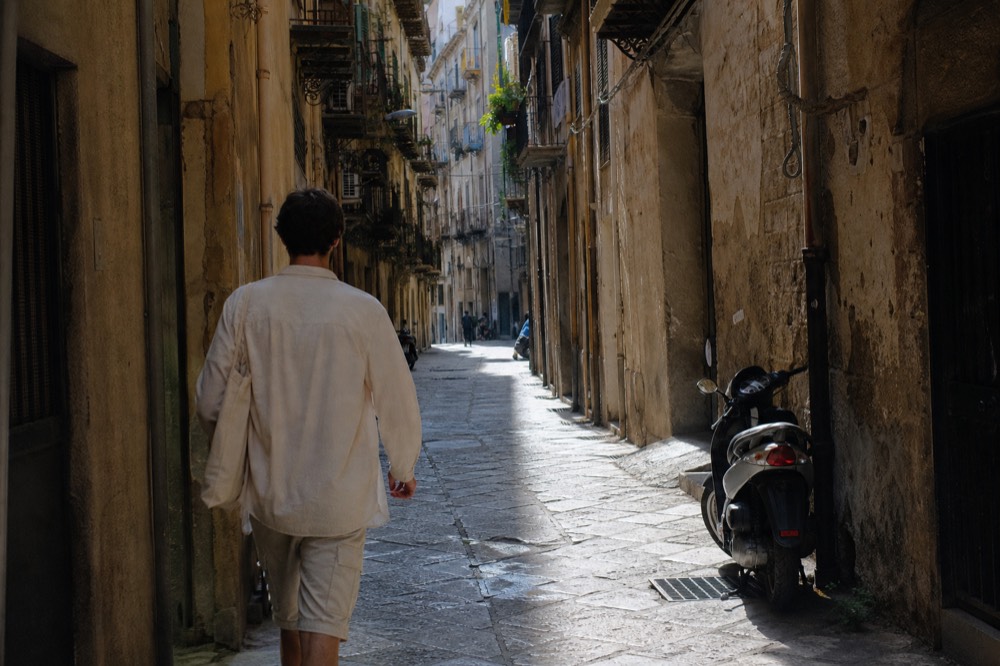
One structural fact works in the free visitor's favour: Palermo's historic centre has a ZTL, a limited traffic zone, active during the day on weekdays and at night at weekends, with the summer timetable running to 31 October 2026. The practical consequence is that the centro storico is a walking zone by design. The free itinerary and the paid itinerary use the same streets.
The Four Historic Markets Cost Nothing To Enter
All four of Palermo's historic markets, Ballaro, the Capo, the Vucciria and Borgo Vecchio, are free to enter with no ticket, no tour requirement and no minimum spend. Ballaro trades Monday to Saturday 07:30 to 20:00 and mostly mornings only on Sunday; Borgo Vecchio is a morning market; the Capo and the Vucciria are described by the city as open mornings and afternoons, though the Vucciria's daytime market has contracted sharply.
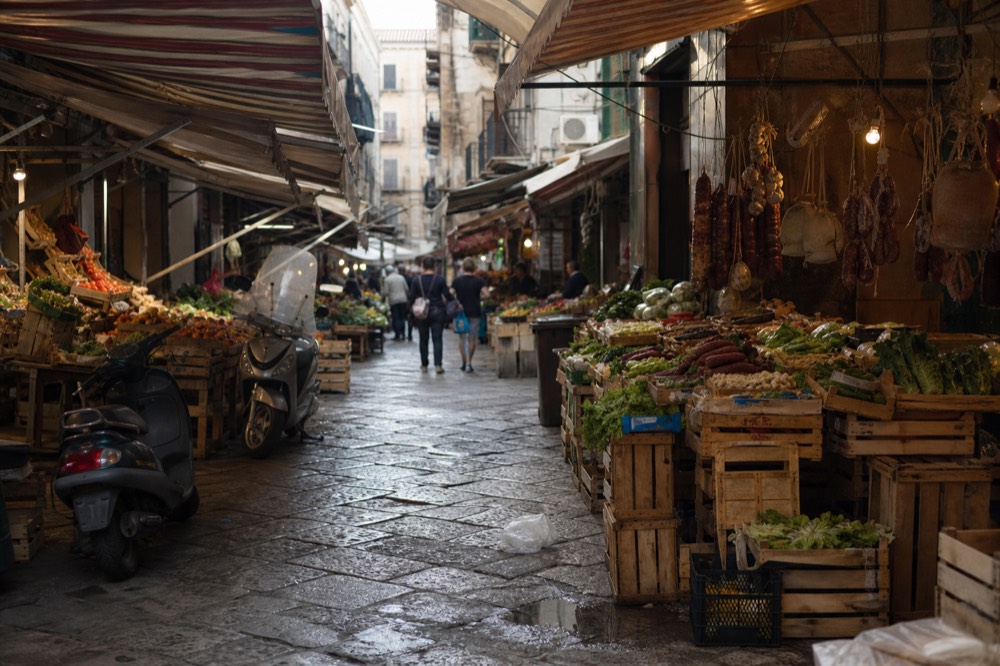
The city's own tourism portal publishes Ballaro's hours as Monday to Saturday 07:30 to 20:00, Sunday predominantly mornings only, free entry. That is the single most useful free-itinerary fact in Palermo: it tells you when the show is on. Go early. The market's character is sharpest in the first two hours, when traders are setting out produce and the shouted sales cry, called the "abbanniata" in Palermitan dialect, is at full volume. The Comune calls that cry part of the show, folk music of the markets, and it costs nothing to stand and listen.
The Capo, along via Carini and via Beati Paoli with its principal entrance at Porta Carini, historically a meat market, also costs nothing. The Comune notes the dialect word for its butchers' shops is "carnezzerie", a Spanish-era borrowing, and records the custom of quarters of meat hung outside the shops, attributed to the city's former Jewish presence, for draining the blood. That is street-level history you read off the storefronts for free.
| Market | Entry | Best hours | Notes for the free visitor |
|---|---|---|---|
| Ballaro | Free | Mon-Sat from 07:30; Sun mornings | Oldest and largest per the city's portal; Albergheria quarter, piazza Casa Professa to corso Tukory |
| Il Capo | Free | Mornings | Street food stalls; Porta Carini entrance |
| Vucciria | Free | Evenings and mornings differ | Daytime market contracted; nightlife square at night |
| Borgo Vecchio | Free | Mornings only | Quarter dates to 1556; behind the Politeama |
The Vucciria deserves its own honesty note. The city's official page still describes a market open every day morning and afternoon, but the daytime reality has changed. The area including piazza Caracciolo is a formally regulated pedestrian zone, established by municipal ordinance in June 2025 and extended to 31 December 2026, and the square now functions more as an evening gathering place than a food market. For more on all four, see which four markets Palermo actually has.
Borgo Vecchio is the sleeper. It is the only one of the four with a hard founding date, 1556, following construction of the new port, settled by fishermen and sailors moving out of the Kalsa. It is a morning market, so pair it with an early start or skip it if your day begins late.
If you want the market with a guide rather than solo, the paid options are worth knowing about even on a free-day plan, because a market is the one place where context changes what you see. The Capo is covered in depth in our guide to the Capo market, and Ballaro gets the same treatment at Ballaro market.
Palermo's UNESCO Layer Is Free To Look At
The Arab-Norman UNESCO World Heritage inscription covers nine civil and religious structures from the era of the Norman kingdom of Sicily, 1130 to 1194, and every one of them can be seen from the street at no charge. Walking the full set between the markets takes a morning and costs nothing; only the interiors, where open, are ticketed.
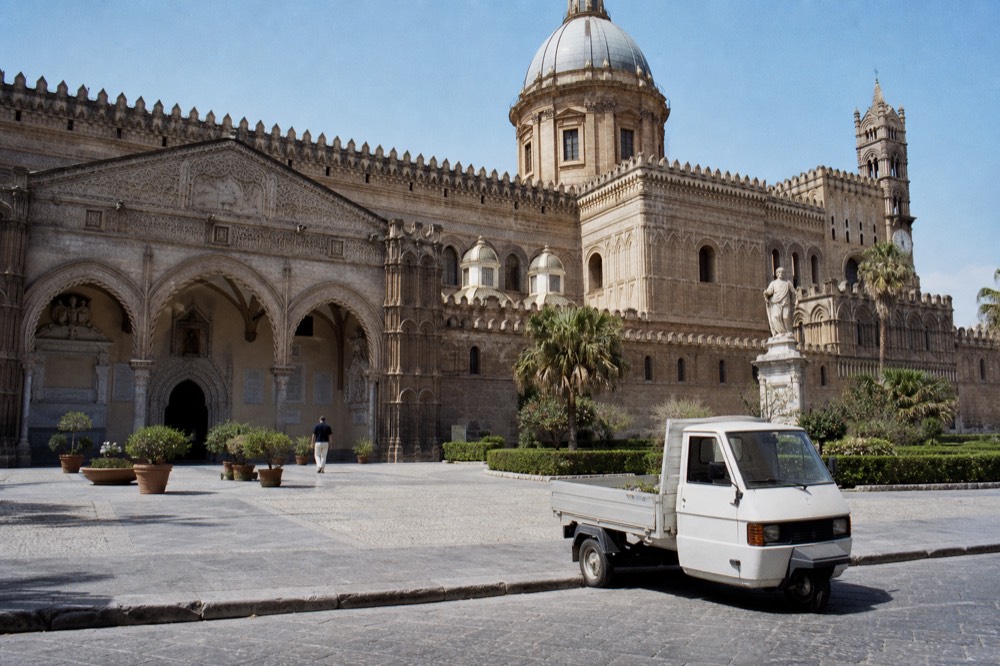
The inscription, Arab-Norman Palermo and the Cathedral Churches of Cefalu and Monreale, was added to the World Heritage List in 2015 under criteria (ii) and (iv). UNESCO's own description calls the buildings an example of social-cultural syncretism between Western, Islamic and Byzantine cultures. Two palaces, three churches, a cathedral, a bridge in Palermo, plus the cathedrals of Cefalu and Monreale. The Monreale cathedral is a short bus or taxi hop from the centre and pairs naturally with a Palermo base.
The free version of this layer is the exterior walk, and it is genuinely rewarding, because the Norman buildings are stitched into the street fabric rather than set apart. The ZTL means the streets between them are walkable. One planning note: the Palazzo Reale and Cappella Palatina are closed Tuesdays and Wednesdays due to Sicilian Regional Parliament sessions, so if interiors are on your list, those are the days the exteriors-only walk is forced on you anyway. The Cappella Palatina's mosaics have been under restoration since January 2025, with the right nave still under scaffolding.
| Structure | Free from the street | Interior |
|---|---|---|
| Palazzo Reale (Royal Palace) | Yes, exterior and piazza | Ticketed; closed Tue-Wed for parliament |
| Cappella Palatina | Visible within palace complex | Ticketed; mosaic restoration ongoing |
| Palermo Cathedral | Yes, full exterior walk around | Ticketed areas within |
| San Giovanni degli Eremiti | Yes, exterior | Ticketed |
| Church of La Martorana | Yes, exterior on piazza Bellini | Ticketed when open |
| Church of San Cataldo | Yes, domes visible from piazza Bellini | Ticketed when open |
| Zisa Palace | Yes, exterior | Ticketed |
| Admiral's Bridge (Ponte dell'Ammiraglio) | Yes, fully free, a public bridge | No interior |
| Monreale Cathedral (day trip) | Yes, exterior and cloister approach | Cloister ticketed |
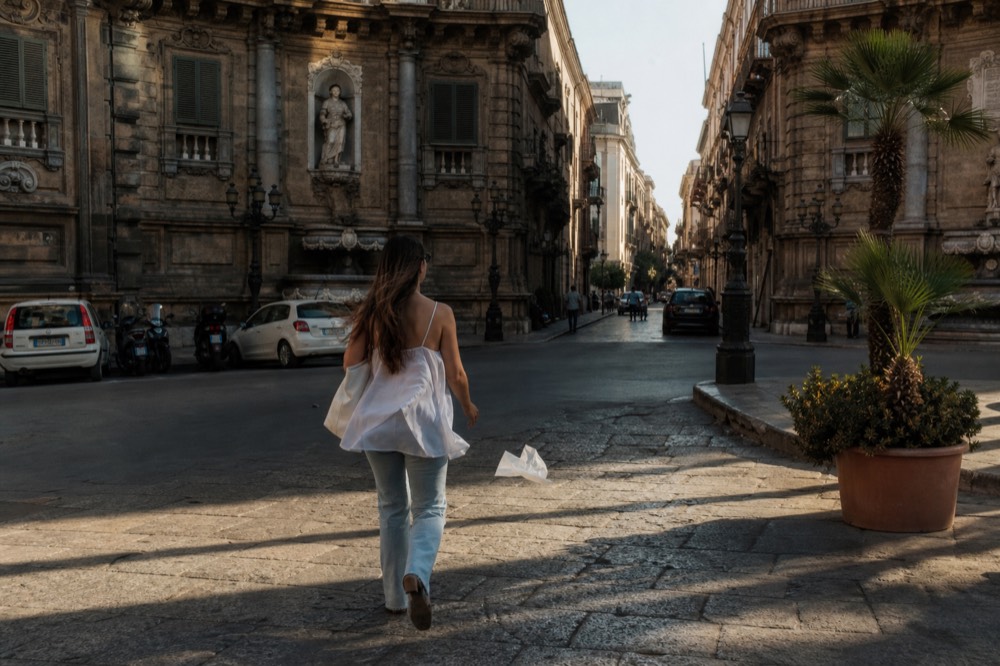
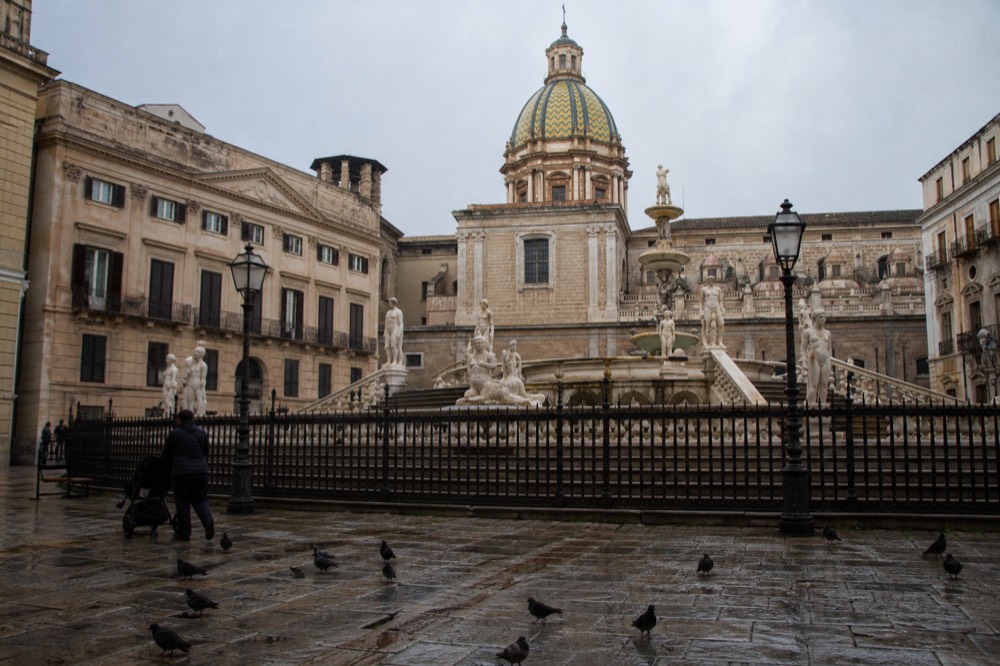
Palermo Cathedral is the anchor of the free walk: its exterior, with its interlaced arches and crenellations, can be circled at no cost and is a five-minute walk from Ballaro's northern edge. Between the cathedral and the markets sit the Quattro Canti, the baroque crossroads at the intersection of the two main streets, and the Pretoria fountain square, both entirely free and both within the walk.
One further free cultural stop belongs on the list, with a caveat about access. Renato Guttuso's painting "La Vucciria", a three-by-three-metre canvas painted between 1 October and 6 November 1974 with produce flown up from Palermo to his studio, hangs in the University of Palermo's Steri complex by the painter's own decision, per the university's heritage pages. Checking the university museum's pages before you go is wise, since opening arrangements for the room are not fixed.
Street Food For Pocket Change: The Functionally Free Tier
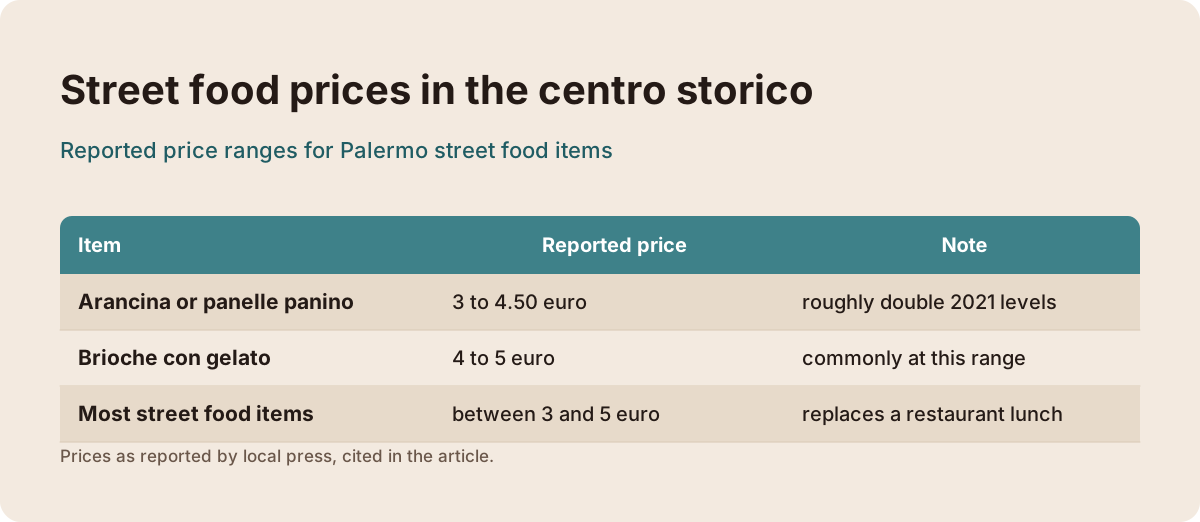
The items that make Palermo famous as a street food city sit mostly between 3 and 5 euro. Local press reports an arancina or a panelle panino in the centro storico at 3 to 4.50 euro, roughly double 2021 levels, and a brioche con gelato commonly at 4 to 5 euro. A sfincione slice runs lower. These are not free, but they replace a restaurant lunch, which averages far more.
The pricing context comes from Italian local press, which reported in 2026 that pizza plus a drink averages 14.56 euro in Palermo with a range of 9 to 28, and that eating out has become expensive for residents, with centro storico street food roughly doubled versus 2021 due to tourism-driven shifts. The two-euro item is mostly gone. What remains is still the cheapest eatable culture in the city.
| Item | Typical centro storico price | What it replaces |
|---|---|---|
| Arancina | 3 to 4.50 euro | A restaurant primo at 7 to 12 euro |
| Panino con panelle e crocche | 3 to 4.50 euro | A full lunch |
| Brioche con gelato | 4 to 5 euro | A cafe pastry stop |
| Pizza plus drink (sit-down average) | 14.56 euro average | Dinner |
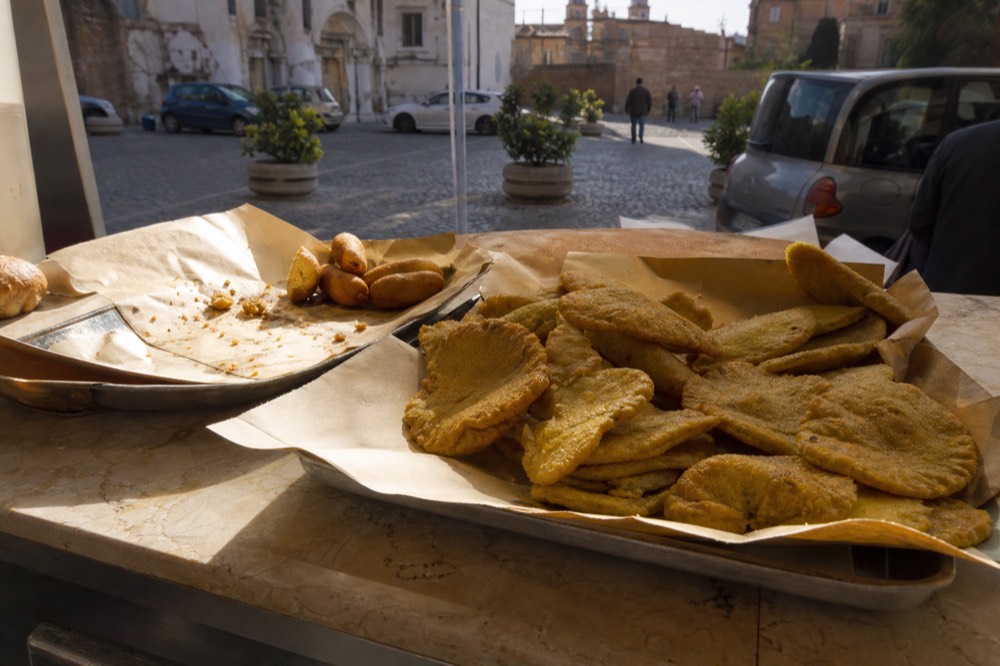
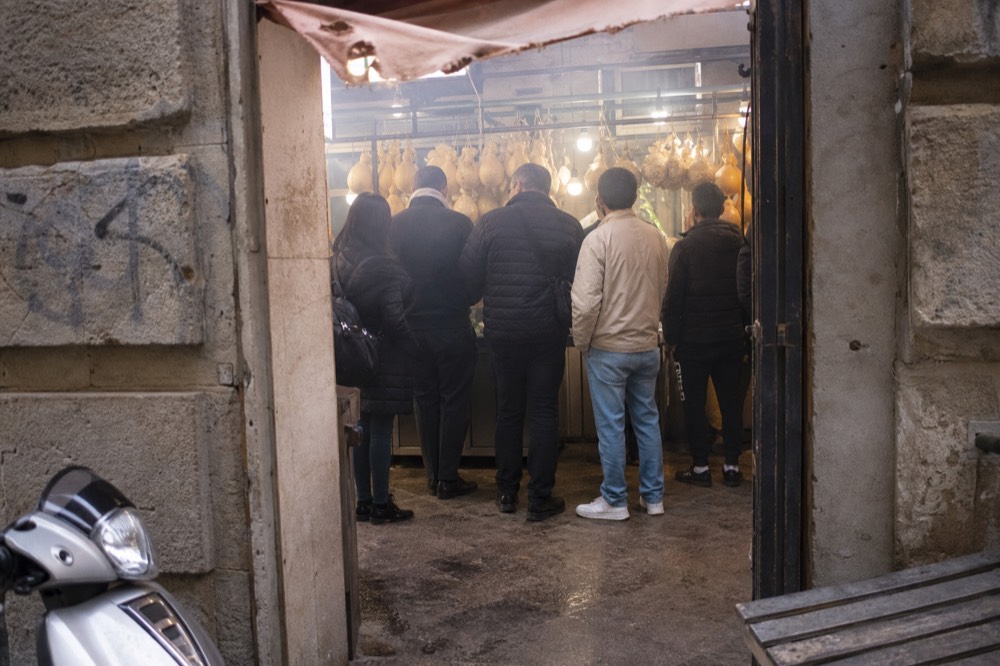
The genuinely free layer here is the watching. A friggitoria in operation, panelle being lifted from hot oil and cut from a half-centimetre-thick sheet the official Regione Siciliana technical sheet specifies, is theatre. Panelle is also the one canon item whose official PAT production territory is Palermo itself, which makes it the most locally correct thing to spend your three euro on. The chickpea fritter is made in friggitorie and at home, per the sheet, and served very hot.
This is also the tier where the free walk and the paid walk diverge most. A recent first-hand report from a Ballaro visitor found microwaved pre-made arancini at some market stalls, with locals in the replies steering them to specific friggitorie away from the market. Knowing which counter to stand at is exactly the kind of knowledge a guided walk sells. The budget tour tier starts around 40 euro for a two-and-a-half hour walk with tastings, and Do Eat Better's small-group version runs from 52.06 euro per person, 4.9 across 1355 reviews, free cancellation up to 24 hours, capped at 12 spots per departure.
For the standalone version of this decision, our guide to Palermo street food covers the canon item by item, and street food prices in Palermo covers the paid tour math against doing it alone.
Free Festivals And The Days Palermo Gives Away
The city's biggest free events are the Festino di Santa Rosalia, whose processions on 14 and 15 July fill the historic centre with no charge, and the free beach concerts at the Cous Cous Fest in San Vito Lo Capo in late September. The Sfincione Fest in Bagheria in November and the pyromusical display closing the Festino are likewise free to attend.
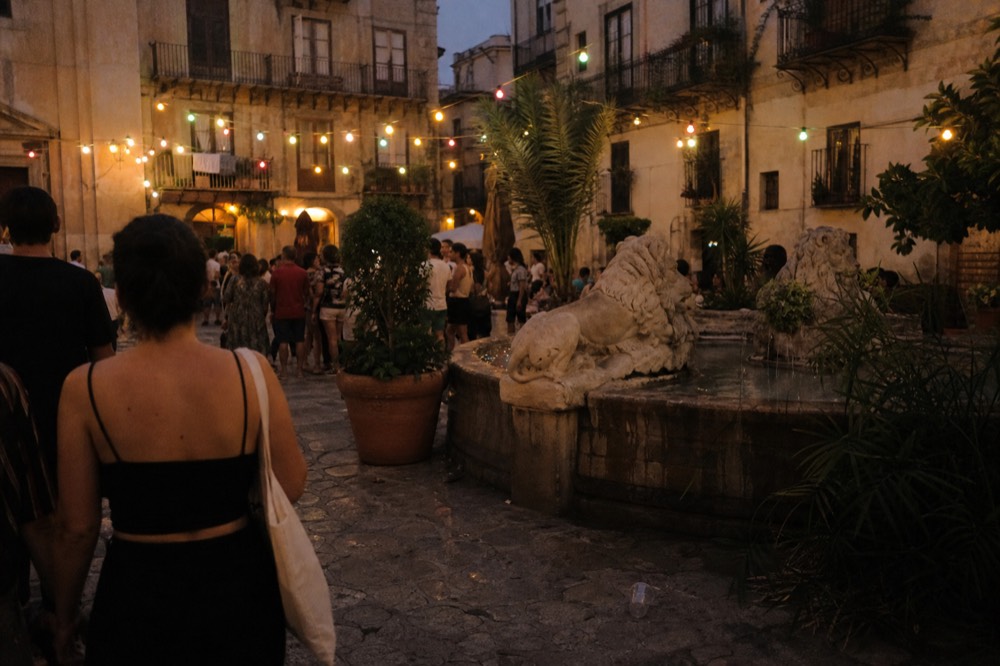
The Festino, held in 2026 for the 402nd time, has a fixed religious calendar published by the Archdiocese. The 14 July vespers in the Cathedral and the night of the civic procession, the 15 July Mass and the city procession of the silver urn through the Quattro Canti and Piazza Marina, and the 23:00 pyromusical display on the cathedral forecourt. Every one of these is free to watch. The procession route passes directly through the ground a market walk covers, so on those two days your free market morning and your free festival evening occupy the same streets.
The caveat is heat and crowds. The 14th and 15th hand the historic centre to processions, and July averages a 29.8 C daily high with just 1.2 rain days, so plan the festival days around the evening schedule and do your walking early.
| Event | When | Free element |
|---|---|---|
| Festino di Santa Rosalia | 14-15 July | Processions, vespers, pyromusical display |
| Cous Cous Fest, San Vito Lo Capo | 18-27 September | Free beach concerts |
| Sfincione Fest, Bagheria | 20-23 November | Tastings and concerts in the street (tastings may charge) |
When To Walk For Free: Weather And Daylight
May, June and September are the walking sweet spots: average daily highs of 23.3, 27.2 and 27.5 C with 4.1, 1.9 and 5.4 rain days respectively, per WMO climatological normals for Palermo. July and August are hotter and the daylight runs past 14 hours, which pushes free sightseeing to early morning and after 19:00. Mid-January offers under ten hours of daylight.
| Month | Mean daily max | Mean rain days | Free-day verdict |
|---|---|---|---|
| April | 18.7 C | 8.6 | Mild but showery, double May's rain days |
| May | 23.3 C | 4.1 | Best all-round month |
| June | 27.2 C | 1.9 | Hot but dry, start early |
| July | 29.8 C | 1.2 | Festino month, evening strategy |
| August | 30.5 C | 2.4 | Hottest, early market only |
| September | 27.5 C | 5.4 | Warm, Cous Cous Fest window |
| November | 19.0 C | 10.4 | Mild but the wettest stretch begins |
Daylight matters for a free itinerary because the free attractions are outdoors. Sunrise to sunset on 15 July runs roughly 05:56 to 20:29, over fourteen and a half hours, while on 15 January it runs 07:22 to 17:10, under ten. In winter, a morning market is effectively the whole free day; in summer the usable free hours split into a market morning and a piazza evening. December is the wettest month at 123.7 mm across 12 rain days, so the free Palermo is a fair-weather proposition from October through March.
Free Squares, Fountains And City Fabric
Beyond markets and monuments, the free layer includes the Quattro Canti crossroads, the Pretoria fountain square, piazza Caracciolo in the Vucciria with its lions and obelisk, the Borgo Vecchio streetscapes, and the general street fabric of the centro storico, much of it newly pedestrianised under ordinances approved in 2026. None requires a ticket, and together they fill the gaps between the headline stops.
The Vucciria's piazza Caracciolo is the historical centrepiece: the viceroy Caracciolo gave the piazza its orderly arrangement in 1783, with porticoes, a square loggia and a central fountain of four small lions around an obelisk. The square narrowed when via Roma was cut through in the early 20th century, and today it is the evening heart of a pedestrian zone. It is the best free people-watching in the city after dark, though recent first-hand reports describe the area as loud on weekend nights, and a strengthened-vigilance ordinance covers the surrounding streets until April 2026, so go with normal city caution.
Borgo Vecchio, behind the Politeama, is the morning counterpart: a working quarter of fishermen's and sailors' descendants founded in 1556, now gentrifying at night per the Comune's own characterisation. The free walk from the Politeama through via Scina and via Principe di Scordia takes twenty minutes and shows a Palermo the monument circuit skips.
A Realistic Free Day, Hour By Hour
A free day in Palermo assembles as follows: Ballaro or the Capo from opening around 07:30, the market's abbannata and street food counters for the pocket-change lunch, the cathedral and Arab-Norman exteriors mid-morning, the Quattro Canti and Pretoria fountain by midday, and either a festival evening or the Vucciria and Borgo Vecchio after 19:00 in summer. Total spend: zero to eight euro.
The one paid item worth considering on an otherwise free day, if you are staying in short-term accommodation, is the tourist tax, four euro per person per night for B&Bs and case vacanze, capped at four nights, in force since 1 July 2025. It is unavoidable and it is not part of the free itinerary, but it frames the real cost floor of a Palermo stay.
| Time | Free activity | Optional spend |
|---|---|---|
| 07:30-09:30 | Ballaro or Capo market at full morning voice | None, or 3-4.50 euro breakfast |
| 09:30-12:00 | Cathedral exterior, Arab-Norman walk, Quattro Canti | Interior tickets if desired |
| 12:00-13:30 | Street food lunch at a friggitoria | 3-4.50 euro |
| Afternoon | Steri and Guttuso, piazzas, or Palazzo Butera exterior | Museum entry where applicable |
| Evening | Vucciria piazza, Borgo Vecchio, or festival | 4-5 euro brioche con gelato |
One seasonal wrinkle: markets and tours in Palermo do not publish a verified pattern of Monday or August closures, so check the day of the week against Ballaro's Monday-to-Saturday schedule before committing the morning. If a market morning is lost, the monument walk and the coastal bus to Mondello, which carries a fare but delivers a free beach, are the fallback.
When The Free Version Stops Being Enough
The free walk ends where interpretation begins: knowing which friggitoria reheats and which fries to order, which market stall is a tourist stall, what the hanging meat at the Capo means, and why Palermo says arancina while Catania says arancino. Guided walks sell that layer, from 39.83 euro for a 2.5-hour walk to 150 euro for a five-hour Culinary Backstreets deep dive, almost all with free cancellation up to 24 hours.
The honest decision axis is not price but refundability and scarcity. Nineteen of the twenty-two tours on this site's roster offer free cancellation up to 24 hours; the three exceptions are all Streaty products, which are non-refundable. Several of the best-reviewed options cap at 12 spots per departure and the listings warn they often sell out. On a free-day plan, the rational move is to book a refundable walk for your second morning, keep your first morning free, and cancel the paid one if the solo market experience satisfies you.
Secret Food Tours' ten-tastings route is the natural upgrade from the free walk: 5 across 782 reviews, from 89.33 euro per person, three and a half hours, free cancellation up to 24 hours, capped at 12 spots. It covers exactly the ground this guide describes for free, but with the food and the stories attached, and recent guest reviews praise the mix of food, drinks and culture.
A cheaper middle path is a combined market walk at the budget tier. Eating Europe's Ballaro market tour runs from 68.15 euro, currently against a 75.72 base price, 5 across 139 reviews, three hours, free cancellation, 12 spots maximum. That price is promotional and could change, so read the live listing rather than planning around the discounted figure.
For a full comparison of the paid tiers against the free walk, start with food tour prices in Palermo and our overview of Palermo's best food.
The questions below cover the practical core of a free Palermo day: what entry costs at the markets, which monuments you can see without a ticket, what street food actually runs, which months reward walking, and whether the free version of the city holds up on its own. Each answer pulls the verified figures from the sections above.
Common Questions About Free Things To Do In Palermo
Are Palermo's markets free to enter?
Yes. All four historic markets, Ballaro, the Capo, the Vucciria and Borgo Vecchio, have free entry with no ticket or tour requirement. Ballaro trades Monday to Saturday 07:30 to 20:00 and mostly mornings on Sunday; Borgo Vecchio is mornings only.
What is free in Palermo besides the markets?
The exteriors of the Arab-Norman UNESCO monuments, the Quattro Canti, the Pretoria fountain square, the Vucciria's piazza Caracciolo, and the Festino processions on 14 and 15 July. The pyromusical display closing the Festino and the Cous Cous Fest beach concerts are also free.
Can you see the UNESCO sites in Palermo without paying?
Yes, from the street. The inscription covers nine structures from the Norman kingdom of Sicily and every exterior is freely viewable. Interiors, where open, are ticketed, and the Palazzo Reale and Cappella Palatina close on Tuesdays and Wednesdays for parliament sessions.
How much does street food cost in Palermo?
Local press reports an arancina or a panelle panino at 3 to 4.50 euro in the centro storico, roughly double 2021 levels, and a brioche con gelato commonly at 4 to 5 euro. A sit-down pizza with a drink averages 14.56 euro.
When is the best month for a free walking day in Palermo?
May, June and September. WMO normals give May a 23.3 C average high with 4.1 rain days, June 27.2 C with 1.9, and September 27.5 C with 5.4. July and August are hotter but fine with an early start and an evening strategy.
Is the free walking version enough, or should I book a tour?
The free walk shows you the markets and monuments; a guided walk adds interpretation, stall selection and the food itself. Refundable tours with free cancellation up to 24 hours let you book ahead and still change your mind, which is the sensible hybrid on any budget.