What Are The Four Markets In Palermo?
The four historic markets of Palermo are Ballaro, il Capo, la Vucciria and Borgo Vecchio. Here is what each one actually is, where it sits, and which one a food visitor should pick.
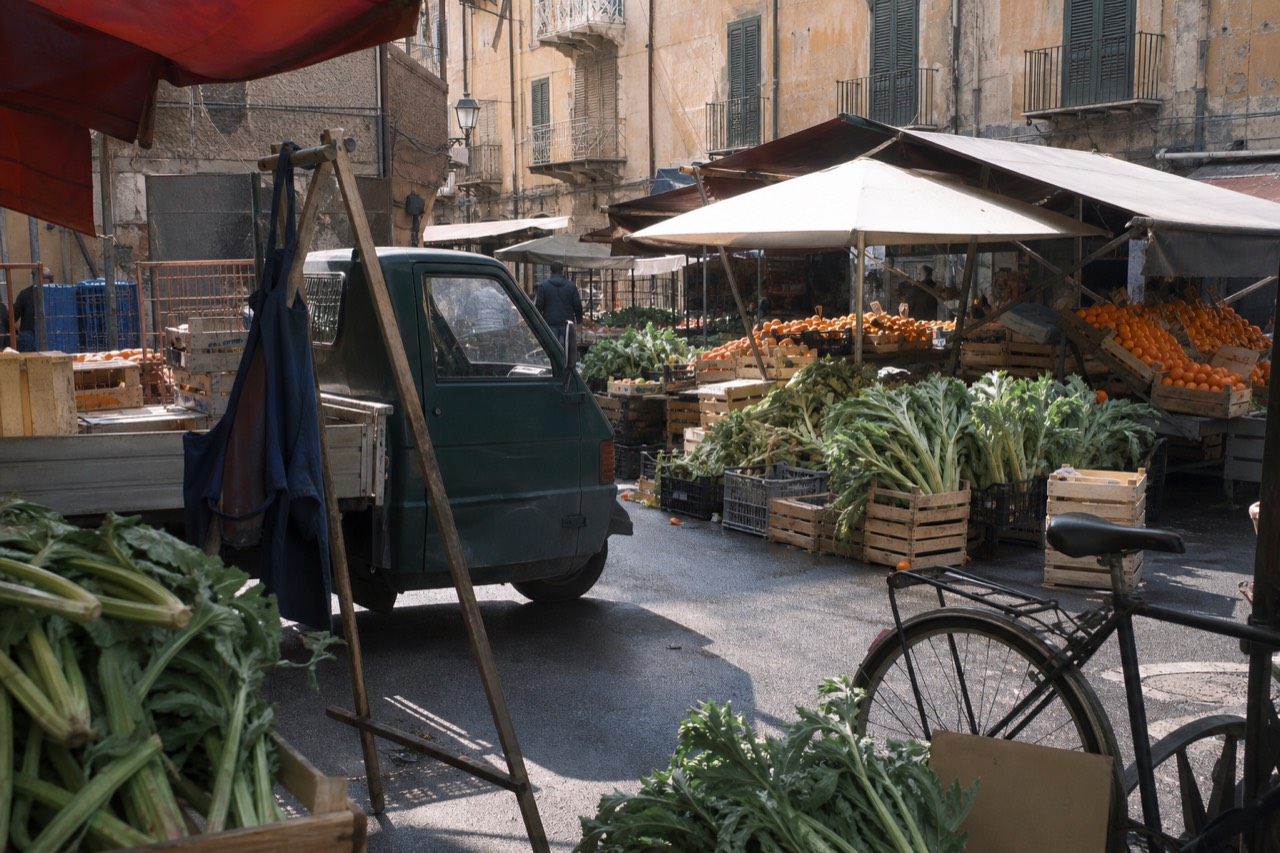
Palermo's historic centre holds four markets that the city's own tourism portal treats as a set: Ballarò, il Capo, la Vucciria and Borgo Vecchio. The Comune di Palermo describes all four as markets that look like the souks of a Muslim city, some of them created during the Arab domination of Sicily, and it gives the shouted sales cry of the hawkers its own Palermitan dialect word: the abbanniata. That is the honest, official answer to the question, and almost everything useful a visitor needs flows from knowing which of the four is which. They are not interchangeable. One is the city's biggest food market, one is the historic meat market turned street-food strip, one is a market that has largely become nightlife, and one is a morning market behind the Politeama that most tourists never reach.
The distinction matters more in Palermo than in most food cities, because a lot of generic travel content lumps "the markets of Palermo" together and implies they all offer the same experience. They do not. The Comune di Palermo's tourism portal publishes a separate page for each of the four, with addresses, extents and, in one case, exact opening hours. This guide follows that structure: each market gets its own section, with the official description first and the current reality second, because for at least one of the four the two have sharply diverged.
What Are The Four Markets In Palermo?
The four historic markets of Palermo are Ballarò, il Capo, la Vucciria and Borgo Vecchio, as listed and described individually by the Comune di Palermo's own tourism portal. Ballarò lies in the Albergheria quarter, the Capo in the old Seralcadio around Porta Carini, the Vucciria along via Argenteria to piazza Garraffello, and Borgo Vecchio behind the Politeama near the port. Three of the four are within easy walking distance of each other in the historic centre; Borgo Vecchio sits a short way north, on the far side of the Politeama theatre. All four descend from the same medieval tradition of neighbourhood food squares, the piazze di grascia, where "grascia" meant foodstuffs and marked the traders' specialisation.
The city's shared description of them is worth repeating accurately, because it is the official version and it is also genuinely evocative. The Comune says the markets recall the souks of a Muslim city, that some were created during the era of Arab domination, that fruit, vegetables, fish and meat are what is mostly sold, and that the hawkers' shouted cry, the abbanniata, is itself part of the show, folk music of the markets. That last detail is real and specific: the abbanniata is not a generic market noise, it is a named Palermitan practice, and hearing it is one of the few experiences all four markets still share.
What the official pages do not always say is how differently the four have fared. A March 2025 dossier by PalermoToday reported that the historic markets are in decline, with the Vucciria described as effectively gone as a daytime food market, the Capo slowly emptying, and Ballarò showing the signs of an inexorable transformation, with traders quoted saying they have lost around 80 percent of their traditional customers, a figure attributed to the traders themselves rather than measured. The same reporting notes that tourist street food has replaced many of the traditional stalls. Any visitor planning a route around all four should know this before setting out, so the sections below pair the official description with what each market is actually like now.
A quick orientation table before the detail:
| Market | Quarter | Official character | Current reality |
|---|---|---|---|
| Ballarò | Albergheria | The city's oldest and largest market, per the Comune | Still a working food market, heaviest tourist presence of the four |
| Il Capo | Seralcadio | Historic meat market around Porta Carini | Working market plus a strong street-food strip |
| La Vucciria | Near piazza Caracciolo | Once the "Bucceria grande", the great food square | Largely nightlife and bars; little daytime market left |
| Borgo Vecchio | Behind the Politeama | Morning market of the 1556 fishermen's quarter | Morning market, fewest tourists, gentrifying at night |
Ballarò: The Biggest, The Oldest And The Busiest
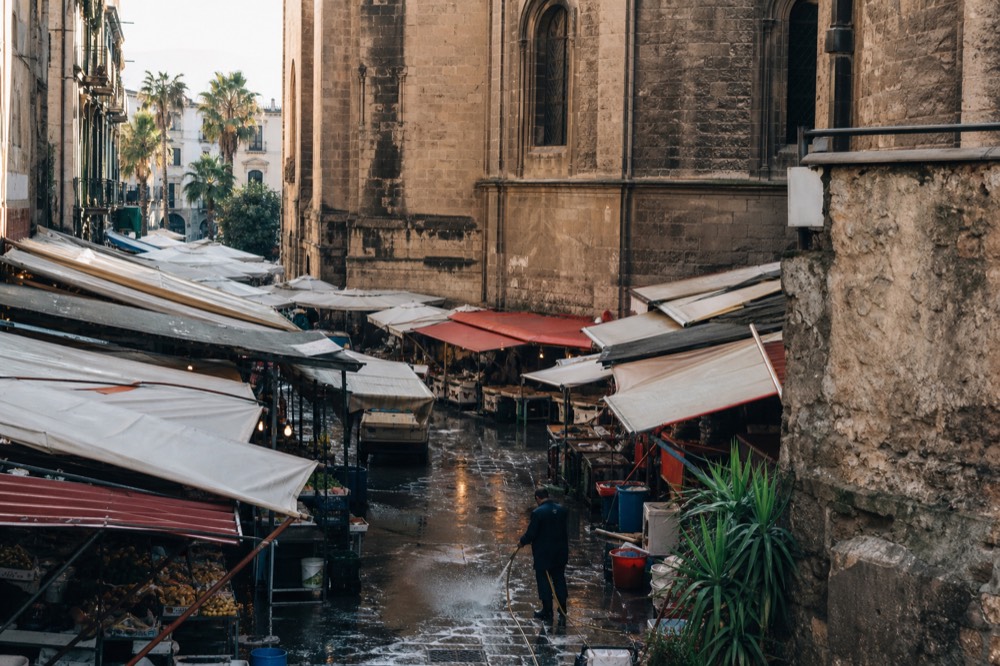
Ballarò is the market the Comune di Palermo itself calls "il mercato più antico e grande della città", the city's oldest and largest, running from piazza Casa Professa to the bastions of corso Tukory in the Albergheria quarter, officially open Monday to Saturday from 07:30 to 20:00 and on Sunday predominantly mornings only. That opening schedule is the only one of the four for which the city publishes exact clock times, which makes it the single most useful practical fact on any of the four official pages. The Comune attributes the market to the era of Arab domination, and quotes a description of piazza Ballarò from Gaspare Palermo's 1800 guidebook, which called it a "piazza di grascia" in the Albergheria quarter, a food square, elongated in shape and not very wide, paved with broad flagstones.
The etymology is unusually unsettled, and the Comune itself offers three competing hypotheses without preferring any of them: that the name comes from Bahlara, a village near Monreale from which goods arrived; from Ag-Vallaraja, a title of the sovereigns of the Indian region of Sind, because spices from the Deccan were sold there; or from Segeballarath, meaning "fair, market". A page that confidently tells you one of these is the true origin is guessing. What is documentable is the market's function: it was the destination for early produce and for goods arriving from the surrounding countryside and from beyond Europe.
In practice, Ballarò today is the market most food visitors see first, and it carries both the best and the worst of Palermo's street-food economy. It is loud, dense and visually spectacular, exactly what the official description promises. It is also the market where the tourist transformation is most visible. A visitor posting in September 2025 described buying arancine at Ballarò that turned out to be microwaved pre-made ones, and called the markets "fairly touristy these days", while locals in the replies recommended specific friggitorie elsewhere in the city instead. That is not a reason to skip Ballarò. It is a reason to be selective about where within it you eat, and a strong argument for a guided route on a first visit, since a good guide knows which stalls still cook from scratch.
The market's recent institutional history is also part of its story. In January 2026 the Palermo city council unanimously approved a regulation for the covered market at piazza del Carmine, prioritising historical traders, and in May 2026 the IACP handed the keys of that structure to the Comune. A bando for 31 ten-year concessions in the covered market was published in July 2026 and then suspended for 90 days in August pending a legal opinion, days before a fire damaged the roof and waste piles inside. None of this affects the open-air market lanes a visitor walks, but it explains why Ballarò feels like a place mid-transformation rather than a frozen postcard.
For first-time visitors the practical read on Ballarò is straightforward: go in the morning, when the produce stalls are at their fullest and the abbanniata is in full voice, treat the fried-food stalls with a local's scepticism, and do not plan the visit around a late-afternoon arrival, when the market is winding down toward its 20:00 close and the best of the day is behind it. If you want the deeper background on the market's food and its history, our Ballarò market guide covers it in detail.
Il Capo: The Meat Market That Became A Street-Food Street
Il Capo is the historic meat market, set in the ancient Seralcadio quarter along via Carini, via Beati Paoli, via S. Agostino and via Cappuccinelle, entered principally through Porta Carini, and described by the Comune as open every day morning and afternoon. The quarter formed in the Muslim era to house the "schiavoni", pirates and slave traders, and the Augustinians settled there from their convent beside the 14th-century church of S. Agostino. Nearby stood the civic slaughterhouse, the "bocceria nuova", and the Comune notes the dialect word for the butchers' shops is "carnezzerie", a Spanish-era borrowing, not the standard Italian "macellerie".
It is the Capo's street food that brings most visitors now. The Comune's own page lists what the hawkers sell here: sfincione and sfincionello, pane con la milza, and pane con le panelle e le crocche di patate. Panelle, the chickpea fritters, are the one item of the Palermitan street-food canon whose official PAT production territory is the city of Palermo itself; the Regione Siciliana's technical sheet specifies a batter of chickpea flour, water, salt and pepper, spread to half a centimetre thick, cut cold into rectangles and deep-fried. Crocchè di patate, potato croquettes, are likewise on the Sicilian PAT list. The panelle-and-crocchè sandwich is the Capo's everyday lunch, and it is one of the cheapest genuine meals in the city.
The Capo also carries two unusual, officially sourced details that almost no travel content mentions. The first is the custom of hanging quarters of meat outside the shops, which the Comune attributes to the city's former Jewish presence, for draining the animal of blood. The second is the display, on certain pre-feast days, of kids and lambs fully skinned except for the tail, which keeps its tuft, arranged as a backdrop to the shop. Both details are on the city's own tourism page for the market. They are not everyone's idea of sightseeing, but they are exactly the kind of living working-market texture that the Vucciria has largely lost.
Visitor reports from 2025 tend to rate the Capo the best of the central three markets for actual food. The same September 2025 thread that criticised Ballarò's microwaved arancine concluded that the Capo had the best food and shopping of the three, a view echoed by Palermo residents in the replies. It is also the market with the strongest single culinary anchor in popular culture: Anthony Bourdain's 2005 Sicily episode of No Reservations filmed at the Capo market, and Stanley Tucci's 2026 Sicily episode of Tucci in Italy included Palermo's Capo among its filming locations. A market that appears in both the 2005 and 2026 television canons of Sicilian food is doing something right.
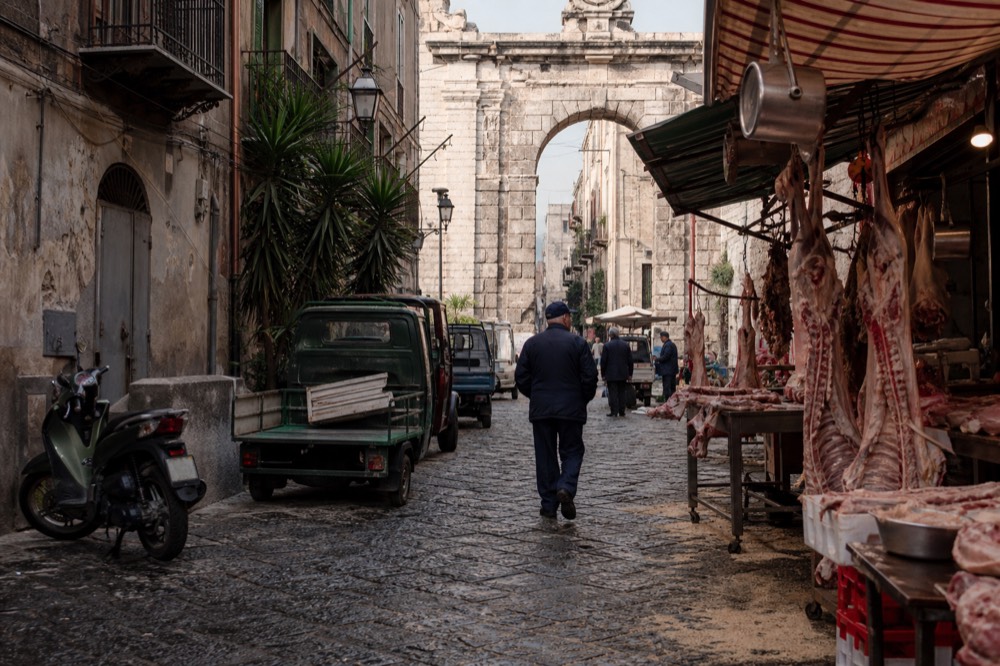
Practically, the Capo rewards the same morning-visit rule as Ballarò, though the official page says it opens every day morning and afternoon, without exact times, so check locally before planning an afternoon arrival. Its lanes are narrower and its focus tighter: this is the market to visit for the fried-food canon rather than for produce photography. If the panelle-and-crocchè sandwich is your goal, the Capo is where the city's own tourism portal places it.
La Vucciria: The Most Famous Market That Is Barely A Market Any More
La Vucciria runs along via Argenteria to piazza Garraffello, anciently called the "Bucceria grande" to distinguish it from lesser markets, and was once the most important food square of old Palermo, but today its daytime market has largely given way to nightlife, with the area formally regulated as a pedestrian zone until 31 December 2026. The etymology the Comune gives is from the French "boucherie", butcher's shop, because the market was originally for selling meat, and in Palermo the word also came to mean uproar, from the shouting. In 1783 the viceroy Caracciolo gave the piazza an orderly arrangement, and it was named piazza Caracciolo after him, with porticoes around a square loggia and, at the centre, a fountain with four small lions pouring water around a small obelisk.
The Vucciria's afterlife as an icon is out of proportion to its current life as a market. It is the market Renato Guttuso painted in "La Vucciria", a canvas of three metres by three metres painted between 1 October and 6 November 1974, with the market produce flown up from Palermo so the painter could work from the real thing, and the painting now hangs at the University of Palermo's Steri, given by Guttuso himself, as the University of Palermo's museum system records. It is also the market that Food & Wine is reported to have named a top world market in its 2025 Global Tastemakers awards, though that report has not been verified against the original page and should be treated cautiously.
The daytime reality is harsher, and honesty about it is more useful than repetition of the legend. The Comune's page still describes a market open every day morning and afternoon selling meat, vegetables and fish, but PalermoToday's March 2025 dossier reported the Vucciria as "ormai scomparsa", by now vanished, as a traditional market. Return visitors on travel forums describe it as crowded, dirty and loud until around 4am at weekends, and recommend staying elsewhere. The city, for its part, has formalised what the Vucciria has become: the Comune di Palermo extended the pedestrian area of the "Mercato Storico della Vucciria", including piazza Caracciolo, to 31 December 2026, with access limited to residents, loading vehicles, taxis and emergencies.
None of this means skip the Vucciria entirely. It means visit it with correct expectations. In the evening it is Palermo's best-known nightlife square, and a glass of wine standing among the crowd at piazza Caracciolo is a genuine local experience, just not a market one. In the morning it is quiet and slightly melancholy, a place to see the bones of the old square, the porticoes, the lions, the Guttuso view, without the produce that once filled it. The one market walk that pairs the two adjacent worlds, Ballarò's working stalls and the Vucciria's faded glamour, is covered in our guide to Palermo's markets.
Borgo Vecchio: The 1556 Quarter Almost No Tourist Visits
Borgo Vecchio is the morning market of the quarter behind the Politeama that runs through via Scina, via Principe di Scordia, via Ximenes and piazzetta Nasce, founded in 1556 after the construction of the new port, and described by the Comune as open in the morning only. It is the only one of the four markets for which the city gives a hard founding date. The quarter was born when the Senate of Palermo bought the tonnara di S. Giorgio following the new port's construction, and it became home to the fishermen and sailors who moved out of the Kalsa and La Loggia districts, later growing through immigration of craftsmen and traders drawn by port work. Originally it lay between porta S. Giorgio and the church of S. Lucia.
For a food visitor, Borgo Vecchio is the contrarian's choice, and that is its whole appeal. It is the one market of the four where you will see more shopping trolleys than cameras, because it is still substantially a proximity market for the people who live around it. The Comune itself notes the quarter has undergone urban gentrification in recent years, with a growing young and tourist presence at night drawn by pubs, taverns and b&bs, but the morning market keeps its working character. Of the four, it is the closest thing to what Ballarò and the Capo were before mass tourism reshaped them.
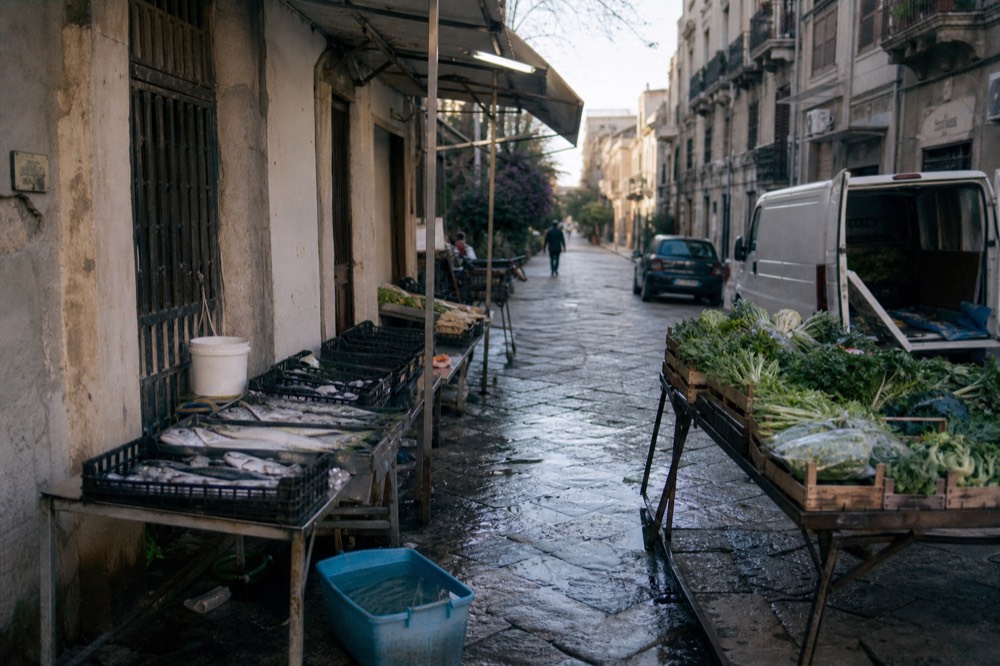
The trade-off is practical. The market is morning-only, so it cannot be an afternoon stop, and its street-food infrastructure is thinner than the Capo's: this is a place to buy produce, fish and bread rather than to eat a full fried-food itinerary. It also sits outside the tight cluster of the other three, a short walk north beyond the Politeama, which puts it off most visitors' routes. That is precisely why it rewards the walk. Fewer tourists means fewer stalls cooking for tourists, and the market's residential base means the food being sold is food someone is actually taking home for lunch.
For a full picture of how the four compare on the plate, the Palermo street food guide maps which dishes belong to which market tradition, and the Vucciria guide covers that market's history and painting in depth.
Which Of The Four Markets Should A Food Visitor Actually Pick?
For food, the Capo currently offers the best eating of the three central markets and Ballarò the best full-market spectacle, while the Vucciria is an evening nightlife square rather than a working market and Borgo Vecchio is a morning produce market for locals, so a first-time visitor with limited time should combine Ballarò and the Capo in one morning and treat the Vucciria as an evening destination. This ordering reflects both the official descriptions and the recent first-hand reporting: the September 2025 visitor thread rated the Capo best of the three central markets for food, and PalermoToday's March 2025 dossier, which reported the traders' own estimate of an 80 percent loss of traditional custom, identified the Vucciria as effectively no longer a functioning daytime market.
The morning rule matters more than the market choice. Ballarò's official hours are 07:30 to 20:00 Monday to Saturday, Sunday mornings predominantly, and the other three are morning markets in practice even where the official description is vaguer. A market visit that starts at 11:00 sees a different place from one that starts at 08:00: fuller stalls, lower prices, the abbanniata in full voice, and vendors with time to talk. By mid-afternoon the produce is picked over and the lanes are given over to the street-food trade.
A guided tour is worth considering precisely because the quality problem in Palermo's markets is invisible from the street. The microwaved-arancine experience reported at Ballarò in 2025 is not a rare complaint, and the difference between a stall frying to order and one reheating is not something a first-time visitor can judge from the queue. A guide who works the market daily knows the difference. The same logic applies to combining markets: the pairings that work on foot, Ballarò to the Capo through the historic centre, or Ballarò to the Vucciria along via Maqueda, are obvious once you know the geography, but the timing that makes them work is local knowledge.
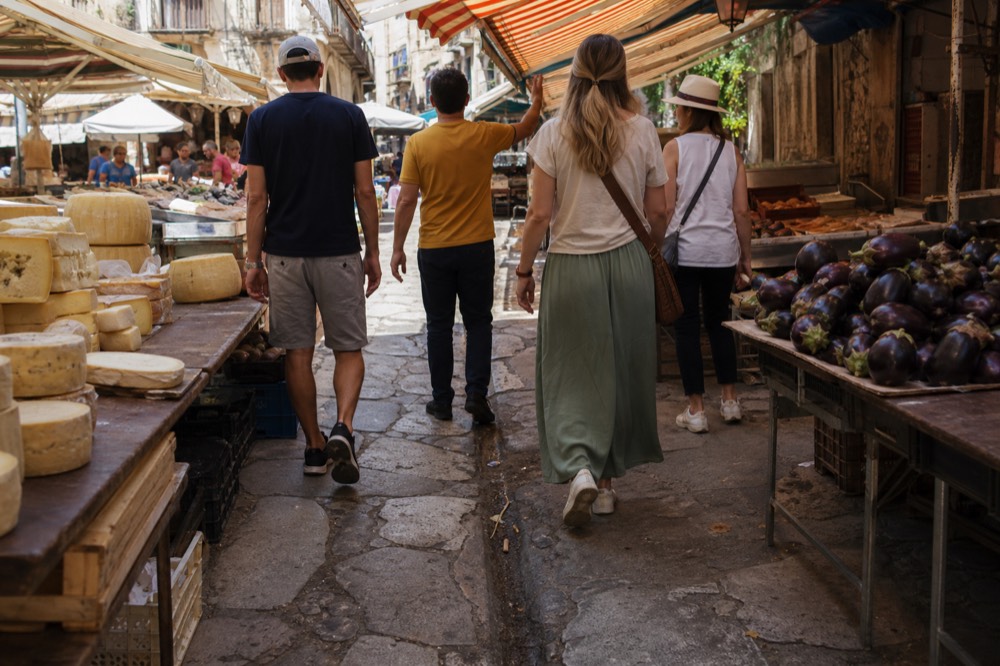
For visitors who want the market experience turned into a meal, the comparison below is the practical version of everything above:
| If you want | Best market | Why |
|---|---|---|
| The biggest, loudest market spectacle | Ballarò | The city's oldest and largest market, full official hours published |
| The best fried street food | Il Capo | The Comune places sfincione, panelle and crocchè here; best rated by recent visitors |
| Evening atmosphere and a drink | La Vucciria | Nightlife square in a formally pedestrianised historic piazza |
| A locals-only morning shop | Borgo Vecchio | Morning produce market, fewest tourists of the four |
| Market history and painting | La Vucciria (daytime) | Guttuso's 3x3m canvas and the 1783 piazza Caracciolo layout |
Palermo's markets are the reason the city has traded on its street-food reputation since a 2012 Forbes article, itself reporting a reader survey by a travel site that has since closed, placed it fifth in the world for street food. That ranking is fourteen years old and was a member poll, not a study, and it is worth being the visitor who knows that. The markets themselves, all four of them, are the real thing either way, and Palermo Food Tours exists to help you tell which parts still are.
The four markets are Ballarò, il Capo, la Vucciria and Borgo Vecchio, and the short answers are these: Ballarò for spectacle and the only published clock times, the Capo for eating, the Vucciria for evening atmosphere and painting history, and Borgo Vecchio for a locals-only morning shop. The questions below cover the practical details visitors ask most: which market is oldest, what the opening hours are, whether the Vucciria still has a market, which one is best for street food, and whether all four can be walked in a single loop. Each answer states only what the official Comune pages or the dated reporting supports.
Common Questions About The Four Markets In Palermo
What Are The Four Markets In Palermo?
The four historic markets are Ballarò, il Capo, la Vucciria and Borgo Vecchio, as listed by the Comune di Palermo's tourism portal. Ballarò is in the Albergheria, the Capo around Porta Carini, the Vucciria near piazza Caracciolo, and Borgo Vecchio behind the Politeama.
Which Palermo market is the oldest?
The Comune di Palermo calls Ballarò the city's oldest and largest market, but gives no founding date. The only one of the four with a hard sourced date is Borgo Vecchio, whose quarter formed in 1556 after the construction of the new port.
What are Ballarò's opening hours?
Officially, Monday to Saturday from 07:30 to 20:00, with Sunday predominantly mornings only. It is the only one of the four markets for which the Comune publishes exact clock times.
Is the Vucciria still worth visiting?
As a food market, barely: PalermoToday reported in March 2025 that the Vucciria has effectively vanished as a traditional daytime market. As an evening nightlife square in a pedestrianised historic piazza, it very much is, and Guttuso's famous painting of it hangs at the University of Palermo's Steri.
Which market is best for street food?
The Capo. The Comune's own page places sfincione, pane con la milza, panelle and crocchè there, and recent first-hand visitor reports rate it the best of the three central markets for food.
Can you walk between all four markets?
Ballarò, the Capo and the Vucciria are all within the historic centre and walkable in a loop. Borgo Vecchio sits behind the Politeama, a short walk further north, and is a morning-only market, so it needs its own early start.