What City Is Famous For Cannoli?
The honest answer to which Sicilian city is famous for cannoli: the official cannolo territory is the Trapani area, but Palermo, Piana degli Albanesi and Dattilo all compete for the crown.
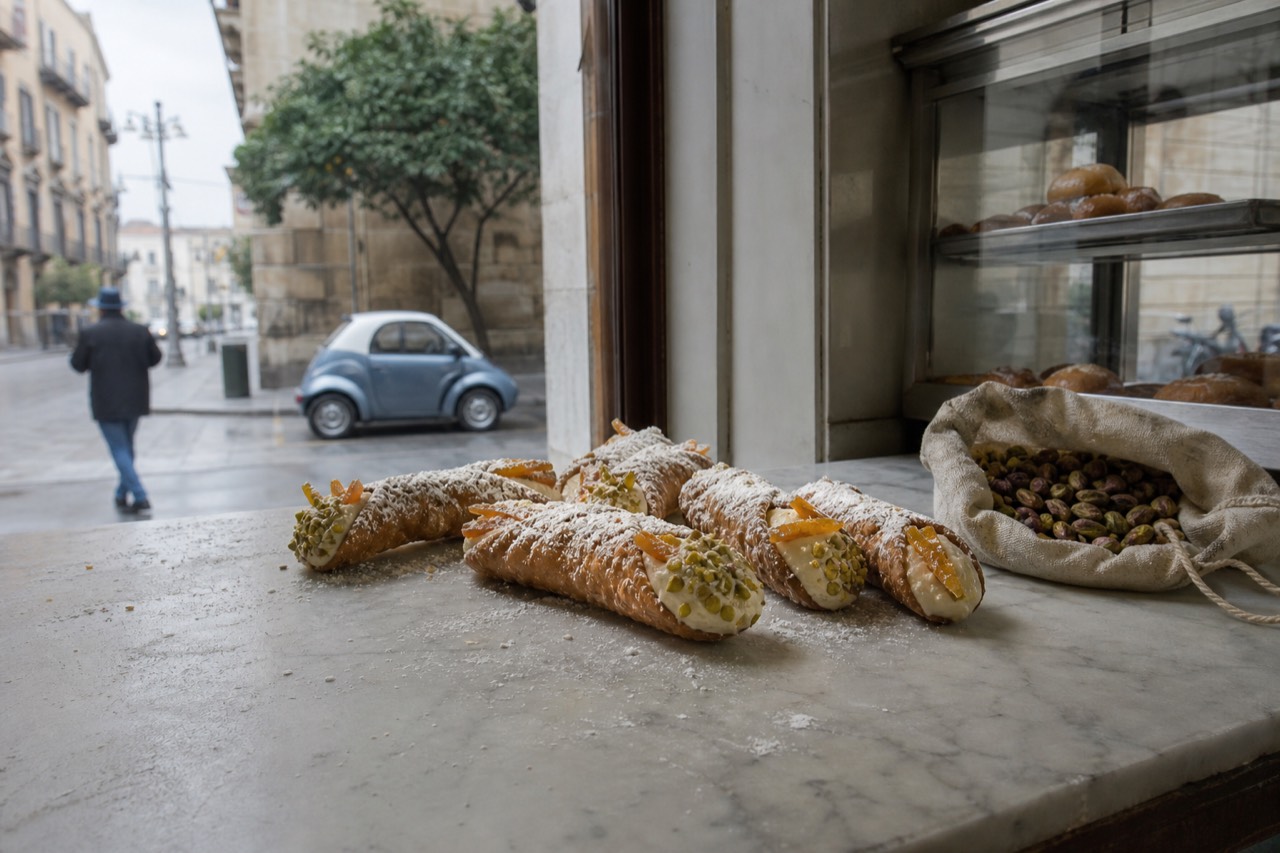
What City Is Famous For Cannoli?
Palermo is the city most travelers associate with cannoli, and you can eat excellent ones there, but the official Italian record names the Trapani area as the cannolo's home. The Regione Siciliana's traditional-food sheet lists the production territory for the cannolo alla ricotta as Paceco, Erice, Trapani and Valderice, all in Sicily's far west, and names Piana degli Albanesi and its neighboring villages separately for their own historic cannolo tradition.
That distinction surprises people, and it is worth sitting with for a moment. The cannolo is the single most recognizable Sicilian sweet in the world, the one dessert that appears on menus from Melbourne to Montreal, and yet almost nobody outside the island can name the place Italy's own agriculture ministry attaches it to. The answer is a cluster of towns around Trapani, the port city on Sicily's western tip, plus a small Albanian-founded hill town outside Palermo with a serious claim of its own.
The word itself is straightforward. Treccani, the Italian Encyclopedia Institute's dictionary, derives cannolo from canna, cane, because the fried shell was originally rolled around a piece of cane, the plant botanists call Arundo donax. The definition describes a typical Sicilian pastry product: pastry rolled around a tube, fried, then filled with sweetened ricotta flavored with liqueur, candied fruit and chocolate pieces. The name tells you the shape. It does not tell you the city.
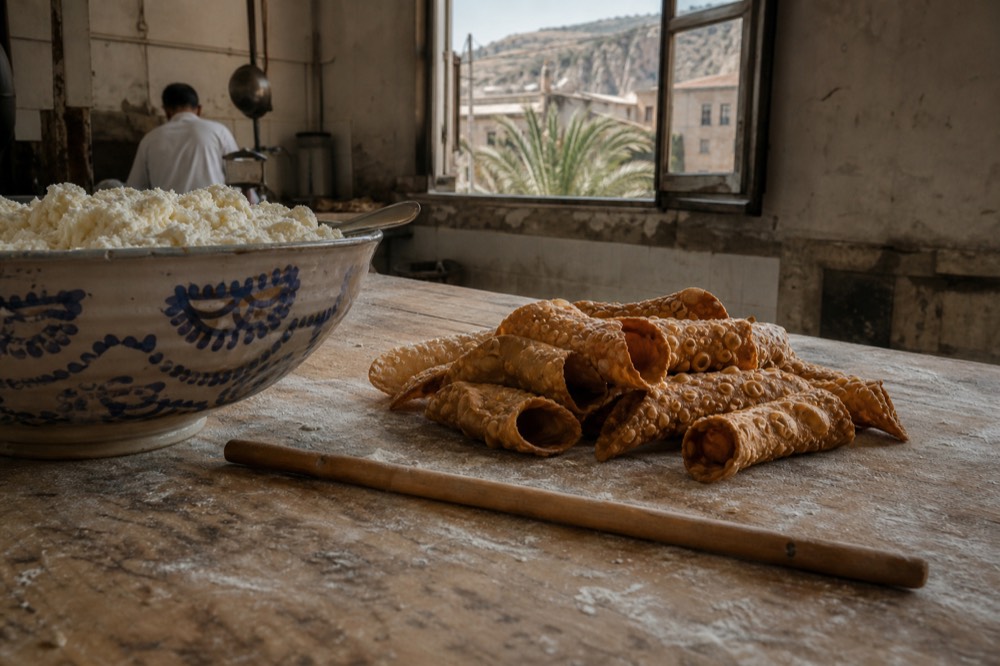
So how does a traveler use this? If cannoli are the mission, Palermo is still the easiest base: it has the island's biggest airport, the largest concentration of pastry shops, and food tours that end with a cannolo filled to order. But the day trip from Palermo to the west, or the short drive up to Piana degli Albanesi, puts you in the territory the official record actually names. Both work. Knowing which is which is the difference between a generic answer and a good one.
There is a second layer to the question that deserves a sentence of its own. Cities do not really own foods in Italy; territories do, and the territory is defined by agriculture and paperwork rather than by where the tourists happen to be standing. The cannolo belongs to a landscape of sheep pasture and dry Mediterranean hill country that happens to sit in the west of the island, and the fame belongs to whichever city the visitor flew into. Separating the two is what this page is for.
Where Does The Cannolo Officially Come From?
The cannolo's official production territory, as recorded on Sicily's regional traditional-food sheet, is the Trapani area: Paceco, Erice, Trapani and Valderice. The sheet describes a fried shell of flour, water, marsala and lard, dried and filled with sheep's milk ricotta, vanilla and sugar, with optional candied fruit, dark chocolate and icing sugar. Piana degli Albanesi holds a separate, distinct recognition for its own traditional cannolo.
The sheet in question is part of the PAT scheme, Italy's register of Prodotti Agroalimentari Tradizionali, created under a 1998 legislative decree and implemented in 1999. To qualify, a product's preparation and conservation methods must have been practised in a consistent, traditional way for not less than 25 years. Sicily carries 293 PAT products on the current list, and the cannolo entries sit among a hundred bakery and confectionery items that include cassata siciliana, granita di mandorla and sfinci di San Giuseppe.
The PAT record matters here because it is the only document with any authority that ties the cannolo to a specific place. Everything else is custom, marketing and local pride. The Trapani territory named is not random: it is sheep and pasture country, and sheep's milk ricotta is the filling the sheet specifies. Cow's milk ricotta, which is what you will often get in the summer months when sheep's milk is scarce, produces a filling that several Palermo bakers themselves describe as a lesser thing. One local discussion among Palermo residents made exactly this point: summer cannoli tend to taste similar across shops because imported milk ricotta smooths out the differences.
There is a lesson in that for visitors. The cannolo you eat in Palermo in August and the cannolo you eat in Erice in February are, functionally, two different desserts. The shell is the same fried tube, but the filling changes with the season and the flock. Ask the shop when the ricotta is from, and whether it is sheep's or cow's. A shop that answers proudly is a shop worth standing in.
It is also worth being the person at the counter who knows the name's origin. The canna reference on the official sheet is not decorative trivia: it explains why the shell has the ridged, slightly irregular surface it does, because it was shaped by rolling dough around a cut stem of a living plant rather than a metal form. Some traditional producers still use the cane. Most use metal. The ridges survive either way.
The 25-year rule behind the register has a practical edge for travelers too. A product that cannot document a quarter century of consistent traditional production does not get on the list, which means the list is a filter against invented traditions, the sort of dish a destination dreams up for a brochure and calls heritage five years later. The cannolo passes that filter without breaking a sweat. Its documentary trail runs deep into the island's monastic and festival past, through pastry shops that were filling shells before anyone thought to trademark the idea.
You can read the regional sheet's description yourself; the Regione Siciliana publishes the technical sheets as a public PDF of Sicilian traditional products, and the dictionary entry is on Treccani's vocabulary page for cannolo.
Why Does Everyone Say Palermo, Then?
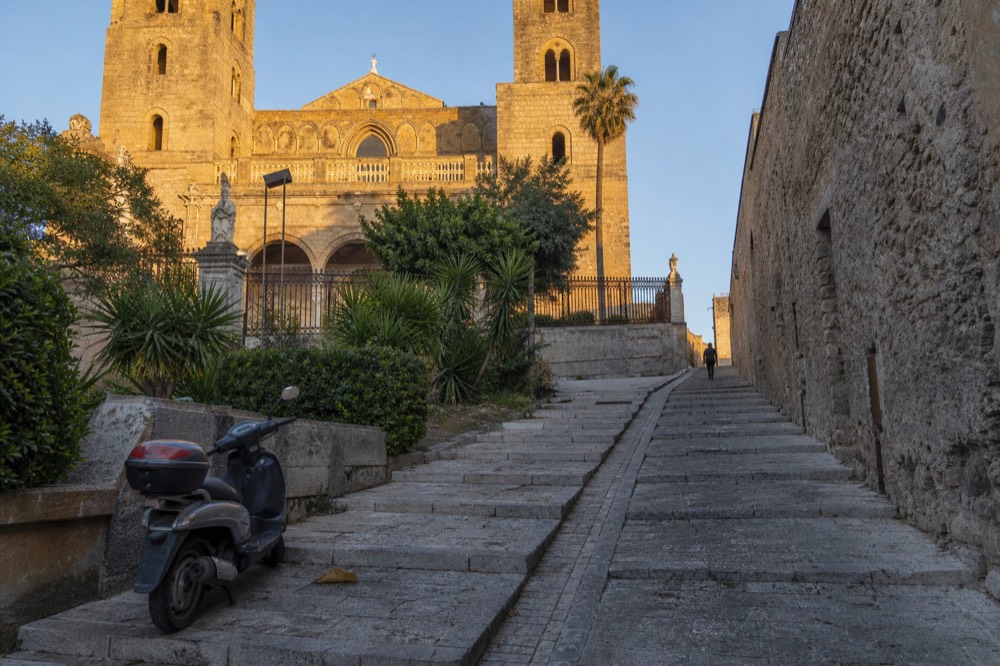
Palermo owes its cannolo reputation to being Sicily's capital, its biggest tourist gateway and the home of a famous hill-town tradition nearby, not to the official PAT territory. Piana degli Albanesi, about an hour outside the city, holds its own separate official recognition for its traditional cannolo, and Palermo's pastry shops fill shells to order all day. The fame is real, even if the paperwork points west.
Start with the geography of travel. Most visitors land at Palermo's airport, sleep in Palermo, and eat their cannoli in Palermo, so the mental map draws the dessert inside the city. The city's bakeries are genuinely good at it. The local advice that circulates among Palermo residents names Piana degli Albanesi as the source of the best cannoli, with Palermo shops where the owners come from there, and names city center spots where the shells are filled to order rather than sitting pre-filled and going soft.
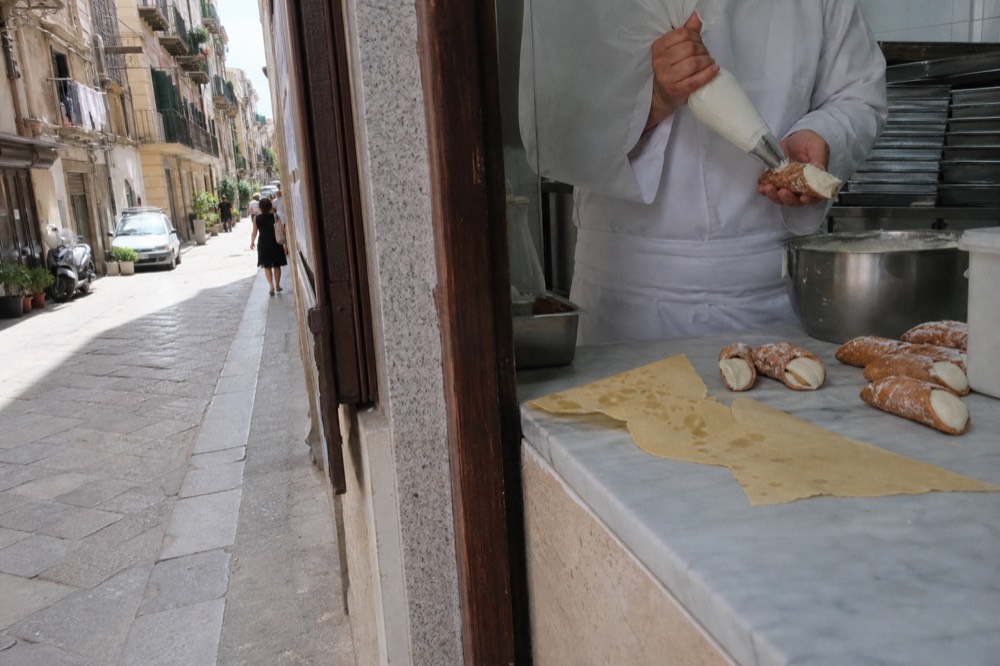
The filling-to-order point deserves emphasis, because it is the single most useful test a visitor can apply. A cannolo filled even an hour ago has a shell that has started to give. A cannolo filled while you watch has a shell that cracks. The best shops in Palermo treat the assembly as a sixty-second performance, slicing the ricotta into the tube, dusting it, handing it over immediately. If a shop's cannoli are displayed fully assembled under glass, that shop has made a choice, and it is not the choice you want.
Palermo also wins on the festival front, at least in the imagination. The Cannolo Fest at Piana degli Albanesi, a short drive from the city, runs over two days in mid-May with pastry makers from across Sicily. Its dates are published on the festival's own official site, and the event is close enough to Palermo to be a realistic morning trip for anyone based in the city. Dattilo, in the Trapani province, answers with its own three-day Cannolo Fest in early July, which is the west's way of reminding everyone whose name is on the official sheet.
Put the competing claims side by side and the picture gets clearer:
| Place | Claim to cannolo fame | What the record says |
|---|---|---|
| Trapani, Paceco, Erice, Valderice | The official cannolo territory, sheep's milk ricotta country | Named on the Regione Siciliana PAT sheet for the cannolo alla ricotta |
| Piana degli Albanesi and Santa Cristina Gela | A separate, distinct cannolo tradition in an Albanian-founded hill town near Palermo | Carries its own PAT entry, the Cannolo tradizionale di Piana degli Albanesi e Santa Cristina Gela |
| Palermo | The island's capital and tourist gateway, with pastry shops filling shells to order | No cannolo PAT entry of its own, but the easiest base for eating them |
| Dattilo (Trapani province) | Hosts a three-day Cannolo Fest in early July | Sits inside the region the official sheet recognizes |
If your trip is built around Palermo and you want the dessert at its source, the practical move is the night food walk. Palermo's evening street food scene includes the pastry stops, and the Palermo Food Tours roster includes a night tour built around exactly this rhythm of fried, savory and sweet. The Small-Group Night Street Food Tour of Palermo, run by Streaty Food Tours, runs three hours from $69.8 per person, holds 4.9 across 580 reviews, and caps departures at 12 spots. One honest caveat: it is non-refundable, so it belongs late in your planning, after the flights are fixed, not at the start.
The night format suits the cannolo in a way a morning walk does not. Sicilian evenings run late, the pastry shops stay lit, and the dessert lands at the end of a meal rather than in the middle of a morning of fried food, which is exactly how locals eat it. A tour that arrives at the pastry counter at ten at night with an appetite already half-spent on panelle and spleen is doing the cannolo a favor.
Between the tours, the city itself, and the hill town an hour away, Palermo covers most of what a cannolo-focused visitor needs. The west rewards the traveler with more time.
What Makes A Cannolo Worth Eating?
A good cannolo comes down to three things: a shell fried fresh and still audibly crisp, a filling of well-drained sheep's milk ricotta rather than cow's milk, and assembly to order rather than in advance. Everything else, the candied fruit, the pistachio, the chocolate, is decoration on top of that foundation. Get the three basics wrong and no amount of garnish rescues the pastry.
The shell is the part most shops get away with ruining quietly. The official sheet's dough is flour, water, marsala and lard, rolled thin, wrapped around a form, fried. Done properly it blisters into a shattering crust. Done lazily, or fried hours ahead, it turns into a soft, slightly greasy tube. The test is acoustic as much as anything: the first bite should make a noise.
The filling is the part that separates Sicily from the cannoli of the diaspora. Sheep's milk ricotta is sharper, more aromatic and less sweet than the cow's milk versions common outside Italy, and the sheet specifies it plainly. Chocolate pieces and candied fruit are listed as optional, which matches how bakeries actually behave: some fold chips through the ricotta, some leave it plain and finish with a cherry or an orange cube at each end.
The assembly rule is where the island's own etiquette does the enforcement. Sicilians widely regard a pre-filled cannolo as a degraded object, and the phrase you will hear in shops is that the shell must not be made to wait. Palermo residents discussing cannoli online recommend shops by this single criterion first, filling to order, before anything about the recipe. It is the one piece of local knowledge that transfers perfectly to a visitor with no Italian and one afternoon.
A short checklist for the counter:
- The shell is filled only after you order it, in front of you.
- The ricotta is sheep's milk, or the shop tells you honestly when it is not.
- The shell surface is blistered and irregular, not smooth and uniform.
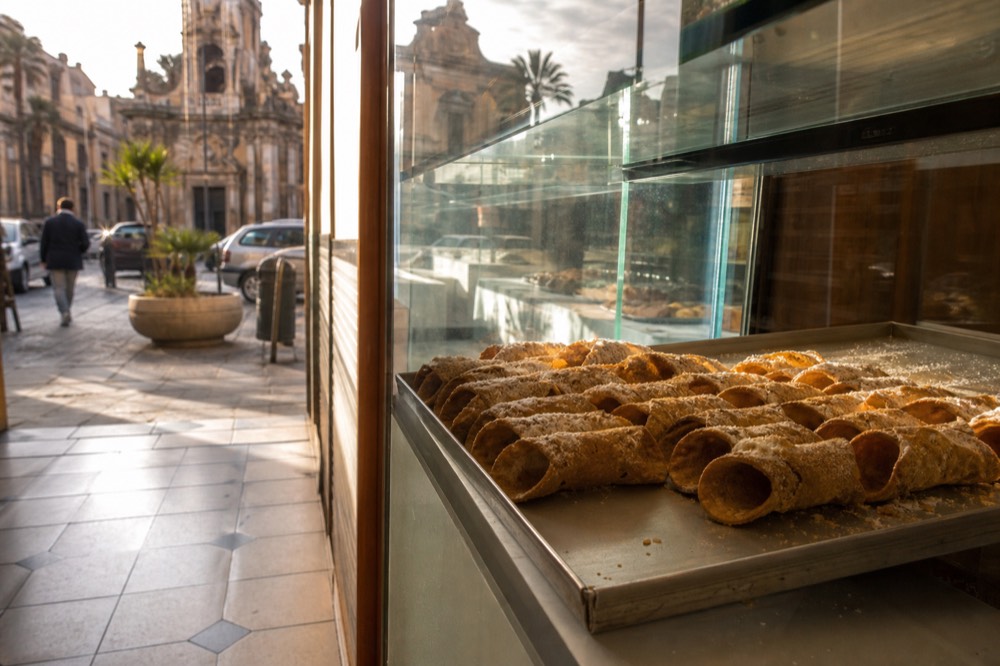
- The display case, if there is one, holds shells and filling separately.
None of this requires knowing a city's name in advance. It does require being in a place where the volume is high enough that shells are fried continuously, which is the quiet argument for the big markets and the busy pastry streets of Palermo over a village shop that fries once a day. Though the village shop, when it fires on all three, is the one people remember for the rest of their lives.
Can You Taste Cannoli On A Food Tour?
Yes, and it is one of the more reliable ways to reach a good one. Several Palermo food tours include a pastry stop where the cannolo is filled to order, and a guided walk has the side benefit of landing you in the neighborhoods where the volume keeps the shells fresh. Prices on the roster run from $39.83 for a 2.5-hour tasting walk to $139.36 for a two-hour cheese and wine tasting.
The budget-friendly entry point is the Palermo Street Food Walking Tour with Local Guide & Tasting, run by Hili srl: 2.5 hours, from $39.83 per person, 4.8 across 933 reviews, free cancellation up to 24 hours. It often sells out, which tells you something about the demand for exactly this kind of walk. The tour moves through the market streets where the fried and the sweet sit side by side, which is the correct context for a cannolo anyway: it is a street food in spirit, a hand-held thing, not a plated dessert.
For a different angle, the two-hour Sicilian Cheese and Wine Tasting run by Siciliandays pairs regional cheeses with local wines, from $139.36 per person, 4.9 across 56 reviews, with free cancellation up to 24 hours. It is not a cannolo tour, but it is the same dairy story told from the savory end: Sicily's sheep and its ricotta are the thread that runs through both the cheese board and the pastry case, and understanding one deepens the other.
The comparison across the formats:
| Tour | Operator | Length | From (per person) | Rating | Cancellation |
|---|---|---|---|---|---|
| Night Street Food Tour (All-Inclusive) | Streaty Food Tours | 3 hours | $69.8 | 4.9 across 580 reviews | Non-refundable |
| Street Food Walking Tour with Tastings | Hili srl | 2.5 hours | $39.83 | 4.8 across 933 reviews | Free up to 24h |
| Sicilian Cheese and Wine Tasting | Siciliandays | 2 hours | $139.36 | 4.9 across 56 reviews | Free up to 24h |
The cancellation column is the one worth reading twice. Of the 22 tours on this site's roster, only three are non-refundable, and all three are Streaty products, including the night tour. Nineteen allow free cancellation up to 24 hours. If your itinerary is still moving, book the flexible ones first and add the night tour once your evenings are locked.
It is also worth saying what a tour cannot do. No three-hour walk teaches you to distinguish a great cannolo from a good one the way three consecutive mornings of deliberate pastry tourism do. The tour gets you to the counter with a guide who knows the neighborhood; the rest is repetition, which in Palermo is no hardship.
If you are planning a longer stay, our guides on what to eat across Palermo's markets and the traditional Sicilian food canon cover the savory side of the same island, and the piece on Palermo street food puts the cannolo back in its fried-food family context.
The short answer to the question is Palermo for convenience and the Trapani area for the official record, with Piana degli Albanesi holding a distinct recognition of its own, and the six questions below cover the details travelers ask most often, from the singular and plural of the name to what the filling should contain and why the shell is never filled in advance.
Common Questions About Cannoli And Their City
What City Is Famous For Cannoli?
Palermo is the city most associated with cannoli, but the official Italian record names the Trapani area, specifically Paceco, Erice, Trapani and Valderice, as the cannolo's production territory. Piana degli Albanesi, near Palermo, holds a separate recognition for its own traditional cannolo.
Are cannoli from Palermo or Catania?
Neither, according to the official record. The Regione Siciliana's traditional-food sheet places the cannolo alla ricotta in the Trapani area. Palermo and Catania both have strong pastry traditions and plenty of excellent cannoli, but the paperwork points west.
What is the difference between cannoli and cannolo?
Nothing except the number. Cannolo is the singular, cannoli the plural, following ordinary Italian grammar. The name comes from canna, cane, because the shell was originally rolled around a piece of cane.
Why are cannoli filled to order?
Because the fried shell goes soft within minutes of contact with the moist ricotta filling. Sicilian shops that respect the pastry fill the shell only after the customer orders, and locals treat a pre-filled cannolo as a compromised one.
What is the filling made of?
The official sheet specifies sheep's milk ricotta with sugar and vanilla, optionally with candied fruit and dark chocolate pieces. In summer, when sheep's milk is scarcer, some shops switch to cow's milk ricotta, which is milder and sweeter.
Is there a cannolo festival?
Yes, two main ones. Piana degli Albanesi holds its Cannolo Fest over two days in mid-May, and Dattilo, in the Trapani province, holds a three-day Cannolo Fest in early July. Both draw pastry makers from across Sicily.