Which Is Nicer, Palermo Or Taormina?
An honest, food-first comparison of Palermo and Taormina: street food, Michelin recognition, tourist tax, daily costs and which city suits which kind of trip.
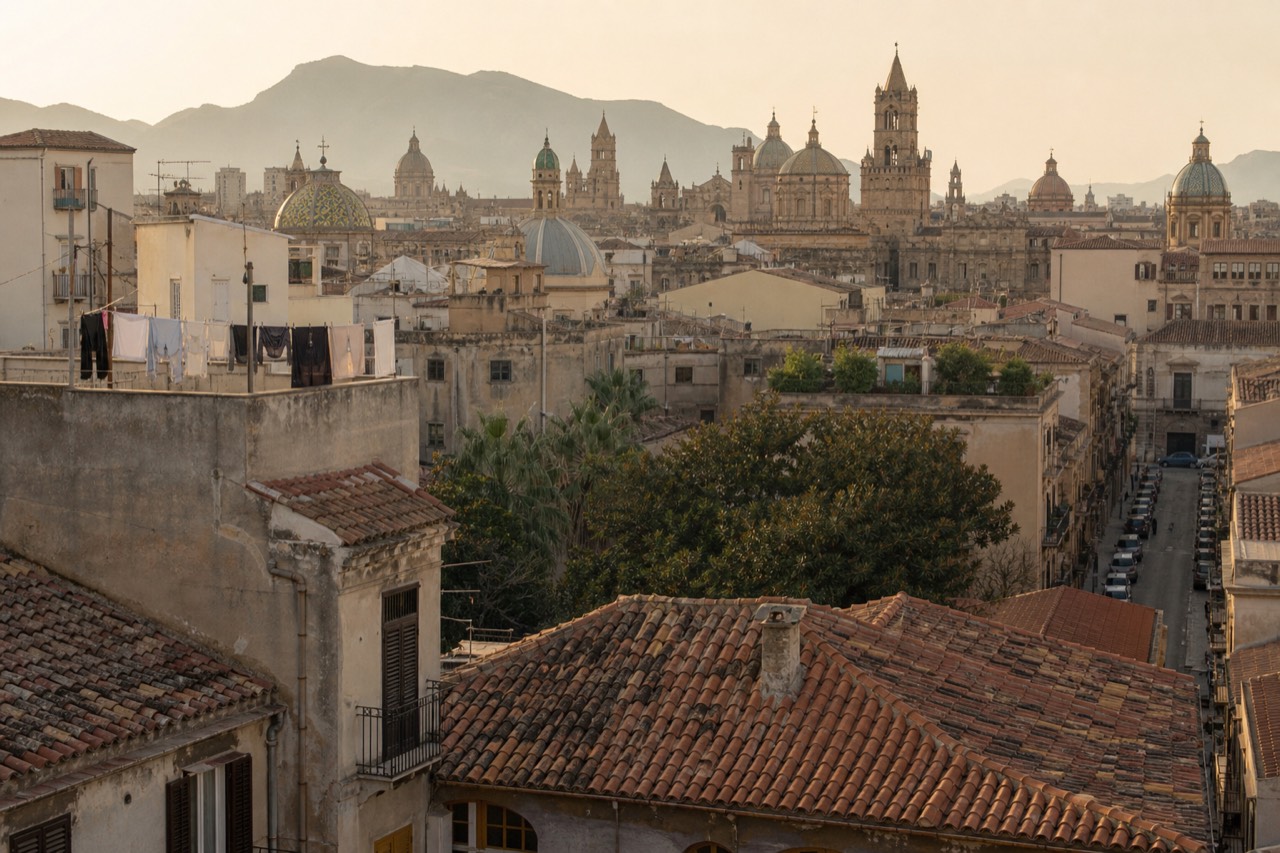
Which Is Nicer, Palermo Or Taormina?
Neither is nicer, because they are different trips. Palermo is the rougher, cheaper, deeper food city, built around historic markets and the best street food in Sicily. Taormina is the polished, compact resort with the island's strongest concentration of fine-dining recognition. If eating is the reason you travel, Palermo wins. If ease and polish come first, Taormina does.
The question gets asked as if the two towns were rivals selling the same product. They are not. Palermo is a working regional capital that happened to keep its Arab-Norman monuments, its four historic markets and a fried-food culture that runs from breakfast to midnight. In 2025 its port handled 996,484 cruise passengers across 284 calls, and the city recorded more than 916,000 tourist arrivals and around 2.1 million presences, up 7.3% on the year before. This is a big, living city that tourists visit, not a resort built for them.
Taormina sells something else entirely. In the Michelin Guide Italia 2026 it holds one two-star restaurant, St. George by Heinz Beck, plus four one-star venues, La Capinera, Otto Geleng, Principe Cerami and Vineria Modì. Palermo city, by comparison, holds a single one-star, Mec Restaurant. Five starred venues in one small resort town is a serious concentration, and it tells you what Taormina is for: seated, curated, expensive-feeling dining in beautiful surroundings.
One disclosure before the comparison goes further. The research and tour coverage published on Palermo Food Tours leans food-first, and that bias shapes everything below. A traveller whose priority is a refined base with acclaimed restaurants will read this page and still correctly choose Taormina. A traveller who wants to eat their way through a city should keep reading.
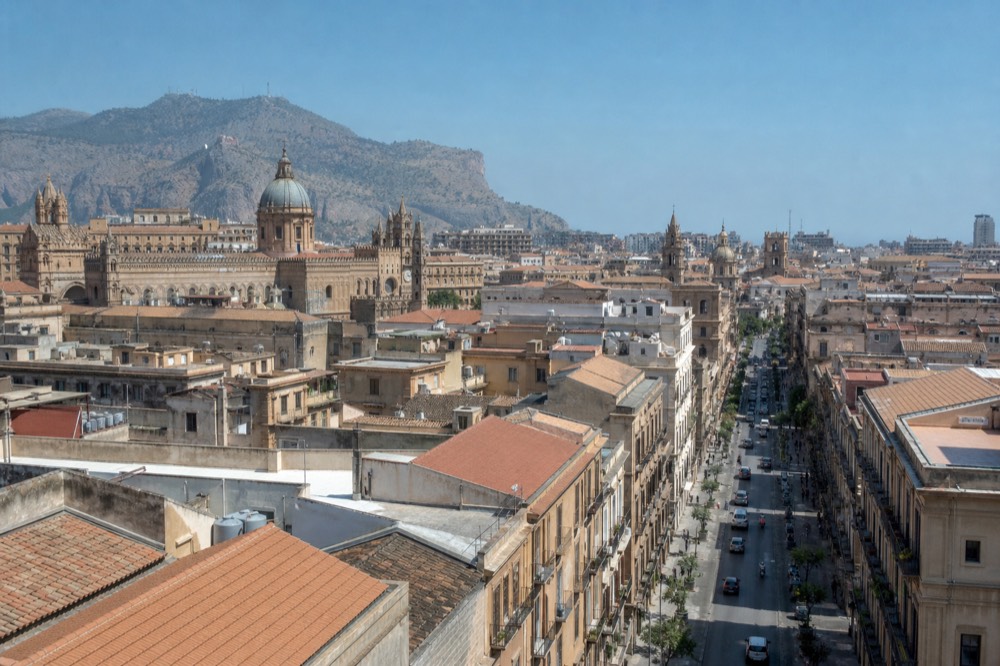
If you want to test Palermo's food side in a single evening before committing to the city, a guided tasting walk is the fastest way. The three options below are the ones this site's research keeps returning to: an all-inclusive night walk, a ten-tasting marathon and a market-focused morning.
What Does Palermo Do Better Than Taormina?
Palermo wins on food depth, on price and on urban texture. It has four historic markets, a street-food canon whose official production territory includes the city itself, and a 2015 UNESCO inscription covering nine Arab-Norman structures. It also recorded over two million tourist presences in 2025 while keeping its eating prices low.
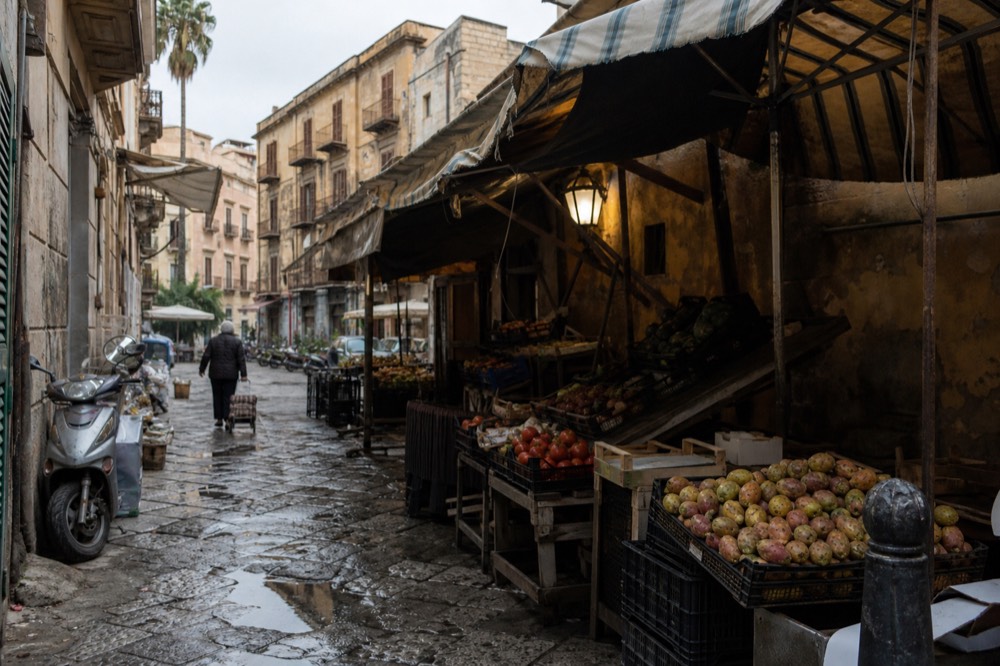
Start with the markets, because they are the thing Taormina has no answer to. The Comune di Palermo's own tourism portal describes four historic markets: Ballarò, the Capo, the Vucciria and Borgo Vecchio. It calls Ballarò the city's oldest and largest market, trading Monday to Saturday from 07:30 to 20:00 and on Sunday mornings only, and it lists the Capo's hawkers as selling sfincione, pane con la milza, panelle and crocchè. The shouted sales cry of the hawkers even has its own Palermitan dialect word, abbanniata, which the city's portal treats as part of the show.
The honest version of the market story includes the decline. PalermoToday reported in March 2025 that the Vucciria has all but disappeared as a daytime food market, that the Capo is slowly emptying and that Ballarò is transforming, with traders quoted saying they have lost around 80% of their traditional custom to the ZTL, parking shortages and the emptied-out centre. The Vucciria market area is now a formally regulated pedestrian zone, established by municipal ordinance in June 2025 and extended to 31 December 2026. None of this has stopped the street food; it has moved it, partly toward tourists, which is exactly why a good guided walk now adds value over wandering alone.
Then there is the heritage. In 2015 UNESCO inscribed "Arab-Norman Palermo and the Cathedral Churches of Cefalù and Monreale" on the World Heritage List, covering nine civil and religious structures from the era of the Norman kingdom of Sicily. Palermo pairs that with a food culture that is cheap, fried and eaten standing up, a combination no other Sicilian destination matches. The city's own figures, published on the Comune di Palermo site drawing on the regional tourism observatory, show over 916,000 arrivals and about 2.1 million presences in 2025, with foreigners making up 63.8% of presences.
Fairness requires the other column too. In the Sole 24 Ore quality-of-life ranking for 2025, Palermo province placed 97th of 107 Italian provinces, and it ranked last among the indicators for waste recycling. The graffiti and the rough edges that surprise first-time visitors are documented, not folklore. If you want a city that rewards curiosity and tolerates some grit, Palermo is your town. If grit ruins a holiday for you, that is a real reason to pick Taormina, and no food tour will change it.
| What you are comparing | Palermo | Taormina |
|---|---|---|
| Character | Working regional capital, raw edges | Compact, polished resort town |
| Food identity | Street food and historic markets | Restaurant-led, formal dining |
| Michelin Guide 2026 | 1 one-star restaurant (Mec) | 1 two-star and 4 one-star restaurants |
| UNESCO recognition | Arab-Norman Palermo, inscribed 2015, nine structures | not verified for this page |
| Tourist tax, B&B or short-term rental | €4 per person per night, max 4 nights | not verified for this page |
| Cheapest guided food walk | from $39.83 per person | no comparable listing on this site |
Whichever way the comparison lands for you, the evening hours are when Palermo's food identity is easiest to sample on a schedule, and a small-group night walk is the lowest-effort way to do it.
What Does Taormina Do Better Than Palermo?
Taormina wins on polish, compactness and fine-dining recognition. The Michelin Guide Italia 2026 gives it one two-star restaurant, St. George by Heinz Beck, and four one-star venues, against Palermo's single one-star. Everything a visitor needs sits within a short walk, and the town trades on setting and curation rather than raw city energy.
The dining numbers are the clearest verifiable difference between the two. The Michelin Guide Italia 2026, presented in November 2025, gives Sicily four two-star and eighteen one-star restaurants in total. Taormina holds five of them: St. George by Heinz Beck with two stars, and La Capinera, Otto Geleng, Principe Cerami and Vineria Modì with one each, as Live Sicilia reported when the guide was released. Palermo's Mec Restaurant keeps its single star. For a traveller planning a trip around starred tables rather than fry shops, that is the whole argument in one paragraph.
Beyond the guide, Taormina's case is the one every visitor already knows the shape of: a compact historic centre where hotels, restaurants and viewpoints sit within a short walk of each other, and where the experience is curated end to end. That is genuinely valuable for some trips. A honeymoon, a short wind-down after a demanding itinerary, a base for travellers who do not want to plan anything: these are Taormina trips, and pretending Palermo serves them equally well would be dishonest.
This page will not print Taormina prices, entry costs or tourist tax rates, because this site's research could not verify any of them from an acceptable source. What can be said plainly is that the two towns reward different instincts. Palermo rewards the traveller who treats eating as the day's main activity and does not mind working for it. Taormina rewards the traveller who wants the eating to be excellent without ever being the plan.
How Do The Two Food Scenes Compare?
Palermo's food scene is street-level, market-driven and inexpensive; Taormina's is restaurant-led and formal. Palermo's canon, panelle, arancine, stigghiola and sfincione among them, sits on Sicily's official traditional-products list and is sold from fry shops and market stalls. Taormina's case rests on five Michelin-starred venues in the 2026 guide against Palermo's one.
The Palermo canon has an unusual amount of official paperwork behind it. Sicily maintains a regional list of Prodotti Agroalimentari Tradizionali, the PAT scheme, which requires that a product's methods be practised consistently for at least 25 years. Panelle, the chickpea fritters served in a sesame roll, is the one canon item whose official production territory is the city of Palermo itself, and the official sheet even fixes the batter's thickness at half a centimetre before frying. Arancini di riso, stigghiola and sfincione are all on the list too. The cannolo is the surprise: its official territory is the Trapani area, not Palermo.
| Street-food item | Official status |
|---|---|
| Panelle | PAT-listed; production territory is the city of Palermo and parts of its province |
| Arancini di riso | PAT-listed; territory is the whole island |
| Stigghiola | PAT-listed; the official sheet sets a 72-hour shelf life |
| Sfincione | PAT-listed |
| Cannolo | PAT-listed, but the official territory is the Trapani area, not Palermo |
| Pani ca meusa | not on the Sicilian PAT list |
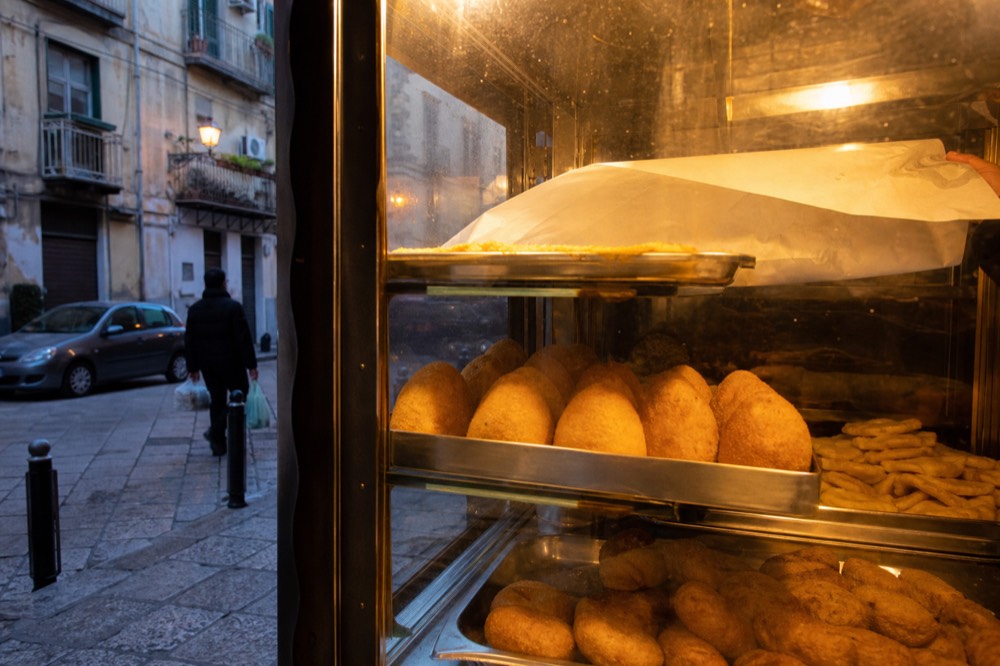
The arancina carries the best story in the whole canon, and it is one most competitor pages get wrong. The Accademia della Crusca, Italy's highest language authority, examined the record and found that the first Sicilian dictionary to record the word, Biundi's of 1857, defines it as a sweet rice dish shaped like a bitter orange, that no meat or tomato appears in any 19th-century source, and that the supposed Arab origin of the dish is not supported by the evidence. The feminine form arancina is Palermo and the west; the masculine arancino is Catania and the east. Crusca's dry conclusion is that Palermo's form is the one that follows standard Italian grammar, which is the opposite of how the local pride usually runs.
Palermo also has the cultural weight Taormina lacks on this axis. Renato Guttuso painted "La Vucciria", his enormous three-by-three-metre canvas of the market, between 1 October and 6 November 1974, with the produce flown up from Palermo to his studio so he could work from the real thing, and the painter himself decided it should hang at the University of Palermo's Steri, a ten-minute walk from the market it depicts. Taormina's food story is told in dining rooms. Palermo's is told on the street, and it has been painted, filmed and argued over for a century.
At night the two scenes diverge completely. The Vucciria turns into nightlife rather than a market, and the Comune itself describes Borgo Vecchio as having undergone urban gentrification with a growing young and tourist presence drawn by pubs and taverns. Eating well after dark in Palermo means knowing where to go, which is where a guided night walk earns its price. The Small-Group Night Street Food Tour of Palermo by Streaty Food Tours runs 3 hours from $69.8 per person, is all-inclusive, holds 4.9 across 580 reviews and caps departures at 12 guests. It is non-refundable, unlike most tours on this site, so it belongs late in your planning, once the evening is genuinely free.
How Much Does A Day Cost In Each?
Palermo is the cheaper base. Its tourist tax is €4 per person per night in a B&B or short-term rental, capped at four nights; an arancina or a panelle sandwich in the historic centre runs 3 to 4.50 euros; a pizza with a drink averages 14.56 euros. No verified Taormina figures exist on this page.
The Palermo numbers are solid enough to plan against. The tourist tax, in force since 1 July 2025, runs €4 per person per night in a B&B or short-term rental for a maximum of four nights, and from €3 in a one-star hotel up to €5 in a five-star. Street prices have risen sharply: local reporting notes that an arancina or a panelle sandwich in the centro storico now costs 3 to 4.50 euros, roughly double the 2021 level, and that a pizza with a drink averages 14.56 euros across a range of 9 to 28 euros, after a rise of about 60% in five years, the sharpest of any Italian city. Even after those increases, this remains one of western Europe's cheapest places to eat seriously.
| Cost item, Palermo | Figure |
|---|---|
| Tourist tax, B&B or short-term rental | €4 per person per night, max 4 nights |
| Tourist tax, hotels | €3 (1-star) to €5 (5-star) per person per night |
| Arancina or panelle sandwich, historic centre | 3 to 4.50 euros |
| Pizza with a drink, city average | 14.56 euros |
| Cheapest guided food walk | from $39.83 per person |
| All-inclusive night food tour | from $69.8 per person |
| Ten-tasting food tour | from $89.33 per person |
Guided eating in Palermo spans a wide band. At the bottom, the Street Food Walking Tour with Local Guide & Tasting by Hili srl starts at $39.83 for 2.5 hours. At the top, Culinary Backstreets' five-hour "Savoring Palermo" walk costs from $150 per person and limits groups to 7. In between sits the format most first-time visitors over-index on: the big tasting count. Palermo Food Tour: 10+ Tastings of Arancini, Cannoli, Wine & More by Secret Food Tours runs 3 hours 30 minutes from $89.33 per person, carries a perfect 5.0 across 782 reviews, caps groups at 12 and allows free cancellation up to 24 hours before. If you want maximum coverage of the canon in one guided walk, that is the one to price first.
Which Should You Choose For A First Trip To Sicily?
Choose Palermo for a first trip if food is the point: it rewards several hungry days, and first-hand reports describe it as sufficient, safe-feeling and inexpensive to eat through. Choose Taormina for a short, polished stay or a wind-down after harder travelling. A first Sicily trip with time for both works well, Palermo first and Taormina last.
The pattern in real trip reports is consistent. One detailed report after six full days in Palermo, with day trips by train and a boat trip to Mondello, described the length as sufficient for a first visit and the food as the highlight; a separate car-free week report reached the same conclusion using only buses, trains and ferries. First-time visitors consistently spend their Palermo days eating and their evenings either at a trattoria or on a night walk, and the city supports both without a car, which matters because the historic centre's ZTL makes driving there a liability anyway.
Timing shifts the answer a little. WMO climatological normals for Palermo put May at a 23.3 C average high with 4.1 rain days, June at 27.2 C with 1.9 and September at 27.5 C with 5.4, which makes late spring and early autumn the comfortable walking months; you can check the published normals yourself. Mid-July averages a 29.8 C high and is also the month the city hands its centre to the Festino di Santa Rosalia processions on 14 and 15 July, with the route passing straight through the ground a market walk covers. Taormina's climate is not covered by the data this site verified, so no comparison is printed here.
If you are still weighing the island's options, the companion pieces on how many days in Palermo is enough, how Palermo compares with Catania and whether Palermo is worth visiting work through the neighbouring questions in more detail.
For the market morning itself, the Palermo Ballarò Market & Street Food Tour by Eating Europe is the format this site would point a first-timer at: 3 hours from $68.15 per person, a perfect 5.0 across 139 reviews, free cancellation up to 24 hours before and a 12-guest cap. It pairs naturally with a night walk, covering the daytime market energy that the evening tours skip.
The verdict, then, in one line: choose by what the trip is for, not by which town is nicer. Palermo is the better food city by any measure this page can verify, and the cheaper one. Taormina is the better resort, and the stronger fine-dining address. Travellers with a week or more should stop treating it as a choice at all and do both, in that order.
These are the questions travellers ask most when splitting a Sicily trip between the two, answered from the verified figures on this page: Palermo for markets, street food and low costs, Taormina for polish and starred dining. Each answer below stands alone, and every number in it comes from the research behind this comparison rather than from guesswork or promotional copy.
Common Questions About Palermo Or Taormina
Which Is Nicer, Palermo Or Taormina?
Neither is nicer in the abstract. Palermo is the better choice for a food-first trip: it has the historic markets, the street-food canon and the lower verified prices. Taormina is the better choice for a polished, compact stay with the island's strongest concentration of Michelin-starred dining. Decide what the trip is for and the answer follows.
Is Palermo or Taormina better for food?
For street food and market eating, Palermo, clearly: panelle, arancine, stigghiola and sfincione are all officially recognised Sicilian traditional products sold across the city, and the guided food-walk selection there is far deeper. For starred restaurant dining, Taormina, which holds one two-star and four one-star venues in the 2026 Michelin guide against Palermo's single one-star.
Is Palermo cheaper than Taormina?
Palermo's costs are verified and low: a €4 per person per night tourist tax in a B&B, 3 to 4.50 euros for an arancina or a panelle sandwich in the historic centre, and food walks from $39.83 per person. This site could not verify Taormina's prices or tourist tax from an acceptable source, so no direct comparison is printed; check current figures when you book.
How many days do you need in Palermo?
First-hand trip reports describe six full days, including day trips to Cefalù and Monreale, as sufficient for a first visit, and a car-free week worked well using buses and trains. A shorter food-focused stay of three or four days covers the markets, the canon and a night walk comfortably.
Can you visit both Palermo and Taormina on one trip?
Yes, and it is a common way to structure a first Sicily trip. The pattern that works is Palermo first for the food days and market energy, then Taormina last as the wind-down, with the island's interior or east coast in between. This site has not verified transfer times between the two, so plan that leg from current timetables.