Where Locals Eat In Palermo: The Neighbourhood Tables Tourists Walk Past
The gap between where visitors eat in Palermo and where residents eat is wide, and it is measurable: in prices, in hours, and in which streets fill up after 20:00. This guide maps the local side of the city, from the friggitorie that fry to order to the trattorias that do not take walk-ins in high season.
Short answer
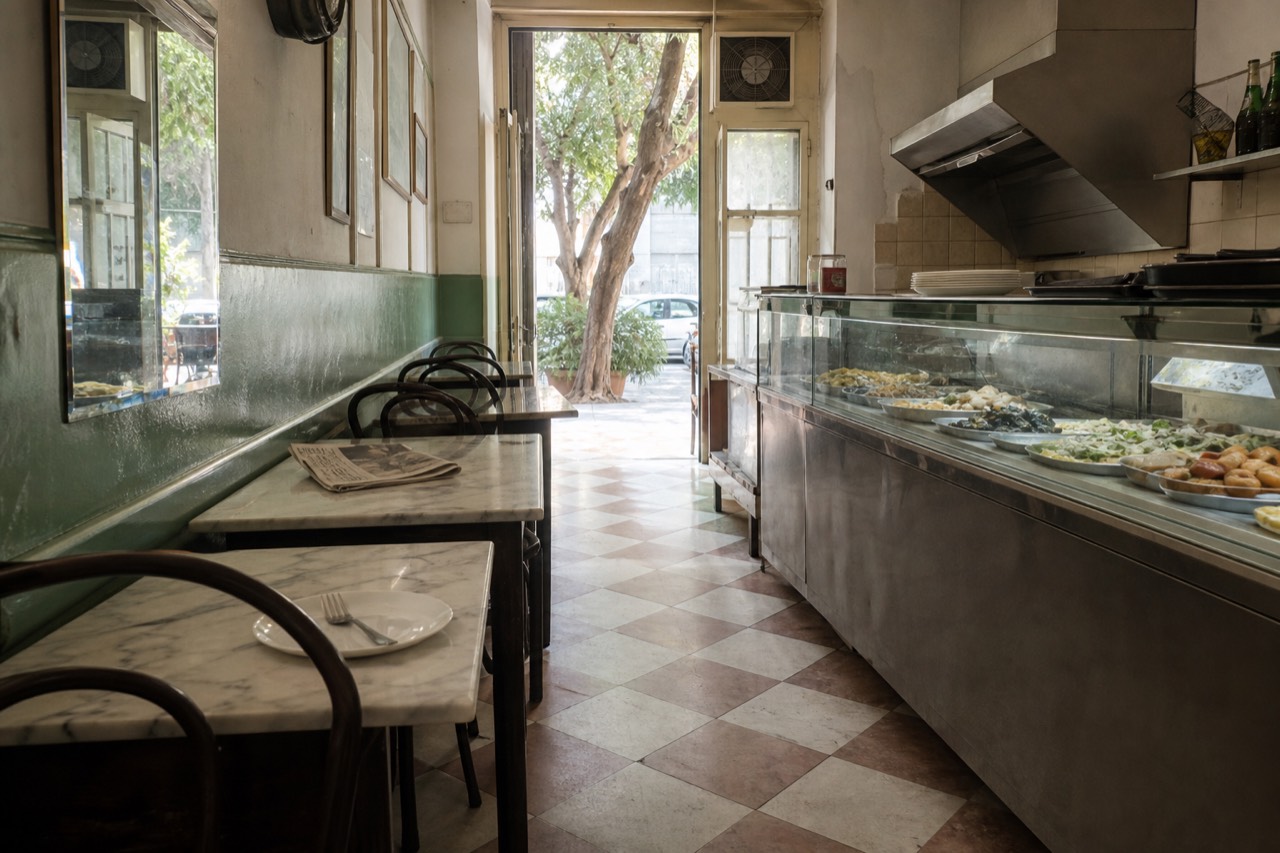
Locals in Palermo eat at friggitorie for lunch, at neighbourhood trattorias for dinner, and in the Capo market rather than Ballaro for market food. An arancina or a panelle sandwich in the centre runs 3 to 4.50 euros, a sit-down trattoria meal 20 to 25 euros with a drink. The clearest tourist tell is a room charging double those figures near the Quattro Canti.
Where Do Locals Actually Eat In Palermo?
The honest answer is that locals eat standing at friggitorie at lunch, at neighbourhood trattorias in the evening, and at a shorter list of market stalls than most guidebooks admit, because the historic markets have lost most of their resident customers and now sell largely to visitors. That last part is not folklore. PalermoToday reported in March 2025 that traders in the Vucciria, Capo and Ballaro say they have lost around 80% of their traditional customers, blaming the limited traffic zone, parking scarcity and thin services, and the same dossier describes the Vucciria as effectively gone as a food market, with tourist street food replacing traditional stalls. So the question "where do locals eat" has become genuinely distinct from "where do people eat in Palermo": the two lists used to overlap almost completely, and now they only partially do.
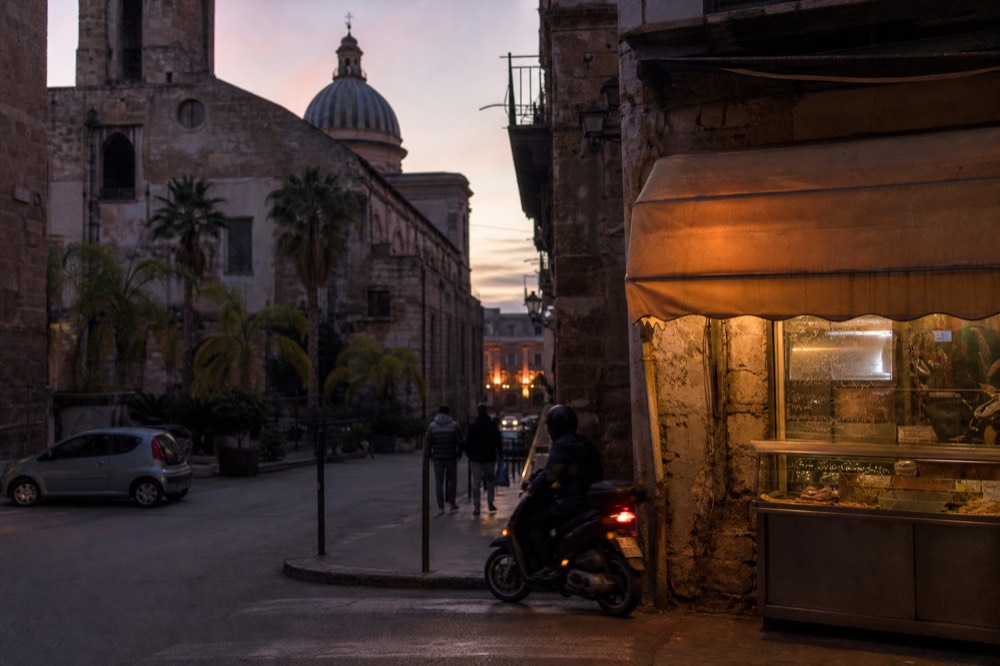
The split runs along predictable lines. Visitors cluster in the streets between the Quattro Canti and the harbour, where a recent local thread on the markets complains of microwaved pre-made arancini sold to tourists, while residents give each other directions to specific fried-food shops and trattorias off the main drags: names like nni Franco u Vastiddaru, Basile near the Teatro Massimo, I Cuochini, Porta Carbone and Bar Vabres come up repeatedly in local recommendation threads. A good way to build an honest answer is to follow those names rather than the crowds, and to understand the hours and prices that structure local eating, which is what the rest of this guide does. For the broader map of the four historic markets and how they differ, see our guide to Palermo's markets.
Which Neighbourhoods Do Palermo Residents Eat In?
Residents eat in the streets around the Capo market, along via Maqueda and its side lanes, in the Kalsa's quieter corners, and around the Libertà and Politeama district, while the Vucciria after dark is now mostly a nightlife scene rather than a food destination, and Ballaro is best treated as a morning market and a grocery run rather than a dinner plan. Local advice threads are strikingly consistent on this: replies to visitors asking where to stay and eat repeatedly recommend the Politeama and Teatro Massimo areas as busier and calmer at night, and warn against the market districts after dark, particularly for solo travellers, while rating the Capo the best of the three central markets for actual food and shopping.
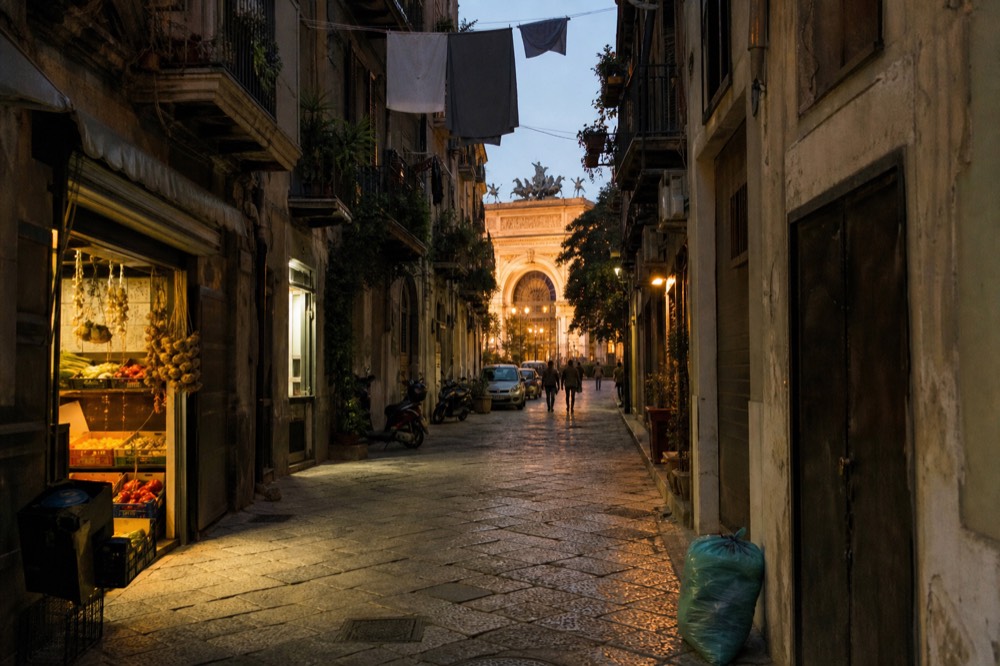
The Vucciria deserves specific honesty. The city's own tourism portal still describes it as a market open mornings and afternoons, but the Comune has regulated its core, including piazza Caracciolo, as a pedestrian area under an ordinance extended to 31 December 2026, and local reporting describes a place that is loud until around 04:00 at weekends and no longer a working food market by day. Renato Guttuso's famous 3-by-3-metre painting of the market, completed in 37 days in 1974 and given by the painter to the University of Palermo, hangs at the Steri a short walk away: the painting is now closer to the market's memory than to its present. Our Vucciria guide covers that history in full.
| Neighbourhood | Day | Night | Local verdict |
|---|---|---|---|
| Capo area | Market trade, fried food | Quieter | Best central market for food |
| Via Maqueda corridor | Shops, friggitorie | Busy, movida rules apply | Good all-round base |
| Kalsa | Quiet corners, a few trattorias | Calm | Mixed, some visitors find little to see |
| Ballaro / Albergheria | Morning market, groceries | Avoid side streets after dark | Grocery run, not dinner |
| Vucciria | Barely a market by day | Loud until around 04:00 | Nightlife zone, not food |
| Politeama / Libertà | Residential eating | Safe and calm | Where locals say to sleep and dine |
If you want to eat the way Palermo does after dark without having to know which doorway is which, a guided evening walk solves the problem neatly.
The night tour above is the one format that mirrors how the city actually eats in the evening: standing, moving, and ordering fried things to order. It runs about 3 hours, is rated 4.9 across 580 reviews, starts from $69.8 per person with tastings included, and caps groups at 12. One honest caveat: it is non-refundable, unlike 19 of the 22 tours on this site, so it belongs late in your planning, once your dates are locked.
How Do You Spot A Tourist-Priced Room Or Restaurant?
The reliable signs are a menu with photographs at the door, a host inviting you in from the street, a cover charge that was not signalled before you sat down, prices well above the local benchmarks of roughly 3 to 4.50 euros for an arancina or a panelle sandwich in the historic centre, and a room with no Sicilians in it, while the cover charge itself is normal and legal as long as it is clearly printed. That last point matters, because visitors often mistake the coperto for a scam. It is not: the Italian consumer organisation Altroconsumo sets out the rule that coperto, service and bread charges are lawful in Italy, and the only requirement, resting on art. 180 of the 1940 TULPS, is that the price list be displayed clearly before you order. If the charge was printed, you pay it; if it was not, you can contest it. Sicily has no regional ban on it (Lazio, unusually, does).
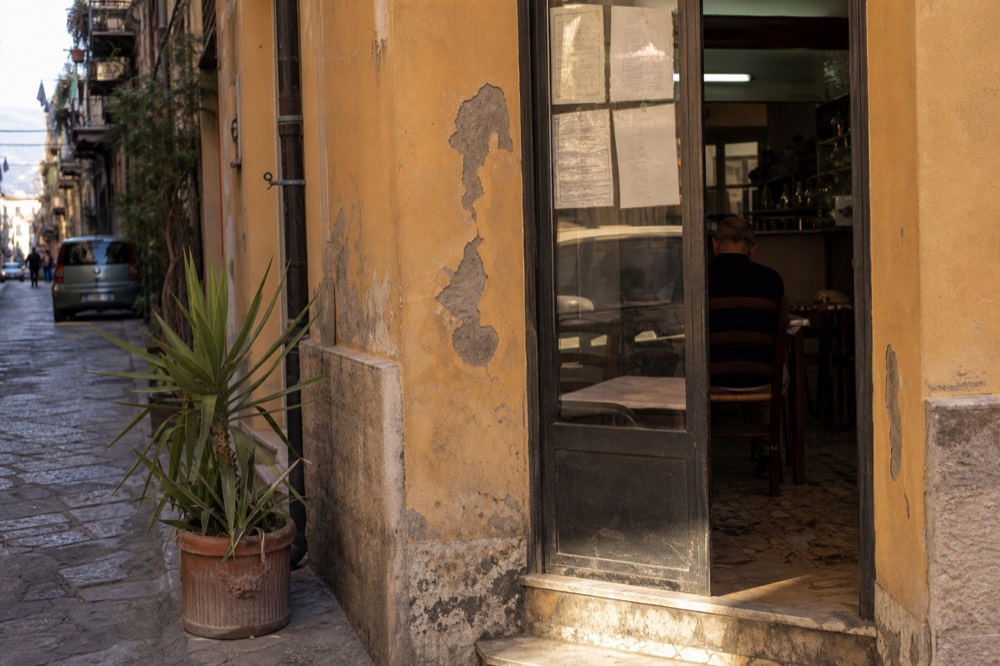
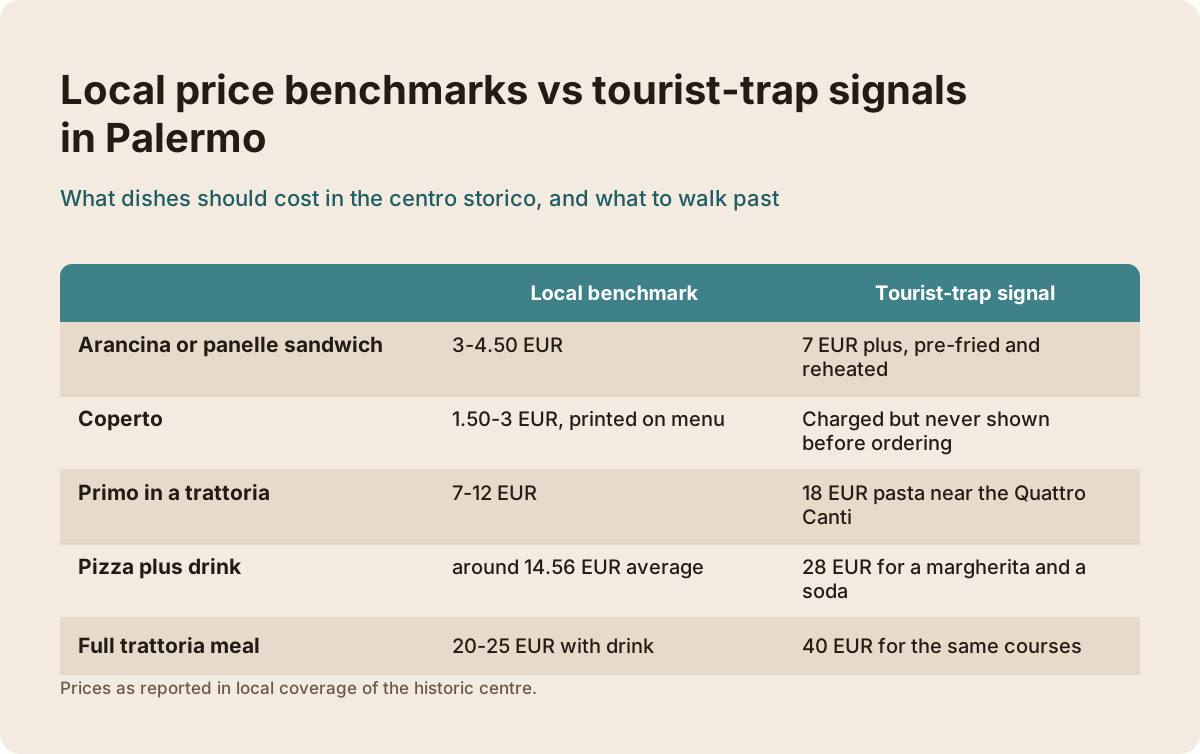
Local price benchmarks are worth memorising, because they make a tourist-priced room obvious at a glance. In the centro storico, an arancina or a panelle-and-crocche sandwich now runs 3 to 4.50 euros, a level local reporting says has roughly doubled since 2021 as tourism reshaped the centre. A pizza with a drink averages 14.56 euros in Palermo, in a range from 9 to 28 euros, and that average has risen about 60% in five years, the sharpest rise of any Italian city. Sit-down trattoria eating is still reasonable: a primo runs 7 to 12 euros, and a typical full meal with a drink lands at 20 to 25 euros, with coperto at 1.50 to 3 euros on top.
| Item | Local benchmark | Tourist-trap signal |
|---|---|---|
| Arancina or panelle sandwich | 3-4.50 EUR | 7 EUR plus, pre-fried and reheated |
| Coperto | 1.50-3 EUR, printed on menu | Charged but never shown before ordering |
| Primo in a trattoria | 7-12 EUR | 18 EUR pasta near the Quattro Canti |
| Pizza plus drink | around 14.56 EUR average | 28 EUR for a margherita and a soda |
| Full trattoria meal | 20-25 EUR with drink | 40 EUR for the same courses |
If you would rather let a local guide steer you past the rooms with photographs on the menu, an evening walk is the shortcut.
The format works because the guide, not you, carries the burden of knowing which counter is honest. If you book it, go with the all-inclusive understanding in mind: tastings are included, the group is capped at 12, and, again, the listing is non-refundable, so confirm your evening is free before you commit.
What Hours Do Locals Actually Eat?
Palermo eats lunch between 13:00 and 14:30 and dinner from 20:30 onwards, markets do their real business before 10:00, Ballaro trades Monday to Saturday 07:30 to 20:00 with Sunday mornings only, and the fried-food shops and bars fill in the two windows around those meals, so a visitor eating at 18:00 is eating alone. Those market hours are the city's own: the Comune di Palermo publishes Ballaro's times exactly, and lists Borgo Vecchio as a morning market, while the Capo trades mornings and afternoons every day. Nothing firm is sourced on restaurant closing days, so treat Monday closures as a possibility to check, not a rule.
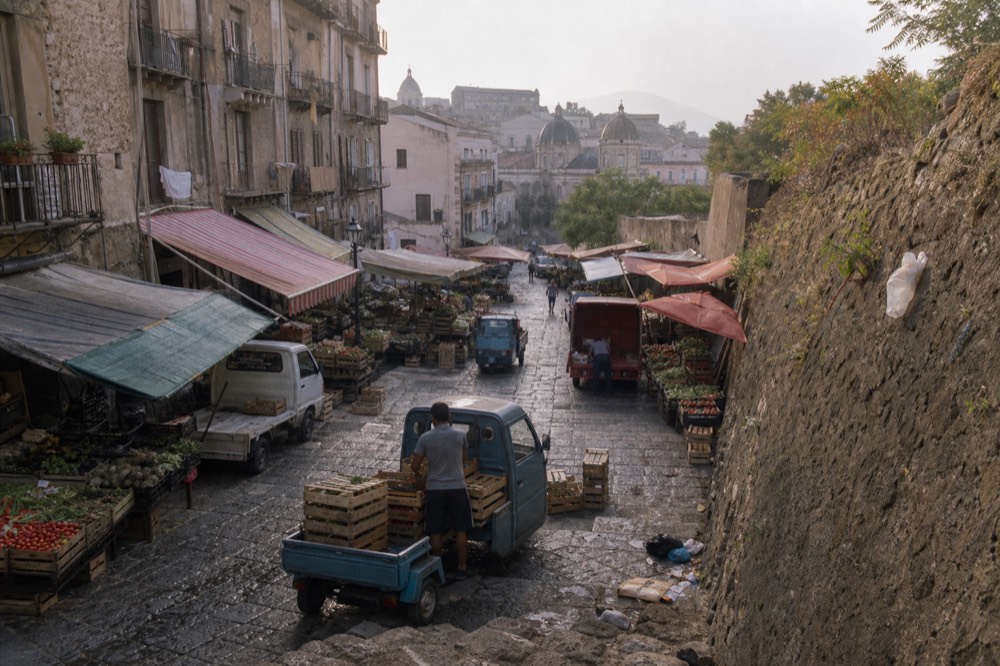
The rhythm matters more than most visitors expect. In mid-July the sun rises at 05:56 and sets at 20:29, and the average daily high is 29.8C, so the usable hours are the early morning and the late evening, and locals organise their eating around exactly that. In mid-January the day is under ten hours long and dark before 17:15, which pushes everything into the middle of the day. December is the wettest month, with 123.7mm of rain across 12 rain days on average; July is nearly rainless, at 6.7mm and 1.2 rain days. Plan the eating day to the season, not to a template.
| Time | What locals are doing |
|---|---|
| 07:00-09:30 | Market shopping, coffee standing at a bar |
| 10:00-12:30 | Second round of market trade, pre-lunch snack |
| 13:00-14:30 | Lunch, the main seated meal for many |
| 17:00-19:00 | Merenda hour, fried snacks, granita in summer |
| 20:30-22:30 | Dinner at trattorias, later in summer |
| After 23:00 | Vucciria nightlife zone, not food |
Which Friggitorie And Fried-Food Shops Do Locals Use?
The names that recur in local threads are nni Franco u Vastiddaru near the teatro, Basile's Focacceria del Massimo, I Cuochini, Porta Carbone, La Romanella and Bar Vabres, plus the Antica Focacceria San Francesco for a sit-down version of the same food, and the shared characteristic is that they fry to order rather than reheating. The Antica Focacceria opened a second location on via Maqueda near the Teatro Massimo in spring 2026, keeping the historic site at piazza San Francesco and adding an artisanal gelateria alongside the panini con la milza, panelle and crocche. Porta Carbone, meanwhile, marked its 82nd anniversary at its own new via Maqueda outlet, which has a grill for stigghiola.
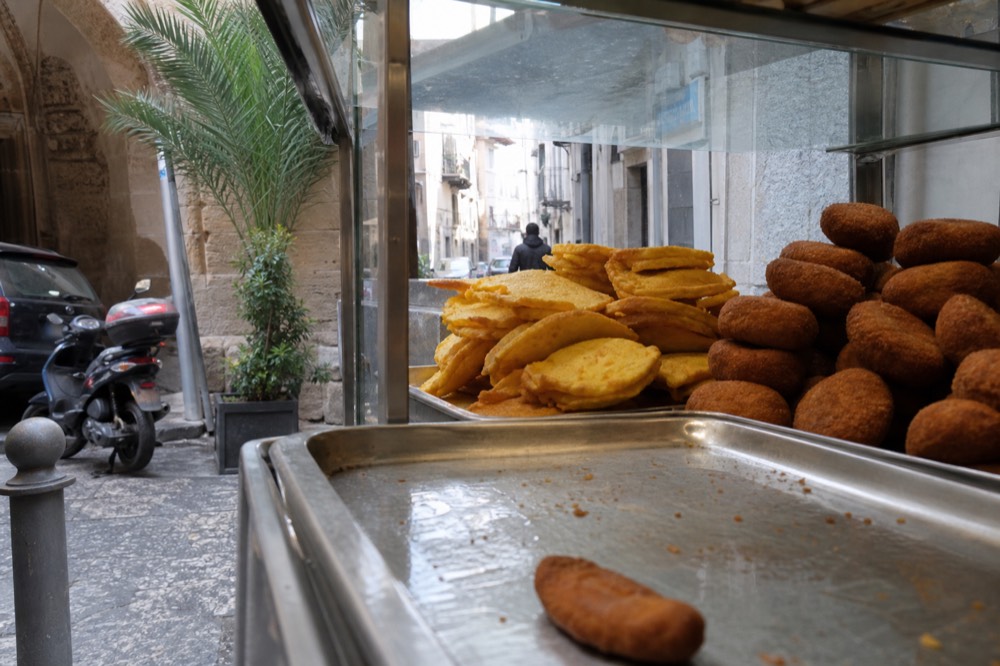
The food itself is the canon. Panelle are the one street-food item whose official PAT territory is Palermo itself, and the Regione Siciliana's technical sheet even fixes the batter's spread at half a centimetre before it is cut and fried. Crocche di patate, arancini di riso (in Palermo, arancine, feminine and round, per the Accademia della Crusca's ruling on the island's east-west split), stigghiola and the sweet fried iris are all on the national PAT list, which requires at least 25 years of documented traditional preparation. Sicily carries 293 PAT products in total as of the XXV revision of March 2025. For the full dish-by-dish background, our traditional Sicilian food guide covers the canon in depth.
What locals insist on is the to-order part. The complaint in the local thread mentioned earlier was not about the food itself but about pre-made arancini reheated in a microwave, and the replies name the shops that fry while you wait. A practical rule: if the arancine are sitting under a heat lamp rather than coming out of oil, walk on.
A night street food tour, run by a Streaty Food Tours guide, is built around exactly these kinds of counters, in the hours when locals are actually out eating them. It runs 3 hours, is rated 4.9 across 580 reviews, from $69.8 per person all-inclusive, with only 12 spots per departure, and it is non-refundable.
Which Trattorias Do Residents Actually Book?
The trattorias that come up again and again in local recommendation threads are Trattoria Al Vecchio Club Rosanero, Trattoria Pisci e Trema da Pino, Trattoria Bersagliere, Osteria Nonna Dora, Osteria della Mercede for fish, and Branciforte at the higher end, with Buatta Cucina Popolana as the reliable popular-Sicilian option that also holds a Bib Gourmand in the Michelin Guide Italia 2026, and Mec Restaurant as the city's one Michelin-starred table. The Michelin facts are solid ground: the 2026 guide gives Palermo a single one-star, Mec, and Buatta retains its Bib Gourmand, while two new Bib entries in Palermo province, TuMa in Bagheria and Nangalarruni in Castelbuono, sit outside the city itself. For a full restaurant-by-restaurant treatment, see our best restaurants in Palermo guide.
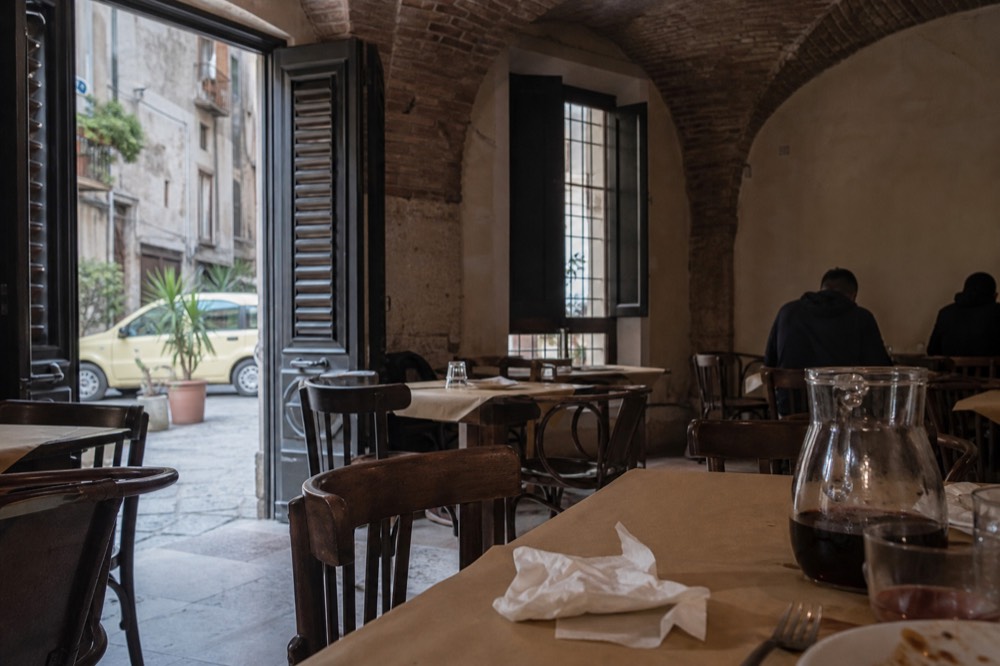
Recent openings matter here too, because locals move with them. Fonderia, a taverna with a grill and a listening bar from the Virga&Milano group, opened at piazza Fonderia in late January 2026 at popular prices. Ristorante Riccio reopened on via Isidoro La Lumia 30 after renovation, focused on seafood, and Ristorante Charleston returned to its historic piazzetta Flaccovio location. The Florentine schiacciata chain All'Antico Vinaio opened its first Sicily store on via Generale Magliocco, which tells you where the lunch footfall is heading even if it is not itself a local table.
| Table | Style | What locals say |
|---|---|---|
| Osteria Nonna Dora | Typical Sicilian | Good price-to-portion ratio, repeated praise |
| Trattoria Bersagliere | Old-school trattoria | Regular local recommendation |
| Osteria della Mercede | Fish | Named for seafood specifically |
| Buatta Cucina Popolana | Popular Sicilian | Bib Gourmand, Alla Norma praised |
| Fonderia | Grill and listening bar | New in 2026, popular prices |
| Mec Restaurant | Fine dining | Palermo's one Michelin star |
Prices at these tables sit inside the benchmarks from earlier: 7 to 12 euros for a primo, 20 to 25 euros for a full meal with a drink, coperto of 1.50 to 3 euros, and remember the coperto only needs to be printed clearly to be legitimate, per Altroconsumo's guidance on the rule.
Where Do Locals Drink In The Evening?
The evening drinking-and-snacking scene runs through the Vucciria's pedestrian core, which is now a regulated night-life zone with alcohol sales restricted between 01:00 and 07:00 under a July 2026 city ordinance, and through a growing set of wine bars where locals pair a glass with cheese and small plates, with the 26mq Urban Winery and Bottega Monteleone the two most-booked wine experiences in the city on this site's roster. The ordinance detail is genuinely useful for planning: the mayor signed it on 1 July 2026, limiting takeaway alcohol sales and public consumption in the movida zones in the small hours, and neighbourhood food shops in parts of via Maqueda must close between 22:00 and 07:00. The night ends earlier than it used to, by law.
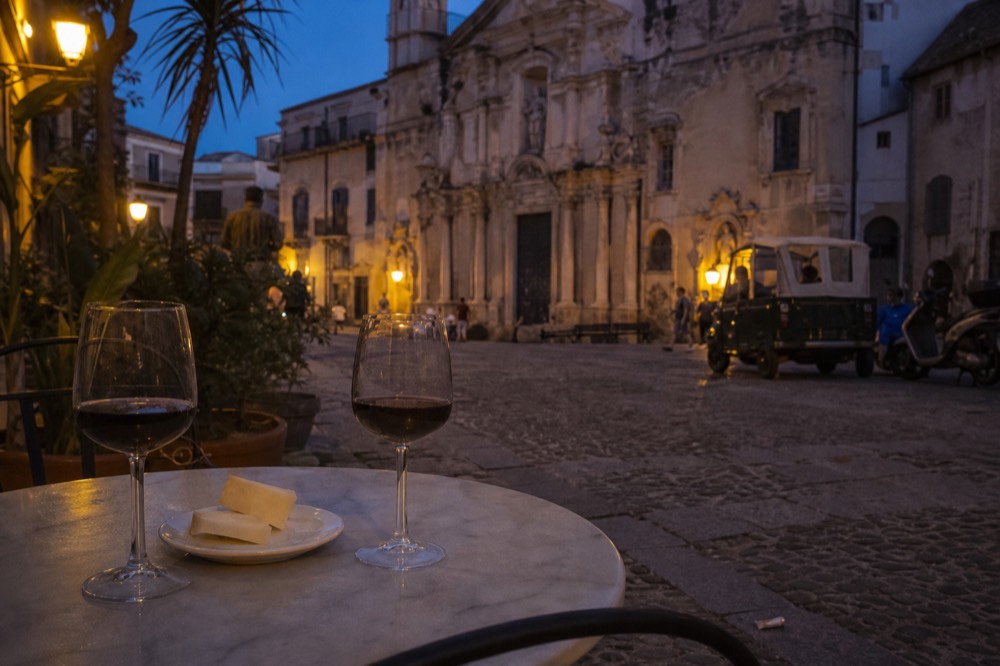
Bottega Monteleone's tasting is the classic version: 4.8 across 917 reviews, from $51.1 per person, 2 hours with snacks, free cancellation up to 24 hours, though it often sells out. The 26mq Urban Winery pours Sicilian tapas alongside its wines at from $49.94, rated 4.8 across 204 reviews, also 2 hours with free cancellation up to 24 hours. For something closer to a full local evening, Streaty's all-inclusive food and wine walk, on a plate, runs 4 hours at from $117.13, rated 5 across 125 reviews, though it shares the non-refundable policy of the operator's other products.
If a two-hour cheese-and-wine tasting is more your evening speed than a full walk, Siciliandays' version is rated 4.9 across 56 reviews, from $139.36 per person, 2 hours, with free cancellation up to 24 hours.
What Does A Local Eating Day Cost, Really?
Counting the way a resident does, a coffee and a brioche at a bar in the morning, a panelle sandwich at a friggitorie for lunch, a granita in the afternoon and a full trattoria dinner with wine lands somewhere around 30 to 40 euros per person for the whole day, with the biggest variable being whether dinner is a simple osteria or a seated restaurant with a full secondo. The sharpest price inflation is concentrated in the centro storico's fried-food counters. The numbers behind that estimate come from local reporting and the city's own price data, and they are the numbers the infographic below reads out.
| Meal | Local benchmark | Notes |
|---|---|---|
| Coffee and brioche at a bar | a couple of euros | Standing at the counter, not seated |
| Arancina | 3-4.50 EUR centro storico | Roughly doubled since 2021 |
| Pane e panelle | 2.50-3.50 EUR | The classic cheap lunch |
| Sfincione slice | 1.50-3 EUR | Sold by weight or the slice |
| Cannolo | 2.50-4 EUR | Filled to order is the local tell |
| Granita with brioche | 3-5 EUR | Local press reports backlash at 5 EUR |
| Trattoria dinner | 20-25 EUR with drink | Plus coperto 1.50-3 EUR |
Two of those figures carry real local controversy. A brioche with gelato or granita now commonly costs 4 to 5 euros, and Giornale di Sicilia documented the local backlash when the five-euro brioche started appearing: this is a traditional breakfast item, and residents read the price as a symptom of the same tourism pressure that emptied the markets. A brioche con granita is the standard Sicilian breakfast, with the brioche used to scoop the granita, a practice Corriere describes as everyday and longstanding. Sitting down for it in a central square is the expensive version; standing at the counter is the local one.
How Do You Eat Like A Local Without A Car?
Eating locally in Palermo requires no car at all, because the ZTL keeps the historic centre effectively closed to daytime traffic, the eating neighbourhoods are all walkable, and the one planning rule that matters is to book the few tables that need booking and to time the rest around the market and meal hours, with the ZTL's summer timetable active on weekdays from 08:00 and at night at weekends until 31 October 2026. The Comune's own notice sets those hours, and the practical consequence for a food visitor is simple: a hire car is a liability in the centre, and everything worth eating in this guide is reachable on foot or by a short bus ride. A car-free week reported by one traveller on a Palermo base confirms the pattern: buses to the beach, trains to Cefalu, and everything in the city itself walked.
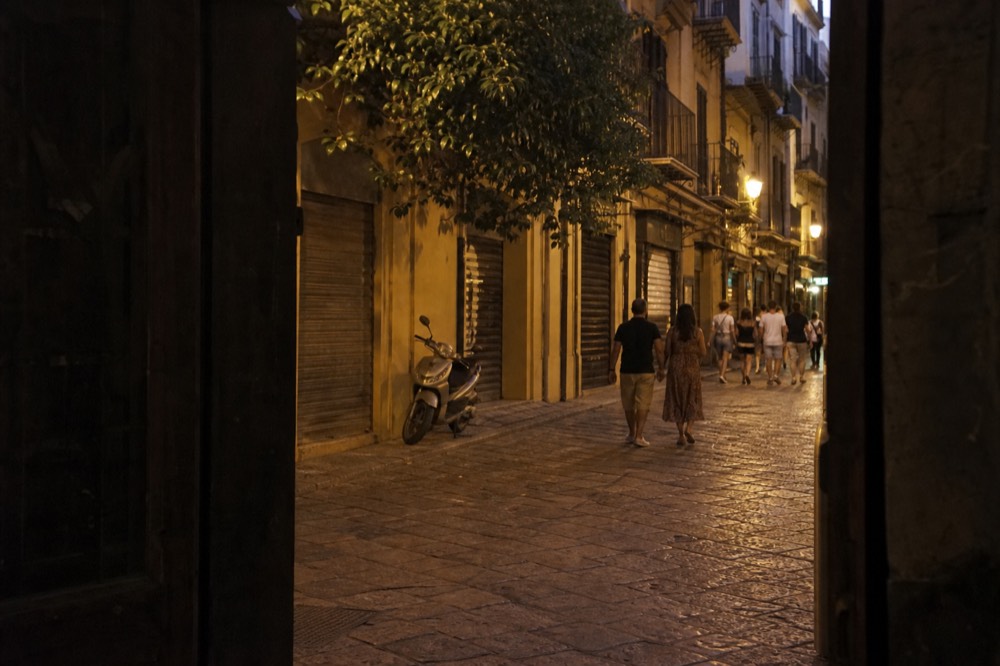
One seasonal warning belongs here. On 14 and 15 July the Festino di Santa Rosalia takes over the historic centre: the procession on the 15th runs from the Cathedral down Corso Vittorio Emanuele through the Quattro Canti and Piazza Marina, followed by a 23:00 firework display on the cathedral forecourt. That is the ground every walking food tour covers, and the Archdiocese's published programme confirms the timings. It is a spectacular thing to see, but it is not an evening for a quiet trattoria in the middle of the route, and restaurants in the path of the procession are dealing with crowds, not cuisine. For building a whole trip around the food rather than one day, our three days in Palermo itinerary sequences the markets, the trattorias and the day trips. More context on the site's approach is on the Palermo Food Tours homepage.
The through-line of everything above is that eating locally in Palermo is less about secret addresses and more about timing, price awareness and walking two streets off the beaten line. A structured walk compresses that learning into three hours; doing it yourself takes a day or two of recalibration. Either way, the city rewards it, and residents are generally delighted to see visitors eating the food they actually eat, at the prices they actually pay, as the reporting and threads cited throughout this guide make clear.
These are the questions visitors ask most about eating where Palermo residents eat, answered with the same sourced prices, hours and neighbourhood guidance used throughout this guide, from the coperto rules to the fried-food shops that fry to order and the trattorias locals actually book.
Common Questions About Where Locals Eat In Palermo
Where do locals eat in Palermo?
Locals eat at friggitorie like nni Franco u Vastiddaru, Basile, I Cuochini and Porta Carbone for fried food, at trattorias such as Osteria Nonna Dora, Trattoria Bersagliere and Osteria della Mercede for dinner, and they shop in the Capo market rather than the more tourist-heavy stalls of Ballaro. The Vucciria is a nightlife zone now, not a food market.
Is the coperto a tourist scam in Palermo?
No. Cover charges are legal across Italy and Sicily has no ban on them. The Italian consumer organisation Altroconsumo confirms the only requirement is that the charge be clearly printed and signalled before you order. If it is on the menu, you pay it; if it was never shown, you can contest it.
What time do Palermo residents eat dinner?
From around 20:30, later in summer. Lunch is the bigger seated meal for many, between 13:00 and 14:30. Markets do their real business before 10:00, and Ballaro trades Monday to Saturday 07:30 to 20:00 with Sunday mornings only.
How much does a local meal cost in Palermo?
An arancina or panelle sandwich in the centro storico runs 3 to 4.50 euros, a trattoria primo 7 to 12 euros, and a full sit-down meal with a drink 20 to 25 euros plus a coperto of 1.50 to 3 euros. A pizza with a drink averages 14.56 euros citywide.
Do locals eat in the Ballaro market?
Less and less. PalermoToday reported in March 2025 that market traders say they have lost around 80% of their traditional customers, and local threads warn that some stalls serve pre-made, reheated food to tourists. Residents who shop in markets tend to favour the Capo, and they buy their fried food from dedicated friggitorie that fry to order.
Is Palermo safe for eating out at night?
The eating streets themselves are generally fine and busy. Local threads advise against the Ballaro side streets after dark and describe the Vucciria as loud until around 04:00 at weekends, recommending the Politeama, Libertà and Teatro Massimo areas for a calmer evening. Reported crime in the Palermo metropolitan area fell 9.24% in 2025 and a further 11.37% in the first quarter of 2026.