Best Restaurants In Palermo: Where To Eat By Occasion
Palermo eating splits cleanly by occasion, and the city's single Michelin star sits a short walk from friggitorie frying panelle.
Short answer
Palermo's best restaurants split by occasion: Osteria Nonna Dora and the old trattorie for everyday dinners, Ristorante Riccio and Trattoria Piccolo Napoli for seafood, Mec for the city's only Michelin star, and Buatta Cucina Popolana for Bib Gourmand cooking. A pizza and a drink averages €14.56.
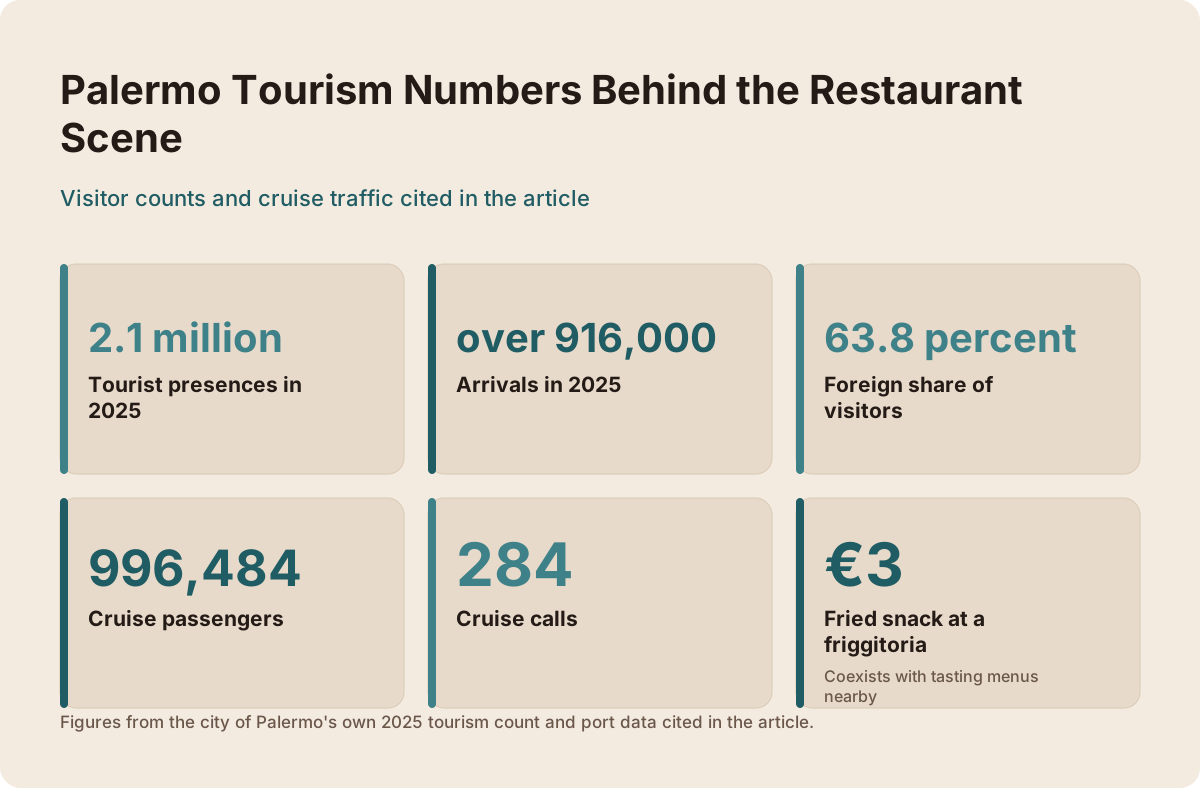
Palermo recorded more than 2.1 million tourist presences in 2025, over 916,000 arrivals, and the city's own count puts foreign visitors at 63.8 percent of them. The port added 996,484 cruise passengers across 284 calls. In other words, everyone is asking where to eat, and the kitchens know it.
This Palermo Food Tours guide takes a different cut from the usual ranked list of ten. Palermo's restaurant field is small enough, and good enough, that the useful question is not "which is number one" but "which room fits tonight". The answer changes with the occasion.
What Are The Best Restaurants In Palermo?
Palermo's best restaurants split cleanly by occasion rather than rank: Osteria Nonna Dora and the city's old trattorie for an everyday dinner, the seafood rooms around the markets and the port for fish, Mec Restaurant for the one Michelin-starred kitchen, and Buatta Cucina Popolana when you want near-fine dining at Bib Gourmand prices.
That split matters more here than in most Italian cities. Palermo is a place where a €3 fried snack from a friggitoria and a tasting menu at the city's only starred restaurant coexist within the same few blocks, and where the market stalls and the restaurant kitchens buy from the same suppliers. A visitor who treats the city as one flat list of "top restaurants" will either overspend on a Tuesday or underbook on an anniversary.
The occasion split also reflects how the city actually eats. Everyday dinners happen in trattorie, family-run rooms with short menus and no ceremony. Fish nights have their own geography, clustered around the historic markets and the old port quarter. The splurge is a short list: one Michelin star inside the city limits, a handful of Bib Gourmands in the province, and a couple of higher-end rooms that visitors keep naming. And the cost question has a real answer now, because Palermo has recorded the sharpest pizza price rise in Italy over the past five years.
| Occasion | Our pick | Why it fits | Watch-out |
|---|---|---|---|
| Everyday dinner | Osteria Nonna Dora | Repeat mentions in first-hand visitor reports for generous portions at fair prices | Popular with locals, arrive early |
| Fish night | Ristorante Riccio | Reopened after a full renovation with a seafood focus | Seasonal hours apply |
| Near-fine dining | Buatta Cucina Popolana | Bib Gourmand in the 2026 guide, also listed in Gambero Rosso's 2026 edition | Book ahead |
| The splurge | Mec | Palermo's only Michelin-starred restaurant | One star in the whole city |
The sections below take each occasion in turn, with the names that keep surfacing in dated first-hand reports rather than recycled listicles. Prices and distinctions come from the guides and press coverage cited inline. Where a claim rests on a single visitor thread, it says so.
Which Trattoria Should You Book For An Everyday Dinner In Palermo?
For an everyday Sicilian dinner, book a trattoria in the centro storico: Osteria Nonna Dora keeps coming up in first-hand visitor reports for generous portions at fair prices, Trattoria Bersagliere and Trattoria Al Vecchio Club Rosanero for classic Palermo cooking, and Buatta Cucina Popolana, which holds a Bib Gourmand, for pasta alla Norma done properly.
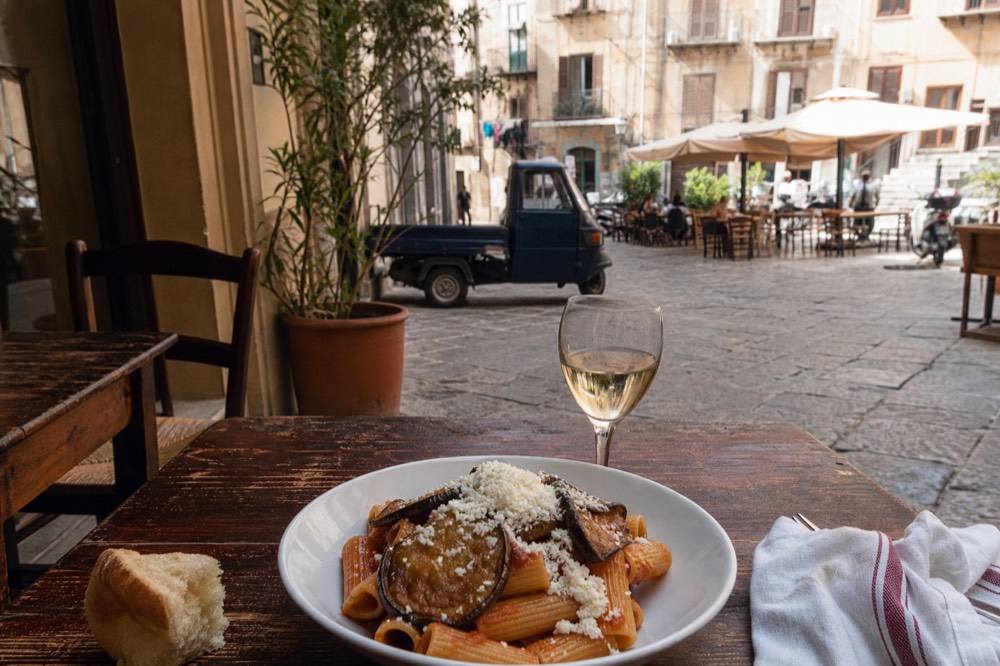
The trattoria is where Palermo's reputation for eating was actually built. These are not destination restaurants. They are rooms with paper tablecloths or bare wood, a menu that changes with the market, and a owner who remembers what you ordered last time. A thread from early 2026 asking locals where to eat well without tourist traps came back with a consistent shortlist: Trattoria Al Vecchio Club Rosanero, Trattoria Pisci e Trema da Pino, Trattoria Bersagliere, Osteria Nonna Dora and Osteria della Mercede for fish.
Individual reports fill in the picture. A visitor finishing a Palermo stay in September 2025 praised Bissot Bistro for its baccala, and Dal Barone for cheese, hams and natural wine at good value. Another the same month highlighted Osteria Nonna Dora as the typical Sicilian choice on price and portion size, and Bar Vabres for arancine and pastries. These are single reports, not rankings, but the overlap between independent threads is what makes a name worth writing down.
Buatta Cucina Popolana is the step up. It retains its Bib Gourmand in the 2026 Michelin guide and appears in Gambero Rosso's Ristoranti d'Italia 2026 listings, which makes it the safest bridge between trattoria prices and fine dining ambition. Visitors specifically single out its pasta alla Norma. If you want the deeper background on the dishes these rooms cook, our guide to traditional Sicilian food traces the canon dish by dish, and where locals eat in Palermo covers the non-touristy shortlist in full.
| Restaurant | Why it keeps coming up | Reportedly good for |
|---|---|---|
| Osteria Nonna Dora | Typical Sicilian, praised on price and portions in a 2025 trip report | The daily menu |
| Trattoria Bersagliere | Named in a 2026 local thread on eating well without traps | Classic Palermo cooking |
| Trattoria Al Vecchio Club Rosanero | Same 2026 local shortlist | Slow, traditional dinners |
| Bissot Bistro | Baccala praised in a September 2025 report | Salt cod dishes |
| Buatta Cucina Popolana | Bib Gourmand 2026, Gambero Rosso 2026 | Pasta alla Norma |
One honest caveat: the historic markets have shifted toward tourist street food, and PalermoToday reported in March 2025 that traders say they have lost around 80 percent of their traditional customers. That pressure pushes some market-adjacent kitchens toward volume. The trattorie above are the rooms that locals still defend by name, which is the strongest signal available.
Where Should You Eat Seafood In Palermo?
For seafood, the reliable picks are Ristorante Riccio, which reopened on via Isidoro La Lumia after a full renovation, Osteria della Mercede for fish done simply, and Trattoria Piccolo Napoli, the room Anthony Bourdain filmed in 2013; the common thread is that the fish comes from the same markets you can walk through yourself.
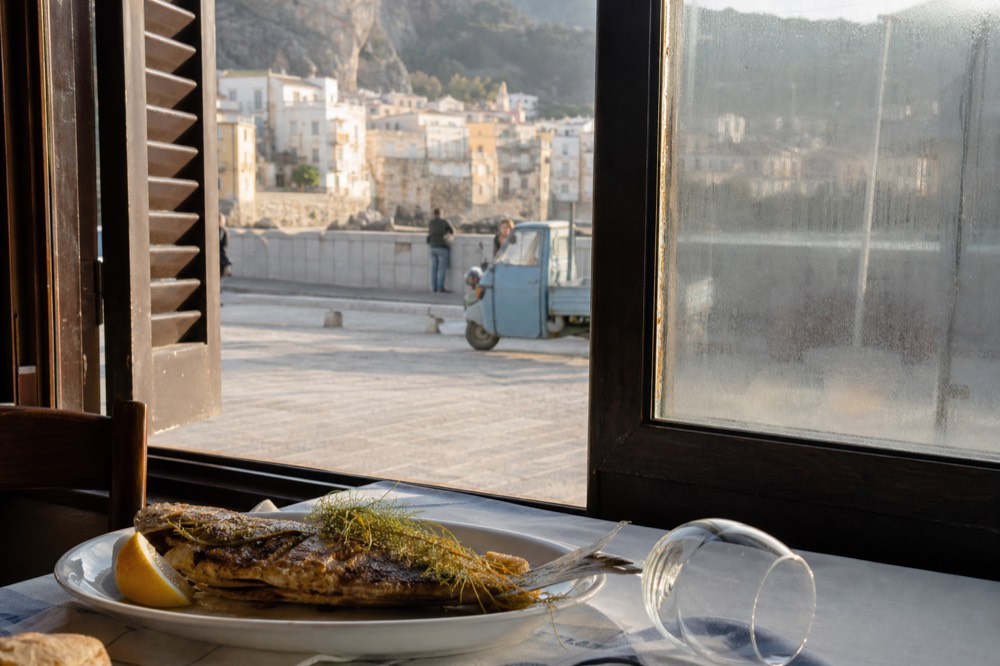
Palermo is a port city with a fish market tradition, and the seafood rooms cluster where that tradition is visible. Ristorante Riccio reopened at via Isidoro La Lumia 30 after a renovation, with a stated focus on seafood and new seasonal hours. Osteria della Mercede is the fish recommendation that recurs in local threads. Trattoria Piccolo Napoli carries the most famous endorsement in the city's modern food history: Anthony Bourdain ate there with the food writer Mary Taylor Simeti in the Sicily episode of Parts Unknown, which first aired on CNN in October 2013.
The newer name worth knowing is Fonderia, opened by the Virga&Milano group in late January 2026 at Piazza Fonderia. Local press describes it as a taverna with a grill and a listening bar at popular prices, which positions it as a seafood-and-fire option rather than a formal dining room. Ristorante Charleston, meanwhile, reopened in its historic piazzetta Flaccovio location with chefs Giovanni Solofra and Roberta Merolli, for anyone wanting the higher-end route.
What ties the seafood occasion together is the market. The fish on these tables comes through Ballarò and the Capo, and understanding those stalls changes how you read a menu. Our guide to Palermo's markets covers each one, its hours and its character. If you would rather have the connection explained than work it out alone, the Original Palermo Street Food & Market Tour from Streaty walks the markets with a guide, runs 3 hours from $81.64 per person, and caps departures at 12 spots. It is non-refundable, unlike most tours in the city, so it rewards travellers whose dates are fixed.
What Does A Michelin-Starred Meal In Palermo Cost?
Palermo has exactly one Michelin-starred restaurant, Mec, and the 2026 guide also lists Buatta Cucina Popolana, TuMa in Bagheria and Nangalarruni in Castelbuono as Bib Gourmands; a starred meal in Sicily sits alongside 18 one-star and 4 two-star restaurants island-wide, so the splurge options are fewer, and cheaper, than in Rome or Milan.
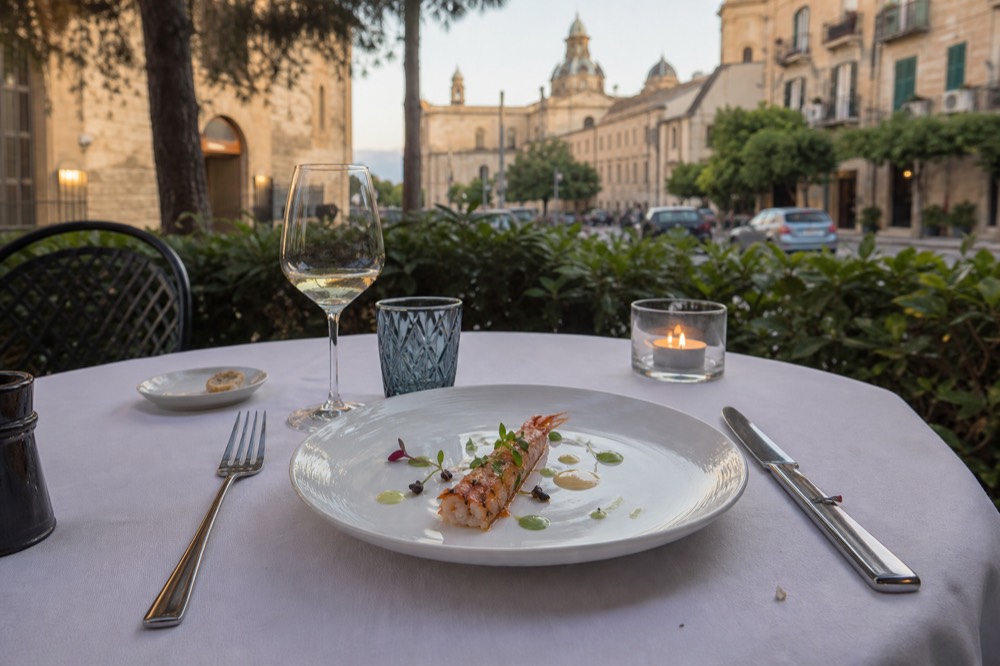
Mec Restaurant is the city's starred kitchen, confirmed again in the 2026 guide with no new Palermo stars added. What the guide did add, as La Sicilia reported, is a pair of new Bib Gourmands in the wider province: TuMa in Bagheria and Nangalarruni in Castelbuono. For a visitor, the practical reading is that Palermo city has one splurge room, and the province has several kitchens worth a short trip.
The starred trip that food television made famous is I Pupi in Bagheria, where chef Tony Lo Coco cooked spaghetti alla bottarga for Stanley Tucci in the Sicily episode of Searching for Italy, first aired in March 2021. The restaurant relocated in 2025, moving to Vicolo Cavallotti 11, still under Lo Coco and still starred. Bagheria is close enough to Palermo to combine a lunch there with a look at the town.
| Kitchen | Distinction in the 2026 guide | Where |
|---|---|---|
| Mec | One Michelin star | Palermo |
| Buatta Cucina Popolana | Bib Gourmand, retained | Palermo |
| TuMa | Bib Gourmand, new entry | Bagheria |
| Nangalarruni | Bib Gourmand, new entry | Castelbuono |
| I Pupi | Michelin star, under Tony Lo Coco | Bagheria, Vicolo Cavallotti 11 |
The honest framing on price: we do not publish tasting menu figures that the sources do not carry, and Michelin itself does not publish prices. What can be said firmly is structural. Sicily's starred field is small, four two-stars and eighteen one-stars for the whole island, so demand concentrates on few tables. Book the starred and Bib Gourmand rooms first, and treat everything else in this guide as bookable closer to the day.
How Much Does A Meal In Palermo Actually Cost?
A pizza and a drink now averages €14.56 in Palermo, with the range running €9 to €28, and a fried snack in the centro storico costs €3 to €4.50; coperto is legal and must be printed on the menu, so a trattoria dinner with wine typically lands between a market lunch and a Michelin splurge.
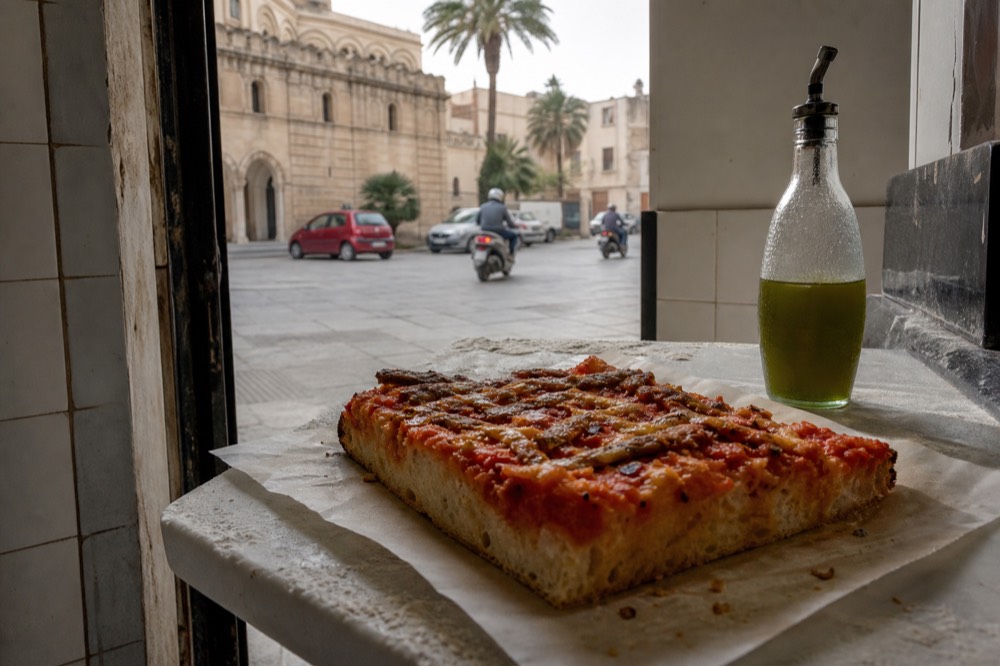
The price story in Palermo has two halves. The first is the rise: local press reported in 2026 that pizza with a drink now averages €14.56, ranging from €9 to €28, and that prices have climbed roughly 60 percent in five years, the highest increase recorded nationally. The same reporting puts an arancina or a panelle panino in the centro storico at €3 to €4.50, roughly double 2021 levels. Tourism is the stated driver, and residents have noticed.
The second half is the brioche question, which sounds trivial and is not. A brioche with gelato or granita commonly costs €4 to €5, and reports of the €5 version sparked genuine local backlash in 2026, treated in the Sicilian press as a symbol of eating out becoming a luxury. Cones at €3 to €3.50 still exist in the Palermo area. For a visitor, the practical takeaway is that sweet-breakfast inflation is real but survivable, and that the €5 brioche is the ceiling, not the norm.
| Item | Typical figure | Note |
|---|---|---|
| Pizza plus a drink | €14.56 average, €9 to €28 range | Up about 60 percent in five years, the sharpest rise in Italy |
| Arancina or panelle panino, centro storico | €3 to €4.50 | Roughly double 2021 levels |
| Brioche with gelato or granita | €4 to €5 | The €5 version drew local press backlash |
| Coperto | Printed on the menu | Legal; contestable if not clearly signalled before you order |
| All-inclusive food and wine tour | From $117.13 per person | 4 hours, non-refundable |
On coperto, the cover charge: the Italian consumer organisation Altroconsumo sets out the rule plainly. There is no national law banning or capping it, it must be clearly stated in writing before you order, and if it was not clearly signalled you can contest and refuse it. Lazio is the exception, with a regional ban; Sicily is not Lazio, so expect the charge and check the menu.
One way to fix your food budget in advance is an all-inclusive evening. Palermo on a Plate, the Traditional Food & Wine tour from Streaty, runs 4 hours from $117.13 per person with every tasting included, rated 5.0 across 125 reviews. It costs more than a trattoria dinner, but nothing on the night is extra, and it is one of only three non-refundable products in the city's whole tour roster, so it suits committed plans.
Which Neighbourhoods Have The Best Restaurants In Palermo?
The centro storico around Ballarò and the Capo has the densest eating, Kalsa has the most atmospheric rooms, Politeama and Libertà are where locals point visitors for a safer, quieter dinner, and Borgo Vecchio is the morning-market quarter that turns into a nightlife scene after dark; Bagheria, reached by train, is worth the trip for I Pupi alone.
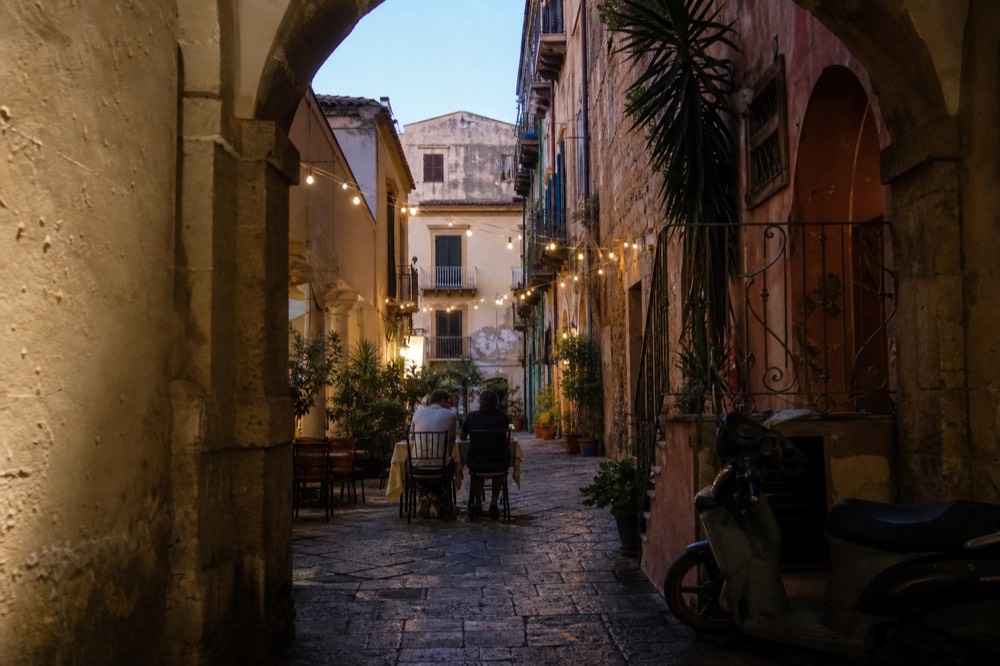
Geography decides a lot of your Palermo dinner. The centro storico concentrates the markets, the friggitorie and most of the trattorie named above, and it is where a food-motivated visitor should stay and eat. The trade-off is noise and late-night activity: recent visitor threads consistently describe the market quarters as loud, and one return visitor called the Vucciria specifically crowded and dirty until around 4am at weekends, recommending Kalsa or the area near Teatro Massimo and Politeama instead.
Politeama and Libertà are the locals' answer for a calmer night. Multiple first-hand reports from 2025 describe them as safer, busier in the good sense and quieter after dark than the market quarters or the station area, which the same reports call rough in the evening. Borgo Vecchio runs the other direction: the Comune's own tourism portal notes the quarter has undergone urban gentrification with growing young and tourist presence at night, while its food market remains a morning affair.
Bagheria, outside the city, earns its place on the food map twice over: I Pupi for the starred kitchen, and the annual Sfincione Fest, whose ninth edition runs 20 to 23 November on Corso Umberto I. For a full restaurant-free day out of the city, the Erice & Marsala Salt Pans tour from Towns of Italy runs 9 hours from $131.7 per person with lunch and a tasting included, rated 4.8 across 349 reviews, and it often sells out.
| Area | Character | Best for |
|---|---|---|
| Centro storico (Ballarò, Capo) | Densest eating, market stalls, friggitorie | Street food and trattoria nights |
| Kalsa | Atmospheric old quarter, mixed recent reports | Slow dinners, wine bars |
| Politeama and Libertà | Where locals send visitors for a quieter night | A calm late walk home |
| Borgo Vecchio | Morning market, nightlife after dark | Market mornings, tavern evenings |
| Bagheria | Train-distance town with a starred kitchen | A half-day food trip |
For eating your way across several neighbourhoods in one guided sweep, Savoring Palermo: In The Markets and Beyond from Culinary Backstreets covers the most ground of anything in the city's tour roster. It runs 5 hours from $150 per person, rated 5.0 across 79 reviews, with free cancellation up to 24 hours, and it is deliberately small at 7 spots per departure. It is the closest thing on the market to a moving dinner party through the markets.
How Do You Book, And What Should You Know Before You Go?
Book two or three days ahead for anything with a Bib Gourmand or a star, walk in early for trattorie, and know two rules: coperto must be clearly printed on the menu or you can refuse it, and every restaurant is legally obliged to tell you about allergens in non-prepacked food when you ask.
The booking picture in Palermo is a function of arithmetic. The city has one starred restaurant and a handful of Bib Gourmands, and it received nearly a million cruise passengers in 2025 on top of its overnight visitors. Concentrated demand, limited tables. Reserve the distinction-holding rooms first, ideally as soon as your dates are fixed, and treat the trattorie as early-walk-in territory, especially if you eat at Sicilian hours rather than northern European ones.
The allergen rule is genuinely useful and widely unknown. Since the EU's food information rules took application in December 2014, allergen information has been mandatory for non-prepacked food, including in restaurants and cafes, as the European Commission's own summary sets out. A Palermo kitchen is obliged to be able to tell you about allergens in what it serves. Ask plainly, particularly with fried street food where cross-contact is routine.
Two practical notes finish the picture. First, the historic centre's limited traffic zone runs during the day on weekdays and at night at weekends, so a centro storico dinner is a walking dinner by design; the Comune publishes the current timetable on its police municipale page. Second, do not judge a room by its queue. The best-rated trattorie in the visitor reports above are frequently the ones with no English menu and a line of locals at 9pm, which is the point.
Is A Food Tour A Better First Evening Than A Restaurant?
A food tour works better than a restaurant on your first evening, because it teaches you the markets the restaurants buy from; the Original Palermo Street Food & Market Tour runs 3 hours from $81.64 per person with 12 spots per departure, and the trade-off is honest: it is non-refundable, so it suits travellers with fixed plans.
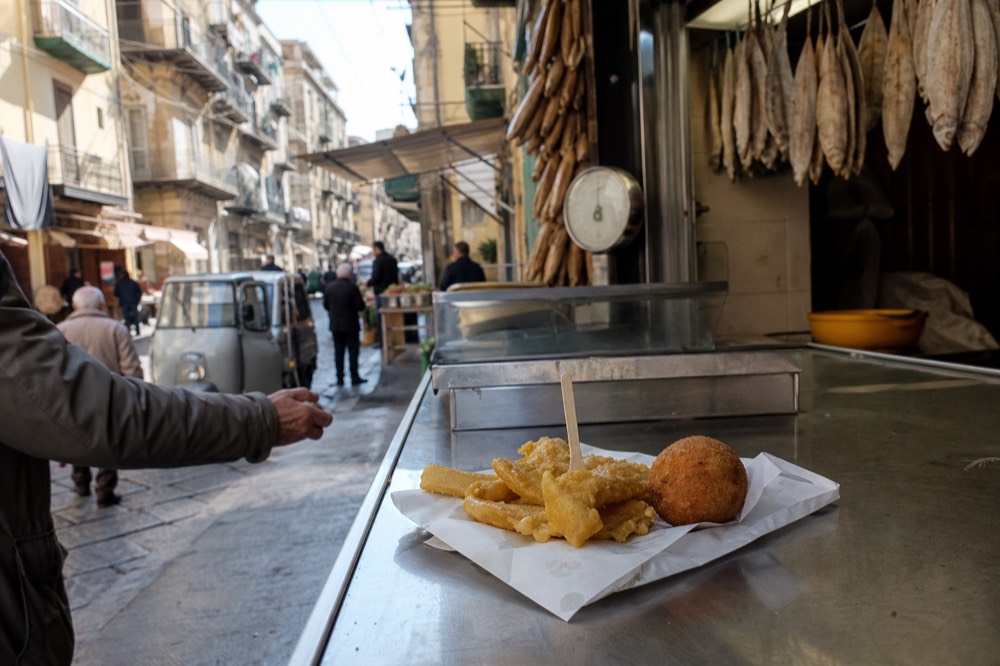
The case for a tour before a table is sequencing. Palermo's restaurant menus are short and assume you know what panelle, arancine and the market fish of the day are; a guided walk through Ballarò or the Capo compresses that vocabulary into three hours. Our Palermo street food guide covers the same canon at reading speed, but a guide answers questions on the spot and knows which stall is frying fresh.
The Original Palermo Street Food & Market Tour, run by Streaty Food Tours, is the city's most-reviewed food experience: 4.9 across 2,308 reviews, all-inclusive, from $81.64 per person, capped at 12 spots per departure. The cancellation policy is the one thing to check before booking, because it is one of only three non-refundable tours in the city's roster of twenty-two. Everything is included in the price, which is what "all-inclusive" means here: no per-tasting surprises.
For a lighter commitment, the Street Food Walking Tour with Local Guide & Tasting from Hili runs 2.5 hours from $39.83 per person, rated 4.8 across 933 reviews, with free cancellation up to 24 hours, though it often sells out. Between that, the all-inclusive Streaty evening and the five-hour Culinary Backstreets walk, the price ladder runs from under forty dollars to one hundred and fifty, which brackets most restaurant dinners in the city anyway.
| Tour | From | Duration | Rating | Cancellation |
|---|---|---|---|---|
| Original Palermo Street Food & Market Tour | $81.64 | 3 hours | 4.9 across 2,308 reviews | Non-refundable |
| Street Food Walking Tour with Local Guide & Tasting | $39.83 | 2.5 hours | 4.8 across 933 reviews | Free up to 24 hours |
| Palermo on a Plate: Traditional Food & Wine | $117.13 | 4 hours | 5.0 across 125 reviews | Non-refundable |
| Savoring Palermo: In The Markets and Beyond | $150 | 5 hours | 5.0 across 79 reviews | Free up to 24 hours |
The honest summary: eat your first evening on foot, book your splurge for the middle of the trip once you know what the city's cooking tastes like, and keep at least one night free for the trattoria you will find on your own. That is the occasion split working as intended.
These are the questions that decide most Palermo dinner plans: which room is genuinely best, what a meal costs after the sharpest price rise in Italy, how far ahead to book, whether the coperto charge is legitimate, what to order in a trattoria, and whether the famous markets are still worth eating in, answered with the figures and first-hand reports cited above.
Common Questions About Restaurants In Palermo
What is the best restaurant in Palermo?
There is no single winner, and any list claiming one is guessing. Mec holds the city's only Michelin star in the 2026 guide, Buatta Cucina Popolana holds a Bib Gourmand and appears in Gambero Rosso's 2026 listings, and for everyday value the first-hand reports keep returning to Osteria Nonna Dora and the other old trattorie in the centro storico.
How much does dinner cost in Palermo?
A pizza and a drink averages €14.56, with the range running €9 to €28, and prices have risen roughly 60 percent in five years, the sharpest increase recorded in Italy. A fried snack in the centro storico costs €3 to €4.50. Coperto, the cover charge, is legal and must be printed on the menu; if it was not clearly signalled before you ordered, you can contest it.
Do I need to book restaurants in Palermo in advance?
Book two or three days ahead, or as soon as your dates are fixed, for anything holding a Michelin star or a Bib Gourmand, because the city has one starred restaurant and a handful of Bibs serving over 916,000 arrivals a year. Everyday trattorie are early-walk-in territory, especially if you eat at Sicilian hours.
Is coperto a tourist scam in Palermo?
No. The Italian consumer organisation Altroconsumo confirms there is no national law banning or capping the cover charge, but it must be clearly stated in writing before you order, and a charge that was not clearly signalled can be refused. A regional ban exists in Lazio only; it does not apply in Sicily.
What should I order in a Palermo trattoria?
Order what the room is known for: pasta alla Norma at Buatta Cucina Popolana, baccala at Bissot Bistro, the fish of the day at the seafood rooms. Panelle, crocchette, arancini di riso, caponata and cassata are all on Sicily's official PAT list of traditional products, so a short menu of them is a feature, not laziness.
Are Palermo's markets good places to eat?
Mixed, and the honest answer has two sides. The city's own tourism portal still describes Ballarò, the Capo, the Vucciria and Borgo Vecchio as the four historic markets, and the Capo in particular earns praise from recent visitors for food. But a September 2025 report found microwaved pre-made arancini at Ballarò stalls, and PalermoToday reported in March 2025 that traders say they have lost around 80 percent of their traditional customers to the street-food shift. Locals steer visitors toward named friggitorie rather than market stalls.