Traditional Sicilian Food: The Arab, Norman And Spanish Layers Behind Every Plate
Sicilian cooking is not Italian cooking with more sunshine. It is a layered record of the peoples who ruled the island, and once you can read the layers, a Palermo menu stops being a list and becomes a history lesson you can eat.
Short answer
Traditional Sicilian food is defined by layers: Arab-era crops and sweets logic, Norman-era exchange, and Spanish-era New World imports, all built on 293 officially recognised traditional products. Signature plates include panelle, arancine, caponata, cassata and cannoli, each with a documented territory and history that separates a Sicilian menu from a mainland Italian one.
Sicilian food is the most written-about and least-explained cuisine in Italy. Menus repeat the word "tradizionale" until it means nothing, and half the origin stories told in Palermo's alleys collapse the moment you check them against a primary source. This guide does the opposite: it traces the island's cooking through its documented layers, Arab, Norman and Spanish, and names the specific plates each one left behind. Where the evidence is contested, we say so. Where it is solid, we cite it. If you want the practical eating side, our guide to Palermo street food covers what to order and where; this page explains why those things exist at all.
What Makes Sicilian Food Different From Italian Food?
Sicilian food differs from mainland Italian food because the island spent most of its history governed from somewhere else: Arabs, Normans, Spanish and others each left crops, techniques and whole dishes, producing a cuisine built on sugar, fried food, citrus, spices and sheep's ricotta rather than the butter, beef and fresh pasta logic of the north. The island has 293 officially recognised traditional products, and many core Sicilian plates have no mainland equivalent at all.
The difference is not a matter of opinion; it is visible in the archaeological record. At Mazara del Vallo, the Sicily in Transition project has found the remains of aubergine, spinach, watermelon, cotton and citrus in Islamic-period deposits, all new to the area, with vegetable and fruit production expanding markedly in the 10th century. Aubergine, the backbone of caponata and much else, is not native and not ancient in the Italian sense. It arrived under Arab rule and remade the vegetable garden.
That matters for how you read a menu. When a Palermo kitchen serves caponata, the official Regione Siciliana technical sheet describes exactly what it is: fried aubergine chunks with celery, green olives, tomato, onion, capers, sugar and vinegar. The sweet-and-sour construction, agrodolce, is the signature of a cooking tradition that used sugar as a seasoning, not just a dessert ingredient. Mainland Italy barely does this. Sicily does it constantly, and the habit has a traceable origin in the island's Arab period, when sugar cane was a major Sicilian crop.
Which Plates Come From The Arab Layer?
The Arab layer, roughly the 9th to 11th centuries, left Sicily its sweet-and-sour logic, its fried snack culture, citrus, aubergine, spinach, sugar and saffron, and the market-souk way of selling food. Plates that carry it most visibly are caponata, panelle, the couscous of western Sicily, and the dense, candied-fruit sweets tradition that later produced cassata. Archaeobotanical finds at Mazara del Vallo confirm aubergine, citrus, spinach and watermelon as period introductions.
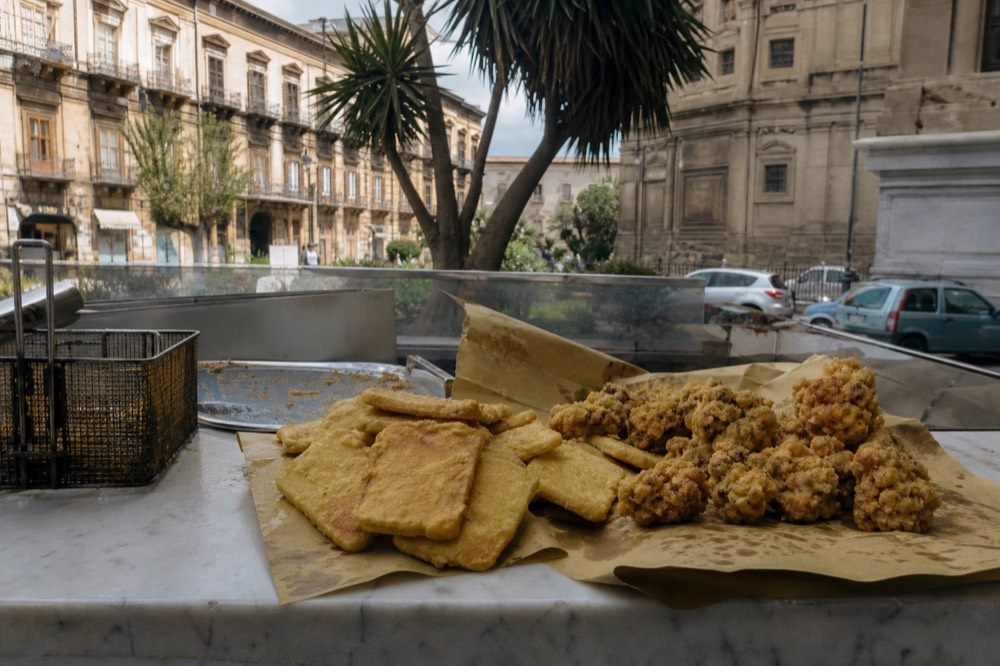
Start with panelle, because they are the one item in the street food canon whose official production territory is the city of Palermo itself. The Regione Siciliana's PAT technical sheet, part of the official "Schede PAT Sicilia 2023", defines them precisely: a batter of chickpea flour, water, salt and pepper, cooked while stirring until it comes away from the pan, spread to half a centimetre thick, cut cold into rectangles and deep fried. Chickpea flour frying is a thoroughly North African technique, and panelle are the Palermo street food most directly tied to the city's own territory on the official record.
| Layer | Period | What it contributed | Plates that carry it most clearly |
|---|---|---|---|
| Arab | 9th to 11th centuries | Aubergine, citrus, spinach, sugar, saffron; fried snack culture; sweet-and-sour logic; souk-style markets | Caponata, panelle, couscous of western Sicily |
| Norman | 1130 to 1194 | A documented culture of exchange between Muslim, Byzantine, Latin, Jewish, Lombard and French peoples, per UNESCO's 2015 inscription | The layering attitude itself; the crossroads cuisine |
| Spanish | 16th to 18th centuries | New World imports including tomatoes and peppers; Spanish-era vocabulary such as "carnezzerie" | Tomato-laced ragu in arancine, pasta with sardines in tomato-influenced forms |
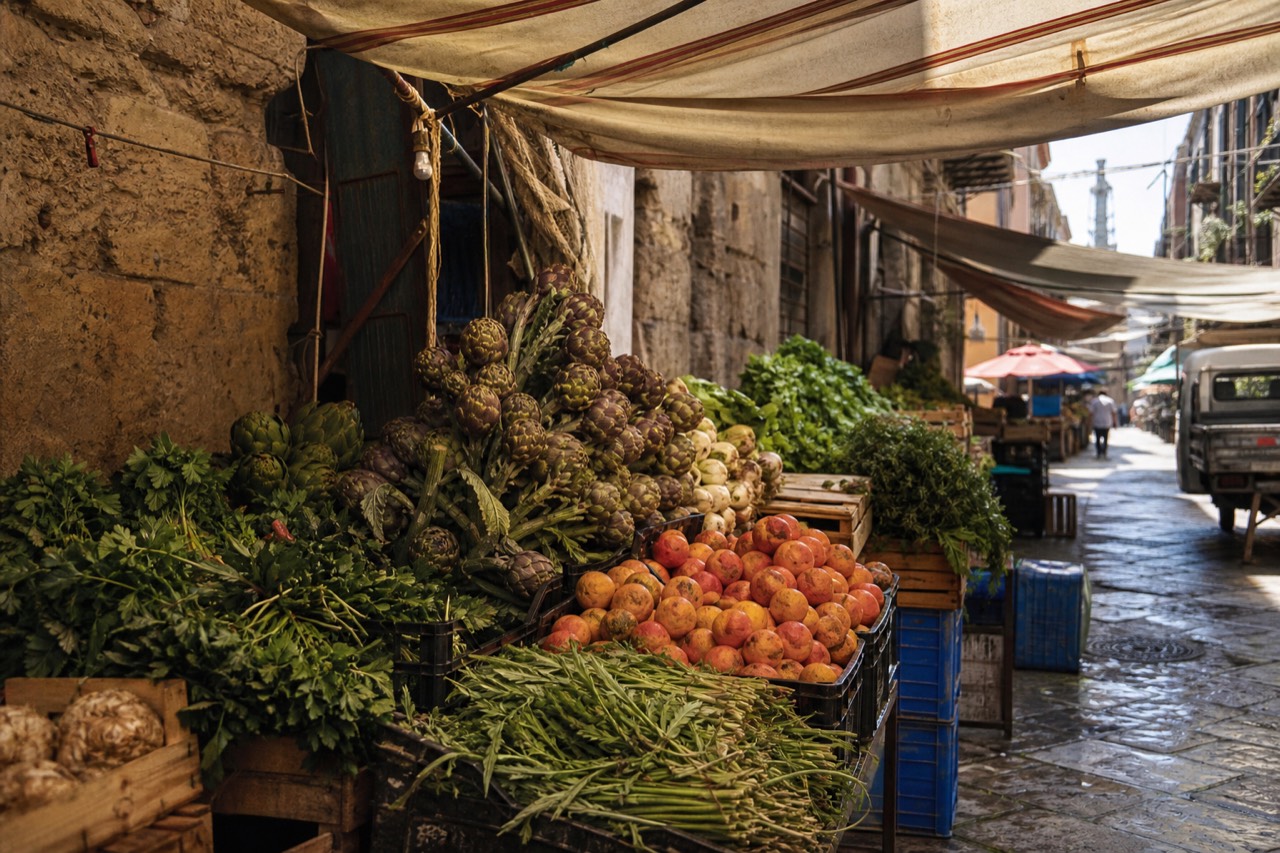
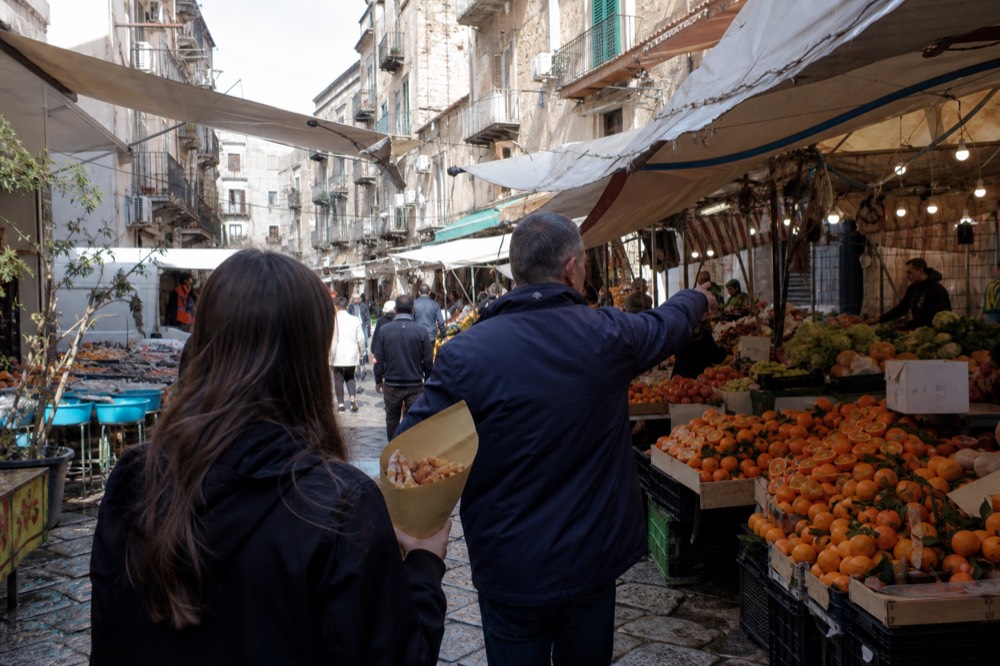
The markets themselves belong to this layer. The Comune di Palermo's own tourism portal describes the four historic markets, Ballarò, the Capo, the Vucciria and Borgo Vecchio, as resembling the souks of a Muslim city, some created during the Arab domination. The shouted sales cry of the hawkers even has its own Palermitan name, "abbanniata". You can read more about each in our guide to Palermo's markets.
One caution. The most famous Arab-origin claim of all, that the arancina is an Arab inheritance, does not survive contact with the linguistic record, and we treat that fully below. The Arab layer is real, deep and delicious; it does not need borrowed proof.
If you want to walk this layer with someone who can name it, the market-and-history walks below are built exactly around it.
What Did The Normans And The Spanish Add?
The Norman kingdom of Sicily, 1130 to 1194, added a documented culture of exchange rather than single dishes: UNESCO's 2015 inscription of "Arab-Norman Palermo and the Cathedral Churches of Cefalù and Monreale" records a coexistence of Muslim, Byzantine, Latin, Jewish, Lombard and French peoples. The Spanish period later contributed New World imports and names, including the Spanish-rooted word for the Capo's butcher shops, "carnezzerie".
The UNESCO inscription, reference 1487, covers nine civil and religious structures and describes them as testimony to "the fruitful coexistence of people of different origins and religions". Food-wise, this is the layer where the island stopped being a colony of one tradition and became a crossroads. The evidence is less a plate than an attitude: Sicilian cooking absorbed whatever the island's rulers and traders brought, which is why it layers rather than purifies.
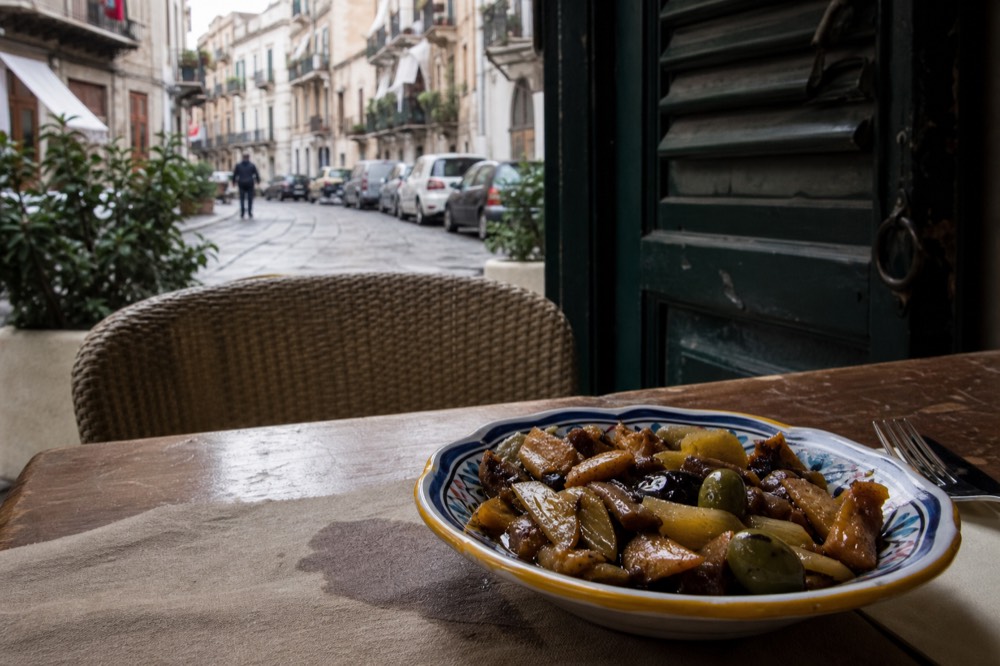
The Spanish layer is easier to taste. Tomatoes and peppers, New World crops that reached Sicily through Iberian trade, reshaped island cooking; pasta che sardi, in a form using wild fennel and sardines, and the tomato-laced ragu inside a Palermo arancina al ragù both sit on top of it. The Comune di Palermo notes that the Capo's butchers' shops are called "carnezzerie", a Spanish-era borrowing, in Palermitan dialect. The Capo's own meat customs are documented on the city's tourism portal, which attributes the hanging of meat quarters outside the shops to the city's former Jewish presence, for draining the blood. History is not decoration in Palermo's food; it is standing in the street.
What Is On The Official Traditional Products List, And What Is Not?
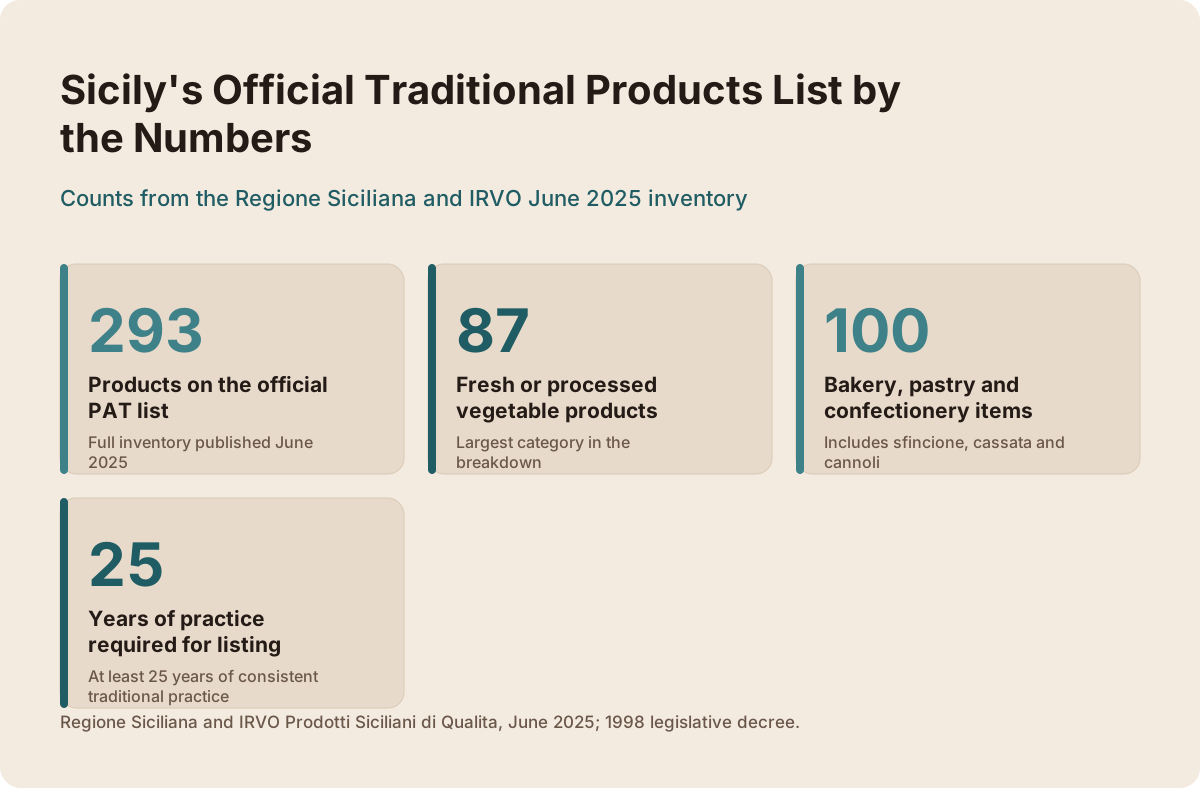
The Italian PAT scheme, created under a 1998 legislative decree and requiring at least 25 years of consistent traditional practice, lists 293 Sicilian products, and the confirmed list includes arancini di riso, panelle, crocché, stigghiola, caponata, sfincione, cassata, cannoli and several granite. Notably absent, checked directly against the full list: pani ca meusa, frittola, babbaluci, sfincionello and brioche col tuppo.
The distinction matters because "traditional" is a word anyone can type onto a menu, while the PAT list is an official register with a legal basis and a 25-year test. The full inventory, published in the Regione Siciliana and IRVO "Prodotti Siciliani di Qualità" document of June 2025, breaks the 293 products down by category: 87 fresh or processed vegetable products, 100 bakery, pastry and confectionery items, 40 gastronomy products, 25 cheeses, 14 animal-origin products such as honey, 11 fish preparations, 7 fresh meats and offal preparations, 6 drinks and liqueurs, 2 condiments and 1 fat.
| Famous Palermo item | On the Sicilian PAT list? | Official notes |
|---|---|---|
| Arancini di riso | Yes, gastronomy | Territory: the whole island; described as typically spherical with meat or alternative fillings |
| Panelle | Yes, gastronomy | Territory: the city of Palermo and parts of its province; the only canon item tied to Palermo itself |
| Crocché di patate | Yes, gastronomy | Listed alongside panelle in the gastronomy category |
| Stigghiola | Yes, gastronomy | Official sheet gives exact ingredients including lamb intestine and pork caul fat |
| Sfincione | Yes, bakery | Listed, but no full technical sheet was retrievable; no topping formula may be published |
| Cannolo | Yes, bakery | Production territory: Paceco, Erice, Trapani and Valderice, not Palermo |
| Pani ca meusa | No | Not on the list; no authoritative composition is publishable |
| Frittola | No | Not on the list despite its fame |
| Babbaluci | No | Snails are listed as "Vaccareddi (Lumache)", not under the babbaluci name |
The absences are as instructive as the presences. Pani ca meusa, the spleen sandwich that visitors ask about constantly, has no official recognition and, as of the latest verification, no authoritative published composition; the Comune confirms only that "pane con la milza" is sold in the Capo market. That does not make it inauthentic. It makes it part of a living street tradition that the paperwork has not caught up with, and it should be described honestly as such.
Arancina Or Arancino, And Where Did It Really Come From?
The Accademia della Crusca's 2016 linguistic consultation establishes that both forms are correct: arancina, feminine and round, in Palermo and western Sicily, arancino, masculine and often conical, in the east, with exceptions around Ragusa and Siracusa. More strikingly, Crusca finds no trace of the preparation before the second half of the 19th century, and notes the first dictionary attestation, Biundi 1857, defines it as a sweet rice dish.
This is the single most useful piece of food scholarship for a visitor, because it demolishes the story told on almost every food tour: that the arancina is an Arab inheritance. Crusca's own conclusion is that the link between the Sicilian rice ball and Arab tradition "does not seem so certain any more", and that the likelier account is a rice dish born in the second half of the 1800s as a sweet, transformed almost immediately into something savoury. Neither meat nor tomato appears in the 19th-century records at all, and tomato cultivation in the south of the peninsula only began at the start of the 19th century.
Why the split? Crusca's morphological verdict is that Palermo's feminine arancina follows standard Italian, where the fruit is feminine and the tree masculine, while the eastern masculine follows the Sicilian dialect form aranciu. In other words, Palermo's version is the grammatically "Italian" one and Catania's is the dialect one, which runs exactly opposite to how the local pride usually frames it. Palermo says arancina. Say the same, and order it al burro or al ragù.
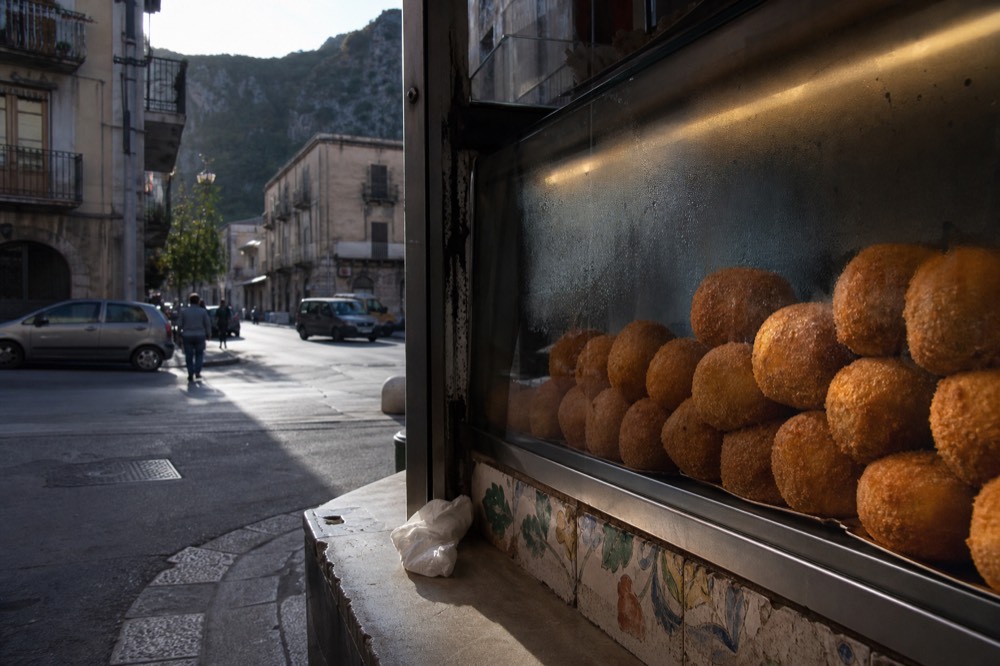
If the naming question appeals to you, we go deeper on the vocabulary in what Sicilians call arancini, including the Ragusa-Siracusa exceptions and why they exist.
Why Are The Sweets The Most Sicilian Section Of The Menu?
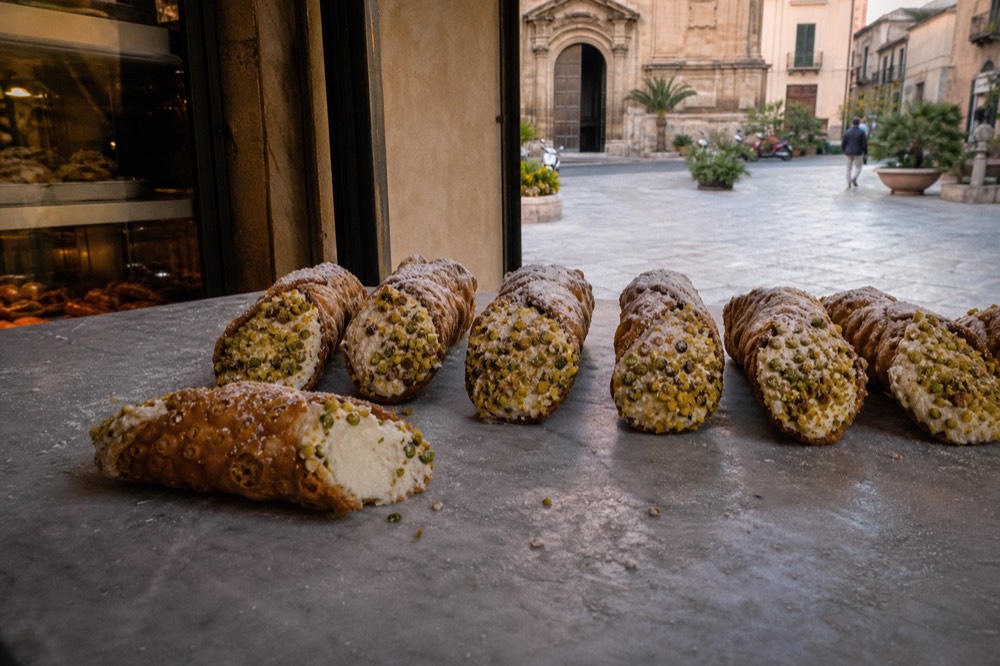
The sweets are the most Sicilian section of the menu because they document the island's sugar-and-ricotta logic: cassata is recorded in a Synod of Mazara document of 1575, the cannolo's official production territory is the Trapani area and its name comes from the cane the shell was rolled around, and the shell is fried, not baked, keeping the Arab-era frying tradition alive in pastry form.
Cassata is the best documented. The official PAT sheet records it as the traditional Easter sweet, cites the Monastero di Valverde in Palermo as historically famous for its cassate, and carries a paper trail to a document of the Synod of Mazara of 1575, where cassata appears among the sweets "indispensable at feast days". The sheet specifies sheep's-milk ricotta in the filling. Even the name is a story worth telling twice, because two authoritative Italian sources disagree about it: the Treccani dictionary derives "cassata" from the Latin caseus, cheese, while the Regione Siciliana sheet says it seems to derive from the Arabic quas'at. Both are on the record. Neither settles it. A page that pretends otherwise is guessing.
| Sweet | What the official record says | The surprising detail |
|---|---|---|
| Cassata siciliana | PAT sheet cites the Synod of Mazara, 1575 | In the Palermo area, parts of the border are covered with pistachio-green pasta reale marzipan |
| Cannolo | PAT territory is Paceco, Erice, Trapani and Valderice | The name comes from the cane, Arundo donax, the shell was originally rolled around |
| Iris | PAT territory is Palermo | A round piece of Palermo rosticceria, sweet fried dough filled with ricotta cream |
| Granita | Treccani names it for the granular look of the ice | Mulberry, lemon and almond granite are each individually PAT-listed |
| Sfoglio | PAT territory is Castellana Sicula, in the Madonie | Not Monreale, despite the common claim; Monreale's PAT entry is its biscotto |
The cannolo correction is the one that surprises people most. The official technical sheet for the cannolo alla ricotta assigns its production territory to the Trapani area, not Palermo, even though Palermo eats them everywhere. And the sfoglio, often attributed to Monreale, is officially a Castellana Sicula product; Monreale's own PAT entry is the "Biscotto di Monreale". Traditional food attribution in Sicily is territorial and precise, which is exactly why the vague version told on the street should be taken with a pinch of sea salt.
Which Market Should You Eat This Food In?
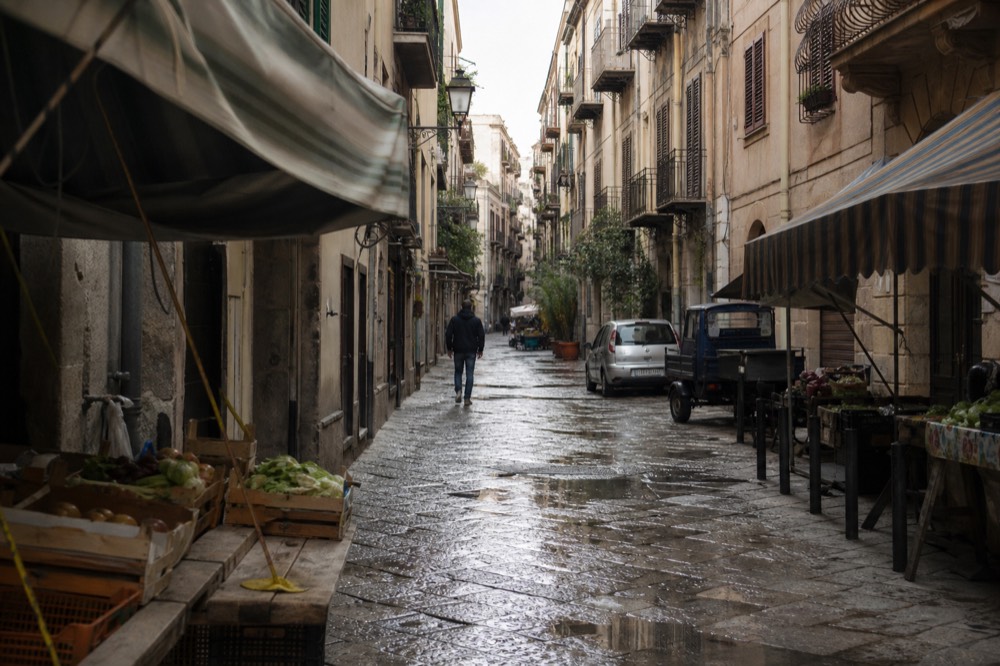
For eating the traditional canon, the Capo and Ballarò are the working markets, open Monday to Saturday, with Ballarò's official hours running 07:30 to 20:00 and Sunday mornings only; the Vucciria is now formally a regulated pedestrian area, extended by municipal ordinance to 31 December 2026, and lives mostly at night. Borgo Vecchio, founded in 1556, trades in the morning.
The honest picture requires holding two facts at once. The Comune's tourism portal still describes the Vucciria as a market open every day, morning and afternoon. The city's own records show the pedestrian-area ordinance, and PalermoToday reported in March 2025 that traders in the historic markets say they have lost roughly 80 per cent of their traditional customers, with street food for tourists replacing traditional stalls in the centre. A visitor who expects the market of Guttuso's 1974 painting, a three-by-three-metre canvas the painter gave to the University of Palermo, now hanging at the Steri, will not find it trading outside the picture.
| Market | Quarter | Official character | What to expect as an eater |
|---|---|---|---|
| Ballarò | Albergheria | The Comune calls it the city's oldest and largest market | The widest fruit, vegetable and fish spread; the only market with published clock hours, 07:30 to 20:00 Mon-Sat |
| Il Capo | Seralcadio | Historically the meat market, near the old "bocceria nuova" | Sfincione, pane con la milza, panelle and crocché sold by hawkers, per the Comune |
| Vucciria | between via Argenteria and piazza Garraffello | Once the "Bucceria grande", the great food market | Now mostly nightlife; a regulated pedestrian area through 2026 |
| Borgo Vecchio | behind the Politeama, toward the port | Quarter formed in 1556 around the new port | A morning market, increasingly a night spot for younger crowds |
Our Ballarò market guide and Capo market guide carry the detail, including the pitfalls that come with a market scene that now leans tourist.
How Much Does Eating Traditional Food In Palermo Cost?
Orientative 2026 street prices for Palermo run roughly €2.50 to €4 for an arancina, €2.50 to €3.50 for pane e panelle, €1.50 to €3 for a sfincione slice, €2.50 to €4 for a cannolo and €3 to €5 for granita with brioche, while local press reported in May 2026 that a pizza plus a drink averages €14.56 in the city, up about 60 per cent in five years, the highest rise in Italy.
The price story is genuinely double-edged. On one hand, Palermo remains one of western Europe's cheaper food cities for street eating; a chickpea fritter sandwich is still a euro-priced lunch in a way that has vanished from most northern capitals. On the other, local reporting has documented steep increases driven by the centre's tourist shift, and a brioche con gelato at €4 to €5 has sparked genuine local backlash as a traditional item pushed past what residents consider acceptable.
| Typical item | Orientative price range | Notes for planning |
|---|---|---|
| Arancina | €2.50 to €4 | Central historic-centre prices reported at €3 to €4.50, roughly double 2021 levels |
| Pane e panelle | €2.50 to €3.50 | The cheapest full lunch in the canon |
| Sfincione slice | €1.50 to €3 | Sold by weight or the slice from bakery counters |
| Cannolo | €2.50 to €4 | Filled to order where it is done properly |
| Granita con brioche | €3 to €5 | A standard Sicilian breakfast, brioche included |
| Pizza plus a drink | around €14.56 average | City average reported by local press, May 2026 |
Treat every range above as planning guidance, not a promise: prices at individual stalls and bakeries move, and the arancina you buy at a market edge will not cost what the one at a table on via Maqueda costs. Check the board before you order. And note that a coperto, a cover charge, is legal in Sicily as long as it is clearly shown on the menu before you order, per the Italian consumer organisation Altroconsumo, which sets out the rule and the national norms behind it.
Can You Cook The Traditional Dishes Yourself?
Yes, and Palermo has one of the strongest cooking-class scenes in Italy for it: classes typically centre on arancine, fresh pasta such as pasta alla Norma, and cannoli, many paired with a market visit to buy the ingredients first. Group formats in Sicily commonly run in the €90 to €130 per-person range when a market tour is included, with simpler sessions cheaper and premium small-group classes higher.
The class format matters more than the brand. A class that walks a market first teaches you how Sicilians actually select raw material, which is half the cuisine; a class that starts in a kitchen teaches technique. The best of them do both, and several operators in our roster, including the Sicilian Pantry's class, which a recent review describes as an intimate six-person group, and Siciliandays' half-day class with market tour, build the whole session around that sequence.
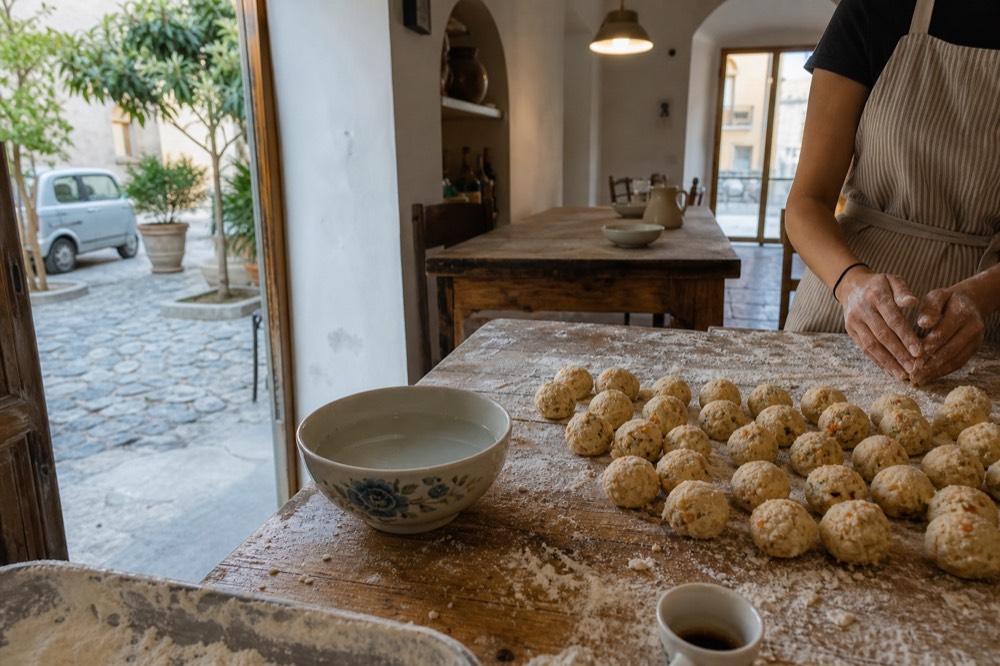
If cooking rather than walking is your route into the tradition, the full-day format below pairs the market run with the cooking and the sitting down to eat what you made, which is the way the island actually does lunch.
For a broader comparison of formats and prices, see our guide to cooking classes in Palermo.
What Is The Best Way To Taste All These Layers In A Few Days?
The efficient route is to combine one guided walk, one market morning on your own and one sit-down meal: a guided street food and history walk covers the canon with the stories attached, a solo morning in Ballarò or the Capo at opening time shows you the working market, and a trattoria dinner covers the plated tradition, pasta che sardi, caponata and the sweets. Two to three days is enough to cover all three without repetition.
The guided walk earns its place because the layers are invisible without a narrator. A plate of panelle is just a chickpea fritter until someone tells you the official sheet fixes its thickness at half a centimetre and its territory at Palermo city; an arancina is just a snack until you know Crusca dated the whole category to the 19th century. The street food and history walk from our roster, run by a local guide and rated 4.9 across 1,672 reviews, is built on exactly that pairing of tastings with context, from $56.91 per person with free cancellation up to 24 hours. It often sells out, which tells you the format works.
For depth over breadth, the ten-plus-tastings format covers more ground: Secret Food Tours' Palermo itinerary, rated 5 across 782 reviews and from $89.33 per person for three and a half hours, moves through arancine, cannoli, wine and more, with free cancellation up to 24 hours and only 12 spots per departure. Recent guest reviews praise exactly the mix of food, drinks and cultural context you would want from a cuisine this layered.
Traditional Sicilian food is a layered cuisine rather than a single tradition: the Arab period left the crops, the frying and the sweet-and-sour logic, the Norman kingdom left the crossroads attitude, the Spanish left the New World imports, and the official PAT register now lists 293 recognised products. The questions below are the ones visitors ask most, answered from the documented record rather than the folklore, with links to the deeper guides where the detail lives.
Common Questions About Traditional Sicilian Food
What is the most traditional Sicilian dish?
There is no single answer, but the strongest claims belong to the officially recognised canon: panelle, whose PAT territory is the city of Palermo itself, caponata, whose official sheet describes the aubergine, celery, olive and sweet-and-sour construction, and cassata, which has a documented paper trail to 1575. Arancine are the most famous, though the linguistic evidence dates them to the 19th century, not antiquity.
Is Sicilian food the same as Italian food?
No. Sicilian cooking runs on sugar, frying, citrus, saffron and sheep's ricotta, with layered foreign influence from Arab, Norman and Spanish rule, while mainland Italian cooking leans on butter, beef and fresh egg pasta in the north and oil-and-tomato simplicity further south. We compare the two traditions directly in our Sicilian food vs Italian food guide.
Is it arancina or arancino?
Both are correct. The Accademia della Crusca establishes that Palermo and the west say arancina, feminine and round, while Catania and the east say arancino, often conical. In Palermo, order an arancina; it is the local form and the one that follows standard Italian grammar.
Did the Arabs invent Sicilian food?
They laid one major layer, not the whole foundation. Archaeological finds at Mazara del Vallo confirm aubergine, citrus, spinach and watermelon as period introductions, and the sweet-and-sour, fried-snack logic of the cuisine is Arab-period in character. But the arancina's Arab-origin story specifically is contradicted by Crusca's finding that no trace of the dish exists before the late 19th century.
What sweets should I try in Palermo?
Cannolo, filled to order with sheep's ricotta where it is done properly; cassata, the Easter sweet documented to 1575; iris, a Palermo-specific fried rosticceria item filled with ricotta cream; and granita con brioche, the standard Sicilian breakfast. For where to buy them, see our guide to the best food in Palermo.
How many days do I need to eat my way through Palermo?
Two to three days covers the canon comfortably: one guided walk, one market morning and two sit-down meals, plus pastry stops in between. Our three days in Palermo itinerary lays out a food-first version of exactly that.
The layers are the point. Any city can fry a rice ball; only Palermo fries one whose name is a grammar dispute, whose documented age is barely 150 years, and whose recipe card still argues with the official record. Eat accordingly, and if you want the layers narrated while you taste them, Palermo Food Tours keeps a short, honestly described roster of the walks and classes that do it well.