Which Is Nicer, Palermo Or Catania?
An honest comparison of Palermo and Catania for food travellers: street food, markets, restaurants, costs, day trips and which city suits your trip.
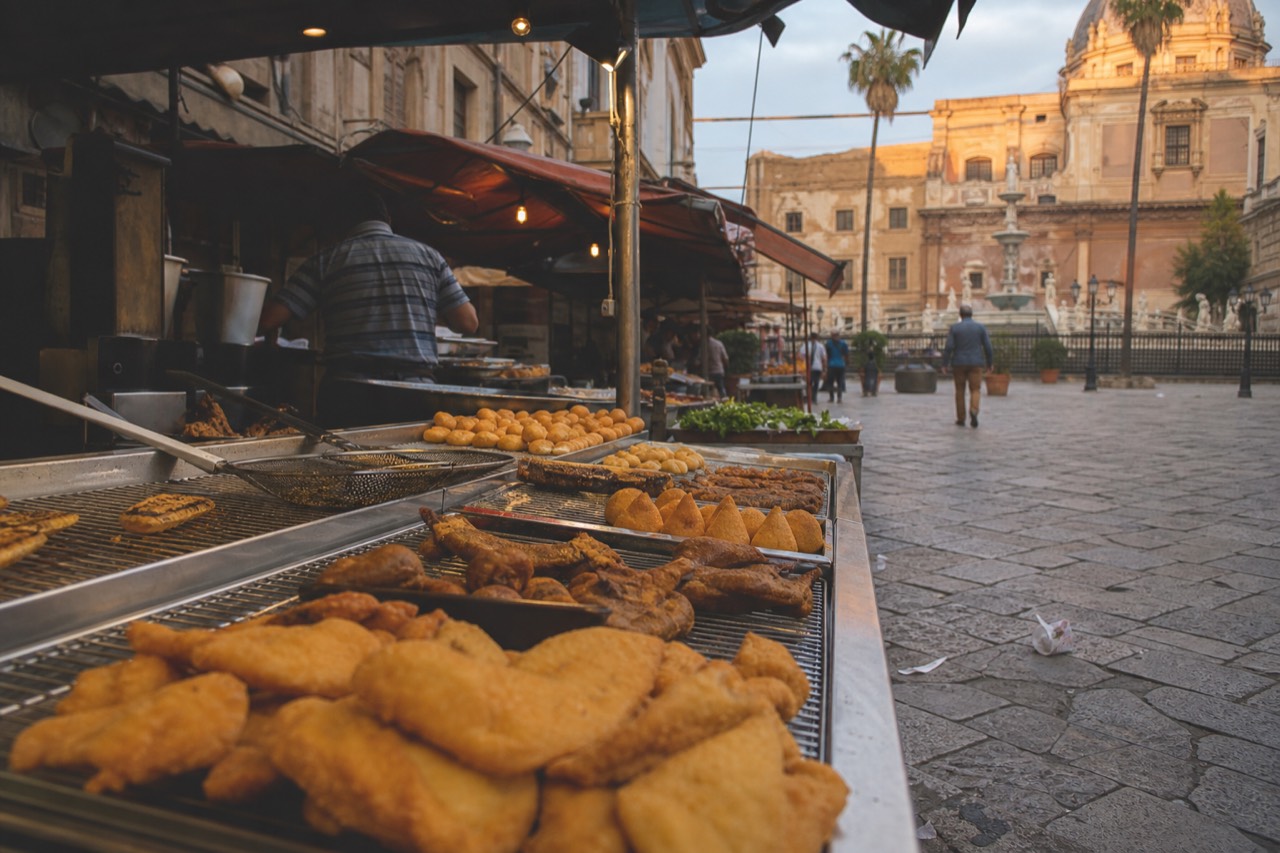
Sicily's two biggest cities attract very different travellers, and the argument between them is old, loud and, for once, grounded in something real: the two cities genuinely do not eat the same way. Palermo sits on the island's western side and its food culture runs through markets, friggitorie and fried snacks. Catania faces Mount Etna on the east coast and leans on fish, pistachio from Bronte, citrus and a proud rivalry with its western neighbour that even extends to grammar. The Accademia della Crusca has documented how the island splits over the name of its most famous snack: arancina in the west, arancino in the east. If you only have time for one city, the choice is real.
Which Is Nicer, Palermo Or Catania?
For a first visit built around food, Palermo is the stronger pick: it has Sicily's densest concentration of street food, four historic markets within walking distance of each other, and more food tours per square mile than anywhere on the island. Catania is the better choice if you want Etna, the sea, late-baroque architecture and a fish market with genuine theatre. Neither city is comfortable or polished, and both reward the same kind of traveller.
Palermo's case rests on sheer density. The historic centre is small enough that a determined walker can cross it in under an hour, and along the way they will pass the markets of Ballarò, the Capo and the Vucciria, plus a string of friggitorie and focaccerie that have been frying panelle and crocchè for generations. The city's own tourism portal describes the four historic markets as resembling the souks of a Muslim city, a legacy of the Arab period that shaped the island's food culture in ways still visible today. UNESCO recognised this layered heritage in 2015, inscribing the Arab-Norman buildings of Palermo, Cefalù and Monreale on the World Heritage List.
Catania's case is different in kind. The city was rebuilt in lava and baroque after a devastating earthquake, and its centrepiece, the fish market La Pescheria, is a working market in a way few Sicilian markets still are. Around it sits a gritty, energetic city of about the same population as Palermo, with Etna smoking on the horizon and the best pistachio in Italy an hour inland. A recent Reddit traveller who visited both sides of the island described loving the food around Catania and finding Palermo's arrival less impressive after a disappointing Ballarò experience, until locals steered them toward better spots. That report is representative: both cities punish lazy eating and reward asking a local.
The honest summary most repeat visitors give is this. Palermo is the better pure eating city. Catania is the better all-round base, because the day trips are spectacular and close. The rest of this page unpacks each axis of the comparison so you can decide which matters more to you.
Which City Has The Better Restaurants And Food Scene?
Neither city dominates on fine dining, and both are outclassed by the villages around them. In the Michelin Guide Italia 2026, Palermo holds one one-star restaurant, Mec, while Catania holds two, Coria and Sapio; the island's only two-star restaurants are elsewhere, including one in Taormina. Where the cities differ is at the low end: Palermo's cheap eating is dramatically better, and that is where most food travellers actually spend their money.
Michelin stars are a thin measure of a Sicilian city, but they are a verifiable one, and the 2026 guide tells an interesting story: Sicily has four two-star and eighteen one-star restaurants in total, none of them three-star, and the biggest concentrations sit in Taormina rather than in either rival city. Palermo also keeps a Bib Gourmand, Buatta Cucina Popolana, while two new Bib Gourmand entries in the 2026 guide sit in the Palermo province itself, at Bagheria and Castelbuono. What this means practically: the celebrated tables are scattered across the island, and neither Palermo nor Catania is a destination you visit for its temples of haute cuisine.
The real contest happens at street level, in trattorie and markets, and here the two cities diverge sharply.
| Axis | Palermo | Catania |
|---|---|---|
| Michelin 2026, city proper | 1 one-star (Mec) | 2 one-star (Coria, Sapio) |
| Signature cheap eating | Panelle, crocchè, sfincione, spleen sandwiches, arancine | Arancini (often conical), cipolline, horse-meat dishes, fish at La Pescheria |
| Market culture | Ballarò, Capo, Vucciria, Borgo Vecchio, mixed states of health | La Pescheria, a genuinely working fish market |
| Sweet identity | Cannoli, cassata, iris | Granita con brioche culture, stronger eastern breakfast tradition |
| Naming | Arancina, feminine and round | Arancino, masculine and often pointed |
The naming row is not trivia. The Crusca's linguistic consultation establishes that Palermo's feminine arancina follows standard Italian grammar, while Catania's masculine arancino follows the Sicilian dialect form, and that the earliest dictionary record of the word, Biundi's 1857 Sicilian-Italian dictionary, defines it as a sweet rice dish. Treccani's own vocabulary entry gives arancino a filling of chicken giblets and sauce, a definition that differs from the official regional technical sheet's meat ragu. Two authoritative Italian sources, two descriptions, and a city rivalry layered on top. Eat in both cities and you will taste the difference too: Palermo's version is round, Catania's often pointed.
For food tours specifically, Palermo has the deeper bench. Our catalog lists more than twenty Palermo food experiences across street food walks, market tours, cooking classes and wine tastings, ranging from a 2.5-hour street food walk at from $39.83 per person to a five-hour Culinary Backstreets walk at from $150. Catania's equivalent scene is smaller and less varied, which matters if you like being guided into the good stuff rather than finding it yourself.
If you do choose Palermo and want a guided way into its market culture, the all-inclusive market tour by Streaty is the one most travellers book first.
Palermo Or Catania For Street Food?
Palermo wins on street food, and it is not close. Its market-and-friggitoria culture is unmatched on the island, with chickpea fritters, potato crocchè and sfincione sold from morning to night across the historic centre. Catania has excellent arancini and a superb fish market, but its street eating is narrower, fishier and more concentrated around one district.
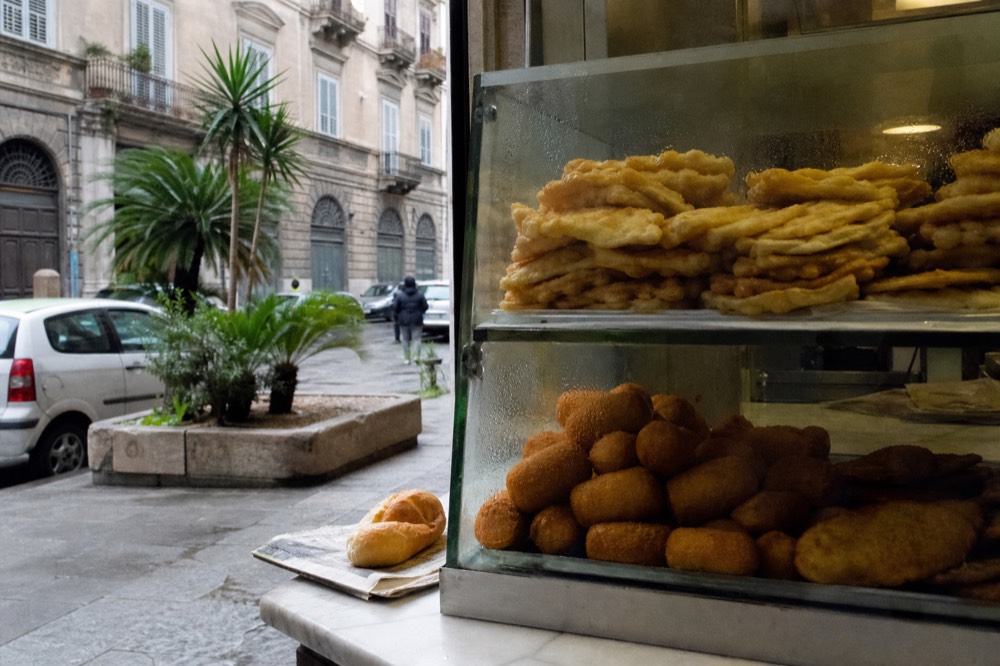
The single most Palermo-specific item is the panella, and it is officially so: the Regione Siciliana's technical sheet for panelle is the only one in the street food canon whose production territory is the city of Palermo itself, and the sheet even specifies the batter is spread half a centimetre thick before being cut and fried. Panelle, crocche di patate, stigghiola, arancini di riso, iris and caponata are all on Sicily's official list of Prodotti Agroalimentari Tradizionali, a national scheme that requires a preparation to have been practised consistently for at least 25 years. Sicily carries 293 PAT products in total, more street food on one list than most Italian regions have entries of any kind.
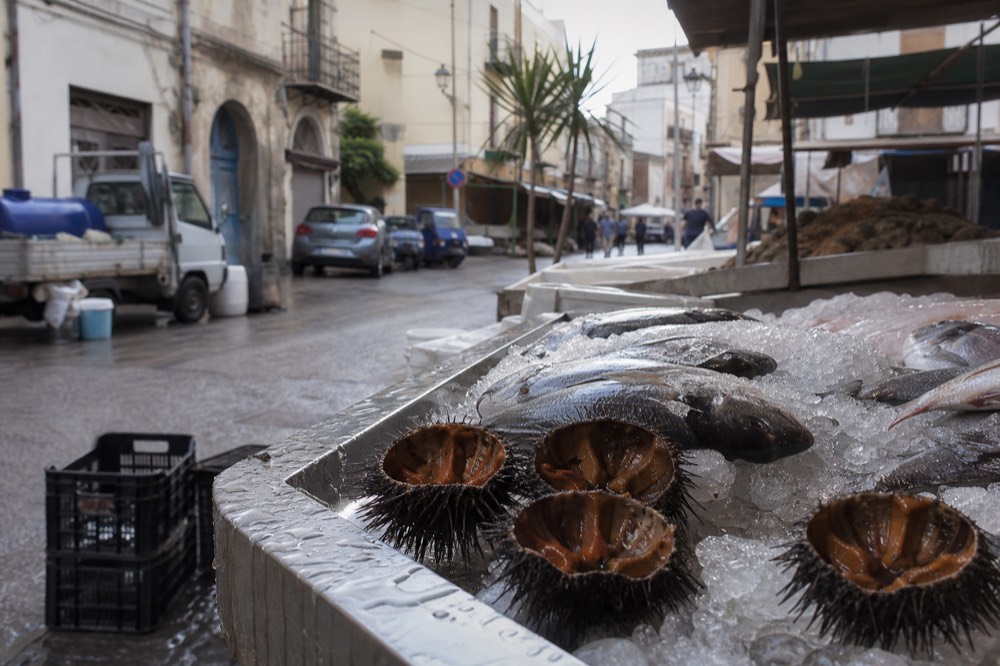
Catania's street food identity is real but different. The city is famous for its arancini, its cipolline, and a working-class tradition of horse and donkey meat dishes that visitors either embrace or avoid. Its trump card is La Pescheria, the fish market beside Piazza del Duomo, which most mornings is a genuine spectacle of swordfish, tuna and sea urchins sold at speed and volume. A first-hand report from a September 2025 visitor to Sicily, posted in a Reddit travel thread, rated the Capo market in Palermo as the best of the three central Palermo markets for food and shopping, but found the tourist-facing stalls at Ballarò disappointing, with pre-made arancini reheated on request. The lesson applies in both cities: the famous markets have tourist-facing corners and locals-facing corners, and the food quality gap between them is wide.
The 2012 provenance point is worth knowing here, because you will encounter it constantly. Palermo's reputation as a world street food capital rests heavily on a single Forbes article from September 2012, which reported a reader survey by the travel website VirtualTourist and placed Palermo fifth. That survey is fourteen years old and the website that ran it no longer exists. Palermo's street food is genuinely excellent, but the "fifth in the world" line you will read on a hundred competitor pages is a fossil, and no newer verified global ranking placing Palermo has been found.
For first-timers who want the street food without the guesswork, a guided walk solves the tourist-trap problem neatly, since guides have every incentive to take you where they eat themselves. The Streaty original market tour, 3 hours all-inclusive from $81.64 per person, is built exactly for this, though note it is one of the few non-refundable tours in the city's catalog. A cancellation-friendly alternative is the Palermo Street Food and History Walking Tour at from $56.91 per person, with free cancellation up to 24 hours.
Which Is The Better Base For Day Trips?
Catania wins as a base, because its day trips are closer and more varied: Mount Etna, Taormina, Siracusa and the Baroque towns of the southeast are all within easy reach. Palermo's day trips are excellent too, with Monreale and Cefalù the classics, but the surrounding west is quieter, wilder and requires more travel time for the headline sights.
From Catania you can be on the slopes of Etna in about an hour, in Taormina in under an hour by train or car, and in Siracusa's old island city of Ortigia in about ninety minutes. The Val di Noto, a string of late-baroque towns rebuilt after the same earthquake that reshaped Catania, sits south of the city. One practical note for 2026 travel: Trenitalia replaced Palermo-Agrigento regional trains with buses between mid-May and the end of September 2026 for infrastructure works, a reminder that Sicily's rail network needs checking before you commit to train-based day trips on either coast.
Palermo's classic day trips are Monreale, whose cathedral and cloisters pair with the Arab-Norman UNESCO inscription, and Cefalù, the seaside town under a Norman cathedral, both reachable by train or bus. Beyond them lie Segesta's Greek temple, Scopello and the Zingaro reserve, Erice and the Marsala salt pans, and Trapani as a ferry gateway to Favignana. A Reddit trip report from a car-free traveller in 2025 described a Palermo-based week using buses and trains for Mondello, Cefalù, Trapani and Favignana, and praised the public transport as reliable and cheap. The west rewards travellers who like landscapes, ruins and food pilgrimage over headline glamour.
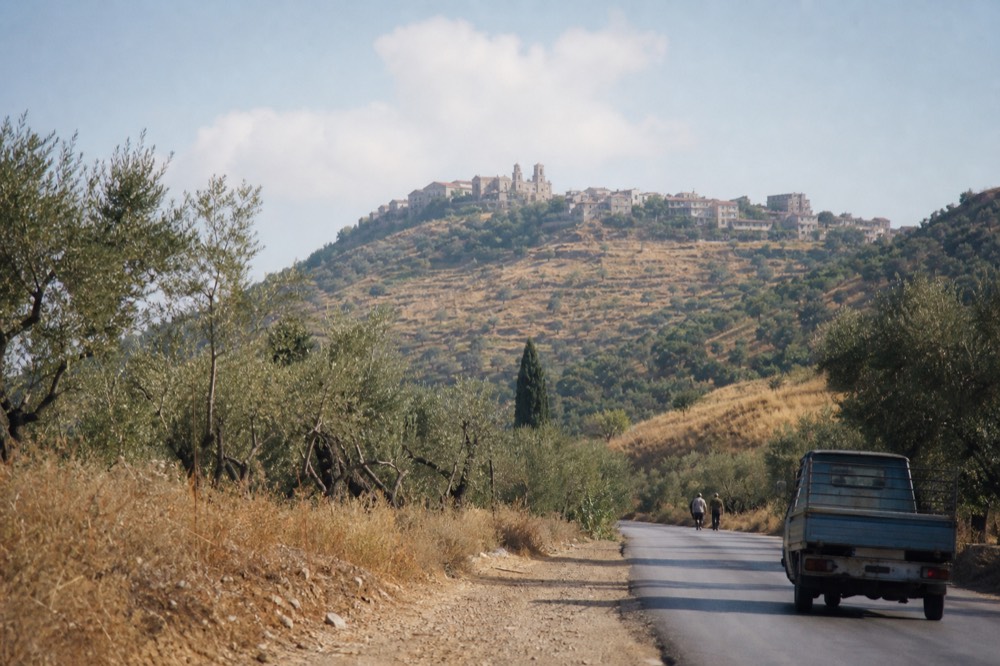
If food day trips are your priority rather than scenery, the west again punches above its weight. The slow food Presidium for the Ciaculli late mandarin sits on Palermo's edge, harvested January to March, and the plain around Palermo, once called the Conca d'Oro, has lost some 80 percent of its cultivated land to urban sprawl according to the Slow Food Foundation, which makes the surviving citrus groves a more fragile thing to see than you might expect.
| Day trip | From Palermo | From Catania | Best for |
|---|---|---|---|
| Monreale | Short bus or taxi ride | Not practical | Mosaics, Arab-Norman heritage |
| Cefalù | Train, roughly an hour | Not practical | Beach and Norman cathedral |
| Mount Etna | Not practical | About an hour by road | Volcano, wine, pistachio country |
| Taormina | Not practical | Under an hour | Views, Greek theatre, upscale dining |
| Siracusa and Ortigia | Not practical | About 90 minutes | Baroque old city, seafood |
| Erice and Marsala salt pans | Half-day to full day | Not practical | Hill town, salt flats, wine |
How Do The Costs Compare?
The two cities cost roughly the same to visit, with one sharp difference in local taxes: Catania's tourist tax rises to a maximum of 5 euros per night in its top category, while Palermo caps at 4 euros per person per night for short-term rentals, both for a maximum of four consecutive nights. Street food in Palermo runs about 3 to 4.50 euros for an arancina or a panelle sandwich in the historic centre.
The tax detail matters more than it looks, because it compounds across a week. Palermo's rates, in force from 1 July 2025, scale from 3 euros at a one-star hotel to 5 euros at five-star, with 4 euros for B&Bs and short-term rentals, capped at four nights. Catania's updated rates climb to 5 euros per night at the top category. For a couple in an apartment for four nights, the difference is a few euros, real but not decisive.
Eating costs are nearly identical, and both cities are cheap by northern Italian standards. Local reporting on Palermo's historic centre found an arancina or a panelle-and-crocchè sandwich priced at 3 to 4.50 euros, roughly double the 2021 level, a rise attributed largely to tourism, and pizza with a drink averaging 14.56 euros, the highest five-year increase of any Italian city (see Best Food City in Italy). At a sit-down trattoria, expect a primo around 7 to 12 euros and a full meal in the 20 to 25 euro range, plus the coperto. The Italian consumer organisation Altroconsumo confirms that the coperto cover charge is legal anywhere in Italy outside Lazio, provided it is clearly stated on the menu before you order.
Guided food experiences are where budgets diverge, and Palermo's deeper catalog gives you more price points to choose from. In our own roster, Palermo street food walks start at from $39.83 per person for 2.5 hours and climb to from $89.33 for a ten-tasting tour, while market-plus-cooking combinations run from the Sicilian Pantry class at from $115.95 per person to the Siciliandays half-day cooking class and market tour at from $209.04. Catania's equivalent offerings exist but are fewer, so the price floor is effectively higher for a guided experience there.
Which City Is Easier Without A Car?
Both are walkable and both punish cars, so the honest answer is that neither needs one. Palermo's restricted traffic zone runs Monday to Thursday from 08:00 to 20:00 and at night at weekends in summer, and its food tours are walking tours by design. Catania's centre is similarly compact, with the fish market, cathedral and main squares all close together.
Palermo's Zona a Traffico Limitato makes a hire car a liability in the historic centre: the summer timetable in force until 31 October 2026 restricts access on weekdays through the evening and in the small hours at weekends. Since the markets, friggitorie and most food tours all sit inside this zone, a car buys you nothing but fines. The durable fact, independent of any timetable, is that Palermo's food district is a walking district.
Catania is no harder. Its grid of baroque streets is flat, compact and well served by the airport bus and the circumetnea railway for Etna excursions. Both cities have their rough edges after dark, and first-hand reports on Reddit consistently flag the areas around Palermo's train station and some market streets at night, while recommending the areas around Teatro Massimo and Politeama as safer and quieter. The same applies to Catania around its station. Neither warning should deter you; both should tell you where to book your bed.
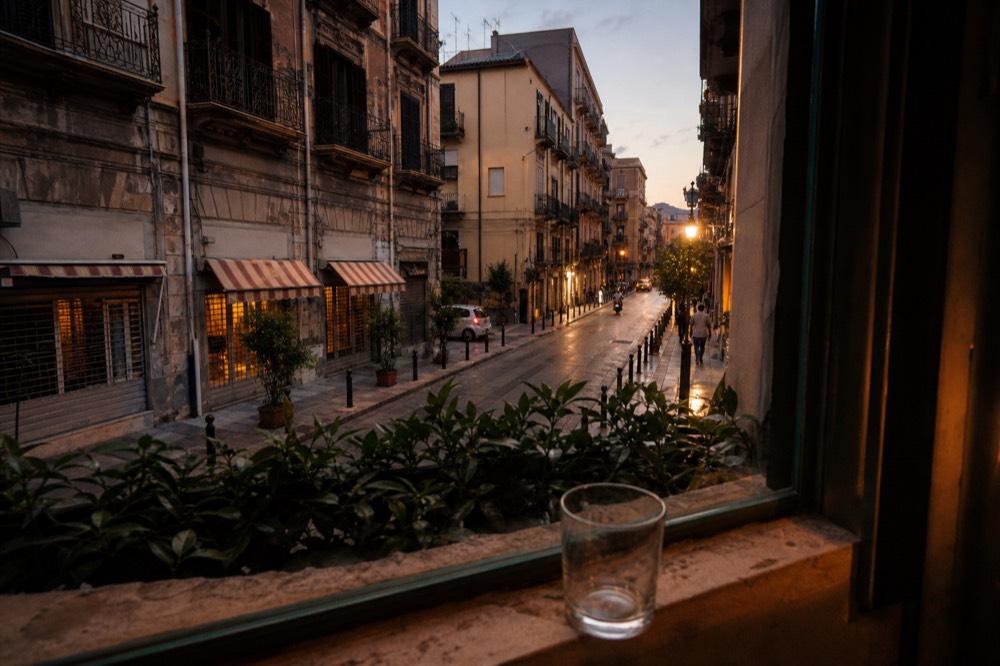
Weather shapes walkability too. WMO climatological normals for Palermo put August's mean daily maximum at 30.5 C and July's at 29.8 C, with July nearly rainless at 6.7 mm across 1.2 rain days on average. Catania, on the same coast-facing logic, is hotter still in high summer. The walking-tour sweet spots are May, June and September, when highs sit in the mid-twenties and rain days are few.
So Which Should You Choose?
Choose Palermo if food is the reason for the trip, if you want to walk one of Europe's great street food cities, or if your interests lean Arab-Norman, baroque and market-adjacent. Choose Catania if you want a volcano, the sea, Siracusa and Taormina within a day's reach, or if you prefer a fish market to a fried-food city. Travellers with a week or more should do both, splitting the island east and west.
There is also a case for skipping the binary entirely. Sicily's food identity is not urban; the PAT list of 293 traditional products is mostly made in villages, the Michelin stars cluster in small towns, and the best cannolo territory on the official technical sheet is the Trapani area, not either city. A trip that takes in Palermo for the markets, then crosses to Catania for Etna and the southeast, eats better than one that commits to a single city and defends the choice.
If Palermo wins your coin toss, our detailed pages can take the planning further: the guide to Palermo's four historic markets covers Ballarò, the Capo, the Vucciria and Borgo Vecchio in depth, the guide to Sicilian street food explains the canon dish by dish, and the three days in Palermo itinerary sequences a short visit around eating well. This site, Palermo Food Tours, exists to help you eat the city properly, and we are transparent about where the guided options are worth it and where a self-guided walk wins.
If your visit lands in summer and the midday heat is too much, there is a third format worth knowing about: Streaty also runs a small-group night street food tour, 3 hours all-inclusive from $69.8 per person, rated 4.9 across 580 reviews and capped at 12 spots per departure, which turns the whole east-versus-west debate into an after-dark question. Like the original tour it is non-refundable, so book it only once your dates are locked.
Whichever format you choose, the trio below covers the three most useful starting points for eating Palermo well on a first visit.
The short version of this whole comparison: Palermo is the better city for a trip organised around eating, with four historic markets, an unmatched fried-food culture and a much deeper catalog of guided food experiences, while Catania is the better base for Etna, Taormina, Siracusa and the southeast. Costs are nearly identical, neither city needs a car, and travellers with a week or more should simply split the island and eat both halves.
Common Questions About Palermo Or Catania
Which Is Nicer, Palermo Or Catania?
For a food-focused trip, Palermo is nicer: it has Sicily's densest street food culture, four historic markets, and a deeper catalog of food tours and cooking classes. Catania is nicer as an all-round base thanks to Etna, Taormina, Siracusa and the southeast within a day's reach. Neither is polished, and both reward curiosity.
Is Palermo or Catania cheaper?
They cost about the same to eat in, with street food around 3 to 4.50 euros for an arancina or panelle sandwich in Palermo's centre and trattoria meals in the 20 to 25 euro range. The one sharp difference is tourist tax: Catania's rises to a maximum of 5 euros per night in its top category, while Palermo charges 4 euros per person per night for short-term rentals, both capped at four nights.
Which city has better street food?
Palermo, clearly. Its markets and friggitorie sell panelle, crocchè, sfincione and spleen sandwiches across a compact centre, and the official regional technical sheet for panelle names Palermo itself as the production territory. Catania has excellent arancini and a working fish market, but a narrower street eating scene.
Do Palermo and Catania really call arancini different names?
Yes, and the Accademia della Crusca confirms the split: arancina, feminine and round, in Palermo and the west, and arancino, masculine and often pointed, in Catania and the east. Crusca also found that the earliest dictionary record of the word describes a sweet rice dish, and that no trace of the savoury version exists in the written record before the late nineteenth century.
Can you visit both cities in one trip?
Yes, and it is the best way to settle the argument for yourself. The two cities are connected by train and bus along the island's north coast, and a week split between them, with day trips to Monreale and Cefalù from Palermo and Etna and Siracusa from Catania, covers the island's two food identities comfortably.