What Italian City Has The Best Food?
Naples tops the reader polls, Bologna has the food valley, Rome has the range, and Palermo has the street food. Here is what the rankings actually measure, and how to pick for your own trip.
What Italian City Has The Best Food?
No single city wins. Naples takes the two biggest 2025 and 2026 rankings of Italian food cities, Bologna holds the strongest claim among the northern gastronomic capitals, and Palermo wins on street food specifically, the category where Italy is least expected to compete at all. The honest answer depends on which question you are really asking: the best sit-down meal, the best cheap eating, or the best one-city food trip.
Italy has twenty regions and several thousand years of competitive cooking, and it refuses to settle the argument internally. Ask a Neapolitan and the answer is pizza and fried everything. Ask a Bolognese and it is fresh egg pasta. Ask a Palermitan and they will talk about eating standing up in a market at 11 in the morning, and they will be making a fair case.
The reason the internet keeps producing new "best food city" lists is that the answer genuinely changes depending on who is measuring. A reader poll of half a million dish ratings produces one winner. A survey of city residents produces another. A guide that counts tasting menus produces a third. This page takes the main 2025 and 2026 rankings apart, shows what each one actually measured, and then helps you match a city to the way you personally like to eat.
Palermo is the city this site covers in depth, so it gets the fullest treatment here, with its case made honestly rather than promoted. If you want to skip straight to eating there, the tours below are the three we would point a first-time visitor at first: a market-and-tastings walk, a small-group street food tour, and a wine tasting that shows the island's cellar side.
What The Rankings Actually Say
The two biggest current rankings disagree: the TasteAtlas 2025/2026 best food cities index places Naples first among Italian cities, followed by Milan, Bologna, Florence, Genoa and Rome, while the Time Out Best Food Cities 2026 survey also puts Naples highest in Italy, at fourteenth worldwide. Neither ranking places an Italian city in the global top three, and neither was built by food critics.
Understanding what each list measures is the only way to use it. The TasteAtlas index is built from roughly 590,000 user ratings and reviews of about 19,000 dishes across cities worldwide, as reported by greenMe. That is an enormous sample, but it is a crowd of self-selected raters scoring individual dishes, not a jury. Cities with famous, nameable, easily rated dishes, pizza, ragù, cannoli, do well in that structure. Cities whose food is diffuse or restaurant-dependent do less well.
The Time Out list works completely differently. It is built from a survey of more than 24,000 city residents across 150 cities, plus an expert panel, as CNN reported when the 2026 edition was published. Residents rate their own city's food scene, so the result measures liveability and everyday eating as much as destination quality. Lima came first worldwide; Naples, at fourteenth, was Italy's highest entry.
Neither list is wrong. But notice what both share: they reward volume of opinion, and volume of opinion clusters around cities that are already famous. A city can be excellent and under-reviewed. Palermo and Catania both appear in the TasteAtlas broader top 100 without making the headline top ten, which tells you more about how many English-language ratings Sicilian dishes attract than about how they taste.
| Italian city | TasteAtlas 2025/2026 position | Notes on the ranking basis |
|---|---|---|
| Naples | #1 in Italy | ~4.99 score; user ratings of individual dishes |
| Milan | #2 in Italy | ~4.99 score; strongest on restaurant dishes |
| Bologna | #3 in Italy | ~4.98 score; pasta city, consistent scores |
| Florence | #4 in Italy | User-rated dish catalogue |
| Genoa | #6 in Italy | Focaccia, pesto, fish |
| Rome | #9 in Italy | Huge volume of ratings, wider variance |
| Palermo, Catania | top 100 worldwide | Broader index, fewer ratings per dish |
The takeaway is not that Naples is objectively best. It is that Naples has the most loved, most rated, most famous food brand in Italy right now, and that is a real thing to be, even when it is not the same thing as being best.
Naples: The Poll Winner
Naples is the strongest single answer to this question in 2026: it tops the Italian table in the TasteAtlas index and ranks fourteenth worldwide in the Time Out survey, the highest Italian city in both. Its case rests on pizza, fried street food and a coffee culture that locals treat as infrastructure, all at prices well below northern Italy.
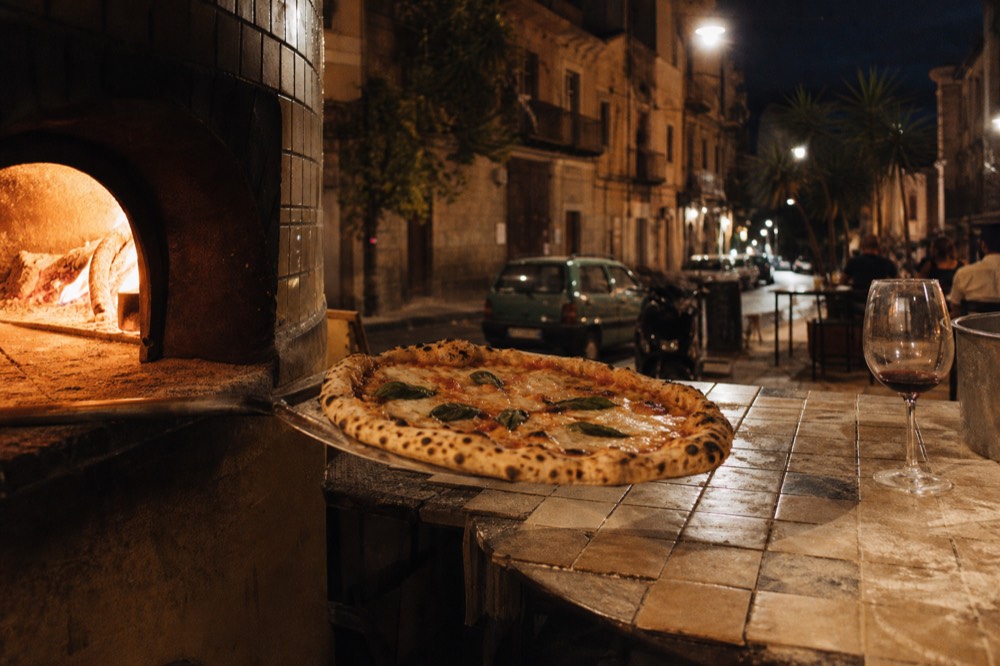
Naples does two things at once that usually exclude each other. It has the most imitated dish on earth, pizza, made at source in a city where a pizza plus a drink averages 14.56 euro, according to a price survey of the historic centre, and it has a depth of cheap daily eating, cuoppo, frittatina, sfogliatella, babà, that most food cities cannot match at any price. The Time Out resident survey result suggests the people who live there agree with the visitors.
Its weakness is the flip side of its fame. The eating experience concentrates hard on a set list of icons, and the city's fine-dining scene, while real, is not the reason anyone books the train. If your ideal food trip is a constant rotation of standing, walking and fried things, Naples is close to unbeatable. If you want long tasting menus and ingredient-driven cooking, you will find better in other cities on this list.
One more honest note: Naples wins polls partly because everyone can rate pizza. That does not make the win hollow, but it does mean the polls systematically undercount cities whose excellence is harder to score in one line. Which brings us to the south's other argument.
Palermo's Case: The Street Food Capital
Palermo is the best food city in Italy for street food specifically, and it is the only southern city whose food culture is built around eating outdoors, standing up, all day, at market prices that still run from about 3 euro for a rice ball. Its sit-down scene is smaller than Naples's, but its daytime eating has no Italian rival, and it holds a Michelin star of its own.
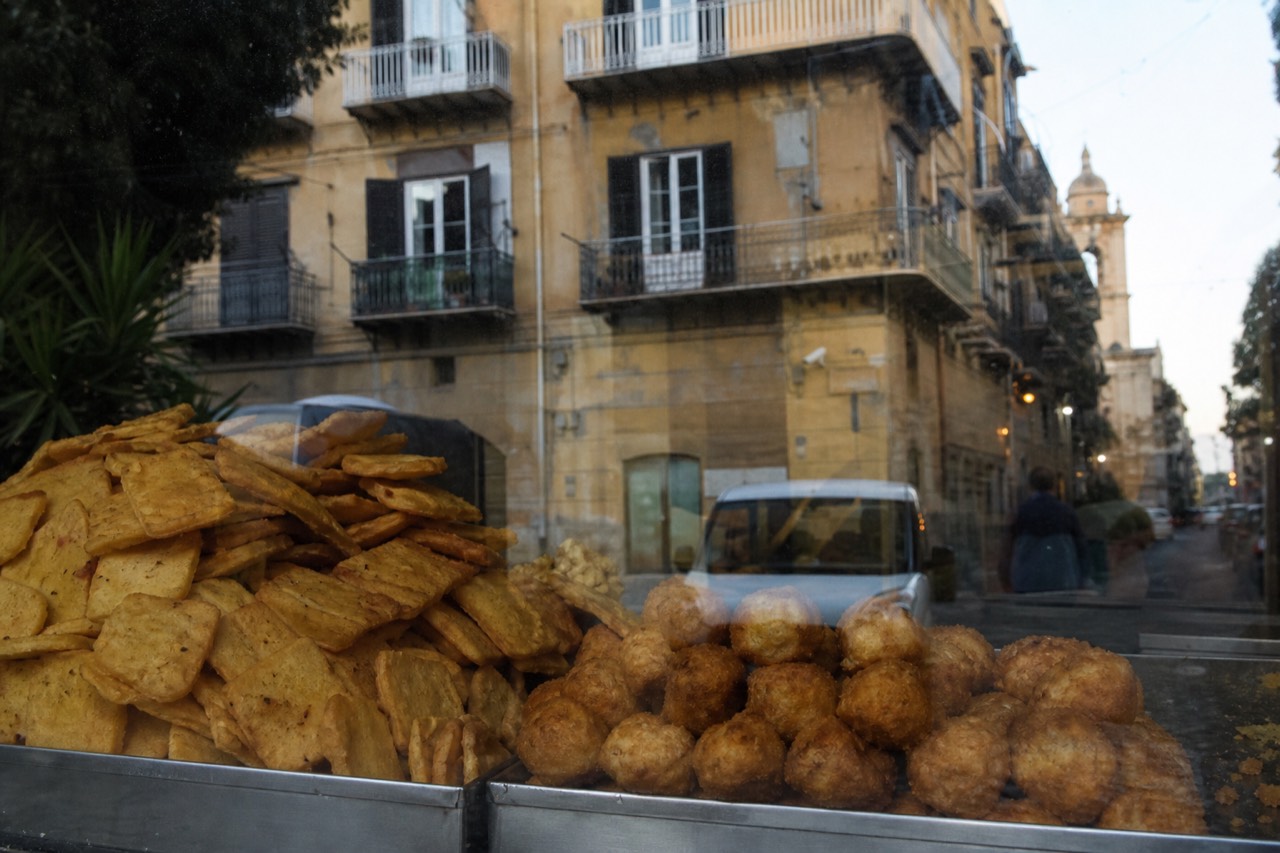
This is the part where this site has a horse in the race, so the case gets made with evidence rather than cheerleading. Palermo's food culture is market culture. The four historic markets, Ballarò, the Capo, the Vucciria and Borgo Vecchio, structure how the city eats, and the street snacks sold around them, panelle, crocchè, arancine, sfincione, stigghiola, are on the official Sicilian list of traditional products. Panelle, chickpea fritters, are the one item in that canon whose official production territory is the city of Palermo itself.
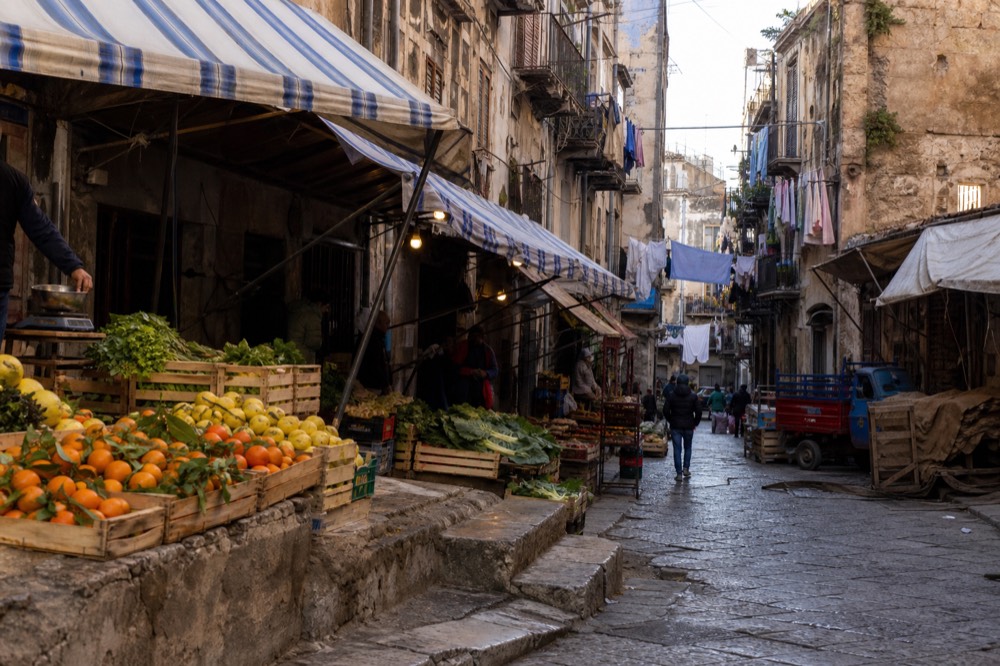
The prices are part of the argument. In the historic centre, an arancina or a panelle-and-crocchè sandwich runs about 3 to 4.50 euro, roughly double the 2021 level, according to reporting on price rises in the centre, and a brioche with gelato or granita commonly costs 4 to 5 euro. That is still cheap eating by any western European standard, and unlike most cheap eating it is the genuine local cuisine, not a discount version of it.
Palermo's reputation has a specific history: the famous line that it ranks fifth in the world for street food comes from a 2012 Forbes article, and it was a reader survey run by a travel website that has since closed. It is fourteen years old. The reason it still circulates is that the underlying claim kept being true enough to survive: the market eating is dense, traditional and cheap, and the television food pilgrims noticed. Anthony Bourdain filmed a Palermo market and a spleen sandwich in his 2005 Sicily episode and came back in 2013; Stanley Tucci's Sicily episode in 2026 filmed the Capo market alongside the cathedral.
For a first visit, the practical entry point is a guided tasting walk, because the best stalls are not always the ones a visitor can identify alone. The Palermo Street Food Walking Tour with Local Guide & Tasting, from $39.83 per person, 2.5 hours, free cancellation up to 24 hours, is the budget-friendly option that covers the Capo market with tastings included, at 4.8 across 933 reviews. It often sells out, which is worth knowing before you leave your food days unplanned.
If you want a slightly deeper version with more stops, the Do Eat Better small-group tour runs 3 hours from $52.06 per person, also with free cancellation up to 24 hours, capped at 12 spots per departure, and holds 4.9 across 1,355 reviews. Between the two, the choice is mostly duration and depth, not quality.
Bologna, Rome And The Northern Contenders
Bologna is the strongest northern answer, holding third place among Italian cities in the TasteAtlas index on the strength of its pasta tradition, while Rome compensates for ninth place with the widest range of any Italian city, from 2-euro pizza al taglio to starred tasting menus. Milan's second place surprises people, but it reflects the depth of its restaurant scene rather than any native dish.
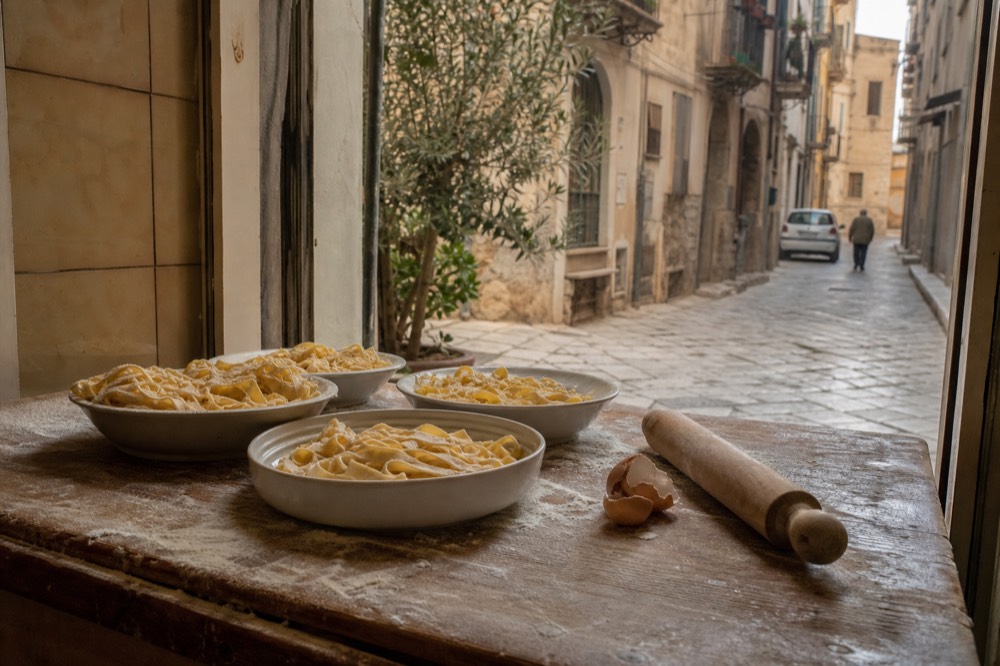
Bologna's case is the purest on this list: tagliatelle al ragù, tortellini in brodo, mortadella, and a surrounding region, Emilia-Romagna, that produces Parmigiano, balsamic vinegar and prosciutto within a short drive. What Bologna cannot offer is the climate and street life of the south. Its food happens indoors, at tables, in a way that makes it a cold-weather food city and a pasta education, rather than an all-day street carnival.
Rome is the pragmatist's answer. It has carbonara and cacio e pepe as native pasta traditions, a Jewish-Roman frying tradition in the ghetto, the best coffee bar density in the country by most accounts, and every price band from vending-machine espresso to two-Michelin-star tasting menus. The TasteAtlas ninth place reflects variance: enormous numbers of ratings, wildly mixed quality. A visitor who researches eats better in Rome than the polls suggest; a visitor who doesn't, worse.
Milan deserves a sentence of honesty, because its #2 ranking raises eyebrows. Milan does not have a deep native street canon. What it has is Italy's wealthiest dining market, meaning the best raw ingredients, the most ambitious kitchens and the largest concentration of good restaurants per block. If your food trip is a restaurant trip, Milan is better than its reputation. If it is a street trip, it is the wrong city.
Genoa, sixth, is the quiet overachiever: focaccia, pesto, fresh anchovies, and a food culture that costs less than anywhere else in the north. It rarely tops anyone's list and rarely disappoints anyone who goes.
| City | Best for | Eating style | Rough character |
|---|---|---|---|
| Naples | Pizza, fried food, coffee | Street and trattoria | Loud, cheap, iconic |
| Bologna | Fresh pasta, cured meats | Sit-down, indoor | Scholarly, rich |
| Rome | Range, pasta classics | Everything, every price | Vast, uneven |
| Milan | Restaurant scene | Fine dining, aperitivo | Polished, expensive |
| Genoa | Focaccia, pesto, fish | Market and osteria | Understated, good value |
| Palermo | Street food, markets | Standing, all day | Raw, market-driven |
Sicily Beyond Palermo
Sicily as a whole, not just Palermo, is the strongest regional food answer in Italy for 2026: the Michelin Guide Italia counts four two-star and eighteen one-star restaurants on the island, with Taormina holding the densest concentration and Catania carrying Palermo's eastern rivalry in both dining and dialect. If the question is "which region", Sicily's case beats any single mainland city's.
The 2026 guide, as Live Sicilia reported at its presentation, gives Taormina one two-star restaurant, St. George by Heinz Beck, plus four one-stars, Catania two one-stars, and Palermo one, Mec Restaurant. No Sicilian restaurant holds three stars. That is a small fine-dining footprint compared with Milan or Rome, and it is the wrong way to judge the island. Sicily's argument was never tasting menus; it is the depth of the everyday canon, from street food in Palermo to the fish cooking of Catania and the pastry towns of the interior.
Catania is Palermo's rival in everything, including food. The split is even baked into the language: Palermo says arancina, feminine and round, Catania says arancino, masculine and often pointed, and the Accademia della Crusca has ruled both correct, a genuinely Italian way for two cities to disagree. For a fuller comparison of the two, our piece on Palermo versus Catania covers the food and the character of each, and our guide to Palermo street food goes dish by dish through the western canon.
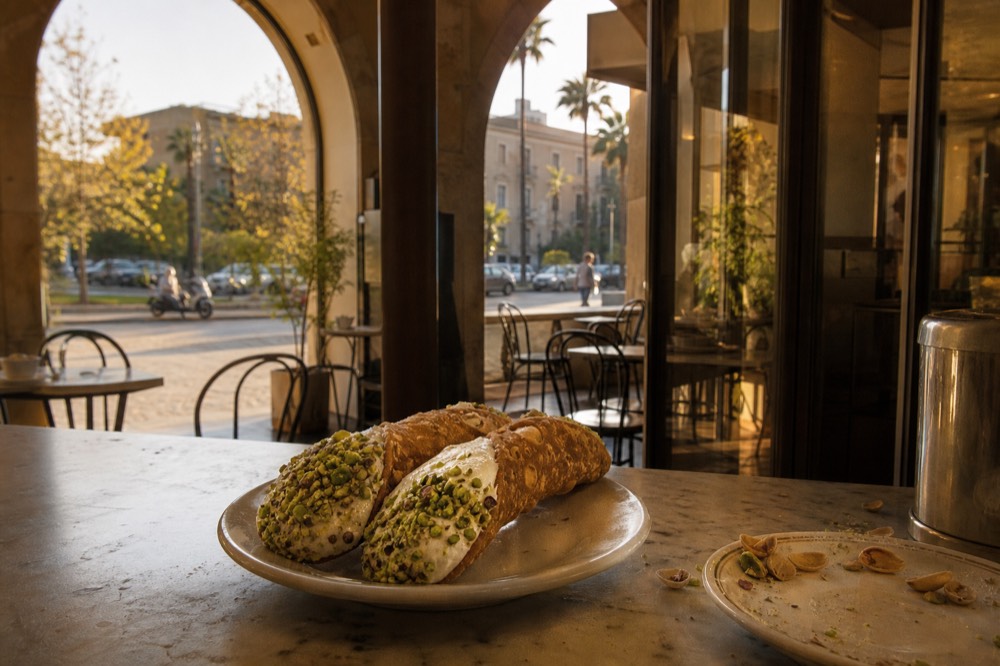
The cannolo question also belongs to Sicily, and specifically not to Palermo: the official Sicilian technical sheet for the cannolo alla ricotta lists its production territory as Paceco, Erice, Trapani and Valderice, the western province, and the name comes from the cane the shell was originally rolled around. Anyone eating their way around Italy's cities should know that some of the best food on the island is a bus ride from any of them.
How To Decide For Your Own Trip
Match the city to how you like to eat, not to the list: choose Naples for icons and low prices, Bologna for pasta and sit-down depth, Rome for range, Milan for restaurants, and Palermo for the market-and-street experience that no other Italian city offers at the same intensity or cost. Then check the practical constraints, season and crowds, before booking.
A short decision framework. If your ideal day is a slice, a coffee, a walk and another slice, book Naples. If it is a two-hour lunch with rolled pasta and a ragù you will think about for years, book Bologna. If you are travelling with people whose food ambitions differ wildly, Rome absorbs everyone. If your budget is higher and your interest is in kitchens rather than stalls, Milan. If you want the feeling of a North African-influenced market city where lunch costs less than a Milanese coffee, book Palermo, and give it the right amount of time; our guide to how many days in Palermo is enough covers the planning.
Season matters more in the south. July in Palermo averages a 29.8 degree high with just 1.2 rain days, hot and dry, and mid-July adds the Festino di Santa Rosalia processions through the historic centre on the 14th and 15th. December is the wettest month at 123.7 mm. May, June and September are the walking-and-eating sweet spots, with highs from 23.3 to 27.5 degrees. None of this affects a restaurant city like Milan nearly as much.
And a note on doing this properly: this site, Palermo Food Tours, exists because the market city rewards local knowledge more than most. But the same is true everywhere on this list. The difference between a good and a great food trip in any Italian city is usually the three streets you didn't know to walk down. A guide, or a well-researched plan, buys you those streets.
For Palermo specifically, the three experiences below cover the range: the tastings walk for value, the small-group tour for depth, and the Bottega Monteleone wine tasting, from $51.10 per person for 2 hours with free cancellation up to 24 hours, for the island in the glass. Sicily's wines deserve the last evening of any food trip here.
The most common version of this question is simply which city to book, so the answers below run through the head-to-head comparisons people actually ask: Palermo versus Naples, the star counts, the prices, and where Palermo's street food reputation really comes from. Each answer gives a direct verdict and the figures behind it.
Common Questions About The Best Food City In Italy
What Italian City Has The Best Food?
There is no single winner. Naples tops both major current rankings of Italian food cities, the TasteAtlas 2025/2026 index and the Time Out 2026 survey, while Bologna leads for pasta and sit-down eating and Palermo leads for street food. Pick by eating style rather than by ranking.
Is Palermo or Naples better for food?
Naples has the stronger overall reputation and the finer pizza culture; Palermo has the stronger street food and market culture. Naples wins on famous sit-down dishes, Palermo on the density and price of daytime market eating, with arancine and panelle sandwiches running roughly 3 to 4.50 euro in the historic centre.
Which Italian city has the most Michelin stars?
Not any southern city. The Michelin Guide Italia 2026 gives Sicily as a whole four two-star and eighteen one-star restaurants, with Taormina the densest cluster and Palermo holding a single star at Mec Restaurant. Mainland dining capitals such as Milan and Rome carry far more stars, but stars measure fine dining, not the everyday food most visitors travel for.
What is the cheapest Italian city for food?
Among the leading food cities, Palermo and Naples are the cheapest for eating out. Palermo's historic-centre street food runs about 3 to 4.50 euro for an arancina or a panelle sandwich and 4 to 5 euro for a brioche with gelato, while Naples averages 14.56 euro for a pizza with a drink. Northern cities cost noticeably more for equivalent meals.
Why is Palermo famous for street food?
Palermo's food culture grew around its historic markets, Ballarò, the Capo, the Vucciria and Borgo Vecchio, where snacks like panelle, crocchè and arancine are sold all day. The famous claim that it ranks fifth in the world for street food comes from a 2012 Forbes report of a reader survey on a now-closed travel site, but the underlying street food tradition is real and continues to draw food travellers and television chefs.