Palermo Street Food Map: A Self-Guided Walking Route Through The Four Markets
Palermo's four historic markets sit close enough to each other to walk in a single loop. This is the route in the order the markets actually trade, with the stops, the dishes and the current prices.
Short answer
Yes. All four historic markets sit inside the centro storico, so a single walking day covers the loop: the Capo in the morning, via Maqueda at midday, Ballarò in the afternoon and the Vucciria at aperitivo hour. Snacks run 3 to 4.50 euro in the centre, and a guided version starts from $52.06 per person.
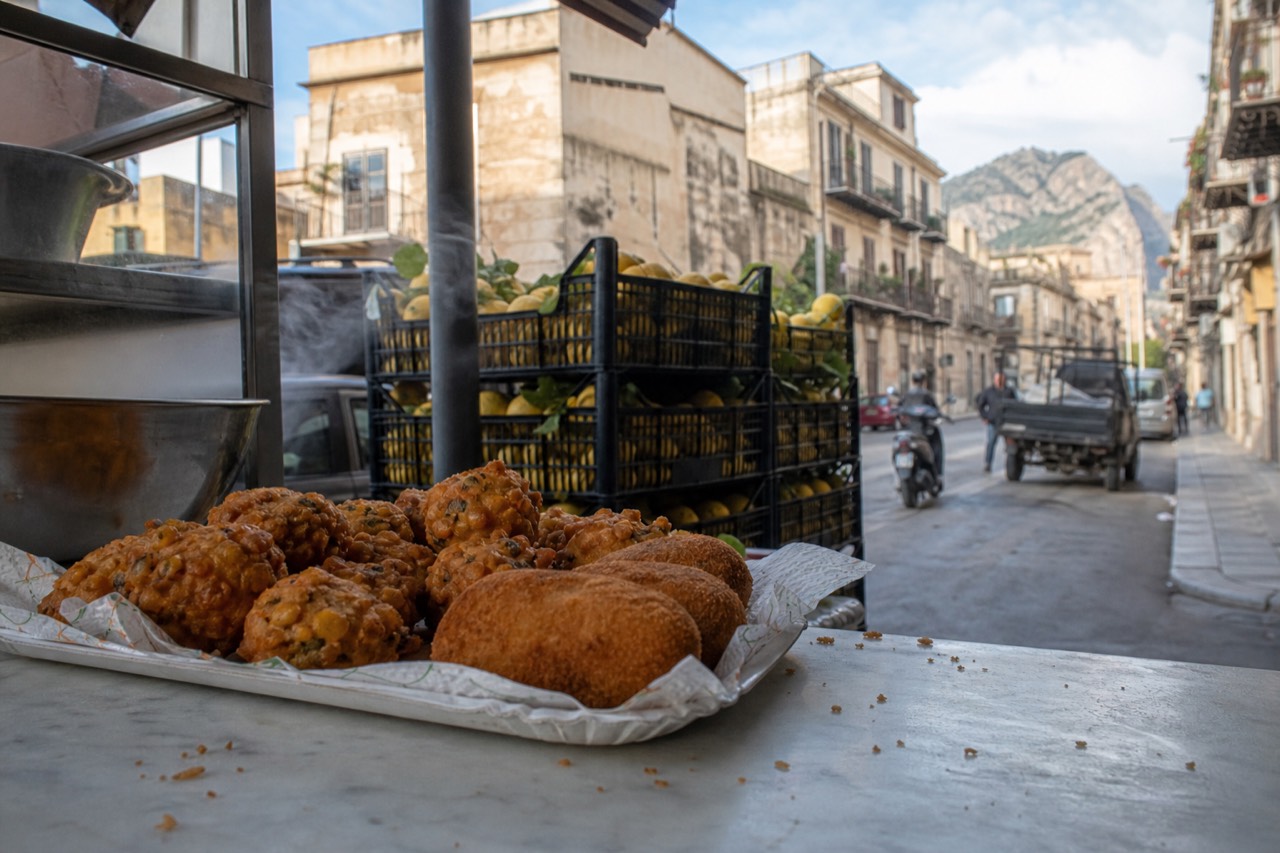
Palermo's street food does not hide. It is sold out of friggitorie within shouting distance of the four markets the city's own tourism portal lists as its historic ones: the Capo, Ballarò, the Vucciria and Borgo Vecchio. The shouted sales cry of the hawkers even has a name here, the abbanniata, and the portal calls listening to it part of the show. This page turns those four markets into a single walking route, in an order that matches how they actually trade, with what to order at each stop and what it currently costs.
Can You Walk Palermo's Street Food Stops In One Day?
Yes. All four of Palermo's historic markets, the Capo, Ballarò, the Vucciria and Borgo Vecchio, sit inside or on the edge of the centro storico, and the street food stalls between them cluster along a handful of streets. One long day covers the loop if you start early, when the markets are at their loudest.
The geography does most of the work for you. The Capo runs along via Carini and via Beati Paoli in the north-centre of the old city. Ballarò stretches from piazza Casa Profesa down to the bastions of corso Tukory in the Albergheria quarter. The Vucciria sits between them, running along via Argenteria to piazza Garraffello, and Borgo Vecchio lies behind the Politeama theatre toward the port. None of these requires transport between them. The route is defined by streets and landmarks rather than by kilometre counts, because the stalls you choose within each market shift the total anyway.
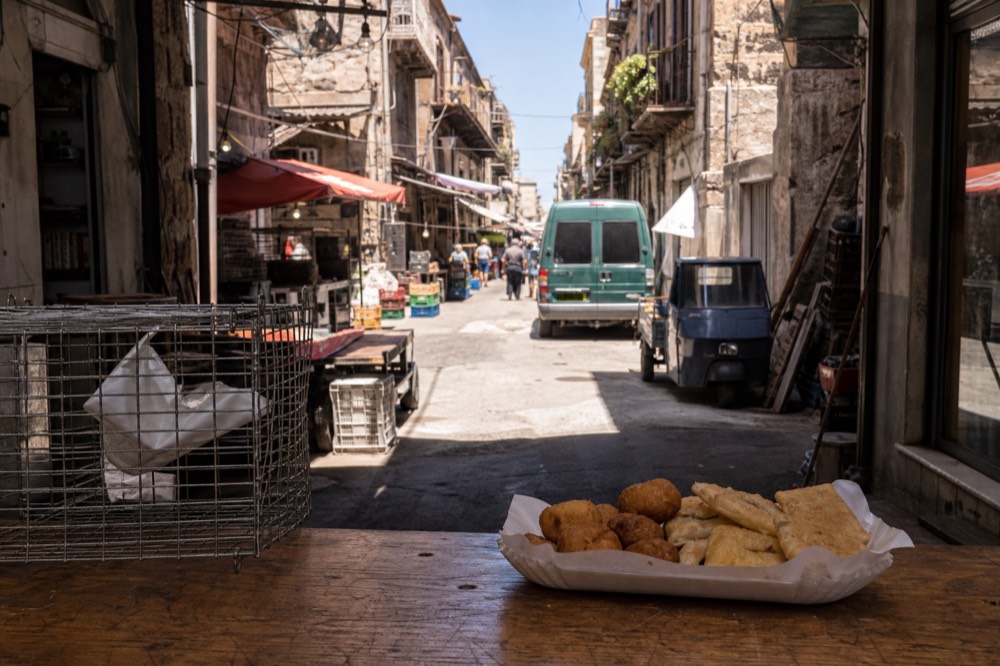
There is a structural reason this works so well on foot. Palermo's historic centre is a Zona a Traffico Limitato, a limited traffic zone, active during the day on weekdays and at night at weekends under the summer timetable published by the city's own police department. In practice that makes the centro storico a walking space by design, and a hire car a liability rather than an asset on this route. If you are staying outside the centre, arrive on foot or by bus and leave the car wherever you are sleeping.
Pacing matters more than distance. The markets are morning animals, and the best fried food comes out when the fryers are hot and the traders are busy. Start at the Capo around opening time, use the middle of the day for the connecting streets and Ballarò, and let the Vucciria's evening character close the walk. Anyone who wants the route compressed into a shorter window can drop Borgo Vecchio entirely and still eat extremely well.
The Palermo Street Food Map: Four Markets, One Loop
The map is a loop of four markets plus one connecting street. The Capo sits in the north-centre near Porta Carini, Ballarò fills the Albergheria to the south, the Vucciria lies between them toward the sea, and Borgo Vecchio sits behind the Politeama. Via Maqueda links the northern half and carries its own stops.
Each market has a distinct character, and the city's tourism portal describes all four in its own words. The Capo grew in the ancient Seralcadio quarter and entered through Porta Carini, the 18th-century gate rebuilt on the model of a 15th-century original. It was historically a meat market, and the portal notes the dialect word for its butchers' shops, carnezzerie, a Spanish-era borrowing. It also records an unusual custom: quarters of meat hung outside the shops, which the city attributes to Palermo's former Jewish presence, for draining the blood. The street food the portal lists as sold here is sfincione and sfincionello, pane con la milza, and pane con le panelle and crocche di patate.
Ballarò is the one the city's own portal calls the oldest and largest market, a characterisation worth repeating only with that attribution since no scholarly date sits behind it. The portal describes it as the market for early produce and goods from the surrounding countryside, and notes it dates to the era of Arab domination, again in its own voice. It runs from piazza Casa Profesa to the bastions of corso Tukory, and it is the only one of the four for which the city publishes exact clock times: Monday to Saturday 07:30 to 20:00, Sunday mostly mornings only, per the official market page.
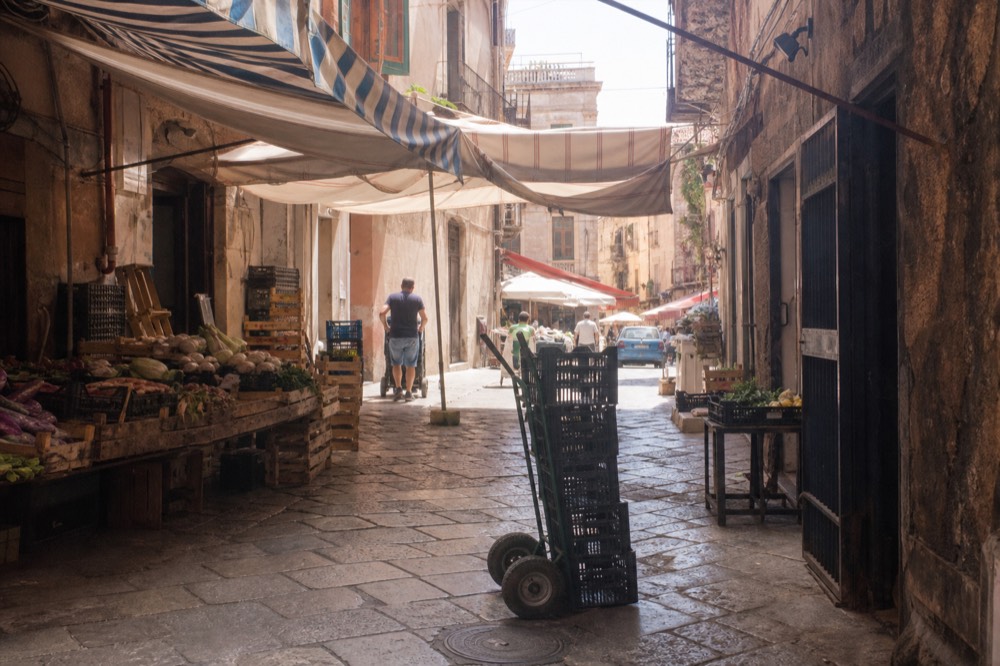
The Vucciria is the complicated one. The portal still describes a food market open every day, morning and afternoon, but the daytime reality has thinned, and the quarter now runs loudest at night. Its name comes from the French boucherie, butcher's shop, because it began as a meat market; in Palermitan the word also came to mean uproar, from the shouting. The viceroy Caracciolo gave the piazza its orderly arrangement in 1783, and the painter Renato Guttuso fixed its heyday in a canvas three metres by three metres, painted between October and November 1974, that now hangs at the university's Steri palace a short walk away, placed there by the painter himself. The city has run the market area, including piazza Caracciolo, as a regulated pedestrian zone since an ordinance of June 2025, extended to 31 December 2026.
Borgo Vecchio is the quiet anchor of the set. The quarter's formation dates to 1556, after the new port was built and the Senate of Palermo bought the tonnara di S. Giorgio, and it was settled by fishermen and sailors moving out of the Kalsa. Its food market occupies via Scina, via Principe di Scordia, via Ximenes and piazzetta Nasce, and it trades in the morning. The city itself notes the quarter has undergone urban gentrification, with a growing young and tourist presence at night around its pubs and taverns.
| Market | Quarter | Key streets | Hours per the city portal | Character |
|---|---|---|---|---|
| Capo | Seralcadio | via Carini, via Beati Paoli, Porta Carini | Open every day, morning and afternoon | Historic meat market, dense friggitorie |
| Ballarò | Albergheria | piazza Casa Professa to corso Tukory | Mon-Sat 07:30-20:00, Sun mostly mornings | Largest market, produce and street food |
| Vucciria | near the sea | via Argenteria, piazza Caracciolo, piazza Garraffello | Officially daily; daytime market has thinned | Daytime quiet, strong evening scene |
| Borgo Vecchio | behind the Politeama | via Scina, via Principe di Scordia | Mornings | Oldest dated quarter, 1556, locals' market |
For a deeper dive into any single one of them, the site carries a dedicated Capo market guide, and the sections below cover the other two central markets in route order.
The Walking Order, Stop By Stop
Walk it in this order: the Capo first thing in the morning, then via Maqueda past two historic friggitorie around Teatro Massimo, then across to Ballarò for the early afternoon, and finish in the Vucciria as the bars open. Borgo Vecchio trades mornings only, so treat it as an optional early start.
Start at Porta Carini, the Capo's principal entrance, as the stalls are being restocked. This is the market for the fried canon: the city portal itself lists sfincione, pane con la milza, panelle and crocche as the street food sold by its hawkers. Walk via Carini and via Beati Paoli slowly. The hanging meat outside the carnezzerie looks theatrical to a visitor and ordinary to a local, and the portal attributes the custom to the city's former Jewish presence. Eat standing, where the fryers are busiest.
From the Capo, head for via Maqueda, the straight spine that runs north toward Teatro Massimo. This single street now carries two of the most useful stops on the whole route. The Antica Focacceria San Francesco, one of the city's historic names, opened a second location at via Maqueda 298 near the theatre in mid-April 2026, with an artisanal gelateria alongside its classics. A few doors down at via Maqueda 295, Porta Carbone opened a new outlet and marked its 82nd anniversary there in July 2025, complete with a grill for stigghiola. Local press covered both openings, and together they turn a plain shopping street into a legitimate food stop.
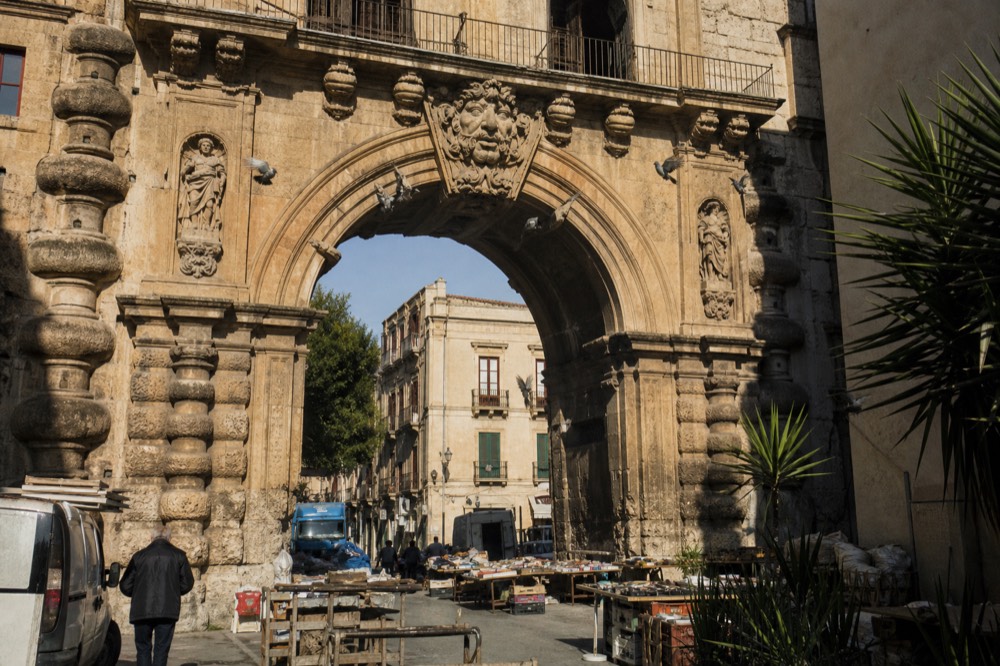
Continue down via Maqueda to the Quattro Canti, the baroque crossroads at the heart of the old city, then cut south into the Albergheria for Ballarò. Give it the early afternoon: the market runs to 20:00 on weekdays, and the produce stalls are the point as much as the fried food. One honest warning is worth carrying. Recent first-hand visitor reports describe pre-made arancini reheated in microwaves at some Ballarò stalls, and the local replies in those same threads point to named friggitorie elsewhere in the city instead. The lesson is not to avoid Ballarò, whose own guide covers it in full, but to apply one rule everywhere on this walk: buy fried food where it is being fried, in front of you, from a busy counter. The site's where locals eat in Palermo page collects the names locals recommend most.
Finish, or pause, in the Vucciria. Walk via Argenteria to piazza Caracciolo and piazza Garraffello, past the porticoes the viceroy arranged in 1783. Do not expect the daytime produce market the older guidebooks describe; that version has contracted, and the quarter's energy now arrives with the evening. It is a good place for a seated aperitivo, and the Guttuso canvas of the market at its peak hangs at the Steri a short walk away if you want to see what it looked like in 1974. The Vucciria guide covers the quarter's transformation honestly.
| Order | Stop | Where | What to get |
|---|---|---|---|
| 1 | Capo market | Porta Carini, via Carini, via Beati Paoli | Panelle, crocchè, sfincione, pane con la milza |
| 2 | Via Maqueda north | via Maqueda 295 and 298, near Teatro Massimo | Historic friggitoria classics, stigghiola off the grill |
| 3 | Quattro Canti | Crossing of via Maqueda and Corso Vittorio Emanuele | Nothing; the landmark halfway point |
| 4 | Ballarò | piazza Casa Profesa to corso Tukory | Produce, arancine from a busy fryer |
| 5 | Vucciria | via Argenteria, piazza Caracciolo | Seated stop, evening scene |
| Optional | Borgo Vecchio | via Scina, via Principe di Scordia | Morning-only market, locals' breakfast |
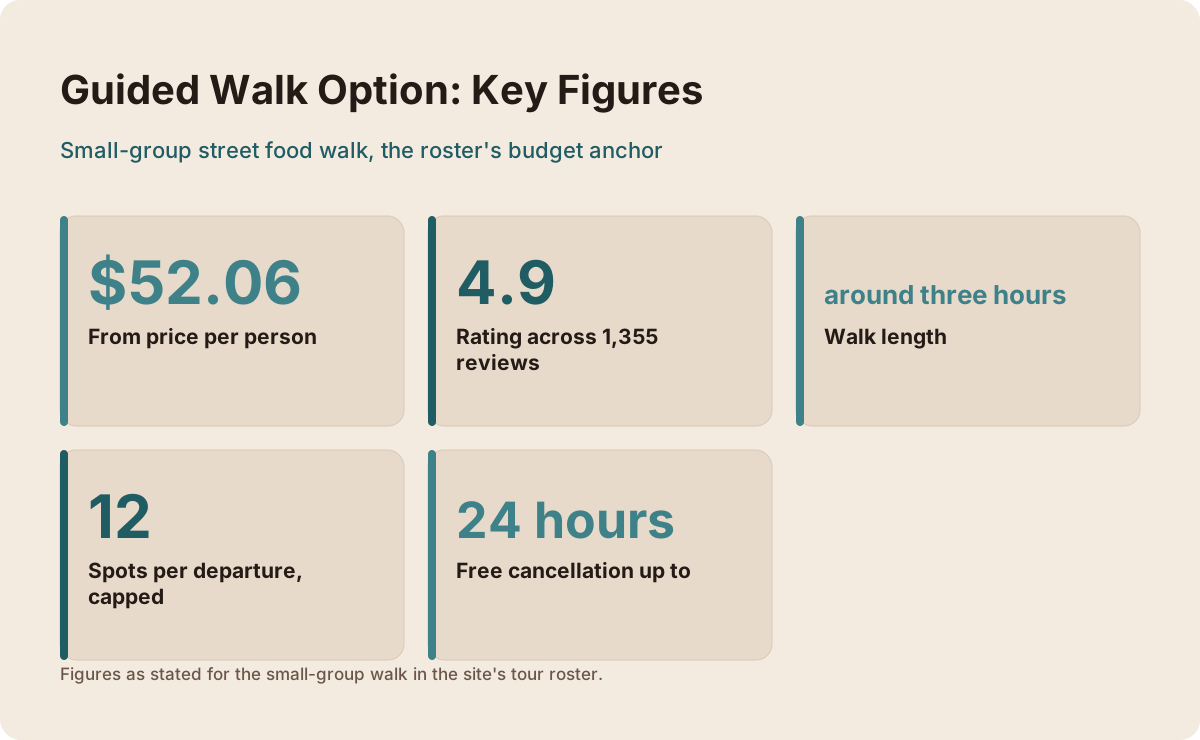
If the idea of calibrating your own taste against a local's on day one appeals, one option is to walk the route once with a guide and repeat the stops you liked on your own afterwards. The small-group walk by Do Eat Better Experience is the roster's budget anchor: 4.9 across 1,355 reviews, from $52.06 per person, around three hours, capped at 12 spots per departure, with free cancellation up to 24 hours.
What To Eat At Each Stop On The Walk
Order by stop: panelle and crocchè from a friggitoria at the Capo, an arancina mid-route, sfincione where a tray looks fresh, and a cannolo filled to order. Several of these are on Sicily's official PAT list of traditional products, and panelle is the one canon item whose official production territory is Palermo itself.
The PAT scheme, Italy's register of traditional food products, is the most reliable way to sort the canon from the folklore. Sicily carries 293 products on it as of the June 2025 regional update. Arancini di riso, Panelle, Crocche di patate, Stigghiola, Iris, Sfincione and Cannoli are all listed, which is a useful filter when a menu offers something you have never heard of. The site's wider Palermo street food page covers the full canon dish by dish.
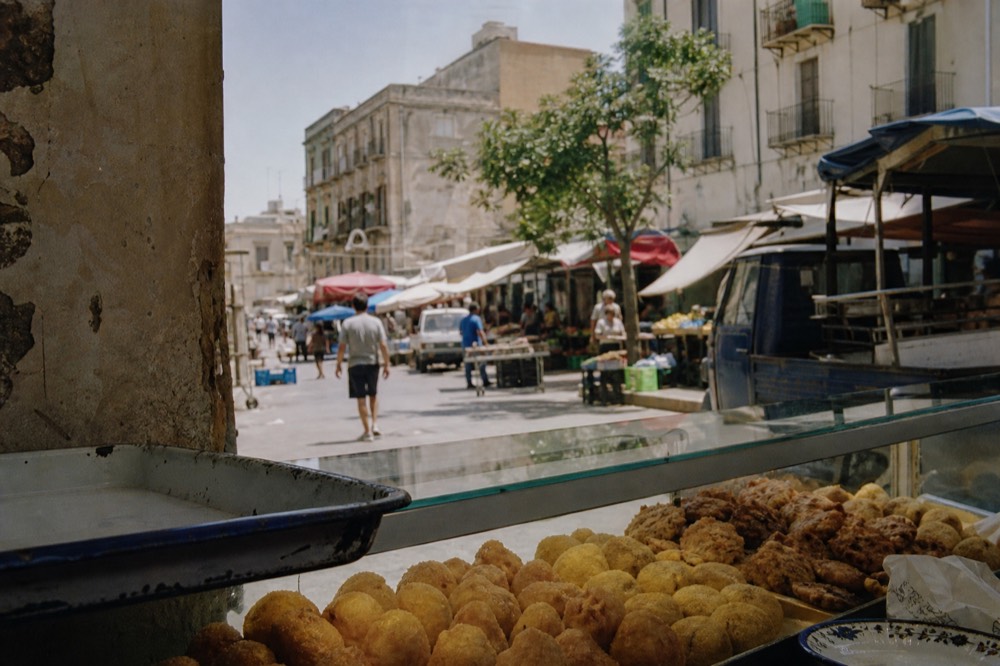
Panelle deserve their spot at the top of the order. The official regional technical sheet gives their production territory as the city of Palermo and parts of its province, the only canon item whose territory is the city itself, and even fixes the thickness of the spread batter at half a centimetre before it is cut and fried. They are chickpea fritters, served hot, and classically eaten in a bun with crocchè, potato croquettes. The arancina is next, and the naming is not a typo: the Accademia della Crusca, Italy's foremost language academy, settles the question in its consultation on arancino versus arancina. Palermo and the west say arancina, feminine and round; Catania and the east say arancino, often conical. Crusca also found something few guidebooks repeat: the first dictionary to record the word, in 1857, defines it as a sweet rice dish shaped like a bitter orange, with no trace of the dish before the second half of the 19th century. The Arab-origin story you will hear on the street is not supported by the lexicographic record.
Sfincione is the Palermo answer to pizza, though calling it Sicilian pizza undersells it. The Comune di Bagheria's own festival page frames the split: white sfincione is Bagheria's symbol product, red is the Sicilian and Palermo tradition, and Bagheria has held a municipal-backed Sfincione Fest in November since 2018. Palermo's version is the red one. For the cannolo, note where the official sheet places it: the PAT production territory is the Trapani area, Paceco, Erice and Valderice, not Palermo, and the name comes from the cane the shell was originally rolled around. The practical consequence is simple. Order it filled to order, never pre-filled and sitting, and treat the shell's crispness as the test.
Two honest gaps are worth flagging rather than papering over. Pane con la milza, the spleen sandwich, is confirmed by the city portal as sold in the Capo, but no authoritative source for its composition or its origin story has been verified, so this site does not publish one; order it if you eat offal, skip it if you do not. And the stigghiola, lamb intestine wound in caul fat and grilled, is PAT-listed with an official ingredient sheet, which is more documentation than most street snacks anywhere can claim.
| Dish | What the official record says | Where on the route |
|---|---|---|
| Panelle | PAT-listed; territory is Palermo city itself; batter spread half a centimetre thick | Capo friggitorie, via Maqueda stops |
| Crocche di patate | PAT-listed potato croquettes | Same counters as panelle |
| Arancina | PAT-listed as arancini di riso; Crusca records the feminine western form and an 1857 first attestation as a sweet | Ballarò, from a busy fryer |
| Sfincione | PAT-listed; red is the Palermo tradition, white is Bagheria's symbol product | Capo hawkers, bakery counters |
| Stigghiola | PAT-listed with a full official ingredient sheet | Via Maqueda grill stops |
| Iris | PAT-listed; territory Palermo; sweet fried dough filled with ricotta cream | Bakery counters mid-route |
| Cannolo | PAT territory is the Trapani area; named for the cane the shell was rolled around | Anywhere that fills to order |
If matching your own stall-picking against a professional's sounds appealing, or if you would rather have the fried canon chosen for you on the first pass, the small-group option above is the one to hold.
How Much Does A Self-Guided Palermo Street Food Walk Cost?
Budget 3 to 4.50 euro for an arancina or a panelle panino in the centro storico, 4 to 5 euro for a brioche with granita or gelato, and 14.56 euro on average for pizza and a drink at a sit-down stop. Local press reported in 2026 that centre snack prices have roughly doubled since 2021.
That last clause deserves emphasis, because a lot of English-language advice about Palermo being Europe's cheapest eating city is written from pre-inflation memory. Il Sicilia, reporting on centro storico prices in May 2026, put the arancina or panelle panino at 3 to 4.50 euro, roughly double the 2021 level, and the average pizza-and-drink combination at 14.56 euro across a range of 9 to 28. Giornale di Sicilia reported that a brioche with gelato or granita at 4 to 5 euro now draws local complaints as excessive for a traditional item. The walk is still good value by northern European standards. It is simply no longer the near-free crawl of older blog posts.
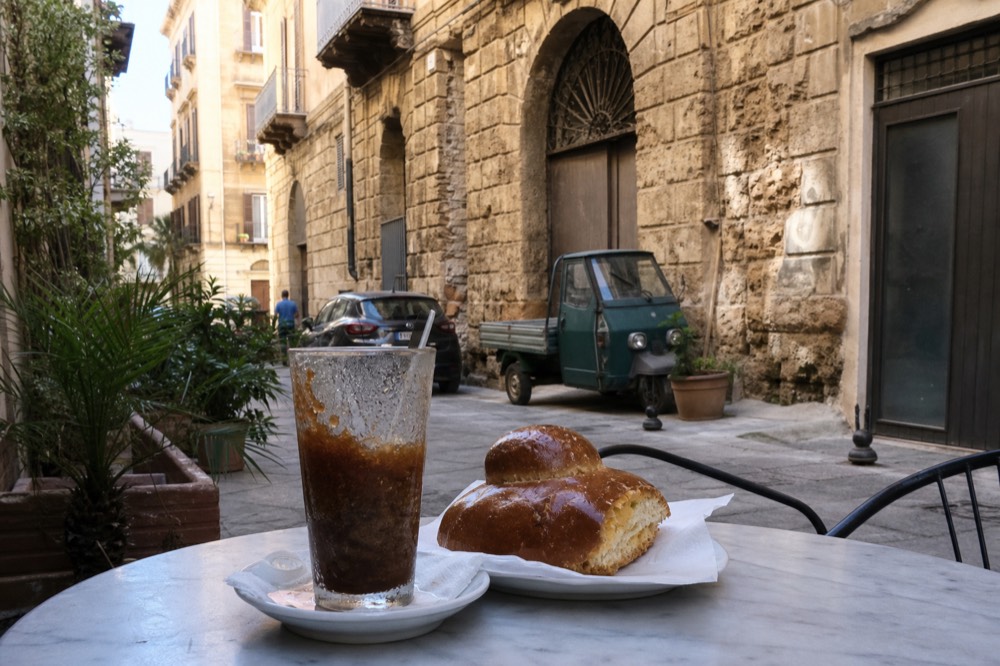
If you sit down, the coperto applies. This is the per-person cover charge, and the Italian consumer organisation Altroconsumo sets out the rule plainly: there is no national law banning it, but it must be clearly stated in writing, on the menu or before you order. If it was clearly signalled, ordering means accepting it. If it was not, or the amount is unclear, it can be contested. One regional quirk: Lazio bans coperto charges outright under a 2006 regional law, and Sicily is not Lazio, so expect the charge here and read the menu before sitting down.
| Item | Typical centro storico price | Note |
|---|---|---|
| Arancina or panelle panino | 3 to 4.50 euro | Local press, May 2026; roughly double 2021 |
| Brioche with granita or gelato | 4 to 5 euro | Local press, 2026 |
| Pizza and a drink, sit-down | 14.56 euro average, 9 to 28 range | Local press survey of centre venues |
| Coperto | On the menu | Legal if clearly stated before ordering, per Altroconsumo |
| Guided walk for comparison | From $52.06 per person | Small-group format, about three hours |
One way to price the decision: the ten-plus-tastings walk by Secret Food Tours, the roster's tasting-count leader, runs from $89.33 per person for three and a half hours, rated 5.0 across 782 reviews, with free cancellation up to 24 hours. If your self-guided day would run six snacks and two seated stops, the arithmetic is closer than it looks, and the guided version buys you the stall choices.
Should You Take A Guided Street Food Walk In Palermo Instead?
Take a guide if you want the stalls chosen for you on a first visit, or if you want an all-inclusive format. Go self-guided if you eat selectively or want to control the budget. Palermo's guided street food walks run from $52.06 to $89.33 per person and last around three hours, with one three-and-a-half-hour exception.
The honest differentiator on this site's roster is not price or rating, which cluster tightly, but the cancellation policy. Three of the tours are Streaty products and are non-refundable: the original all-inclusive market tour, the night tour, and the food-and-wine walk. The other nineteen offer free cancellation up to 24 hours. If your travel dates are firm, the non-refundable formats are defensible. If there is any chance a flight or a ferry shifts, pay the small premium for a cancellable ticket.
| Tour | Rating | From | Duration | Cancellation |
|---|---|---|---|---|
| Do Eat Better small group | 4.9 across 1,355 reviews | $52.06 | 3 hours | Free up to 24h, 12 spots |
| Street food and history walk | 4.9 across 1,672 reviews | $56.91 | 3 hours | Free up to 24h, often sells out |
| Original all-inclusive market tour | 4.9 across 2,308 reviews | $81.64 | 3 hours | Non-refundable, 12 spots |
| Ten-plus tastings walk | 5.0 across 782 reviews | $89.33 | 3 hours 30 | Free up to 24h, 12 spots |
| Night street food tour | 4.9 across 580 reviews | $69.8 | 3 hours | Non-refundable, 12 spots |
The middle option deserves a look from history-minded walkers. The Street Food and History walk by Cavallaro Fabrizio pairs five tastings, a cannoli and a drink with the Capo market and the city's story, from $56.91 per person, rated 4.9 across 1,672 reviews. It often sells out, which is the practical thing to know: the cancellable formats here book out ahead in peak months precisely because they are cancellable.
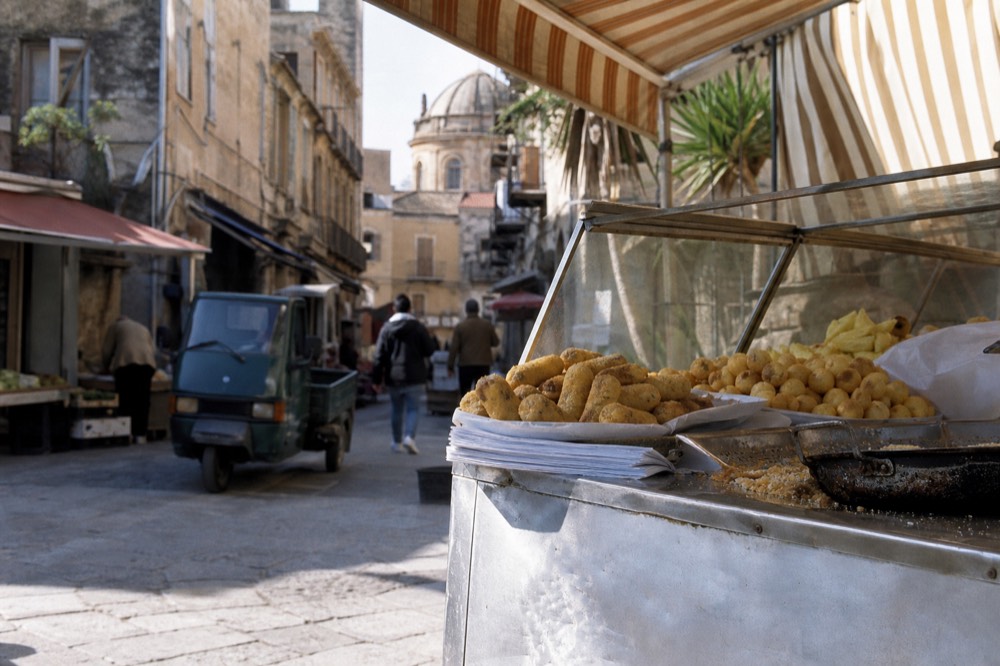
A note on what a guide actually adds, beyond stall selection. The self-guided route above gives you the same streets and, if you apply the busy-fryer rule, the same food. What it cannot give you is the abbanniata translated in real time, the story behind the hanging meat in the Capo, or a local's verdict on which Ballarò stall is worth your last two euro coins. Some travellers value that highly. Others would rather spend the money on a second seated lunch, and both positions are reasonable.
When Is The Best Time Of Year To Walk The Route?
May, June and September are the best walking months. WMO climatological normals for Palermo put May at a 23.3 degree daily high with 4.1 rain days, June at 27.2 with 1.9, and September at 27.5 with 5.4. July is nearly rainless but the Festino fills the centre on 14 and 15 July, and August is the hottest month.
The World Meteorological Organization's published normals for Palermo give the full picture. April is mild at an 18.7 degree high but averages 8.6 rain days, more than double May's. July averages just 6.7 millimetres of rain across 1.2 rain days, and August is the hottest month at a 30.5 degree mean high. The wet half of the year is October through March, with December the wettest at 123.7 millimetres across 12 rain days. None of this stops the walk; it changes what you pack and when you start.
| Month | Mean daily high | Mean rain days | Walk verdict |
|---|---|---|---|
| April | 18.7 C | 8.6 | Mild but showery |
| May | 23.3 C | 4.1 | Sweet spot |
| June | 27.2 C | 1.9 | Sweet spot, book ahead |
| July | 29.8 C | 1.2 | Hot; Festino crowds 14-15 July |
| August | 30.5 C | 2.4 | Hottest; walk early mornings |
| September | 27.5 C | 5.4 | Sweet spot |
Daylight shapes the day as much as temperature. Mid-July gives over fourteen and a half hours of daylight, with the sun setting past 20:30, so an early Capo start and a late Vucciria finish both stay in the light. Mid-January gives under ten hours, with the light gone before 17:15, which effectively makes a morning market the whole eating day. If you walk in winter, one seasonal reward is the Ciaculli late mandarin, a Slow Food Presidium grown on the edge of the city, harvested January to March; it is the closest thing Palermo has to a winter-only street food.
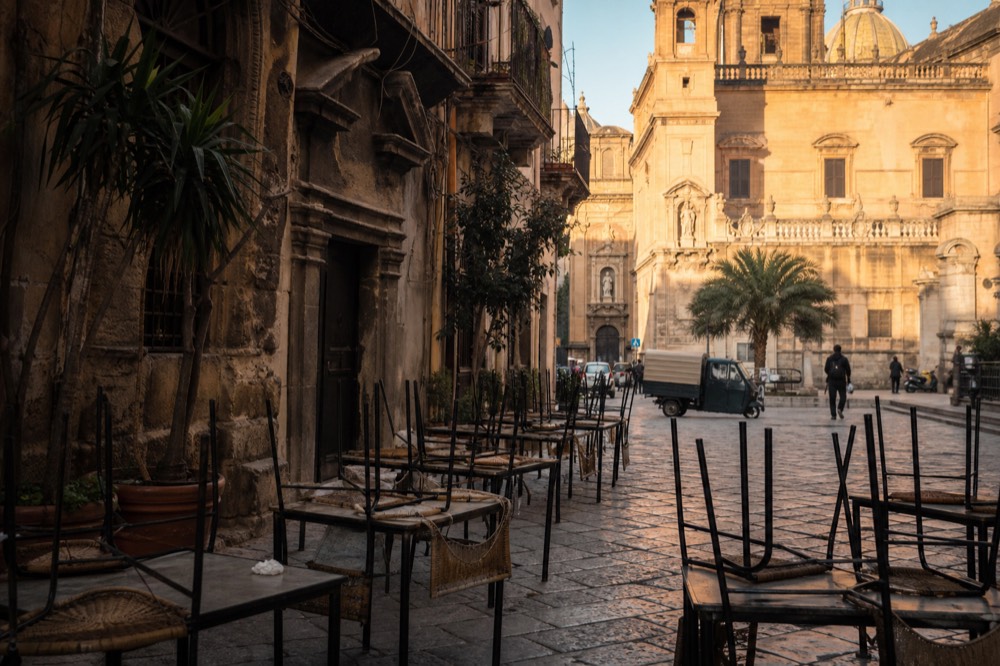
The Festino di Santa Rosalia, the city's biggest annual event, deserves a line of planning advice. The 2026 edition was the 402nd, and on 14 and 15 July the processions run straight through the ground this walk covers: Corso Vittorio Emanuele, the Quattro Canti, Piazza Marina. The archdiocese's own programme publishes the routes. If you are in Palermo those two days, do the walk anyway and let the procession interrupt you; there is no route around the city's biggest party.
Evening walkers have one guided option built for the hour. The small-group night street food tour by Streaty runs from $69.8 per person, about three hours, rated 4.9 across 580 reviews. It is one of the non-refundable formats, and it caps at 12 spots per departure, so the cancellation trade-off above applies with extra force.
Practical Rules For The Walk: The ZTL, Allergens And Tap Water
The centre is a limited traffic zone, active on weekday days and weekend nights under the summer timetable, so the route is a walking one by design. Stallholders must be able to tell you about allergens under EU food information rules, and the tap water is utility-monitored and drinkable. Keep valuables close in market crowds.
The ZTL detail matters if any part of your day involves a car or taxi. The summer timetable in force until 31 October 2026, per the city police's own notice, runs Monday to Thursday 08:00 to 20:00, Friday 08:00 to 24:00, Saturday from midnight to 06:00 and again 20:00 to 24:00, and Sunday from midnight to 06:00. The winter timetable differs, so check that page before driving in the cooler months. The durable version: the historic centre is restricted during the day on weekdays and at night at weekends, which is exactly why this route is a loop on foot.
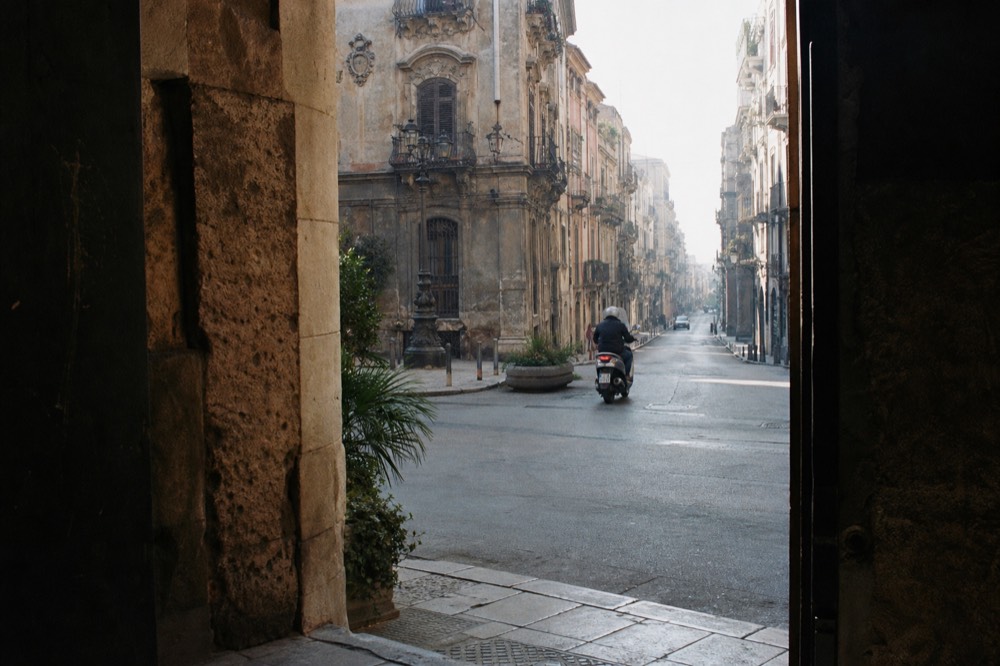
Allergens are covered by real law, not courtesy. EU Regulation 1169/2011 on food information to consumers made allergen information mandatory for non-prepacked foods, including in restaurants and cafes, when it entered application in December 2014. In practice: a friggitoria frying panelle in shared oil should be able to tell you what is in the fryer, and a sit-down restaurant must have the allergen picture available. Ask plainly, and treat a stall that cannot answer as a stall to skip.
The tap water is fine. The utility, AMAP, publishes its water identity card for Palermo with average physico-chemical values, zero coliform bacteria, zero E. coli and zero enterococci per 100 millilitres, and states the water is suitable for daily consumption. The governing law has since been updated by a 2023 decree implementing an EU directive, so the current legal reference is D.Lgs 18/2023. Refill a bottle and spend the money on a second arancina.
On personal safety, keep expectations calibrated rather than alarmed. Recent first-hand traveller reports describe pickpocketing attempts in the tourist streets and advise the usual big-city habits, bags in front, valuables not in back pockets, while rating violent risk as low compared with larger European cities. Reports on the market quarters after dark are mixed, and locals in those threads recommend the central streets and the Politeama side for late evenings. Walk the route in daylight and the question mostly answers itself.
The route above is the core of what this site exists for: Palermo Food Tours covers the city's food, market by market and dish by dish, with the numbers checked rather than repeated. One footnote for walkers who want a day off the street: the trio below includes a vineyard option in Partinico, from $55.74 per person, where transport to the estate is not included and you drive yourself, a different kind of afternoon entirely.
This closing section answers the questions walkers actually ask before setting out: how long the loop takes, whether a guide is necessary, when the markets open, what a vegetarian can eat, and whether the route works after dark. Each answer is short and stands alone, and every figure in it comes from the same checked sources as the rest of the page.
Common Questions About The Palermo Street Food Walk
How long does the Palermo street food walk take?
Most of a day at market pace. The Capo is worth its full morning, via Maqueda works as a midday stretch, Ballarò trades until 20:00 Monday to Saturday, and the Vucciria is an evening finish. A compressed version covering the Capo, via Maqueda and Ballarò fits a half day.
Do I need a guided tour to eat well in Palermo?
No. The route on this page works self-guided if you follow one rule: buy fried food where it is being fried, from a busy counter. A guide adds stall selection, translation of the market banter and context, and guided walks run from $52.06 per person for around three hours.
What time do Palermo's markets open?
Ballarò trades Monday to Saturday 07:30 to 20:00, with Sunday mornings only, per the city's tourism portal. Borgo Vecchio is a morning market. The Capo and the Vucciria are described by the portal as open daily morning and afternoon, though the Vucciria's daytime market has thinned and the quarter now peaks in the evening.
Is the walk suitable for vegetarians?
Largely. Panelle and crocchè are chickpea and potato based, caponata and the sweet canon are vegetarian, and arancina fillings vary by stall. Recent first-hand reports also note vegan arancini options in the city. The one dish to check is pane con la milza, an offal sandwich, which you simply skip.
Can I do the walk in the evening?
Partly. The markets are morning animals, and only Ballarò trades as late as 20:00 on weekdays. The Vucciria is the natural evening stop, as a bar quarter rather than a produce market. If evenings are your only window, the small-group night street food tour runs from $69.8 per person, though it is one of the non-refundable formats.