What Are The Best Food Tours In Italy?
An honest answer to which food tours in Italy are actually worth booking, with verified Palermo prices, cancellation rules, and how to judge a tour before you pay.
What Are The Best Food Tours In Italy?
No single verified ranking names Italy's best food tours, and any page claiming one is guessing. The strongest options cluster in a handful of cities, led by Naples, Bologna and Palermo, and the best of them share three traits: small groups, a guide who eats where locals eat, and tastings that cost less than you would pay alone. In Palermo, verified walks run from $39.83 to $89.33 per person.
The honest starting point is that nobody has ranked them. Searches for current food-tour operator awards or dated per-person price comparisons across Italian cities return nothing that meets a sourcing bar. What does exist is city-level evidence about where food tourism pays off, and tour-level evidence about price, group size and cancellation terms. This page works from both, and it leans on Palermo, where Palermo Food Tours has verified the full local roster, because the same judging criteria apply in Naples, Bologna or Rome.
A quick warning about the most repeated credential in this space. Palermo is often called the fifth best street food city in the world. That line traces to a Forbes piece published on 19 September 2012, which reported a reader survey run by VirtualTourist, a travel site that has since closed. It is a fourteen-year-old member poll, not a study, and it should never be read as a live ranking. The useful takeaway is different: Palermo has been trading on its street food reputation for well over a decade, and the infrastructure of walks, markets and fried-food counters behind that reputation is real and bookable today.
What separates a good Italian food tour from a mediocre one is rarely the food itself. Italy's raw material is uniformly strong. The differences show up in group size, where a cap of twelve keeps you at the counter instead of queueing behind it; in what is included, since an all-inclusive price beats a cheap headline plus paid tastings; and in the guide's relationship to the stalls, because a guide who is known by name at a friggitoria gets you the batch that just came out of the oil. Cancellation terms matter too, and more on that below, because they are the sharpest real difference between otherwise similar products.
Judged on those criteria, three formats consistently rise to the top across Italy: small-group street food walks in working markets, hands-on cooking classes that end with the meal you cooked, and producer visits at wineries or dairies where you meet the person who made what is in the glass. Here is a Palermo selection spanning all three.
Which Italian Cities Reward A Food Tour Most?
Naples, Bologna, Rome, Florence and Palermo give a food tour the most to work with. Naples tops Italy in the TasteAtlas 2025/2026 user-rating ranking of food cities and ranks 14th in Time Out's 2026 poll, Italy's highest. Palermo is the street-food outlier: its markets, fried-food counters and low tasting prices make it the one Italian city where a walking food tour is close to mandatory.
The city credentials come from two very different exercises. TasteAtlas's 2025/2026 best-food-cities list, built from roughly 590,000 user ratings of around 19,000 dishes across more than 18,828 cities, puts Naples first in Italy on a score near 4.99, with Milan second, Bologna third, Florence fourth, Genoa sixth and Rome ninth; Palermo and Catania both appear in the broader top 100. Time Out's 2026 ranking, a survey of more than 24,000 residents across 150 cities plus an expert panel, crowns Lima globally and places Naples 14th, the highest Italian entry. User ratings and resident polls measure different things, but they agree that Italy's food-tour capital is in the south.
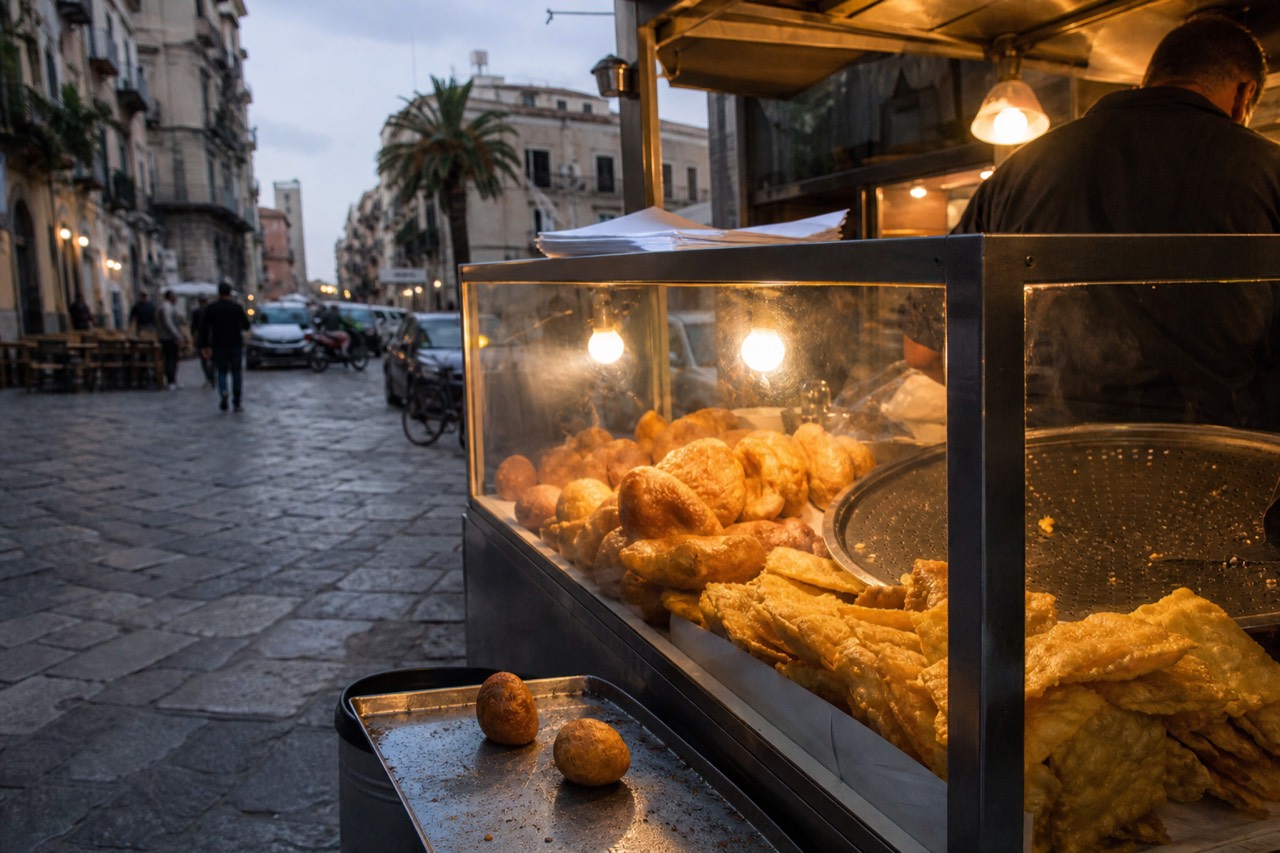
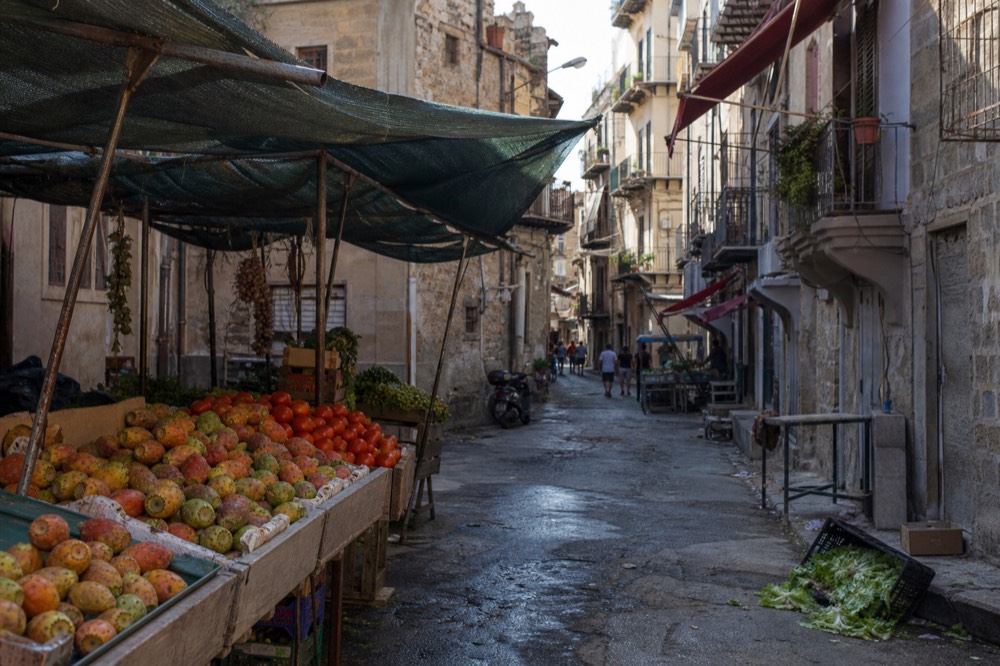
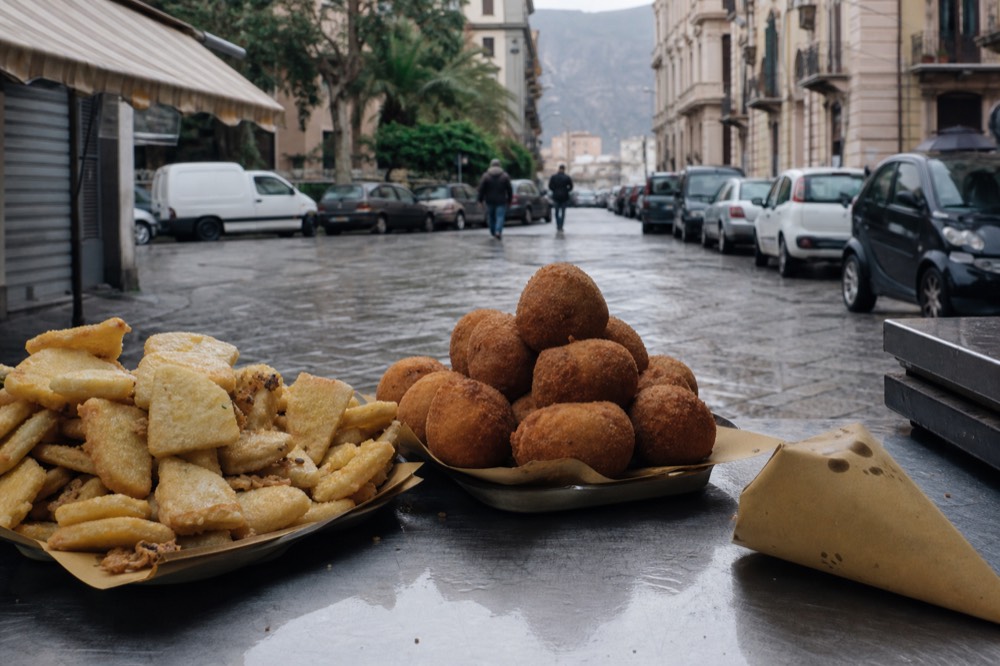
Palermo's case is narrower and stronger. It is not a fine-dining destination on the scale of Rome or Milan; its one Michelin star is modest against Italy's totals. What it has is density. Four historic markets, Ballarò, the Capo, the Vucciria and Borgo Vecchio, sit inside or beside the walkable centre, and the street food sold around them, panelle, crocchè, arancine, sfincione, is cheap by any Italian standard: an arancina or a panelle sandwich in the historic centre runs 3 to 4.50 euros. A tour guide in Palermo is not unlocking a hidden restaurant so much as routing you past the microwaved pre-made arancini that disappoint some independent visitors. The city's own figures show the demand is real: Palermo passed two million tourist presences in 2025, per the Comune di Palermo's published tourism data.
| City | Food credential worth citing | What a tour there does best |
|---|---|---|
| Naples | First in Italy, TasteAtlas 2025/2026 user ratings; 14th globally, Time Out 2026 | Pizza, fried street food and coffee bars, often at speed |
| Bologna | Third in Italy, TasteAtlas 2025/2026 user ratings | Fresh pasta, cured meats and market halls |
| Rome | Ninth in Italy, TasteAtlas 2025/2026 user ratings | Classic Roman plates and neighbourhood trattorias |
| Florence | Fourth in Italy, TasteAtlas 2025/2026 user ratings | Tuscan markets, bistecca and wine bars |
| Palermo | Historic markets and a 2012 Forbes-reported reader survey placing it fifth for street food | Market walks, fried food counters and Sicilian sweets |
Rome and Florence deserve their rows for inventory alone: both carry more food-tour listings than any other Italian cities, which means more choice and more variance in quality. The screening advice in the sections below matters most there. Bologna rewards the traveller who wants pasta literacy, since a class or walk there usually explains the difference between tagliatelle and the spaghetti bolognese that does not exist locally. Naples rewards appetite. Palermo rewards walking shoes and an empty stomach.
What Does A Food Tour In Italy Cost?
Palermo, where this site has verified prices, runs from $39.83 for a 2.5-hour tasting walk to $209.04 for a half-day cooking class with a market visit. Street food walks cluster at the bottom of that range, wine tastings in the middle, hands-on cooking classes at the top. Duration, group size and whether food is included explain most of the spread, and no verified national price list exists for Italy.
The table below is the verified Palermo roster by format, and it doubles as a fair proxy for Italy, because the same structure, cheap walks, mid-priced tastings, expensive classes, repeats everywhere. Note how little the price of a walk buys in extra duration: the spread between the cheapest and a mid-market walk is roughly the cost of two arancine.
| Tour | Format | From (per person) | Duration | Cancellation |
|---|---|---|---|---|
| Palermo: Street Food Walking Tour with Local Guide & Tasting | Street food walk | $39.83 | 2.5 hours | Free up to 24h |
| Palermo Sicilian Street Food Tour: Small Group by Do Eat Better | Street food walk | $52.06 | 3 hours | Free up to 24h |
| Palermo: Street Food and History Walking Tour | Street food walk | $56.91 | 3 hours | Free up to 24h |
| Palermo: Pizza and Gelato Cooking Class with Dinner and Wine | Cooking class | $60.95 | 3 hours | Free up to 24h |
| The Original Palermo Street Food & Market Tour (All-Inclusive!) | Street food walk | $81.64 | 3 hours | Non-refundable |
| Palermo Food Tour: 10+ Tastings of Arancini, Cannoli, Wine & More | Street food walk | $89.33 | 3 hours 30 minutes | Free up to 24h |
| Palermo: Half-Day Cooking Class & Market Tour | Cooking class | $209.04 | 4 hours | Free up to 24h |
Two readings of that table are worth pulling out. First, the all-inclusive flag matters more than the headline number: a tour that prices every tasting in is competing against a self-guided crawl that would cost you maybe 12 to 18 euros for four items at current historic-centre prices, so the guide, the routing and the context are what you are actually buying. Second, the cooking-class premium buys a skill you keep. A class that sends you home able to roll arancine has a different afterlife than a walk, which is a fair reason to pay three or four times the price of one.
For a fuller breakdown of where the money goes, the site's dedicated price guide works through the arithmetic tour by tour: what food tours cost in Palermo.
Still deciding which format suits your trip?
Why Do Palermo's Street Food Walks Punch Above Their Price?
Palermo's small-group street food walks deliver more tastings per dollar than tours in Italy's bigger-name food cities, because the underlying food is cheap. The Do Eat Better small-group tour charges from $52.06 for three hours capped at 12 guests, holds 4.9 across 1355 reviews, and can be cancelled free up to 24 hours before. That combination of price, rating and flexibility is hard to match in Rome or Florence.
The economics are structural. Where a Roman food tour is partly renting you access to trattorias that charge trattoria prices, a Palermo walk is routing you through food that costs a few euros a serving. The tour's margin and your tastings both benefit. The Do Eat Better small-group walk is the clearest example on the roster: three hours, a hard cap of 12 spots per departure, a 4.9 rating built on 1355 reviews, and free cancellation up to 24 hours, from $52.06 per person.
There is also a knowledge dividend specific to this city, and it is the kind of thing a first page of search results will not tell you. Take the arancina itself. The Accademia della Crusca's linguistic consultation on the arancina-versus-arancino question establishes two things worth knowing before you eat one in Palermo: the feminine, round western form follows standard Italian's fruit-gender rule while the eastern masculine follows the Sicilian dialect, and the widely repeated Arab-origin story is shaky, because no trace of the preparation appears in literature, chronicles, dictionaries or recipe books before the second half of the 19th century, when the first recorded form was a sweet rice dish shaped like a bitter orange. A guide who can tell you that, in one sentence, at the counter, is delivering something a listicle cannot.
The same goes for panelle, the chickpea fritters that are the one street-canon item whose official traditional-product territory is Palermo itself, and for the markets' shouted vendor cries, which have their own Palermitan dialect word, abbanniata. These are the details that make a walk in Palermo different in kind from a walk in a city whose food story is already fully told elsewhere. The site's street food guide covers the full canon: what to eat on the streets of Palermo.
Are Cooking Classes And Winery Visits Better Than Walking Tours?
Italy's best food tours are not all walks. A cooking class teaches a dish you can reproduce at home, and a winery visit shows terroir you cannot taste in a city bar. In Palermo, the pizza and gelato class from Towns of Italy costs from $60.95, runs three hours with dinner and wine included, and holds 4.9 across 1208 reviews, while the Camporeale wine discovery at Tasca D'Almerita starts at $69.68.
The honest answer is that they solve different problems. A walk suits a first day in a city, when you want geography, vocabulary and a shortlist of foods in one pass. A class suits a rainy day, a tired-feet day, or a traveller who wants to bring the dish home. A producer visit suits the second half of a trip, once the city food makes sense and you want to see where the wine and the oil actually come from.
Palermo's class offering is unusually strong for the price. The pizza and gelato class run by Towns of Italy is the volume leader: from $60.95, three hours, dinner and wine included, free cancellation up to 24 hours, 4.9 across 1208 reviews, and flagged as often selling out. You leave with dough skills rather than a food coma, which is the point.
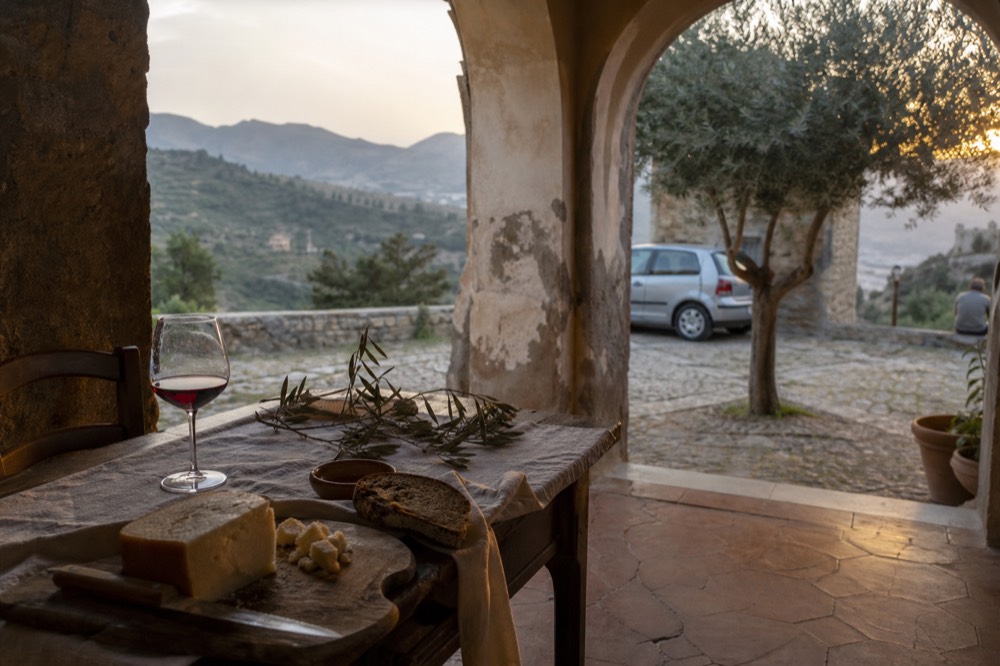
The wine side splits into two experiences. In the city, tastings such as the Bottega Monteleone session, 4.8 across 917 reviews from $51.1, or the 26mq Urban Winery's wine-and-tapas pairing, 4.8 across 204 reviews from $49.94, keep everything walkable. Out of town, the Camporeale option at Sallier de La Tour, the Tasca D'Almerita estate, offers a two-hour discovery tour from $69.68 with free cancellation, and it earns its place on any best-of list for the access alone: a historic working estate whose wines you will then recognise on every Palermo list. One practical point the listing is explicit about: transport to the estate is not included, so you drive yourself or arrange a car. For combining a market morning with an afternoon at the stove, the site tracks the options here: market tours paired with cooking classes in Palermo.
How Do You Spot A Food Tour Worth Booking?
Check three things before booking any food tour in Italy: the cancellation window, the group cap and whether food is included or paid separately. In this site's Palermo roster, 19 of 22 tours allow free cancellation up to 24 hours, while the three Streaty products are non-refundable. That single line in the listing matters more than a tenth of a rating point.
The cancellation split is the sharpest decision axis in the whole catalog, and it is honest to say so plainly. Nineteen of the 22 Palermo tours on this site's roster can be cancelled free up to 24 hours before departure. The three exceptions are all Streaty products: the original all-inclusive street food and market tour, the night street food tour, and the all-inclusive food and wine walk. They are good tours; the original holds 4.9 across 2308 reviews, the deepest review base on the roster, from $81.64 for three hours with everything included and 12 spots per departure. But the money is committed the moment you book, and a missed flight connection or a rough ferry crossing turns a non-refundable seat into a donation.
The trade-off is real rather than rhetorical. An all-inclusive, non-refundable tour at $81.64 suits a traveller with fixed plans who wants zero decisions on the day. A refundable walk at $52.06 suits everyone else, and travel plans change more often than itineraries admit. The same logic applies across Italy: before you book anything, find the cancellation line, and treat a missing one as an answer.
Two further screens are worth sixty seconds each. The group cap tells you whether you will hear the guide: 12 is the ceiling on several of the best Palermo products, and anything above roughly 20 starts to become a procession. And the allergen question is not a formality, because under EU food-information rules in force since December 2014, allergen information is mandatory for non-prepacked food, including restaurants and market stalls, as the European Commission's consumer-information legislation sets out. A tour operator who cannot tell you whether a tasting contains gluten or nuts before you book is telling you something about how closely they work with the vendors.
When Should You Book A Food Tour In Italy?
Book a Palermo food tour for May, June or September, when average highs sit between 23.3 and 27.5 degrees Celsius and rain days stay between 1.9 and 5.4 per month. July is nearly rainless at 6.7 mm but the centre is given over to the Festino processions on 14 and 15 July. Mid-January daylight lasts under ten hours, so morning markets are the whole day.
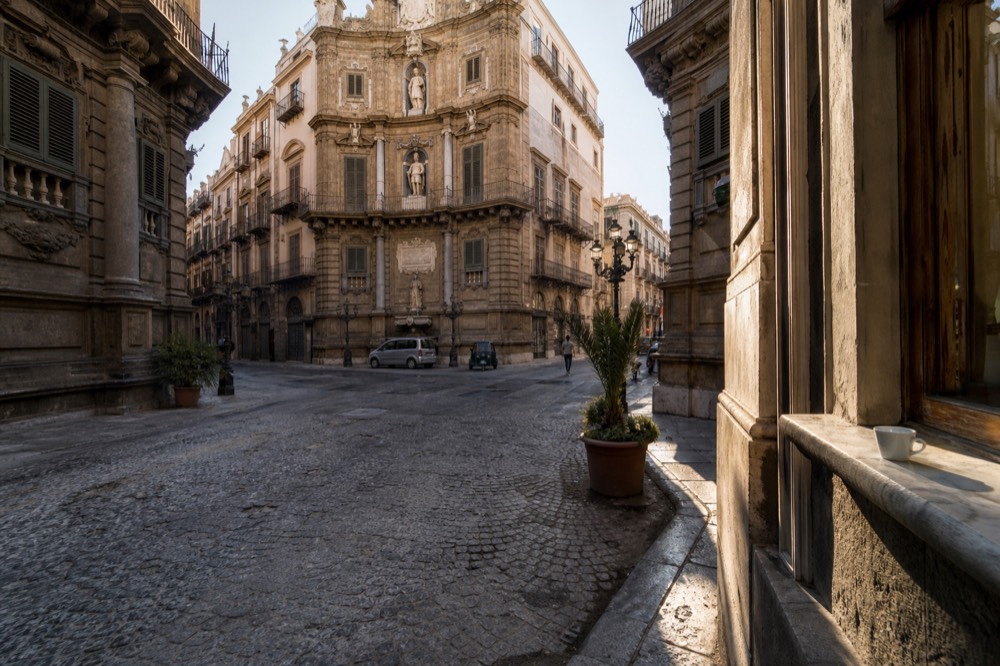
The climate case comes from the WMO climatological normals for Palermo, and the pattern generalises across Italian food cities with local adjustment: spring and early autumn give you the walking hours, midsummer gives you heat, and winter compresses everything into the morning. The numbers for Palermo specifically: May averages a 23.3 degree high with 4.1 rain days, June 27.2 with 1.9, September 27.5 with 5.4. July, at 29.8 and 1.2 rain days, is nearly dry but is the month of the Festino di Santa Rosalia, when the processions of 14 and 15 July fill Corso Vittorio Emanuele, the Quattro Canti and Piazza Marina, the exact ground a centre-based food tour walks. August is the hottest month at a 30.5 degree average high, which argues for the earliest departures or the evening street food format.
| Month | Mean daily high | Mean rain days | What it means for a food tour |
|---|---|---|---|
| May | 23.3 C | 4.1 | Prime walking month, markets in full swing |
| June | 27.2 C | 1.9 | Long daylight, very low rain risk |
| July | 29.8 C | 1.2 | Near-rainless, but Festino crowds on 14-15 July |
| September | 27.5 C | 5.4 | Warm and lively, shoulder-season pricing |
| December | 15.8 C | 12.0 | Wettest month, indoor formats fare better |
Daylight is the quieter constraint. Mid-January in Palermo gives you under ten hours between sunrise and sunset, with the light gone before 17:15, so a morning market is effectively the whole food day. Mid-July gives more than fourteen and a half hours, which is why the small-group night street food format, 4.9 across 580 reviews from $69.8 for three hours, exists at all: it moves the eating into the hours when the city cools. The WMO's published normals for Palermo carry the full monthly breakdown if you are planning around them.
Booking lead time follows the caps. Several of the best Palermo products hold only 7 to 12 spots per departure and are flagged as often selling out, including the street food and history walk at 4.9 across 1672 reviews and the pizza and gelato class. In May, June and September, book the moment your dates are firm. In deep winter, a few days is usually enough.
Whatever the season, the shortlist is the same three formats this page opened with, and here it is once more for a final comparison.
These are the questions travellers ask most before booking a food tour in Italy: what a tour costs, whether it is worth the price, which one suits a first visit and what happens if plans change. The short answers draw on the verified Palermo roster, where walks run from $39.83, classes from $60.95, and 19 of 22 tours can be cancelled free up to 24 hours before departure.
Common Questions About Food Tours In Italy
What Are The Best Food Tours In Italy?
No verified national ranking exists. The best food tours in Italy are small-group street food walks in Naples, Bologna and Palermo, hands-on cooking classes, and producer visits at wineries, booked on cancellation terms, group caps and what is included rather than on a headline price. In Palermo, verified options run from $39.83 to $209.04 per person.
How much does a food tour in Italy cost?
In Palermo, where pricing is verified, a street food walk costs from $39.83 to $89.33 per person for 2.5 to 3 hours 30 minutes, a city wine tasting from $49.94 to $51.1 for two hours, and a cooking class from $60.95 to $209.04 depending on length and inclusions. No verified national price list exists for Italy as a whole.
Are food tours in Italy worth it?
A good one is, and the arithmetic is testable: a self-guided crawl of four street food items in Palermo's historic centre costs roughly 12 to 18 euros at current prices, so a walk from about $40 is buying routing, context and a guide known to the vendors. Tours with caps of 12 or fewer and all-inclusive tastings justify their price most easily.
Which food tour in Palermo is best for a first visit?
The Do Eat Better small-group street food tour is the strongest all-round first visit: 4.9 across 1355 reviews, three hours, from $52.06 per person, capped at 12 guests, with free cancellation up to 24 hours. Travellers with fixed plans who want everything included often prefer the original all-inclusive market tour at 4.9 across 2308 reviews, though it is non-refundable.
Can you cancel a food tour in Italy?
It depends on the product, so read the listing before paying. In this site's Palermo roster, 19 of 22 tours allow free cancellation up to 24 hours before departure. The three exceptions are all Streaty products, including the original all-inclusive street food and market tour, which are non-refundable once booked.