What's The Best Thing To Buy In Sicily?
The Sicilian purchases worth packing: Bronte DOP pistachios, Modica chocolate, olive oil and wine, what each should cost, and where to shop so the label is real.
What's The Best Thing To Buy In Sicily?
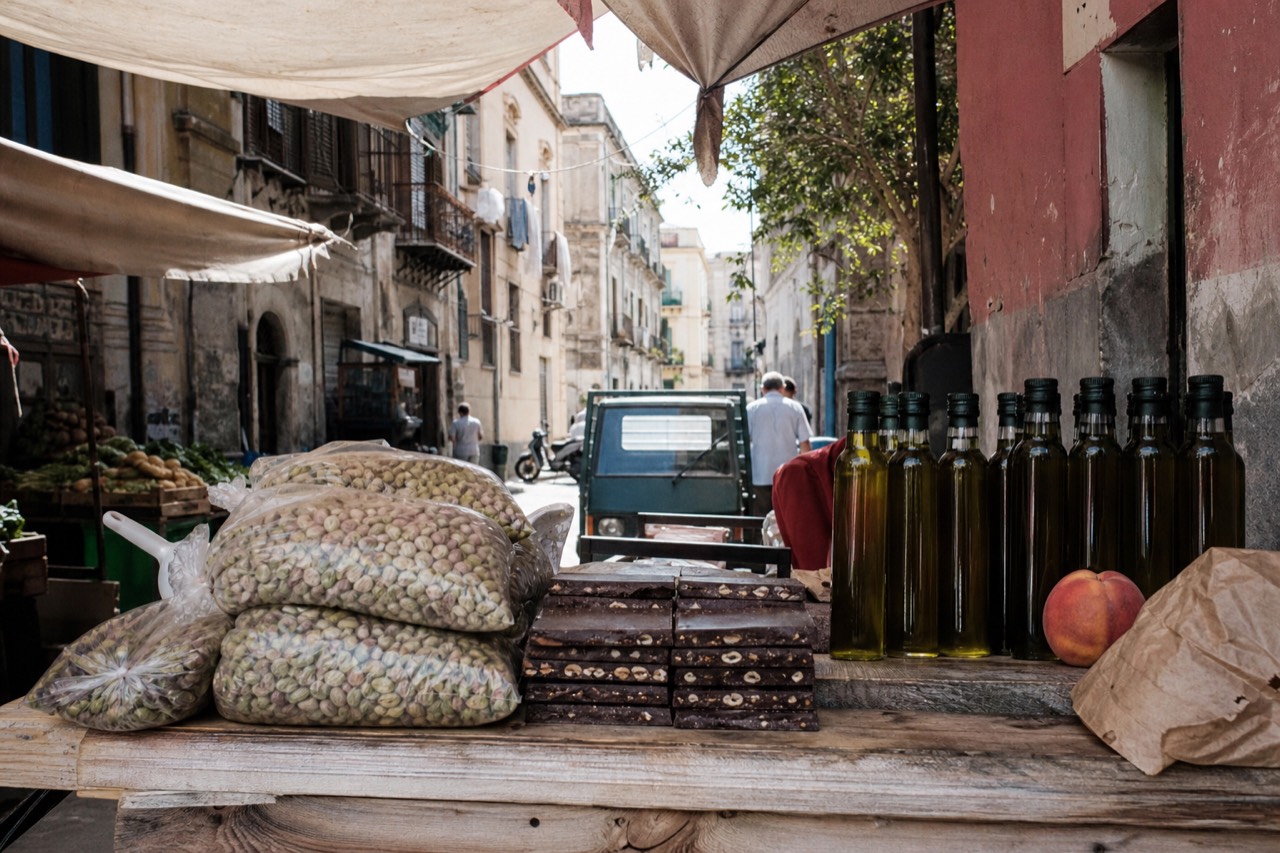
If you are flying home with one purchase, make it shelled Pistacchio Verde di Bronte DOP. A one-kilogram vacuum pack of the 2025 harvest is a premium purchase at Sicilian delis, the name is legally protected across the EU, and the nuts keep for months in a sealed bag. Modica chocolate, Val di Mazara olive oil and Sicilian wine are the runners-up, because all three survive a flight and carry a protected name.
Sicily is one of the most heavily protected food regions in Europe, which is exactly why it is a good place to shop. The island holds 67 EU-recognised products, 36 of them food and 31 of them wine, according to the regional institute for wine and oil's product catalogue. On top of the EU list, Sicily carries 293 products on the national register of traditional foods, the PAT list, which requires a preparation method practised for at least 25 years. Very few destinations offer that combination of density and documentation.
That protection matters to you as a buyer in a second way. A protected name is a promise about what is in the packet, and it is enforceable. When a label says Pistacchio Verde di Bronte DOP, the producer is answering to a certified specification rather than to marketing. The same logic applies to the olive oils and wines from the island: the name on the bottle narrows down where the olives grew or the grapes were pressed, and that is worth more in a suitcase than any generic souvenir.
The question of what to buy is also a question of what will still be worth eating when you unpack at home, and that is where this page earns its length. This site, Palermo Food Tours, keeps a sourced fact file on every product named here, from the official PAT technical sheets to local press price reporting, because the difference between a good purchase and a disappointing one in Sicily is usually information. Readers planning the eating side of a trip can start with what food Palermo is famous for before deciding what deserves suitcase space.
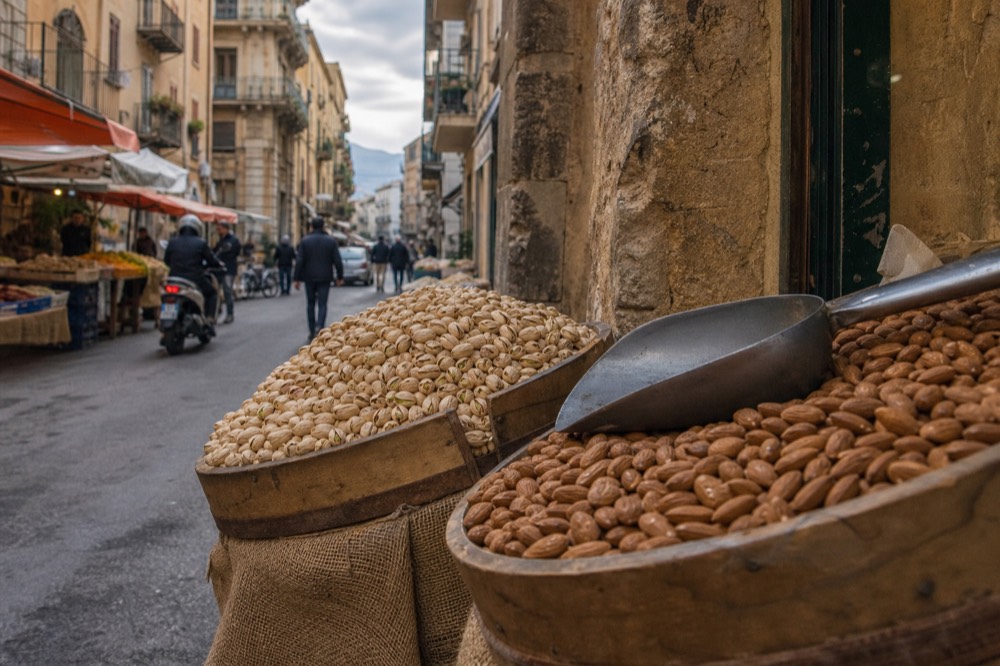
Start with pistachios because they are the island's most defensible purchase. The Bronte pistachio grows in volcanic soil on the island's western slope country, is harvested once a year, and commands a price that reflects genuine scarcity. At a premium per-kilogram rate shelled, it is not cheap, but that price is the reference point for the real thing, and a small pack still makes an impressive gift. Chocolate from Modica, pressed cold rather than conched, is the second pick: it is hard, dry, travels without melting into a disaster, and carries its own IGP name. Olive oil and wine complete the shortlist, with the caveat that both need checked luggage.
If shopping is only part of your trip, these three walks and classes are the ones visitors book most around the same decision:
Which Sicilian Food Souvenirs Survive The Trip Home?
The souvenirs that survive a flight are dry, sealed and protected by a label: pistachios, Modica chocolate, extra virgin olive oil, wine and vacuum-packed cheese. Fresh ricotta fillings do not. A cannolo is a fried shell filled on the spot, so it is a same-day pleasure rather than a souvenir, and an arancina is best eaten within hours of leaving the fryer. Buy those to eat in Sicily, and pack the shelf-stable things.
The cannolo is the clearest case study in what not to put in a suitcase. The Treccani dictionary definition describes it precisely: a pastry shell rolled around a tube, fried, then filled with sweetened ricotta flavoured with liqueur, candied fruit and chocolate pieces. The shell is designed to stay crisp for hours, not weeks. Once filled, the clock runs fast, which is why bakers in Palermo fill cannoli to order and why the ones sitting pre-filled in a display case are already past their best.
There is a detail here that most first pages of search results do not carry. The official PAT technical sheet for the cannolo lists its production territory as Paceco, Erice, Trapani and Valderice, in other words the Trapani side of the island, not Palermo province at all. The name itself comes from the cane, Arundo donax, around which the shell was originally rolled. None of that stops Palermo from making excellent cannoli, and local bakers in recent visitor discussions keep pointing travellers towards Piana degli Albanesi, a town inland from the city with a strong cannoli reputation. But if you are buying cannoli-themed souvenirs, the shell-and-filling kits that travel are the honest version of the gift.
Here is the practical sorting, item by item:
| Souvenir | Survives the flight | Why |
|---|---|---|
| Shelled Bronte DOP pistachios | Yes, months in a sealed pack | Dry, protected name, premium reference price per kilogram |
| Modica chocolate | Yes | Cold-pressed and hard, keeps without refrigeration |
| Val di Mazara DOP olive oil | Yes, in checked luggage | Sealed bottle, protected name covering Palermo and Agrigento provinces |
| Sicilian wine | Yes, in checked luggage | Sealed bottle, 31 recognised wine designations on the island |
| Ciaculli late mandarins | Only in season | Fresh fruit, harvest runs January to March |
| Cannolo | No | Fried shell plus fresh ricotta filling, a same-day food |
| Arancina | No | Fried rice ball at its best within hours |
Packing is its own small discipline. Bottles go into checked luggage, wrapped in clothing or bubble wrap, and it is worth checking your airline's baggage rules before you buy a six-pack of wine. Anything fragile or oily should ride in the middle of the case, not against the sides. Dry goods such as pistachios, chocolate, pasta and biscuits need nothing more than a zip lock and a level surface. None of this is complicated, but it decides which of the island's products you can honestly take home.
How Much Should Pistachios, Chocolate And Street Food Cost?
Budget roughly 3 to 4.50 euros for an arancina or a panelle sandwich in Palermo's historic centre, 4 to 5 euros for a brioche with gelato or granita, and 14.56 euros on average for a pizza and a drink. For souvenirs, shelled Bronte DOP pistachios command a premium per-kilogram rate at the deli counter. Anything far below those bands deserves a very close look at the label.
Local press reporting gives us the street-level numbers, and they tell a story of their own. Il Sicilia reported that an arancina or a panino con panelle in the centro storico now runs 3 to 4.50 euros, roughly double the level of 2021, and that a pizza with a drink averages 14.56 euros across a range of 9 to 28. Giornale di Sicilia, meanwhile, covered the local argument over brioche prices, with the traditional brioche con gelato or granita now commonly at 4 to 5 euros. These are the numbers locals argue about, which makes them a useful floor for your own expectations.
The counterfeit problem is not theoretical. In January 2026, la Repubblica reported that Carabinieri food-squad officers in Catania seized panettoni labelled as containing Pistacchio Verde di Bronte DOP and Cioccolato di Modica IGP when the certified ingredients were absent, and the owner was reported for attempted fraud. The lesson for a shopper is simple: the protected name, the EU seal and a price consistent with the real product travel together. When one of the three is missing, ask why.
| Item | Typical price | What to watch for |
|---|---|---|
| Shelled Pistacchio Verde di Bronte DOP, 1 kg | Premium per-kilogram price | Vacuum pack, DOP seal, harvest year on the label |
| Arancina or panelle sandwich, centro storico | 3 to 4.50 euros | Fried to order, not reheated |
| Brioche with gelato or granita | 4 to 5 euros | Standard item, prices at the centre's edge often lower |
| Pizza plus a drink | 14.56 euros on average | Reported range runs 9 to 28 euros |
| Modica chocolate | Check the listing | IGP name on the wrapper, cold-pressed texture |
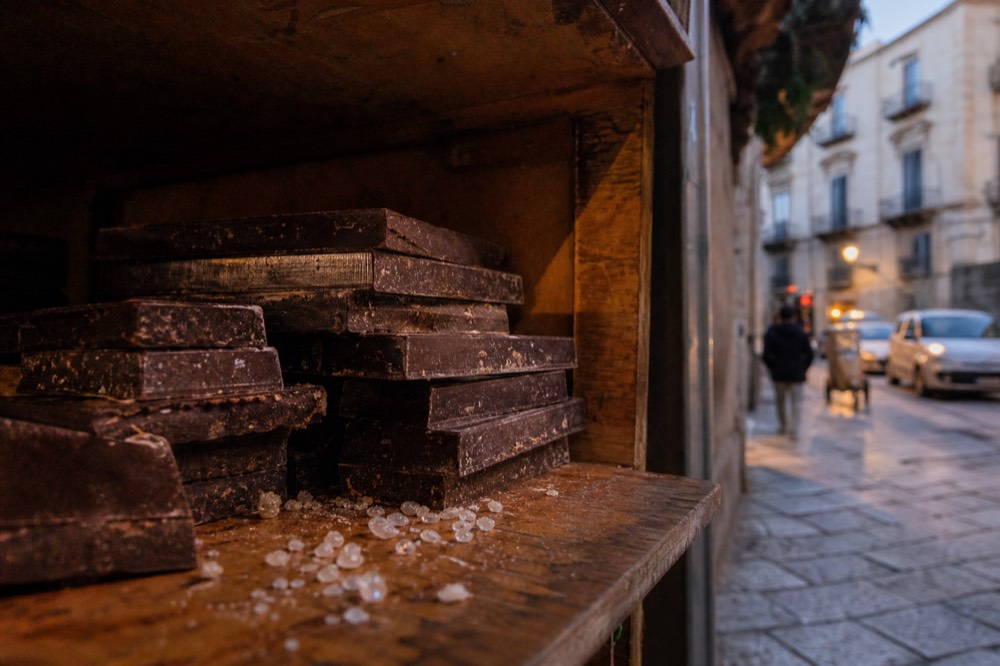
A word on the chocolate, since it is the second-most-faked category after pistachios. Modica's chocolate is made with a cold process that leaves sugar crystals intact, which gives it the grainy snap that distinguishes it from industrially conched chocolate. The IGP name is your guarantee of that method. Buy it from a pasticceria or an alimentari rather than a market stall with no printed label, and keep the receipt if you are buying several bars as gifts.
Where Should You Shop In Palermo: Markets Or Shops?
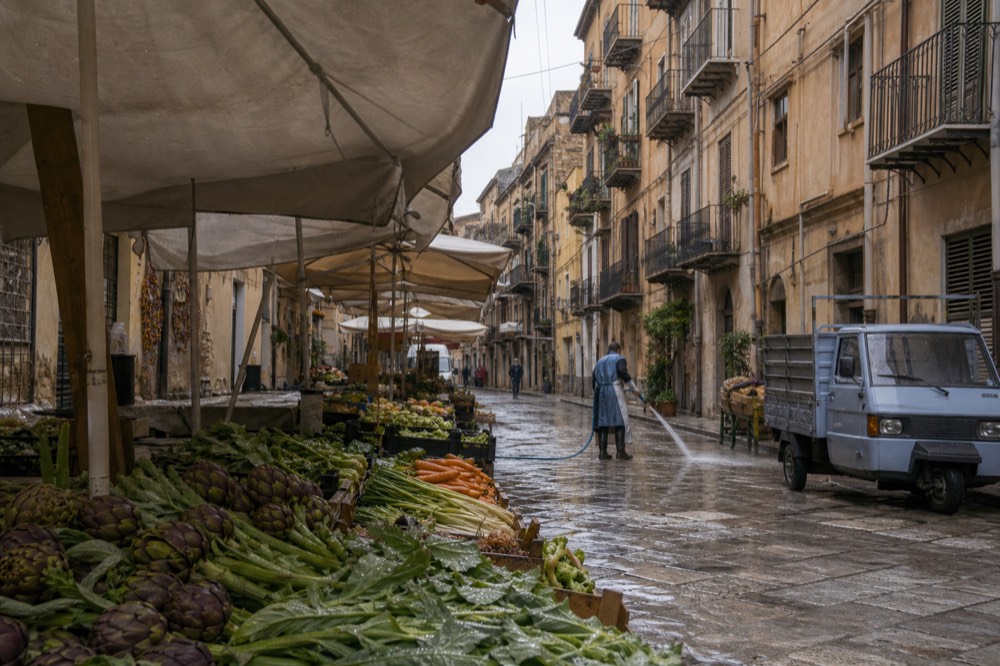
Shop where Sicilians shop: a busy friggitoria with a fryer running beats a market stall with pre-made food under a lamp. Palermo's four historic markets, Ballarò, the Capo, the Vucciria and Borgo Vecchio, are wonderful to walk and photograph, but recent visitor reports describe pre-made, reheated arancini at some tourist-facing stalls, so buy from vendors who fry to order.
The market question deserves honesty, because the postcard version and the current reality have diverged. PalermoToday reported in March 2025 that the historic markets are under real strain, quoting traders who say they have lost 80 per cent of their traditional customers to the traffic-restricted centre, parking shortages and declining services, with tourist street food replacing traditional stalls. The same reporting described the Vucciria as effectively gone as a daytime food market, the Capo slowly emptying, and Ballarò still alive but transforming. None of that makes the markets bad places to visit. It does mean the produce and the fried food are two different shopping experiences now.
| Market | Quarter | Hours | Best for |
|---|---|---|---|
| Ballarò | Albergheria | Monday to Saturday 07:30 to 20:00, Sunday mornings | Produce, spices, atmosphere |
| Capo | Seralcadio | Every day, morning and afternoon | Street food, friggitorie |
| Vucciria | Via Argenteria to piazza Garraffello | Officially open all day, now mostly evening life | Evening drinks, the Guttuso painting's setting |
| Borgo Vecchio | Behind the Politeama | Mornings | Fish, local shopping |
The market hours come from the city's own tourism portal, and Ballarò's are the only exact published times. For a deeper walkthrough of all four, see the site's guide to Palermo's historic markets.
Visitor reports from recent months sharpen the point. One traveller at Ballarò described buying arancini that turned out to be pre-made and microwaved, and the replies from locals pointed to specific friggitorie elsewhere in the city where the frying happens in front of you. The pattern in those replies is consistent: look for a queue of locals, a fryer that is hot, and food that comes out of oil rather than out of a warming cabinet. That instinct, once learned, protects every purchase you make on the island.
This is also where a guided walk earns its price before you buy a single souvenir. The Do Eat Better small-group street food tour runs 3 hours from $52.06 per person, holds 12 spots per departure, and carries a 4.9 rating across 1355 reviews, with free cancellation up to 24 hours before. A walk like that functions as a calibration exercise: you taste what a fresh panelle or a proper arancina should be, and every stall you visit afterwards gets measured against that standard.
For shopping itself, split your time deliberately. Markets for produce, spices, and the theatre of the abbanniata, the shouted sales cry the city's own tourism portal calls part of the show. Shops for anything sealed, labelled and protected. The airport is the last resort, where prices climb and the interesting regional names thin out. A good rule of thumb: if a purchase needs an explanation, buy it where someone can give you one.
What Can You Only Buy In Sicily In Season?
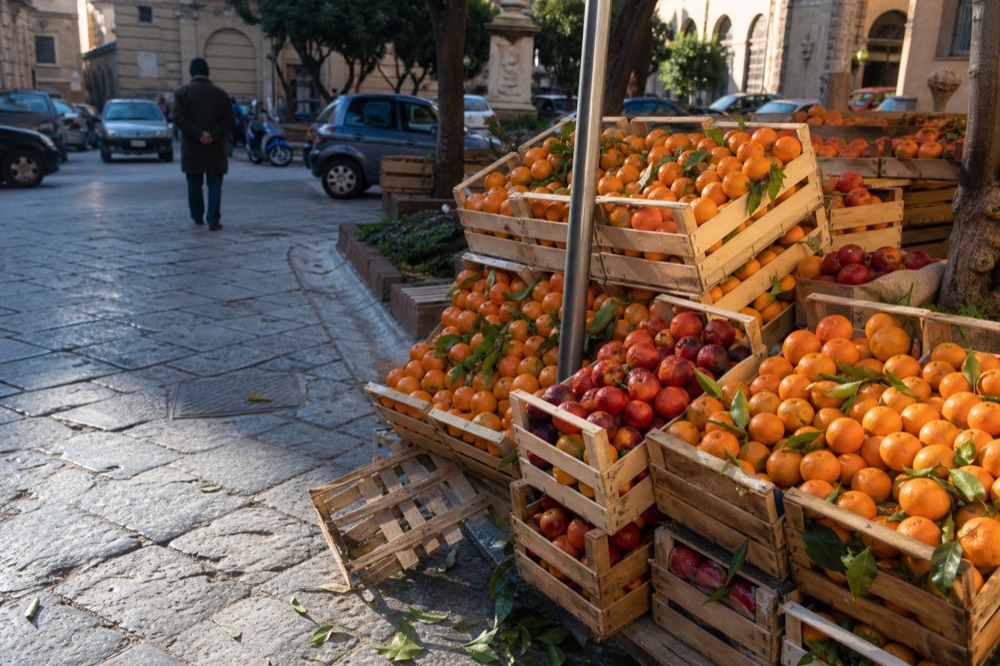
Between January and March the buy is the Ciaculli late mandarin, a Slow Food Presidium grown on around 80 hectares on Palermo's eastern edge, a 1940s mutation of the Avana mandarin that is sweet, thin-skinned and nearly seedless. Blood oranges under the Arancia Rossa di Sicilia IGP name are the other winter purchase. Both are finished by late spring, so the calendar decides for you.
The Ciaculli mandarin is the connoisseur's answer to this whole question, and almost nobody outside Sicily has heard of it. According to the Slow Food Foundation's Presidium page, the variety comes from a spontaneous mutation in the 1940s in Ciaculli, on the edge of Palermo, and it is harvested from January to March. The Presidium covers growers farming around 80 hectares in total, and Slow Food records that the Conca d'Oro, the plain around Palermo, has lost 80 per cent of its cultivated land over the past sixty years as the city sprawled. What you are buying, in other words, is a shrinking orchard's winter crop, and you cannot buy it in July.
Blood oranges are the volume answer. The Arancia Rossa di Sicilia IGP specification was updated in 2026, with new Tarocco, Moro and Sanguinello cultivars admitted, so the name now covers a slightly wider family of red-fleshed oranges grown under the protected rules. They are a winter and early spring fruit, they pack reasonably well for a few days of travel, and a crate shared around a kitchen at home does more for Sicily's reputation than any magnet.
| When | What to buy | Why then |
|---|---|---|
| January to March | Ciaculli late mandarins, Arancia Rossa IGP blood oranges | Harvest window, Presidium fruit at its peak |
| May | Cannoli at Piana degli Albanesi's Cannolo Fest | The festival runs over two days in mid-May |
| July | Cannoli at the Dattilo Cannolo Fest near Trapani | Three-day celebration of the shell and the filling |
| September | Couscous at San Vito Lo Capo's Cous Cous Fest | Ten-day festival with tastings and free beach concerts |
| November | Sfincione at Bagheria's Sfincione Fest | The town's white sfincione is its symbol product |
The festival calendar is a shopping calendar in disguise. Piana degli Albanesi holds its Cannolo Fest in mid-May, Dattilo near Trapani holds its own in early July, San Vito Lo Capo dedicates ten late-September days to couscous, and Bagheria closes the year with Sfincione Fest in November, where the town's white sfincione is the symbol product according to the municipal announcement. Timing a trip to any of these turns souvenir shopping into something closer to participation.
Is A Food Tour A Better Buy Than More Souvenirs?
Often, yes. A three-hour street food walk from $52.06 per person teaches you which friggitorie fry to order and which products deserve suitcase space, and a four-and-a-half-hour Sicilian cooking class at $115.95 per person sends you home with recipes and a market instinct you can still use. Both cost less than a kilogram of pistachios bought on autopilot at the wrong stall.
Consider what a souvenir is actually for. A bag of pistachios is a memory with a shelf life, and a good one. But the visitor who has spent three hours with a local guide, tasting at the stalls that earned their reputation, goes home with something that keeps working: the ability to read a friggitoria, a market and a label. The street food and history walking tour, 3 hours from $56.91 per person with a 4.9 rating across 1672 reviews, pairs the food with the city's story, and it often sells out, which tells you something about demand.
The cooking class is the other side of the same coin. The Sicilian Pantry class runs 4 hours 30 minutes from $115.95 per person, caps the group at 8, and carries a 5.0 rating across 310 reviews, with free cancellation up to 24 hours before. Its format, shopping near one of the historic markets and then cooking a multi-course meal, is effectively a masterclass in ingredient selection. You leave knowing what good ricotta smells like, what seasonal produce looks like, and which of those things you can recreate at home. The site's guide to Palermo cooking classes breaks the options down in detail.
For readers who want the traditional dishes themselves explained, ingredient by ingredient, the companion piece is the site's guide to traditional Sicilian food. Between that page and this one, the shopping list and the reasoning behind it are covered.
So, what is the best thing to buy in Sicily? The honest answer is a protected name you have learned to read. Pistachios if you want the single most defensible purchase, Modica chocolate if you want durability, oil and wine if you have checked luggage, mandarins if you are here between January and March, and a guided walk or a class if you want the judgement that makes all the other purchases better. The suitcase, in the end, is the easy part.
The short answers: pistachios with a DOP seal are the single best buy, cannoli do not travel, real Bronte pistachios carry a premium price and a harvest year on the pack, and the safest sealed purchases are chocolate, olive oil and wine in checked luggage. The season matters for citrus, January to March for the Ciaculli mandarin.
Common Questions About Buying Food In Sicily
What's The Best Thing To Buy In Sicily?
Shelled Pistacchio Verde di Bronte DOP is the strongest single purchase: legally protected, sold in sealed vacuum packs, and it keeps for months. Modica chocolate, Val di Mazara DOP olive oil and Sicilian wine are the other buys that survive the flight home.
Do cannoli travel well?
No. A cannolo is a fried shell filled with fresh sweetened ricotta, designed to be eaten within hours of filling. Buy them to eat in Sicily, filled to order, and take home pistachios or chocolate instead.
How can I tell real Bronte pistachios from fakes?
Look for the DOP seal and the harvest year on a sealed pack, and expect a premium per-kilogram price for the genuine product. Carabinieri in Catania have seized products falsely labelled as Bronte DOP pistachio, so a price far below the going rate is a warning sign.
Can I carry olive oil and wine home in my luggage?
Yes, in checked luggage. Wrap the bottles well, place them away from the case edges, and check your airline's baggage allowance before committing to a multi-bottle purchase.
When is the best time to buy citrus in Sicily?
January to March. That is the harvest window for the Ciaculli late mandarin, a Slow Food Presidium fruit, and the main season for Arancia Rossa di Sicilia IGP blood oranges. Both are finished by late spring.
Are market stalls the cheapest place to buy food souvenirs?
Not always. Recent visitor reports describe pre-made, reheated food at some tourist-facing market stalls, and local reporting describes the historic markets shifting towards tourist trade. For sealed, labelled products, a shop with printed packaging is often the safer buy.